

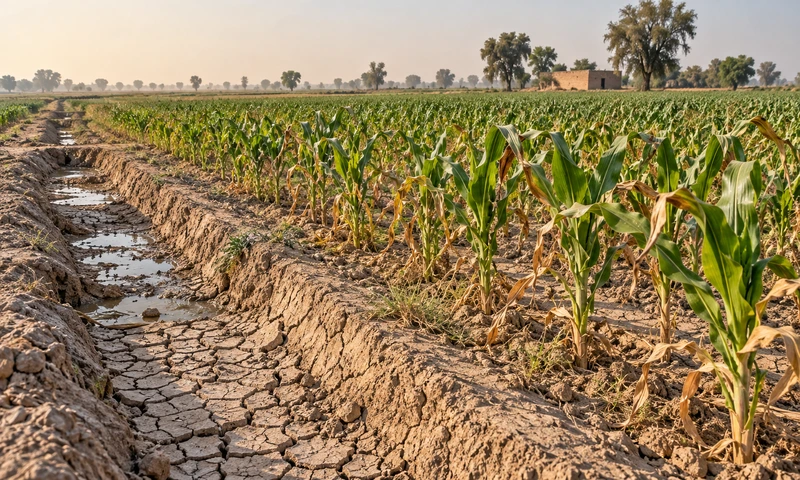
Pakistan must strengthen agricultural resilience as water shortages, deteriorating soils and changing weather threaten crop production, rural incomes and food security. Zeeshan Baig, Country General Manager of Syngenta Pakistan, raised these concerns at the Pakistan Agriculture Coalition’s Agri-Connections 2026 conference in Lahore. He said climate disruptions were intensifying existing pressures, including declining water availability and changing pest and disease patterns. Farmers increasingly struggled to produce food consistently and profitably. “We don’t just need more food, we need more sustainable and resilient food,” he said. Weak crop growth highlights economic stakes Agriculture contributed 23.44% of Pakistan’s GDP and grew 2.89% during FY2025-26, according to the Pakistan Economic Survey. However, important crops recorded growth of just 0.65%. Higher sugarcane, wheat and rice production offset declines in cotton and maize. Baig said Pakistan could no longer separate agricultural productivity from environmental pressures and resource constraints. Its dependence on irrigation leaves farming particularly exposed to water shortages. He called for producing more food while using water, land and other inputs more efficiently. The implications extend across the rural economy. The World Bank identified Punjab as accounting for 73% of national food production in its 2022 agricultural resilience project announcement. That year, the bank approved $200 million for the Punjab Resilient and Inclusive Agriculture Transformation Project. It targets water efficiency, climate resilience and higher small-farmer incomes. Rising demand increases pressure on farmers Baig warned that population growth would increase food demand while agricultural resources remained constrained. “By the next 30 years, our population is expected to increase by almost 50 percent. Today, we are already at a weak deficit or marginally meeting the food demand of the local economy,” said Zeeshan. He said Pakistan needed to protect productivity from sudden shocks and longer-term stresses. Climate resilience should therefore guide everyday farming decisions. Those decisions include irrigation, soil management, crop protection and responses to changing weather. Baig highlighted laser land levelling as a practical intervention. Figures presented during his address suggested it could cut water use by 20% to 30% and increase yields by approximately 10%. He said resilience did not depend solely on complex technologies. Farmers could also benefit from better agronomic practices, digital advice, crop diagnostics, weather information, crop protection and biological solutions. “Until we empower farmers to make the right decisions, we will never be able to solve food security in Pakistan,” Baig said. Investment needs coordinated action Baig urged government, academia, researchers and businesses to improve farmers’ access to knowledge, technology and practical support. A June 2026 World Bank assessment reinforces the regional investment case. It covers the Middle East, North Africa, Afghanistan and Pakistan. The bank estimates that an additional $12 billion annually in water-efficient irrigation and agricultural innovation, alongside reforms, could raise cereal yields 72% by 2050. It also projects more than double the region’s fruit and vegetable production under that scenario. For Pakistan, Baig linked agricultural resilience directly to protecting harvests, farmer livelihoods, national food supplies and the wider economy.
OICCI Seeks Rs103 Billion Tax Refunds as FDI Falls
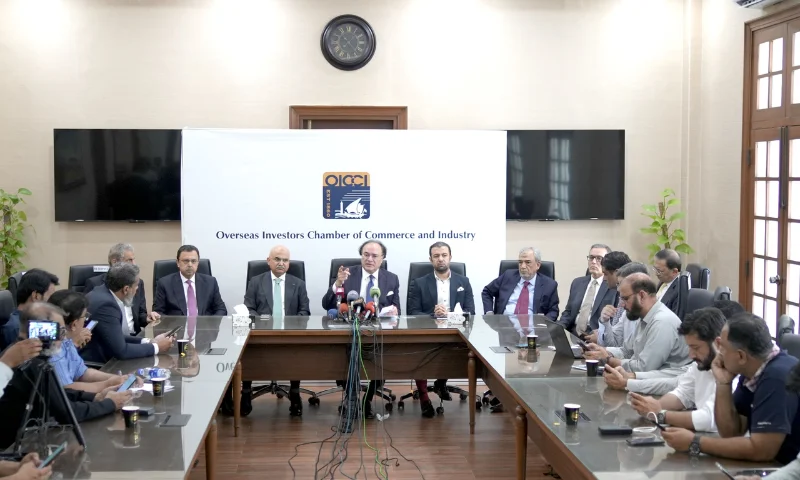
Foreign investors urged Finance Minister Muhammad Aurangzeb on Thursday to address approximately Rs103 billion in pending tax refunds and ensure predictable policies. The Overseas Investors Chamber of Commerce and Industry (OICCI) raised the demands during his visit to its Karachi headquarters on October 1. Senior chamber officials and leading foreign investors discussed how Pakistan could convert macroeconomic stability into investment, exports and employment. OICCI acknowledged the economic turnaround but said investment had yet to follow. According to the chamber, net foreign direct investment fell roughly 34% to $1.7 billion in FY26. “Stabilisation was the first step, not the destination,” said Aurangzeb, the federal minister for finance and revenue. “Our task now is to turn it into investment, exports and jobs, and that means hearing directly from investors about what still stands in the way.” Tax refunds top investors’ concerns Members sought a time-bound mechanism to pay or formally dispose of verified income- and sales-tax refund claims. The outstanding amount was their principal concern during the meeting. They also called for rationalising withholding taxes and sector-specific levies. Separately, they proposed medium-term fiscal and tax frameworks developed through consultation with industry. Investors urged the government to gradually reduce borrowing from commercial banks, freeing up credit for private businesses. “Pakistan has done the hard part of stabilising its economy. The test now is whether that shows up in reinvestment and new FDI,” said OICCI President Umar Ahsan Khan. “Clearing pending tax refunds and giving investors predictable tax policy would be the quickest way to show that it does.” The meeting followed Khan’s election as OICCI president for 2026–28. He also serves as chief executive and managing director of Dawlance. Chamber presses for structural reforms Beyond immediate tax concerns, OICCI urged reform and privatisation of state-owned enterprises. It also sought a solution to power-sector circular debt. Members called for broader taxation of agriculture, real estate, retail trade and small and medium-sized enterprises. “Our members are not asking for favours; they are asking for predictability,” said OICCI Secretary General M. Abdul Aleem. “Stability gave us a foundation. Structural reform, and a consultative process that outlasts any one budget, will decide whether capital stays and grows.” The proposals linked immediate investor concerns with longer-term changes to taxation, public-sector businesses and access to finance. External ties offer investment opportunities OICCI also highlighted Pakistan’s improving relationships with the United States, Gulf countries and China. It urged policymakers to translate those relationships into greater trade, investment and export opportunities. Former OICCI president Yousaf Hussain attended the meeting. Aurangzeb presented him with a souvenir on the occasion. The chamber represents about 200 member companies from more than 30 countries. According to OICCI, its members contribute one-third of Pakistan’s total revenue collection. Those companies have also reinvested more than $23 billion over the past decade, underlining their existing stake in Pakistan’s economy.
World Cup 2027 Schedule: Pakistan vs India on October 10
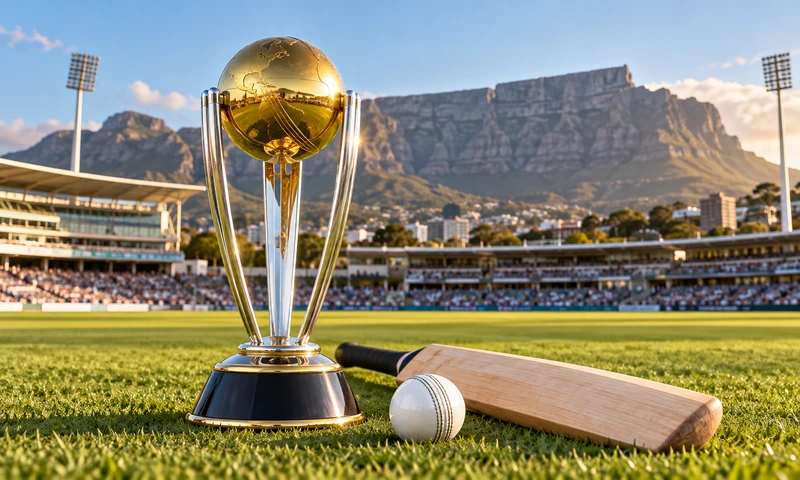
Pakistan will face India in Johannesburg on October 10 at the ICC Men’s Cricket World Cup 2027. The ICC announced the schedule on Thursday and opened its ticket ballot. South Africa, Zimbabwe and Namibia will host the tournament from October 2 to November 21. Fourteen teams will contest 57 matches across 12 venues. Defending champions Australia face India in Cape Town on October 7, opening the group stage with a repeat of the 2023 final. Pakistan’s group and qualification route Group A comprises Pakistan, India, Australia, Afghanistan, Zimbabwe and Qualifier A. New Zealand, South Africa, Sri Lanka, England, Bangladesh and Qualifier B form Group B. South Africa and Zimbabwe qualified automatically as hosts. Eight other teams qualified through the ODI rankings at the September 30, 2026 cut-off. The World Cup Qualifier determines the remaining four entrants. Its winner advances directly to the group stage. 𝙈𝘼𝙍𝙆 𝙔𝙊𝙐𝙍 𝘾𝘼𝙇𝙀𝙉𝘿𝘼𝙍𝙎 🗓️ The ICC Men’s #CWC27 fixtures have been unveiled 🏆 Access the ticket ballot 🎫 https://t.co/MSLEQzcObb pic.twitter.com/dpTE4TEjO7 — ICC (@ICC) October 1, 2026 The second-, third- and fourth-placed finishers contest a single round-robin Super Series in Windhoek on October 2, 4 and 6. Only its winner progresses. South Africa open against New Zealand in Cape Town on October 9. England meet Sri Lanka in Windhoek on October 13. India’s match against Zimbabwe closes the group stage at Victoria Falls’ new Mosi-oa-Tunya Stadium. Super 7 replaces traditional second round The top three teams from each group advance alongside the fourth-placed side with more points. The Super 7 runs from October 25 to November 14. Teams carry no points forward and play six matches each. Pre-seeded positions are India A1, Australia A2, Pakistan A3, England AB4, New Zealand B1, South Africa B2 and Sri Lanka B3. These allocations help fans plan travel but do not guarantee qualification. An unseeded qualifier inherits the position of the seeded team it displaces. The #CWC27 groups are locked ⚡🔐 A cricketing extravaganza awaits! How to watch the schedule launch ➡️ https://t.co/Eod5GoN7zW pic.twitter.com/oVg7zVHLNF — ICC (@ICC) October 1, 2026 Johannesburg hosts A2 against B3 on October 25. The top four subsequently reach the semi-finals, with first facing fourth and second meeting third. Cape Town hosts the November 17 semi-final; Tshwane stages the second on November 18. Both have reserve days. Johannesburg hosts the November 21 final, with November 22 reserved for interruptions. Ticket ballot opens Tickets range from $9.62 (R158) to $31.31 (R514), alongside family, student, pensioner, local, school and community pricing options. The free ballot closes on November 21, 2026. Fans can request up to four tickets per match; entry does not guarantee tickets. ICC chairman Jay Shah said: “The announcement of the schedule and opening of the ticket ballot are major milestones on the road to the ICC Men’s Cricket World Cup 2027, bringing fans one step closer to a spectacular celebration of cricket across the three nations. “The ICC remains committed to making its World Cup events accessible to as many fans as possible, with affordable ticket prices and options that bring families, young people and local communities closer to the action. “South Africa, Zimbabwe and Namibia will provide an unforgettable stage for the world’s best teams, combining a deep passion for cricket, extraordinary destinations and a renowned warmth of welcome. We look forward to welcoming fans from across the world and creating memories that will last long beyond the final.”
Abdul Samad’s Explosive Knock Sends Pakistan Into Asian Games Final
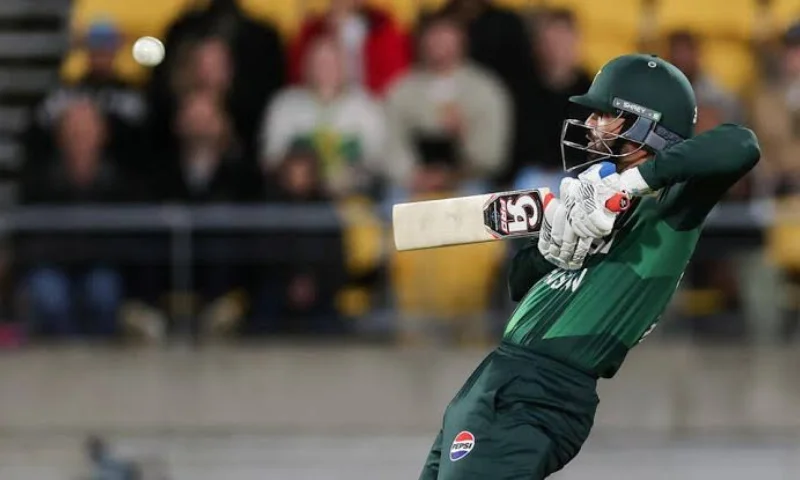
Pakistan reached the Asian Games 2026 men’s cricket final after defeating Bangladesh by six wickets at Korogi Sports Park on Thursday. Sufiyan Muqeem claimed three wickets before Abdul Samad and Hasan Nawaz rescued Pakistan’s chase with an unbeaten 59-run partnership. Pakistan reached 112/4 in 11.3 overs, with nine balls remaining. A wet outfield had reduced the semi-final to 13 overs per side. The victory secured Pakistan a place in Saturday’s gold-medal match against the winner of the India-Sri Lanka semi-final. Pakistan march into the #AsianGames final! 👏 A stunning 59-run partnership between Hasan Nawaz and Abdul Samad seals the chase with 9 balls to spare 🏏#PAKvBAN | #BackTheBoysInGreen pic.twitter.com/J7GbWlRjDI — Pakistan Cricket (@TheRealPCB) October 1, 2026 Samad and Nawaz rescue Pakistan Pakistan’s pursuit began poorly when captain Sahibzada Farhan fell to Mahedi Hasan for one, leaving his side 6/1. Maaz Sadaqat struck two fours and a six in his seven-ball 15 before Nasum Ahmed dismissed him. Saim Ayub counterattacked with 21 from 12 deliveries, including two sixes and a four. However, Mustafizur Rahman removed him in the fourth over. Usman Khan added 15 with Hasan Nawaz before Rishad Hossain dismissed him for 14. Pakistan slipped to 53/4 on the first ball of the seventh over. Read More: Pakistan Get Asian Games Semi-Final Ticket After Hong Kong Washout Samad then joined Nawaz, and the pair completed their match-winning stand from 32 deliveries. The decisive assault came in the 10th over, with Pakistan needing 36 from 24 balls. After Nawaz took a single, Samad hit Mustafizur for six followed by four consecutive boundaries. The 23-run over left Pakistan needing 13 from 18 deliveries. Samad finished unbeaten on 30 from 15 balls, striking five fours and a six. Nawaz contributed 27 not out from 22 deliveries. Mahedi, Nasum, Mustafizur and Rishad took one wicket each. Muqeem checks Bangladesh’s recovery Earlier, Farhan won the toss and chose to field. Bangladesh managed 111/7 after recovering from early trouble. Arafat Minhas broke a 17-run opening stand by dismissing Tanzid Hasan for seven. Ayub bowled captain Litton Das for two, while Minhas removed Parvez Hossain Emon for one. Bangladesh slipped to 21/3 before Saif Hassan and Towhid Hridoy added 24. Read More: Pakistan Beat India 3–0 in Asian Games Volleyball Muqeem dismissed Saif for 19 from 17 balls, which included two sixes and a four. Hridoy and Mosaddek Hossain then shared 53 before Muqeem removed both in the penultimate over. Hridoy led Bangladesh with 42 from 25 deliveries, hitting four sixes and two fours. Mosaddek scored 11 from 16 balls. Mahedi finished unbeaten on eight, while Rishad made two before a final-ball run-out. Muqeem returned 3/26 from three overs. Minhas took 2/23, while Ayub conceded just three runs in two overs for one wicket. Playing XIs Pakistan: Sahibzada Farhan (captain), Maaz Sadaqat, Usman Khan (wicketkeeper), Saim Ayub, Hasan Nawaz, Abdul Samad, Arafat Minhas, Ahmed Daniyal, Mohammad Wasim Jnr, Abrar Ahmed, Sufiyan Muqeem. Bangladesh: Tanzid Hasan, Saif Hassan, Litton Das (captain and wicketkeeper), Towhid Hridoy, Parvez Hossain Emon, Mosaddek Hossain, Mahedi Hasan, Rishad Hossain, Nasum Ahmed, Shoriful Islam, Mustafizur Rahman.
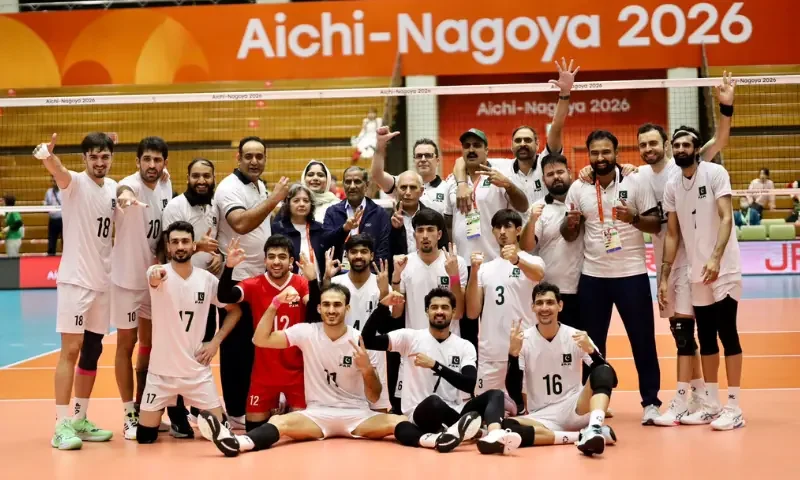
Pakistan Beat India 3–0 in Asian Games Volleyball
Pakistan defeated India in straight sets on Thursday to reach the Asian Games 2026 men’s volleyball semi-finals in Japan. Pakistan won 25–19, 25–23, 25–18 at the Okazaki Chuo Sogo Park Gymnasium, keeping their medal hopes alive. The victory marked Pakistan’s second successive win over India at the Asian Games. Strong attacking, effective blocking and determined defence helped Pakistan control the quarter-final. India mounted their strongest challenge in the second set, but Pakistan recovered before dominating the third. Pakistan withstand second-set challenge Pakistan took the opening set 25–19, establishing an early advantage through cleaner finishing at the net. India struggled to contain their attacking pressure. The second set brought a much closer contest. Both teams exchanged points before India moved into a 19–16 lead, threatening to level the match. However, Pakistan responded with three consecutive points to draw level. They then moved 21–19 ahead, turning a three-point deficit into a two-point advantage. Read More: Zain Waseem Strikes Gold After Defeating Indian Players Twice India continued to resist, but Pakistan reached set point at 24–22. India saved the first before Pakistan secured the set 25–23. Pakistan’s improved reception and sharper digging helped sustain rallies during this period. Their defensive recovery repeatedly forced India to play another ball, increasing the pressure on their attack. The comeback left Pakistan one set from the semi-finals. India, meanwhile, needed to win three consecutive sets to keep their medal challenge alive. Third-set surge seals victory Pakistan carried that momentum into the third set, winning the first three points before India opened their account. India reduced the deficit to 3–2 and later stayed within two points at 6–4. However, Pakistan extended their advantage to 8–4 before moving 14–9 ahead. The gap widened further at 17–10 as Pakistan combined pressure at the net with disciplined defence. India struggled to build a sustained response. Pakistan reached match point at 24–16, giving themselves a substantial cushion. India saved two match points, but Pakistan converted the third to finish the set 25–18 in 25 minutes. Players from both teams shook hands at the net after the match. Attacking strength underpins semi-final place Pakistan collected 75 points overall against India’s 60. They scored 50 points through spikes, compared with India’s 33, and led the blocking count six to four. Murad Khan was credited with 22 points, including 21 from spikes and one from service. Usman Faryad added nine, Mohammad Hamad eight and Musawir Khan seven. Read More: Pakistan Turns Down India Invite for Major Asian Sports Event Pakistan had opened their campaign with a 3–1 victory over Kazakhstan. The Pakistan Volleyball Federation recorded those set scores as 25–16, 25–22, 17–25, 25–20. They subsequently defeated Uzbekistan before losing to hosts Japan, finishing second in Pool A. Against India, Pakistan regained winning form when it mattered, securing a place among the tournament’s final four.
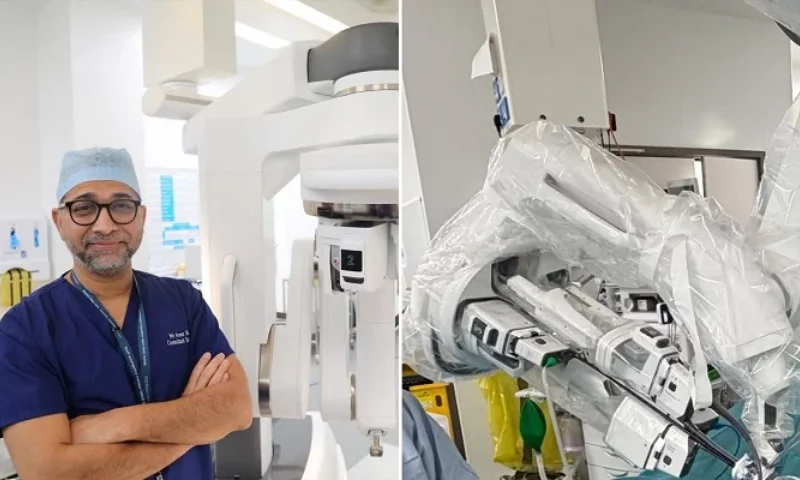
Dr Amer Raza’s Team Tops 400 Single-Port Robotic Surgeries
British-Pakistani surgeon Dr Amer Raza’s programme has completed more than 400 single-port robotic gynaecological procedures at Cromwell Hospital. It was reported as the milestone of a new British record. The Nishtar Medical College, Multan, graduate leads the hospital’s endometriosis and robotic surgery services. He has worked in Britain for more than 25 years. His team has expanded from benign gynaecological procedures to complex endometriosis operations. Single-port surgery uses one abdominal entry point for the camera and instruments. Conventional multi-port surgery generally requires several incisions. Cromwell confirms it pioneered UK gynaecological surgery using the da Vinci SP system. Surgeons control its instruments from a console. Training surgeons from around the world The programme also attracts visiting surgeons from Europe, the United States and elsewhere. “More than 100 surgeons from the UK and abroad have visited our centre to learn about single-port robotic gynaecological surgery. Surgeons and consultants travel to London to observe us carrying out complex single-port robotic operations, exchange experience and learn how the technology can be applied to some of the most challenging cases in gynaecological surgery,” Dr Raza said. Read More: Pakistani Doctors Prescribe Over Twice WHO-Recommended Medicines He also holds Master Surgeon accreditations in Robotic Surgery and Advanced Endometriosis Care. He is Europe’s only consultant holding both. The US-based Surgical Review Corporation awarded these after reviewing his practice, outcomes, complications, governance and patient care. Three years earlier, his team set another reported record at Chelsea and Westminster Hospital. That two-day da Vinci surgery programme included 12 major operations in one day. Treating complex endometriosis The World Health Organization estimates endometriosis affects 190 million reproductive-age women worldwide, approximately 10%. It can cause severe menstrual and pelvic pain, alongside infertility. Dr Raza highlighted disease involving pelvic organs, the bowel, bladder, urinary tract, nerves and diaphragm. “Our work covers some of the most difficult forms of endometriosis, including complex disease affecting the bowel, urinary tract and diaphragm, as well as robotic hysterectomy, myomectomy and other advanced gynaecological procedures. I believe that complex endometriosis cannot be treated by one surgeon alone. My philosophy is that surgery should form only one part of a woman’s endometriosis journey, with diagnosis, recovery, pain management, fertility, psychological wellbeing and long-term support all forming part of comprehensive care.” Bringing expertise to Pakistan Dr Raza also wants to share advances in robotics, artificial intelligence and surgical education internationally. “I regularly travel to Pakistan to help patients and new doctors. Pakistan gave me education, identity and resources to be able to make an impact in the UK health care system. I will be working with partners in Pakistan to transfer the same technology and procedures to Pakistan, where there is a serious need for upgraded medical care. “I have made it a mission to train the next generation of surgeons, raising awareness of endometriosis and other neglected women’s health conditions, and strengthening collaboration between clinicians in Pakistan, the UK and internationally. Innovation has real value only when it improves patient care, and knowledge has greater value when we share it.”
Pakistan Cuts Interest Payments by 22%, but Its Debt Keeps Growing
Pakistan’s public debt climbed 7.7% to Rs86.72 trillion by June 2026, although lower interest costs helped slow borrowing growth. Business Recorder, citing the Finance Ministry’s Annual Debt Review FY2026, reported that debt growth eased from 13% a year earlier. The debt-to-GDP ratio fell to 68.3% from 70.6%. Domestic debt increased 9% to Rs59.441 trillion. External public debt grew 6.8% to $98.075 billion, against 6.1% growth previously. Total public debt reached $312 billion. Interest payments fall, fiscal deficit narrows Interest expenditure dropped 22% to Rs6.948 trillion from Rs8.887 trillion. Consequently, the federal fiscal deficit narrowed to Rs4.763 trillion from Rs7.089 trillion. The federal primary surplus, which excludes interest payments, increased to Rs2.185 trillion from Rs1.798 trillion. Net federal revenues rose 6% to Rs10.52 trillion, while non-interest spending grew 2.3%, against 15% previously. Under the Fiscal Responsibility and Debt Limitation Act definition, government debt totalled Rs77.168 trillion. This represented 60.8% of GDP, down from 64.2%. Read More: Pakistan Wins Panda Bond Award, Plans More Debt Issues in China Domestic borrowing financed 75% of the federal deficit, contributing Rs3.586 trillion. External financing supplied the remaining 25%, or Rs1.177 trillion. Treasury bills increased 25% to Rs10.928 trillion, while Sukuk and Bai-Muajjal financing rose 35% to Rs8.559 trillion. Floating-rate Pakistan Investment Bonds’ share declined to 37.2% from 43%; fixed-rate bonds’ share increased to 21.7% from 17.2%. Domestic debt maturity averaged 3.82 years, while average time to refixing reached 1.3 years. Commercial banks held 70% of domestic debt, up from 64%. The State Bank’s share fell to 5% following liability management operations. External borrowing shifts towards longer maturities Medium- and long-term borrowing accounted for 84% of external debt, up from 76%. Short-term debt’s share fell to 16% from 24%. Pakistan returned to international capital markets after four years. It issued a $750 million Eurobond in April and a CNY1.75 billion Panda bond in May. External budgetary disbursements totalled $15.6 billion: multilaterals supplied $5.4 billion, commercial sources $4.9 billion, bilateral partners $4.3 billion and bonds $1 billion. Multilateral creditors held $44.621 billion, or 45.5% of external debt. Bilateral creditors, including deposits, held $27.310 billion, or 28%. Commercial banks and Eurobonds accounted for $12.848 billion, or 13%. IMF outstanding credit reached $11.050 billion, representing 11%; mainly Naya Pakistan Certificates comprised the remaining 2%. Separately, Reuters reported that May’s IMF reviews unlocked $1.32 billion under Pakistan’s economic and climate programmes. Read More: Every Pakistani Now Owes Rs333,000 as National Debt Surges Federal authorities accounted for 84% of external debt; provincial and sub-national governments accounted for 16%. Punjab owed $6.40 billion, Sindh $5.62 billion and Khyber Pakhtunkhwa $2.97 billion. Balochistan owed $390 million, Gilgit-Baltistan $69 million and Azad Jammu and Kashmir $180 million. Meanwhile, the government retired Rs1.926 trillion in SBP debt and bought back Rs996 billion of market debt. It used Rs1.133 trillion in SBP profits for retirement. Guarantees reached Rs4.283 trillion, comprising Rs2.238 trillion domestically and Rs2.045 trillion externally. Fresh and renewed guarantees totalled Rs812.8 billion; power-sector exposure represented around 56% of outstanding guarantees.
