


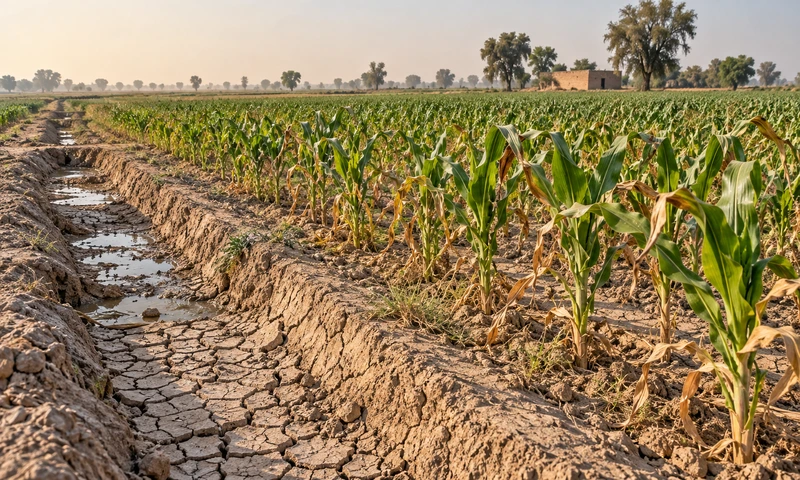
Pakistan must strengthen agricultural resilience as water shortages, deteriorating soils and changing weather threaten crop production, rural incomes and food security.
Zeeshan Baig, Country General Manager of Syngenta Pakistan, raised these concerns at the Pakistan Agriculture Coalition’s Agri-Connections 2026 conference in Lahore.
He said climate disruptions were intensifying existing pressures, including declining water availability and changing pest and disease patterns. Farmers increasingly struggled to produce food consistently and profitably.
“We don’t just need more food, we need more sustainable and resilient food,” he said.
Weak crop growth highlights economic stakes
Agriculture contributed 23.44% of Pakistan’s GDP and grew 2.89% during FY2025-26, according to the Pakistan Economic Survey.
However, important crops recorded growth of just 0.65%. Higher sugarcane, wheat and rice production offset declines in cotton and maize.
Baig said Pakistan could no longer separate agricultural productivity from environmental pressures and resource constraints. Its dependence on irrigation leaves farming particularly exposed to water shortages.
He called for producing more food while using water, land and other inputs more efficiently.
The implications extend across the rural economy. The World Bank identified Punjab as accounting for 73% of national food production in its 2022 agricultural resilience project announcement.
That year, the bank approved $200 million for the Punjab Resilient and Inclusive Agriculture Transformation Project. It targets water efficiency, climate resilience and higher small-farmer incomes.
Rising demand increases pressure on farmers
Baig warned that population growth would increase food demand while agricultural resources remained constrained.
“By the next 30 years, our population is expected to increase by almost 50 percent. Today, we are already at a weak deficit or marginally meeting the food demand of the local economy,” said Zeeshan.
He said Pakistan needed to protect productivity from sudden shocks and longer-term stresses. Climate resilience should therefore guide everyday farming decisions.
Those decisions include irrigation, soil management, crop protection and responses to changing weather.
Baig highlighted laser land levelling as a practical intervention. Figures presented during his address suggested it could cut water use by 20% to 30% and increase yields by approximately 10%.
He said resilience did not depend solely on complex technologies. Farmers could also benefit from better agronomic practices, digital advice, crop diagnostics, weather information, crop protection and biological solutions.
“Until we empower farmers to make the right decisions, we will never be able to solve food security in Pakistan,” Baig said.
Investment needs coordinated action
Baig urged government, academia, researchers and businesses to improve farmers’ access to knowledge, technology and practical support.
A June 2026 World Bank assessment reinforces the regional investment case. It covers the Middle East, North Africa, Afghanistan and Pakistan.
The bank estimates that an additional $12 billion annually in water-efficient irrigation and agricultural innovation, alongside reforms, could raise cereal yields 72% by 2050.
It also projects more than double the region’s fruit and vegetable production under that scenario.
For Pakistan, Baig linked agricultural resilience directly to protecting harvests, farmer livelihoods, national food supplies and the wider economy.

























