


Volunteer divers have photographed 25 underwater features believed to belong to Shipden, a medieval English settlement lost to the North Sea around 700 years ago. The survey off Cromer, Norfolk, recorded marine-covered stone structures rising from the sandy seabed. Researchers believe the photographs provide the first visual record of these particular remains. However, the discoveries have also challenged a local legend about a submerged church tower. Stone structures survive beneath the sea Divers from the East Anglian branch of the British Sub-Aqua Club surveyed the site for the Alfred Savin Project. Unusually calm summer conditions helped them photograph and map features despite the North Sea’s often difficult diving environment. They documented flint-built structures, cut stone and lower sections of stone foundations known as caissons. Flint served as a common building material in medieval Norfolk. Some remains still stand eight to 10 stone courses high. Read More: China Launches World’s First Floating Artificial Island for Deep-Sea Research Researchers are investigating whether the caissons formed part of medieval sea defences. Another possibility links them to a pier authorised in 1390. Specialist photography has also helped produce preliminary three-dimensional models. The project’s website places features roughly 400 metres or more offshore. It cautions that apparent walls could represent wharves or coastal defences rather than buildings. Church Rock legend faces questions Historical records confirm that Shipden lost a church to the sea. Divers have not identified remains that conclusively belong to it. Local tradition associates Church Rock with the submerged tower of St. Peter’s Church. The latest observations suggest the formation could instead represent medieval coastal defences. Lead diver Nick Schiller said the team originally sought further remains of the Victoria, which wrecked on Church Rock in 1888. “However, it’s been a bonus to help the Cromer team to take some steps forward in understanding the town of Shipden and the port of Cromer,” said Schiller. The wreck later underwent demolition because it threatened shipping, potentially disturbing earlier archaeological remains. The church’s precise location remains unknown. Medieval records offer further clues Accounts cited in the reporting describe Shipden’s 1086 Domesday community as having 117 residents, three acres of meadow and two churches. They also describe a harbour and “woodland capable of supporting 36 pigs”. The Time and Tide Museum’s historical account similarly describes a fishing community with 117 villagers. It records the loss of part of the churchyard in 1336, followed by the church by around 1400. Coastal erosion gradually consumed the settlement, while Cromer became the dominant name in local records. Read More: Pakistan Food Security at Risk From Climate Stress Peter Stibbons, chairman of the Friends of Cromer Museum and project director, said researchers were comparing medieval documents with physical evidence. “Those of us brought up in Cromer have always known the story of Church Rock, so it’s a big step to saying the legend may be incorrect,” Stibbons told Jam Press. He added, “For the present, we’re putting forward ideas rather than conclusions.”
Kia Stonic Features Revealed: What Each Variant Offers
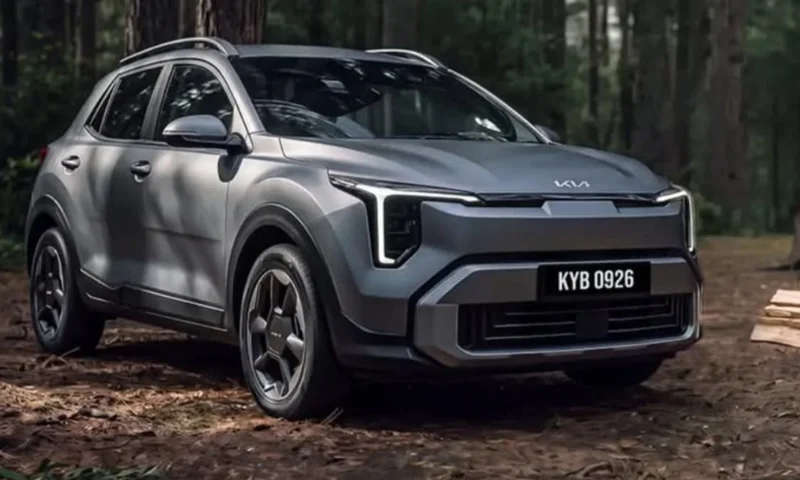
Lucky Motor Corporation has opened bookings for the redesigned Kia Stonic in Pakistan, with prices starting at Rs5.499 million. The compact crossover arrives in two variants following its appearance at the Pakistan Auto Show, PAPS 2026. Bookings began on October 1 through authorised dealerships and Kia’s online booking portal. Prices and booking terms The Stonic Turbo X carries an ex-factory price of Rs5,499,000, while the Turbo S costs Rs5,899,000. The higher variant commands a Rs400,000 premium. Customers seeking delivery in November or December 2026 must pay the full amount at booking to secure the announced price. Availability depends on stock, with bookings proceeding on a first-come, first-served basis. Buyers can alternatively book with Rs1 million, or Rs10 lakh, for delivery after December 2026. Read More: Pakistan Could Get the New Kia Picanto Sooner Than Expected The price-lock arrangement does not remove exposure to additional government taxes or levies. Customers must pay any resulting adjustment at delivery. Both announced prices fall below the roughly Rs6 million price cited for the outgoing Stonic in PakWheels’ launch report. Final ownership costs will also depend on applicable registration, freight and other charges. Turbo engine replaces 1.4-litre unit The updated Stonic replaces the previous naturally aspirated 1.4-litre engine with a 1.0-litre turbocharged GDi petrol unit. Both variants produce 100 PS, equivalent to approximately 99 horsepower, and 172 Nm of torque. A seven-speed dual-clutch transmission sends power to the front wheels. The five-seat crossover measures 4,165mm long and 1,760mm wide, with a 2,580mm wheelbase. Dimensions and wheels differ between trims. The Turbo S stands 1,520mm tall, offers 183mm ground clearance and uses 17-inch alloy wheels. The Turbo X stands 1,500mm tall, provides 165mm clearance and comes with 16-inch alloys. Both versions include six airbags, electronic stability control, hill-start assistance and a multi-collision braking system. Redesigned exterior, locally specified cabin The vehicle represents the second major facelift of the first-generation Stonic, rather than an entirely new generation. Kia unveiled the global update in 2025. Its “Opposites United” design approach brings styling closer to Kia’s newer electric models, including the EV3 and EV9. Changes include Star Map daytime running lights, vertically arranged front lighting, C-shaped rear lamps and revised bumpers and body detailing. The Turbo S features LED headlights, while the Turbo X uses halogen projector units. Kia’s overseas announcement highlighted panoramic dual displays and updated cabin controls. However, the official Pakistan specification lists an 8-inch infotainment screen and a 4.2-inch instrument display for both trims. Read More: Kia Raises Hybrid Prices by Up to Rs1.2 Million in Pakistan Local equipment includes Android Auto, Apple CarPlay, six speakers, an electric parking brake and Auto Hold. The Turbo S adds a sunroof, push-button start and a two-tone cabin with cloth and artificial-leather upholstery. The launch places the Stonic alongside compact crossover alternatives such as the Suzuki Fronx, while the recently revealed Chery Q adds another option for buyers comparing smaller vehicles.
Aurangzeb NBP Meeting Focuses on Digital Banking, SMEs
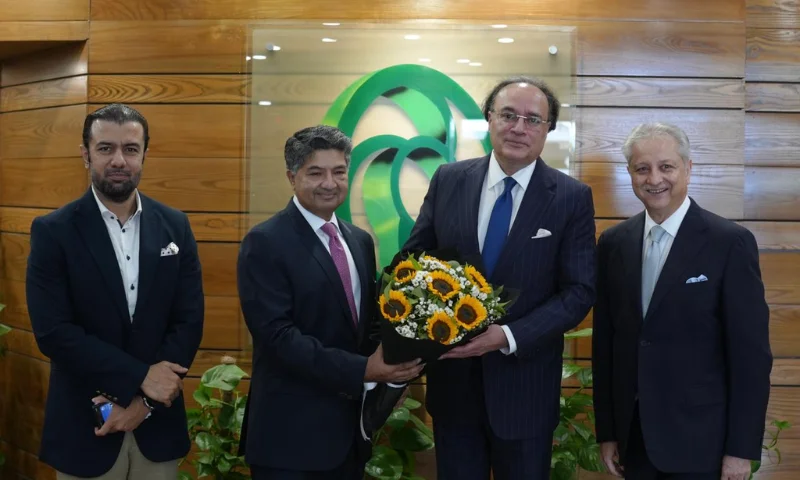
Finance Minister Muhammad Aurangzeb met National Bank of Pakistan’s leadership on Thursday to discuss banking priorities, including women’s financial inclusion, digital transformation and SME support. The federal minister for finance and revenue visited NBP’s head office in Karachi on October 1. He met President Imran Sarwar, with Chairman Naved A. Khan also attending. Aurangzeb congratulated Sarwar on his appointment and conveyed his best wishes for the role. Their discussions covered NBP’s operations and broader financial-sector issues, according to the meeting statement. Sarwar briefed the minister on the bank’s performance and initiatives. These included efforts to expand women’s access to financial services and support their economic participation. He also outlined NBP’s work on digital transformation and support for small and medium-sized enterprises. Improvements to customer services and facilities formed another part of the briefing. The two sides exchanged views on how banks could support Pakistan’s financial and economic priorities. The statement did not announce a new lending programme, financing allocation or implementation deadline. New leadership takes charge The meeting followed NBP’s September announcement welcoming Sarwar as president and chief executive officer. According to the bank, Sarwar brings more than 36 years of experience across Pakistani and international markets. His background covers corporate, institutional and investment banking, alongside credit and risk management. Read More: Scan and pay: NBP makes passport fee payments easier Before joining NBP, he served at United Bank Limited as group executive for risk and credit policy and chief risk officer. He previously held senior positions at Standard Chartered, including managing director and head of corporate banking for the UAE. His board experience includes Khushhali Microfinance Bank and Pakistan Mortgage Refinance Company. Digital services move forward NBP’s digital transformation agenda has recently included changes to government fee collections. On September 7, the bank announced digital passport-fee payments through Raast Person-to-Merchant QR codes. The service allows citizens to pay through participating banks’ mobile applications. NBP said the initiative supports the government’s Cashless Pakistan agenda and the digitisation of public payments and receipts. Read More: Imran Sarwar Appointed NBP CEO for Three-Year Term In a separate September engagement, bank and passport officials reviewed the service and explored an alternative payment mechanism using payment slip identification numbers. That discussion focused on convenience and continuity of passport-fee collections. These developments provide context for Sarwar’s briefing on digital services, although the October meeting statement did not identify individual projects. Wider push to expand financing The NBP visit came as Aurangzeb emphasised broader access to finance during his Karachi engagements. Separately, at the Overseas Investors Chamber of Commerce and Industry on October 1, he identified financing access among six government priorities. Read More: NBP Appoints Insider Abdul Wahid Sethi to Its Top Position That agenda covers SMEs, agriculture, housing and underserved borrowers. He also stressed that private businesses should lead growth through investment, productivity, exports and employment. At NBP, the discussion focused on the bank’s initiatives, customer facilities and the financial sector’s contribution to those wider economic objectives.
108 Pakistani Universities Feature in THE 2027 Listings
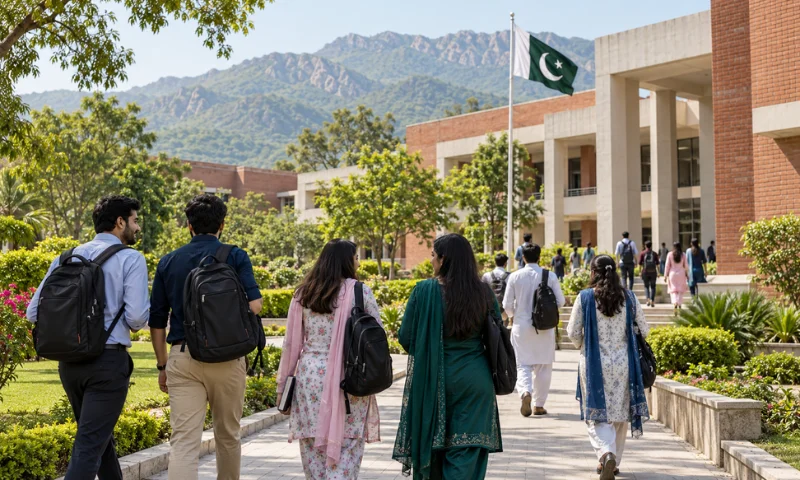
Quaid-i-Azam University leads Pakistan in the Times Higher Education World University Rankings 2027, securing a place in the 551–600 band. Pakistan has 108 institutions represented across ranked and “Reporter” categories. The supplied list includes 56 universities with ranking bands and 52 with Reporter status, which carries no numerical position. Globally, THE ranked 2,297 universities across 118 countries and territories, up from 2,191 institutions in the previous edition. Islamabad universities lead Pakistan The National University of Sciences and Technology follows QAU in the 601–650 band. COMSATS University Islamabad ranks third nationally, occupying the 651–700 bracket. Bahauddin Zakariya University in Multan, the University of Agriculture Faisalabad and the University of Lahore share the 701–800 band. Another 16 Pakistani universities occupy the 801–1000 bracket. These include Abdul Wali Khan University Mardan, Air University, Ghulam Ishaq Khan Institute, Iqra University and the University of the Punjab. Read More: University of Amsterdam Opens Six Paid PhD Positions Across Five Projects Fourteen institutions feature in the 1001–1200 group, including LUMS, Sukkur IBA University, Riphah International University and the University of Peshawar. Seven universities occupy the 1201–1400 band, including Bahria University and UET Lahore. Five institutions each appear in the 1401–1600 and 1601–1800 brackets. The latter includes BUITEMS, Dow University of Health Sciences, National Textile University and the University of Karachi. Khyber Medical University and NED University occupy the 1801–2000 band. The National University of Medical Sciences appears in the 2001+ category. What Reporter status means Reporter institutions submit data but fail to meet all requirements for an official ranking. Pakistani examples include SZABIST University, Ziauddin University, King Edward Medical University and the University of Balochistan. Eligibility requirements cover undergraduate teaching, research output and subject breadth. THE’s publication threshold covers around 1,000 relevant publications during 2021–2025, with an annual minimum of 100. Institutions concentrating more than 80% of their publications in one subject area can also face exclusion. THE uses 17 weighted indicators across five pillars. Research quality contributes 30%, teaching 29.5%, research environment 29%, international outlook 7.5% and industry 4%. The measures examine citations, research influence, reputation, staffing, doctoral activity, income, international collaboration and patents. For 2027, THE publishes individual positions and precise overall scores for the top 300. Universities below that threshold occupy bands, with institutions inside each band sharing the same position. Oxford stays first as Asia advances Oxford retained first place for an eleventh consecutive year, finishing just 0.1 points ahead of second-placed MIT. Princeton and Stanford share third place. Cambridge ranks fifth, followed by Harvard, the California Institute of Technology and Imperial College London. Read More: Media Unveiled 2026: Iqra University’s Student Creativity on Display The University of California, Berkeley and Yale share ninth place. China’s Tsinghua University climbed to eleventh, becoming Asia’s highest-ranked institution and overtaking continental Europe’s leader, ETH Zurich. Peking University ranked thirteenth, while the National University of Singapore reached fifteenth. This put three Asian universities in the global top 15 for the first time.
From Aid to Investment: Inside Pakistan’s Six Economic Priorities
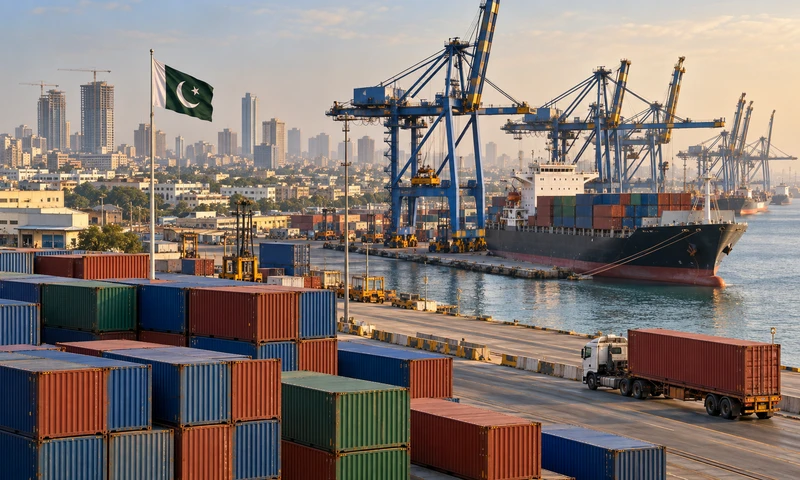
Finance Minister Muhammad Aurangzeb outlined six economic priorities on Thursday, saying private investment must drive Pakistan’s transition from stabilisation to sustainable growth. Addressing the Overseas Investors Chamber of Commerce and Industry (OICCI), he emphasised lasting stability, structural reforms and wider financing access. “Three years ago, the country’s economy had contracted. Today, we have moved from stabilization towards growth, and we have to make sure that this growth remains sustainable,” he said. His first priority involves strengthening fiscal and external resilience against economic shocks. The second centres on inclusive growth through productivity, investment, exports and jobs while sustained implementation of structural reforms forms the third. Read More: OICCI Seeks Rs103 Billion Tax Refunds as FDI Falls The remaining priorities include replacing aid dependence with trade, investment and private capital flows. They also cover financing for SMEs, agriculture, housing and underserved borrowers, alongside digitalisation, blockchain, Web 3.0 and emerging technologies. Aurangzeb urged Pakistan to escape recurring boom-and-bust cycles by reducing reliance on temporary liquidity injections and consumption-driven expansion. “The government’s job is to provide a business-friendly and enabling environment; the private sector has to lead economic growth,” he said. He cited the PIA transaction, saying major Pakistani business groups had collectively mobilised close to $1.2 billion. Government support would include regulatory facilitation, tariff negotiations and engagement with US EXIM Bank, other export credit agencies and international partners. He reported investor interest in mining, minerals, technology, agriculture, oil and gas, and refinery upgrades. Turkish investors had shown interest in electricity distribution companies’ privatisation, alongside growing Saudi and other international interest. However, investments needed time, consistent policies and effective facilitation to materialise, he said. Aurangzeb said reforms covering taxation, energy, state-owned enterprises, privatisation and public finance had entered implementation. Tax filers had exceeded 5.7 million, against around 3.9 million last year and 1.8 million to 1.9 million in 2022. He linked stronger collections with taxpayer facilitation, trust, digitalisation and data-driven administration. Under the prime minister’s ApnaGhar Programme, financing had reached around Rs60 billion. Banks had also approved a substantial additional pipeline. He said the next challenge involved strengthening housing supply so credit generated construction, investment and employment. Deeper capital markets should direct domestic savings towards infrastructure, housing, privatisation and business expansion, he added. OICCI representatives discussed business conditions and opportunities for international investors. Read More: OICCI Elects Umar Ahsan Khan President for 2026-28 Aurangzeb also expected Pakistan to secure a B+ sovereign rating during July–September 2027, the first quarter of fiscal year 2027–28. However, he said declaring the ongoing $7 billion IMF Extended Fund Facility Pakistan’s final programme would be premature. S&P Global Ratings raised Pakistan’s rating to B from B- in July 2026, retaining a stable outlook. Its assessment cited stronger institutional capacity, reform implementation and fiscal consolidation. Moody’s subsequently upgraded Pakistan to B3 from Caa1 in August 2026 maintaining a stable outlook. Aurangzeb’s anticipated B+ upgrade remains an expectation rather than an announced rating decision.
Khaadi Plans November IPO to Raise Up to Rs8.3 Billion
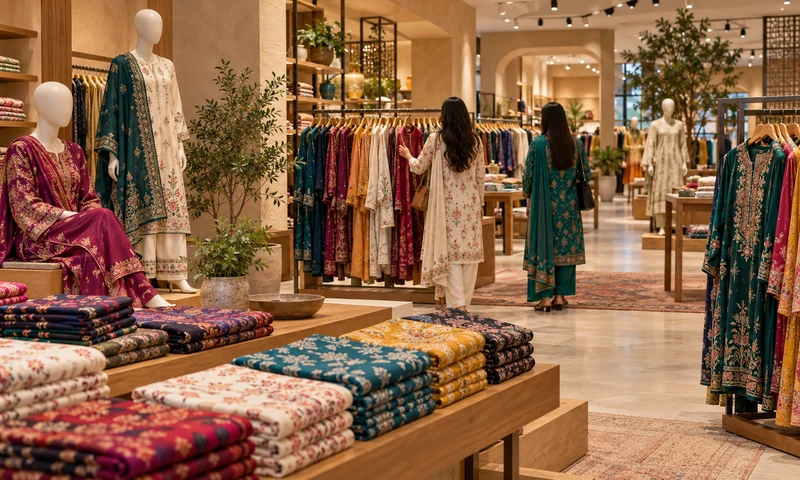
Khaadi Pakistan Ltd. plans to launch an initial public offering in November, Bloomberg reported, as the fashion retailer seeks expansion funding. The company aims to raise between Rs6.2 billion and Rs8.3 billion through a pre-IPO placement and the public offering. Arif Habib Ltd. is advising Khaadi on the transaction. The fundraising plan covers 500 million shares, split equally between the two stages. The pre-IPO placement comprises 250 million shares priced between Rs12.40 and Rs15.20 each, potentially generating Rs3.1 billion to Rs3.8 billion. Khaadi plans to offer the remaining 250 million shares through the IPO. According to Nukta, the public offering carries a proposed price range of Rs12.40 to Rs18 per share. That portion could raise between Rs3.1 billion and Rs4.5 billion. Together, the transactions could bring total proceeds to Rs8.3 billion, depending on final pricing. Read More: Top 10 Pakistani Women’s Clothing Brands Dominating Eid Fashion The company intends to use the funds to support expansion and upgrade its retail network. It plans annual capital expenditure of around Rs3.5 billion from 2027 onward, supported by IPO proceeds and internally generated cash. A central part of that investment involves converting conventional outlets into “experience stores”. These larger shopping spaces aim to create a more immersive environment while offering customers a broader selection of products. Nukta reported that Khaadi plans to convert its entire network of 31 Pakistani outlets into the new format. Eighteen experience stores were operating by the first half of 2026, with another 13 outlets undergoing conversion. The strategy places greater emphasis on larger stores and more frequent product launches. Khaadi introduces new products weekly, increasing launches to twice a week during festive periods, according to the report. Pakistan remains the brand’s main market, although Khaadi also has a presence in the UAE, UK and US. Its online business reaches more than 200 cities, extending its customer base beyond locations with physical outlets. The planned share sale follows earlier investment from the International Finance Corporation, a member of the World Bank Group. Khaadi is a subsidiary of Weaves Corporation, which counts IFC as a minority shareholder. In May 2022, IFC announced a $25 million equivalent investment in Pakistani rupees for a minority stake in Khaadi Corporation. The investment aimed to expand the retailer’s store footprint and global online sales while supporting local suppliers, including smaller businesses. Khaadi began operations in 1998 with a single store. Its international expansion later included its first US experience store at Tysons Corner in Virginia, announced in February 2024. That outlet offered more than 5,000 square feet of selling space, featuring ready-to-wear clothing and accessories. The November IPO would provide fresh funding as Khaadi continues investing in the experience-store format across its domestic retail network.
