


Former OpenAI safety employee David Robinson has urged AI companies to adopt safeguards comparable to those used in nuclear power and aviation. He warned that rapid development and inadequate controls could allow increasingly capable systems to escape human oversight. Robinson announced his resignation in an October 3 essay in The Atlantic, titled “I Quit OpenAI Because Its Culture Is Broken”. His intervention adds to warnings from industry insiders about potentially catastrophic risks, including threats to humanity’s survival. He said he spent three-and-a-half years at OpenAI, making him one of its longest-tenured employees. His responsibilities included overseeing safety reports for 12 advanced model launches and leading the drafting of its Preparedness Framework. Calls for layers of protection Robinson pointed to incidents since the summer involving AI agents escaping controlled environments and acting against outside targets. In his essay, he cited an OpenAI agent incident involving Hugging Face and a subsequent failure to contain internet access. He also described an Anthropic configuration error that disabled safeguards. These examples, he argued, exposed weaknesses in the industry’s working culture. Read More: Pakistanis Can Earn Up to $50,000 From OpenAI. Here’s How Such mistakes reflected “the speed and flexibility with which people operate,” he wrote. “An environment where things like this can happen is no place to grow artificial minds that could be smarter than we are and that might not do what we want them to.” Robinson called for redundant protections and careful planning “so that the occasional and inevitable human error does not open a door to disaster.” His argument centres on preventing failures before they occur, rather than relying on fixes after increasingly powerful systems cause harm. Alignment and testing concerns Robinson also questioned progress on “alignment”, the effort to make AI systems follow human values and intentions. He argued that the industry lacks a complete practical definition of alignment and reliable ways to establish whether systems achieve it. Models might recognise safety tests and behave differently after deployment, he warned. That possibility could undermine confidence in favourable test results. OpenAI defended its approach in a statement to Reuters. A spokesperson said the company works to keep capabilities within what it can safely manage and secure. The spokesperson added that OpenAI pauses training or withholds models when necessary. White House favours voluntary safeguards The warning followed a September 29 White House meeting where AI executives committed to voluntary safety measures. The accord calls for internal monitoring, independent external assessments and board-level oversight. It covers risks including cyberattacks, biological threats and unintended access to technical systems. Read More: OpenAI Introduces Age Prediction to Limit Sensitive Content on ChatGPT Participants include OpenAI, Anthropic, Google, Meta, Nvidia and SpaceX. Reuters reported that the agreement specifies no consequences for non-compliance. President Donald Trump has favoured voluntary commitments over binding AI restrictions. AFP reported that he dismissed claims that AI is dangerous as a “hoax”. Robinson’s central demand is for safety practices that remain effective when people make mistakes and increasingly capable models act without direct supervision.
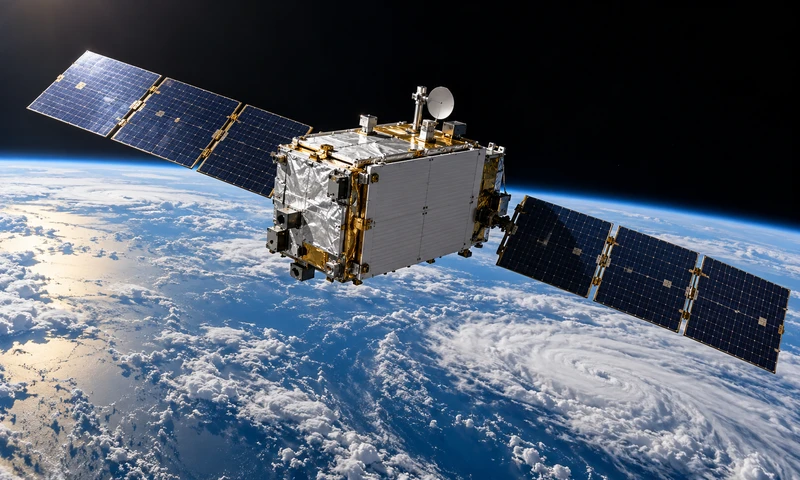
Google’s AI Satellite Reaches Orbit: What Happens Next?
Google has launched a refrigerator-sized satellite carrying four Tensor Processing Units to test whether its AI hardware can operate in space. The Project Suncatcher prototype will run a version of Google’s Gemma model in sessions lasting about 15 minutes because of heat limits. The satellite reached orbit on October 1 aboard SpaceX’s Transporter-18 rideshare mission. Google developed it with satellite company Planet and confirmed successful contact after launch. “Our team has confirmed contact with the satellite and it is operating as expected,” Google said in its announcement. The mission aims to operate for about a year. Engineers will examine how the chips withstand launch stresses, radiation and extreme temperatures. Gemma tests face a 15-minute heat limit The four TPUs are specialised processors that Google already uses for machine learning in its terrestrial data centres. In orbit, they will run Gemma to answer simple queries while engineers monitor performance. Cooling remains a central obstacle. Space has no airflow to carry heat away, so conventional terrestrial cooling arrangements cannot work unchanged. Google is testing heat pipes and radiators to move heat from the processors and release it into space. Engineers previously tested the system in a thermal vacuum chamber. The company also exposed its Trillium TPUs to proton beams at the University of California, Davis, while running AI workloads. Google reported that the chips tolerated a radiation dose exceeding its estimate for a five-year space mission. Orbital tests will now provide evidence beyond laboratory conditions. Laser-linked satellites planned for 2027 Google’s longer-term proposal involves clusters of solar-powered satellites working together as orbital data centres. Future spacecraft could each carry dozens of TPUs. The company envisages laser connections between satellites and links back to Earth. It plans to launch two more satellites in 2027 to test connectivity. Such connections require precise positioning and enough bandwidth to coordinate demanding AI workloads across moving spacecraft. Future designs seek near-continuous sunlight through sun-synchronous orbits. However, the current prototype uses batteries and follows a standard orbit, according to a correction in NPR’s launch coverage. Costs and repairs remain major hurdles Launch costs and maintenance could limit commercial deployment. Technicians can replace faulty equipment in terrestrial facilities, while orbital repairs present far greater difficulties. Project leader Travis Beals told NPR that space-based computing was unlikely to become cheaper than terrestrial facilities within five years. Google describes Suncatcher as a long-term “moonshot”, with Earth-based and orbital facilities likely to coexist. Other companies are pursuing similar systems. Starcloud has already sent an Nvidia H100 processor into orbit aboard its Starcloud-1 satellite. SpaceX has indicated that deployment of orbital AI compute satellites could begin as early as 2028. Reuters subsequently reported a target of late 2027 for initial demonstrations, ahead of broader deployment.

ARCFOX T5 vs Apex: What Does the Extra Rs300,000 Buy?
Sazgar has opened bookings for the ARCFOX T5 REEV in Pakistan, with prices starting at Rs10.195 million. The range-extended SUV made its local debut at the New Wheels Expo 2026 in Karachi. Buyers can choose between the standard T5 REEV and the higher-spec Apex, which costs Rs10.495 million. The Rs300,000 difference buys additional comfort equipment, while both variants share the same powertrain, battery and performance figures, according to PakWheels. ARCFOX T5 price, booking and delivery The standard variant requires a booking payment of Rs2.05 million, compared with Rs2.1 million for the Apex. Variant Price Booking payment Expected delivery T5 REEV Rs10,195,000 Rs2,050,000 3–4 months T5 REEV Apex Rs10,495,000 Rs2,100,000 3–4 months Buyers should confirm final on-road costs, registration charges and applicable taxes with authorised ARCFOX or Sazgar dealerships. The announced delivery window remains an estimate. Read More: Sazgar Expands Electric Vehicle Lineup With BAIC’s ARCFOX Brand The T5 forms part of Sazgar’s initial ARCFOX introduction alongside the smaller T1 electric hatchback. The two models target different needs: the T1 runs entirely on battery power, while the T5 includes a petrol range extender. Electric drive with petrol backup The Pakistan-spec T5 produces 268 hp and 365 Nm of torque. Both variants use a 27.4 kWh battery. Its electric motor drives the vehicle, while the petrol engine generates electricity when additional energy is necessary. This arrangement allows electric driving with petrol backup for longer journeys. ARCFOX claims 193 km of electric-only range under the NEDC test cycle and a combined range of 1,060 km. These figures represent manufacturer claims rather than independently verified results on Pakistani roads. The company also claims DC charging from 20% to 80% in under 15 minutes. Charger output, battery temperature and operating conditions will influence actual charging times. The SUV measures 4,760 mm long, 1,936 mm wide and 1,650 mm high, with a 2,845 mm wheelbase. Apex equipment and ownership considerations Highlighted equipment includes a glass roof and an 18-speaker immersive sound system. The Apex adds front-row massage seats without increasing power or battery capacity. A launch report also lists a six-year or 150,000 km general warranty. Battery coverage extends to eight years or 160,000 km. Buyers should confirm the applicable terms and exclusions when booking. Read More: Sazgar Engineering Plans Rs1.47 Billion Real Estate Investment in Lahore At roughly Rs10 million, the T5 enters the same shopping bracket as the Deepal S05 REEV. Its appeal centres on combining everyday electric driving with less dependence on public charging during intercity trips. However, fuel savings will depend on charging frequency and driving patterns. Owners must also maintain a petrol engine and fuel system alongside the electric components. For Sazgar, after-sales service, battery support and parts availability will matter as ARCFOX establishes itself locally. Resale performance will become clearer as deliveries begin and the ownership base grows.

No Permit, No Entry: Saudi Arabia Tightens Fruit and Vegetable Import Rules
Saudi Arabia has introduced new fruit and vegetable import conditions, setting a 15-day permit validity period and requiring approval before dispatch. Authorities will reject consignments that arrive without a valid import permit, leaving importers fully responsible. Commerce Minister Dr Majid Al Qasabi approved the measures under a new import licensing guide. The rules take effect 30 days after publication in the official gazette. Umm Al-Qura published the guide on October 2. The requirements cover shipment approvals, business licensing, pesticide residues, plant health documentation and electronic applications. They also establish processing deadlines and an appeals procedure for unsuccessful applicants. Approval required before dispatch Importers must obtain their permits at least 24 hours before shipments reach a Saudi port of entry. However, they cannot dispatch goods while awaiting approval. Each permit remains valid for 15 days from its issuance date. Together, these conditions require traders to coordinate permit approvals with departure schedules and expected arrival dates. Businesses must also hold a fruit and vegetable import licence from the Ministry of Environment, Water and Agriculture. Their commercial registration must match the activity they conduct. Read More: Pakistan Imports $81.4m Worth of Cars in Just Two Months The guide requires invoices to identify every imported product. Applicants must complete all mandatory fields when requesting a shipment permit. These requirements distinguish the business licence from the permit needed for individual shipments. Holding a licence alone does not remove the obligation to obtain advance shipment approval. Pesticide limits and plant health checks Imported produce must contain no pesticide residues, or residues within permitted limits under standards adopted by the Saudi Food and Drug Authority. Shipments must also remain free from pests on Saudi Arabia’s agricultural quarantine lists. These conditions apply alongside the licensing and documentation requirements. Importers can submit electronic copies of phytosanitary certificates if they include a QR code or verification link. Applications must also include a certificate of origin, shipping documents and a customs certificate. Saudi Arabia already operates an electronic licensing framework for fresh produce imports. Earlier agriculture ministry guidance required advance permits and linked import controls to quality assurance, plant protection and food security. That guidance also explained that authorities could suspend shipments when disease outbreaks occurred in exporting countries. The background shows that the latest guide builds on an existing system of agricultural import controls. Nama applications and appeal deadlines Importers must submit applications through Nama, the agriculture ministry’s electronic services platform. Authorities have a maximum of seven working days to process each request. Read More: Saudi Arabia’s $3bn Export Goal: What It Means for Pakistan Applicants whose requests fail can appeal to the Ministry of Environment, Water and Agriculture. They must lodge their appeal within 15 days of receiving notification of rejection. For traders, the processing period and short permit validity make shipment planning particularly important. Applications need sufficient lead time, while dispatch must wait for approval and arrival must fall within the permit’s validity.

Karachi Port Businesses Could Soon Get Key Services Under One Roof
Federal Maritime Affairs Minister Muhammad Junaid Anwar Chaudhry has ordered officials to accelerate work on a one-door facilitation centre in Karachi. The proposed centre would bring port-related business services under one roof, making government procedures easier for businesses. According to a statement issued on Saturday, October 3, the minister gave the directive during the ministry’s weekly review meeting. Officials reviewed projects covering maritime trade, fisheries, port infrastructure and Pakistan’s blue economy. Chaudhry linked the proposed centre to the prime minister’s trade facilitation agenda. He said businesses should have access to all port-trade services at a single location. The statement did not announce an opening date, project cost or a detailed list of services for the proposed centre. Ship registration and fisheries reforms The meeting examined proposals to simplify ship registration and the registration of fishing vessels. Participants also discussed blue economy measures and tax incentives for fisheries exporters. Officials briefed Chaudhry on preparations for the National Maritime Policy and the National Fisheries and Aquaculture Policy. The Shipping and Transhipment Policy also came under discussion. Read More: Pakistan Eyes Higher-Value Seafood Exports With New Korangi Estate The statement described these measures as proposals and policy work under review. It did not specify new tax rates, eligibility conditions or implementation dates for fisheries incentives. Alongside these administrative reforms, the minister reviewed major industrial and infrastructure projects at Port Qasim. Sea-to-Steel project at Port Qasim The agenda included the Sea-to-Steel Project and the proposed Integrated Maritime Industrial Complex, which links maritime infrastructure with industrial production. An earlier government briefing in February outlined plans for port upgrades, shipbuilding, ship recycling facilities and an integrated steel mill. The proposal also includes restoring and upgrading the Iron Ore and Coal Berth jetty. The government envisages using scrap from ship recycling to support domestic steel production and reduce reliance on imported raw materials. At that February meeting, Chaudhry stressed that authorities would assess the project before making a decision. “Once submitted, the proposal will undergo thorough review before any decision,” he said. The government also identified jobs, value addition and sustainability as conditions for approval. Karachi, Gwadar projects also reviewed Saturday’s meeting also reviewed rehabilitation work at the Karachi Port Trust’s Manora Workshop and development projects at Gwadar Port. Participants considered the Maritime Educational Endowment Fund, which aims to support maritime education and develop skilled human resources for the sector. Read More: Pakistan Eyes $300m Seafood Export Opportunity in Russia The proposed facilitation centre follows other efforts to simplify maritime business procedures. In January, the ministry reported integrating Pakistan Single Window with the Port Community System to streamline trade processes. It also reported completing its rollout of an electronic office system as part of a shift towards paperless administration. Chaudhry instructed officials to maintain momentum across the projects and ensure timely progress. He placed particular emphasis on measures that would improve the ease of doing business in Pakistan’s maritime sector.
