


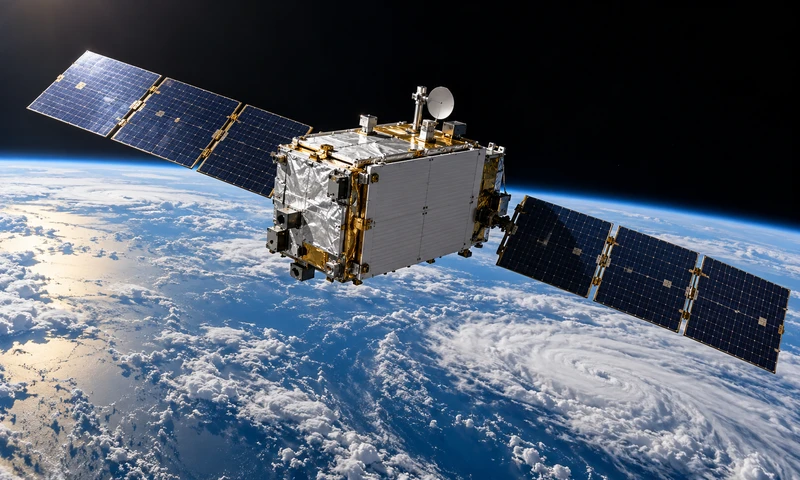
Google has launched a refrigerator-sized satellite carrying four Tensor Processing Units to test whether its AI hardware can operate in space. The Project Suncatcher prototype will run a version of Google’s Gemma model in sessions lasting about 15 minutes because of heat limits.
The satellite reached orbit on October 1 aboard SpaceX’s Transporter-18 rideshare mission. Google developed it with satellite company Planet and confirmed successful contact after launch.
“Our team has confirmed contact with the satellite and it is operating as expected,” Google said in its announcement.
The mission aims to operate for about a year. Engineers will examine how the chips withstand launch stresses, radiation and extreme temperatures.
Gemma tests face a 15-minute heat limit
The four TPUs are specialised processors that Google already uses for machine learning in its terrestrial data centres. In orbit, they will run Gemma to answer simple queries while engineers monitor performance.
Cooling remains a central obstacle. Space has no airflow to carry heat away, so conventional terrestrial cooling arrangements cannot work unchanged.
Google is testing heat pipes and radiators to move heat from the processors and release it into space. Engineers previously tested the system in a thermal vacuum chamber.
The company also exposed its Trillium TPUs to proton beams at the University of California, Davis, while running AI workloads. Google reported that the chips tolerated a radiation dose exceeding its estimate for a five-year space mission. Orbital tests will now provide evidence beyond laboratory conditions.
Laser-linked satellites planned for 2027
Google’s longer-term proposal involves clusters of solar-powered satellites working together as orbital data centres. Future spacecraft could each carry dozens of TPUs.
The company envisages laser connections between satellites and links back to Earth. It plans to launch two more satellites in 2027 to test connectivity.
Such connections require precise positioning and enough bandwidth to coordinate demanding AI workloads across moving spacecraft.
Future designs seek near-continuous sunlight through sun-synchronous orbits. However, the current prototype uses batteries and follows a standard orbit, according to a correction in NPR’s launch coverage.
Costs and repairs remain major hurdles
Launch costs and maintenance could limit commercial deployment. Technicians can replace faulty equipment in terrestrial facilities, while orbital repairs present far greater difficulties.
Project leader Travis Beals told NPR that space-based computing was unlikely to become cheaper than terrestrial facilities within five years. Google describes Suncatcher as a long-term “moonshot”, with Earth-based and orbital facilities likely to coexist.
Other companies are pursuing similar systems. Starcloud has already sent an Nvidia H100 processor into orbit aboard its Starcloud-1 satellite.
SpaceX has indicated that deployment of orbital AI compute satellites could begin as early as 2028. Reuters subsequently reported a target of late 2027 for initial demonstrations, ahead of broader deployment.

























