
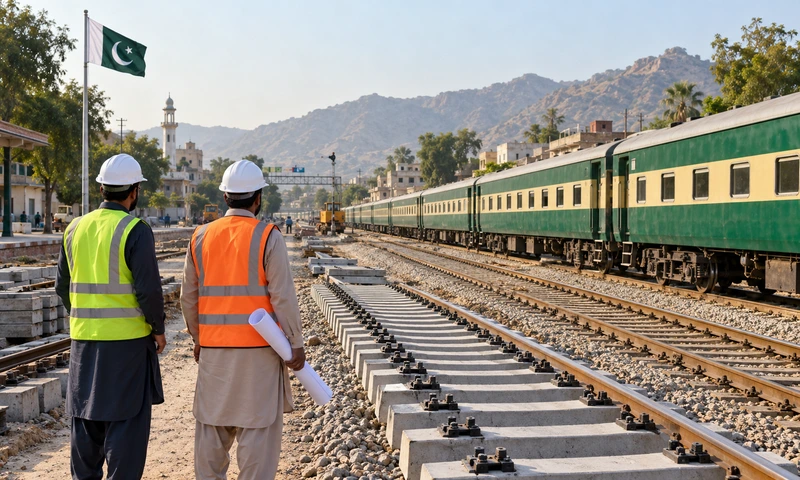
Pakistan and the World Bank have agreed to accelerate their Country Partnership Framework for 2026-2035, prioritising better-prepared projects and efficient financing. The discussions focused on turning development commitments into measurable improvements in people’s lives. Economic Affairs Minister Ahad Khan Cheema met World Bank Managing Director of Operations Anna Bjerde in Bangkok on October 15. Cheema, also Pakistan’s governor to the World Bank Group, held the talks during the World Bank-IMF Annual Meetings. He sought stronger technical and financial support, programmes spanning multiple sectors and digital monitoring systems to track progress and assess results. Better project preparation and responsible borrowing Cheema called for dedicated Project Readiness Facilities to improve preparation before projects move towards approval and execution. He also stressed predictable financing and stronger implementation support to speed up delivery. The minister highlighted the prime minister’s government-wide initiative to address persistent obstacles in project planning and implementation. He urged both sides to improve operational effectiveness, strengthen institutional capacity and maintain a shared focus on timely delivery. Cheema said Pakistan must use concessional resources efficiently to maximise development benefits while safeguarding debt sustainability. The discussions covered human development, climate resilience, water and sanitation, alongside investments that could support wider economic transformation. He particularly emphasised sectors with strong job-creation potential to expand employment and promote inclusive growth. Bjerde reaffirmed the World Bank’s support for Pakistan’s priority sectors. She also committed to working with the government on operational efficiency and faster project implementation. Railway corridor and minerals sector discussed Cheema sought enhanced support for the ML-1 Railway Upgradation Project and outlined the vision for an Economic Railway Corridor. The proposed corridor would run along the approximately 1,800-kilometre railway line, strengthening connectivity and opening economic opportunities. He also discussed the proposed Minerals Compact, which aims to advance Pakistan’s minerals sector. The meeting account outlined these areas for cooperation without announcing a new financing approval or specifying funding amounts. Both sides agreed to deepen cooperation under the framework. Their stated objective was to ensure that development financing delivers timely, sustainable and measurable benefits for Pakistan’s population. A decade-long framework with six priorities The World Bank Group announced the partnership framework in January 2025. It focuses on six outcomes: reducing child stunting, improving foundational learning, strengthening climate resilience, cleaner energy, better public finances and productive private investment. Its human development agenda links nutrition with clean water, sanitation and basic health services. Climate priorities include protection against floods and stronger food security. The framework also supports social safety nets, financial inclusion, and digital and transport connectivity. The World Bank says private investment and coordination with other development partners will help achieve these goals. A performance and learning review in fiscal year 2030 will assess progress. The framework favours larger, sustained investments in selected priorities over scattered, short-term interventions, making consistent implementation central to its success.

Apna Ghar Goes Simpler: How to Apply Online for Housing Finance
Pakistan has reduced the documents required for the Prime Minister’s Apna Ghar housing scheme from 25 to five. Officials have also capped application processing at 15 working days to simplify access to home financing. The changes came under review at a meeting chaired by Prime Minister Shehbaz Sharif in Islamabad on October 14. The meeting examined financing for housing, agriculture and small and medium-sized enterprises (SMEs). Officials said lenders had approved Rs448 billion for 75,198 Apna Ghar applicants. Actual disbursements stood at Rs76 billion, reaching 14,000 beneficiaries. The government aims to provide Rs700 billion in housing finance for 125,000 residential units during the current year. Easier applications and property documentation Shehbaz directed officials to simplify housing finance procedures further and help applicants obtain clear property title documents. He also instructed the committee examining developer financing to complete its recommendations promptly. The measures seek to reduce administrative hurdles for households while improving access to funding for housing development. The programme operates under the slogan “Ghar Ho Tu Apna” and provides affordable housing finance across Pakistan. Its official portal lists first-time homebuyers with valid CNICs who do not own a housing unit as eligible applicants. Financing covers home purchases, construction and buying a plot together with construction. Applicants can visit apnaghar.gov.pk, create an account, log in, complete the loan application and submit it online. They can also apply through participating financial institutions. The portal’s terms clarify that submitting an application does not guarantee financing. The selected bank makes the final decision under its credit assessment policies. Agriculture and SME lending targets rise The briefing also detailed lending to farmers and small businesses. Agricultural financing has reached Rs1,352 billion, benefiting approximately 3.455 million people. The government plans to raise lending to Rs1,500 billion and reach 4.5 million beneficiaries by June 2027. Meanwhile, more than 352,000 SMEs have received loans totalling Rs1,137 billion. By June 2027, the government aims to increase SME financing to Rs1,500 billion and expand borrowing businesses to 575,000. Shehbaz said timely financing for these sectors remained essential for economic growth and national development. He urged banks falling short of expectations to improve their performance. He directed relevant ministries, secretaries and the State Bank of Pakistan to consult stakeholders and submit recommendations by October’s end. The exercise will focus on making existing financing schemes more effective. Grain storage and private investment The prime minister also called for public-private partnerships to operate inactive PASSCO warehouses and silos. Better storage would help farmers preserve their produce safely. He praised Allied Bank’s model of establishing grain storage facilities and lending to farmers against stored commodities. He asked officials to explore expanding the approach with private-sector participation. Shehbaz also welcomed Allied Bank’s proposed investment in an SME park. Together, the financing and storage measures aim to improve credit access for households, farmers and businesses while reducing procedural obstacles.
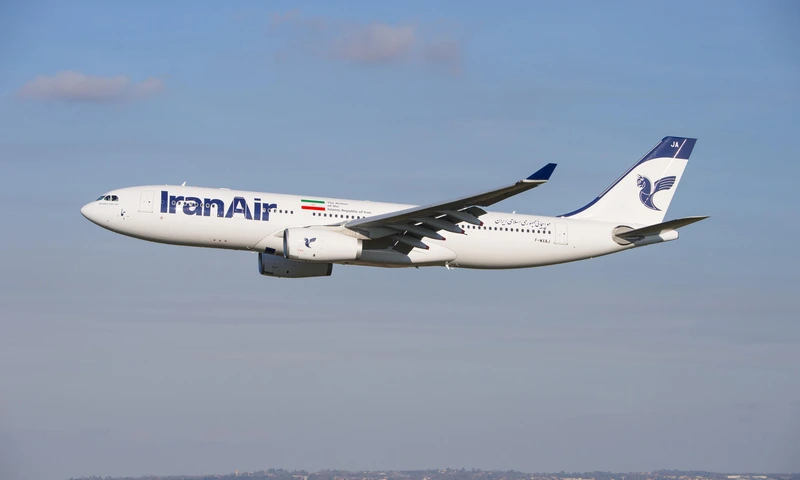
Iran Air Resumes Quetta-Zahedan Flights After Suspension
Iran Air has resumed flights between Quetta and Zahedan after a temporary suspension, restoring a direct connection for traders and passengers. The service gives Balochistan’s business community another travel option as Pakistani and Iranian trade representatives pursue closer commercial ties. Local reports said the returning flight carried more than 80 passengers from Quetta to Zahedan. The airline had suspended the service amid the prevailing international situation. However, accounts differ on the flight’s timing. The supplied report places the arrival on Tuesday and identifies the incoming service as IRA 0827. Flightradar24 records show flight IR826 arriving from Zahedan on Wednesday, October 14, followed by the outbound IR827 service. The tracker identifies the aircraft as an Iran Air Airbus A320. Business representatives discuss stronger trade ties The restored connection coincided with discussions between Zahedan Chamber of Commerce President Haji Hakim Regi and members of Quetta’s business community. They examined ways to expand bilateral trade, develop commercial partnerships and improve cooperation between traders in the neighbouring countries. Quetta Chamber of Commerce and Industry representatives welcomed the visiting Iranian delegation at the airport. Local reporting identified Jangiyan Baloch, Sardar Ayub Marriani and Jumma Khan Badizai among those present. Quetta Airport Manager Khalid Kakar and other officials also attended the reception. Business representatives welcomed the service as an opportunity to strengthen commercial contacts and facilitate passenger movement. Earlier launch connected Quetta with Iranian cities Iran Air’s route links Quetta with Zahedan and the wider Mashhad network. Balochistan Governor Jafar Khan Mandokhail attended the original inauguration. Although the latest reports cite December 2025, contemporaneous official coverage records the inauguration in October that year. Associated Press of Pakistan reported on October 30, 2025, that flight 826 had arrived the previous night. An Airbus A319 operated that inaugural Mashhad-Zahedan-Quetta service. Airport authorities welcomed the aircraft with a water cannon salute. The governor attended a ceremony alongside Iran’s consul general and aviation, diplomatic and business representatives. At the time, Mandokhail described the launch as a “significant milestone” for bilateral ties, trade and cultural exchange. Connectivity supports a wider trade agenda The flight resumption comes against a broader push to increase Pakistan-Iran commerce. In August 2025, Prime Minister Shehbaz Sharif and Iranian President Masoud Pezeshkian reaffirmed a target of raising bilateral trade to $10 billion. Their Islamabad discussions covered barter trade, border markets and larger export quotas for rice, fruit and meat. They also agreed to deepen cooperation in connectivity, culture and people-to-people exchanges. For traders in Balochistan, the restored air service provides a practical link for meetings and commercial visits. Its immediate significance lies in reopening passenger access between Quetta and Zahedan while business groups work on expanding cross-border cooperation.
UNDP Chief Urges Private Climate Investment to Cut Losses
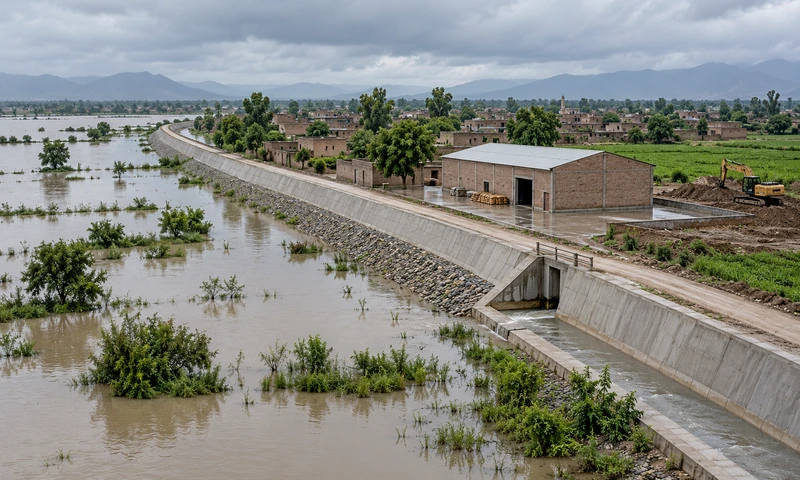
Private investors must help tackle the worst consequences of climate change, UN Development Programme chief Alexander De Croo said. He argued that preventing economic damage offered a clear commercial incentive. “We see that the impact of climate has an economic cost. Avoiding that cost has a business case,” he said. De Croo made the remarks to AFP during the IMF-World Bank Annual Meetings in Bangkok. His appeal comes as developing countries struggle with expensive energy, rising borrowing costs and shrinking international aid. The former Belgian prime minister warned that repeated crises had left governments little time to rebuild their financial reserves. Many had introduced broad energy subsidies, but their limited resources made those measures increasingly difficult to sustain. Debt pressures limit climate spending According to UNDP figures cited by AFP, the median developing country now spends about 9.5% of government revenue on interest payments. That represents the highest level in 25 years and exceeds the equivalent burden in high-income countries by more than three times. The agency also warned that higher food and energy prices could push around 130 million people into poverty this year. That estimate assumes governments pass the increases through fully without subsidies. South and East Asia and sub-Saharan Africa face particular risks, adding urgency to efforts to secure financing. Climate adaptation faces a funding gap UNDP estimates that developing countries will need between $310 billion and $365 billion annually for climate adaptation by 2035. Adaptation involves preparing communities, infrastructure and economic activity for climate impacts. However, international public adaptation finance amounted to approximately $26 billion in 2023, according to the agency. Private finance remains another major gap. UNDP says businesses and investors provide more than half of global finance for reducing emissions. Yet they contribute only 1% to 2% of adaptation spending. That imbalance leaves protection against climate damage heavily dependent on public resources, even as governments face competing spending demands. Insurance partnership targets emerging markets A separate announcement in Bangkok showed how financial institutions plan to expand private-sector participation. On October 13, insurer Generali and the World Bank Group signed a memorandum of understanding covering investment and insurance in emerging markets. Their plans include agricultural and crop insurance, alongside stronger protection against disasters and climate risks. The insurance work will initially focus on Asian markets. The partners also intend to develop investment opportunities that attract institutional capital into frontier and emerging economies. Generali said those opportunities would need to meet its investment requirements. The announcement therefore sets out areas for cooperation, rather than a completed funding commitment. De Croo participated alongside World Bank Group President Ajay Banga in the event associated with the announcement. The proposed work links his appeal for private capital to specific areas of financial protection, including farming and disaster recovery.
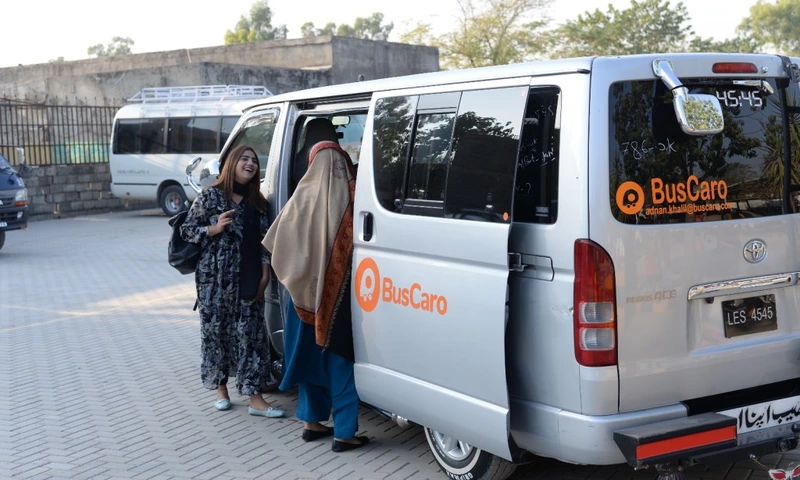
BusCaro Faisalabad Launch Planned by End-2026
BusCaro plans to launch employee transport services in Faisalabad by the end of 2026, extending its footprint into Pakistan’s industrial heartland. The technology-led commute platform has started preparations, including talks with local vehicle suppliers and potential corporate customers. It is also hiring a local team. Faisalabad will mark its first expansion beyond Karachi, Lahore, Islamabad and Rawalpindi. The company plans to enter additional cities in 2027, following its move into positive EBITDA in existing markets earlier this year. BusCaro provides employee commute and on-demand transport services to businesses, including multinational companies, banks, hospitals and airlines. Why BusCaro chose Faisalabad The company cited Faisalabad’s industrial and export economy, alongside its workforce’s daily travel needs, as reasons for choosing the city. According to its announcement, Faisalabad has around 3.69 million residents, while the wider district’s population exceeds nine million. Around 50,000 industrial units operate in the area, creating substantial demand for dependable employee transport. Fuel costs also continue to pressure commuting budgets. BusCaro said organised shared transport could help employers manage staff movement, attendance and punctuality more predictably. “Over four years we built and proved this model in Pakistan’s largest urban centres, and reaching profitability showed it is sustainable,” said Maha Shahzad, Founder and CEO of BusCaro. “Employers in Faisalabad and other cities face the same commuting challenges with far fewer options. Faisalabad is the first of many new cities on our map.” Expansion follows operating milestone BusCaro’s expansion follows its reported achievement of positive earnings before interest, taxes, depreciation and amortisation, commonly known as EBITDA. Shahzad told mobility publication Zag Daily in September that the company had maintained positive EBITDA since April 2026. The measure excludes several expenses and does not necessarily indicate a net profit. The company has also attracted investment to expand its services. In September 2025, BusCaro announced a $2 million funding round led by Daman Investments, bringing total funding to $3.5 million. Other participants included Cartography Capital, Epic Angels, Wahed Ventures and Accelerate Prosperity. That announcement described a model built around dedicated routes for organisations, supported by live tracking and tools for managing transport operations. One provider across multiple cities BusCaro said future expansion would prioritise cities with sufficient employer demand, concentrated workforces and gaps in organised transport. A larger network would allow businesses operating across several cities to use one transport provider under a single contract. The approach targets employers managing factories, offices and service locations in different markets. On its website, BusCaro lists regular driver verification, vehicle inspections, emergency response and backup transport among its service features. It also offers dedicated account managers and round-the-clock customer support. For Faisalabad, the immediate work centres on securing suppliers, building the local team and developing corporate relationships ahead of the planned launch.
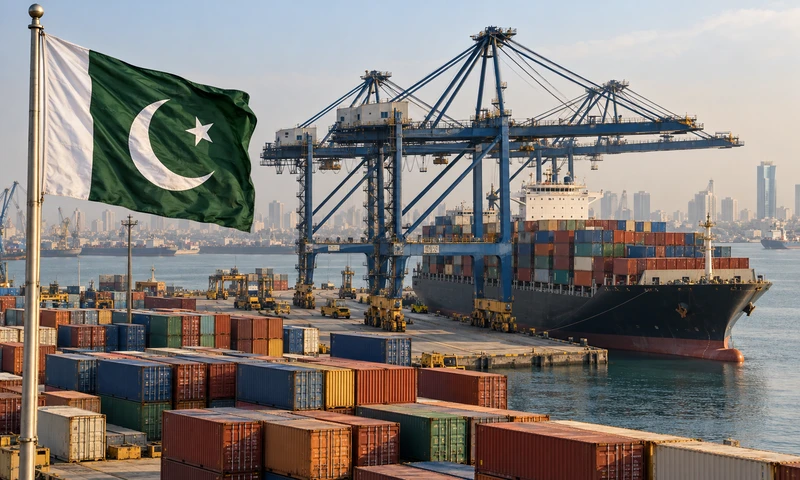
Pakistan Export Target: $100bn by 2035 for Economic Independence
Pakistan must raise exports to $100 billion by 2035 to achieve economic independence and escape recurring balance-of-payments crises, Planning Minister Ahsan Iqbal said on Wednesday. Addressing an international economics conference in Islamabad on October 14, he urged a shift towards production and export-led growth. He called for practical measures to strengthen competitiveness and connect Pakistani businesses with global supply networks. “If Pakistan succeeds in exporting $100 billion by 2035, then we will reach the level of economic independence,” he said. The PML-N minister spoke at the 39th International Conference and Annual General Meeting of the Pakistan Society of Development Economists. The Pakistan Institute of Development Economics (PIDE) hosted the event, which focused on turning the export ambition into workable policies. Uraan Pakistan puts exports at the centre Iqbal said the Uraan Pakistan initiative prioritised exports as a route to lasting economic stability. He stressed that Pakistan needed stronger links with international markets to finance development through its own earnings. He urged policymakers to organise industries around competitive clusters and complete value chains. These clusters would connect producers with skilled workers, universities, testing laboratories, finance providers, logistics companies and overseas buyers. Businesses also needed to meet international standards, improve reliability and produce goods that matched global demand. He identified branding, technology and value addition as areas requiring greater attention. The push follows earlier government instructions to develop detailed export plans under Uraan Pakistan. In May 2025, Iqbal directed ministries to establish working groups, set measurable targets and prepare business plans for individual clusters. That review focused on a $60 billion export target over five years, providing an earlier milestone for the broader expansion drive. Domestic weaknesses hold back exporters PIDE Vice-Chancellor Dr Nadeem Javaid said weaknesses in Pakistan’s domestic economic system remained a major reason for low exports. He called for an effective strategy and better production standards to achieve the $100 billion goal. Javaid, who also heads the economists’ society, highlighted the scale of the challenge. Goods and services exports fell from around 16% of GDP in the late 1990s to approximately 10.4% in 2024. He identified expensive energy, tariffs, limited financing, logistics problems, skills shortages and regulatory uncertainty as obstacles to competitiveness. He also criticised incentives that favoured protected domestic markets and low-value activities. CPEC 2.0 offers agricultural opportunities Chinese expert Yuan Jianmin highlighted opportunities to expand agricultural exports under the second phase of the China-Pakistan Economic Corridor. He proposed a green channel for transporting fresh produce through the Khunjerab route. He also suggested wider use of Chinese currency for cross-border payments. The two-day conference runs from October 14 to 15. Organisers selected 24 papers from 204 submitted research abstracts, while 31 PhD scholars are presenting research posters.