

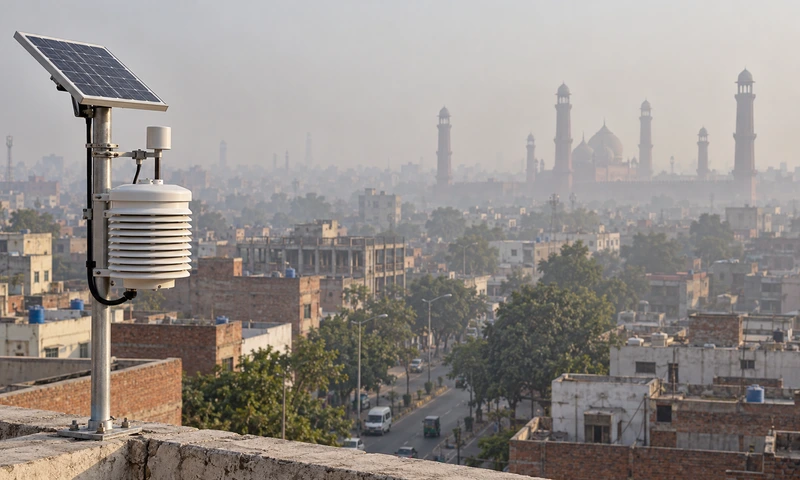
Federal Climate Change Minister Musadik Malik on Wednesday announced plans for a $10 million clean-air startup fund, pledging domestic resources to support pollution solutions. Speaking at the Pakistan National Clean Air Conference 2026, Malik said the government had approached development partners before deciding to finance the initiative itself. He said authorities expected approval of the fund’s board on Thursday, October 29. Malik framed the proposed initiative as an obligation to future generations rather than a grant or loan. He said Pakistan would pursue clean-air measures with or without external support. However, he acknowledged the World Bank, Asian Development Bank, UNICEF and German development agency GIZ for supporting climate-related initiatives. Pollution costs Pakistan 6.5% of GDP, minister says Malik put air pollution’s economic burden at the equivalent of 6.5% of Pakistan’s gross domestic product. He linked that cost to illness, hospitalisation and the financial pressures families face when pollution damages their health. The minister described polluted air as a human-induced crisis shaped by policy decisions and economic activity. Poor and vulnerable communities bear the heaviest consequences because they have fewer resources to protect themselves, he said. He highlighted the exposure of children, street vendors and farmers, contrasting their circumstances with wealthier households that can afford air purifiers. Malik also referred to patients with chronic obstructive pulmonary disease who depend on oxygen and medication. His remarks placed public health and household finances at the centre of the government’s clean-air agenda. Practical solutions must protect livelihoods The minister urged policymakers to recognise that agricultural communities contributing to pollution also suffer its consequences. He called for practical measures that address environmental damage while taking affected families’ livelihoods into account. Malik said cleaner air required engineering solutions, effective policies and financial commitments, rather than declarations and slogans. He reaffirmed the government’s willingness to work with development partners on measures that reduce pollution and protect public health. The government’s announcement did not specify application dates, eligibility criteria or the financing arrangements that individual startups would receive. For prospective applicants, those operational details remain important as the proposed fund moves towards implementation. Fund follows wider clean-air investment The announcement comes alongside existing efforts to strengthen air-quality management in Pakistan. In March 2025, the World Bank approved a $300 million concessional loan for the Punjab Clean Air Program. That programme supports Punjab’s Smog Mitigation Action Plan across transport, agriculture, industry, energy and municipal services. It aims to reduce fine particulate pollution, known as PM2.5, by 35% over a decade, benefiting 13 million residents of Lahore Division. Planned interventions include 5,000 super seeders to reduce crop-residue burning and 600 electric buses to encourage public transport use. The programme also provides for expanded air-quality monitoring and two fuel-testing laboratories. Those measures illustrate the range of agricultural, transport and monitoring interventions already included in Pakistan’s broader response to air pollution.
Pakistan bars Taiwanese airlines under its One-China policy
Pakistan has barred Taiwanese airlines from using its airspace in support of Beijing’s One-China policy, prompting carriers to reroute Asia-Europe flights through Russia. Bloomberg reported the restriction on Wednesday, describing it as the first such move by any country explicitly backing the policy. “The aviation division follows the One China policy,” Defence Minister Khawaja Asif told Bloomberg News, adding that “only mainland China is allowed”. “We have permitted only Chinese airlines to fly over Pakistan.” His remarks concerned the distinction between mainland Chinese and Taiwanese carriers in the reported restriction. China Airlines and EVA Air change routes Taiwanese carriers began adjusting their flight paths over the weekend, according to Bloomberg. Flightradar24 tracking data cited by the report showed that China Airlines Ltd. and EVA Airways Corporation stopped crossing Pakistan on October 25. Neither airline had flown over the country since that morning. At least a dozen of their flights between Asia and Europe subsequently travelled over Russia from Sunday onwards. Read More: Karachi Port Receives 179 Electric Buses From China Both airlines declined to comment to Bloomberg, according to Taiwan’s Central News Agency. Taiwan’s Civil Aviation Administration did not address the rerouting directly. However, it said it had never prohibited airlines from flying over Russia. The changes affect overflight routes rather than simply services arriving in or departing from Pakistan. Pakistan’s restrictions also go further than mainland China’s approach, Anadolu reported, citing Bloomberg. Beijing continues to allow Taiwanese airlines to cross its territory. Islamabad reiterates longstanding Taiwan position Pakistan regards Taiwan as an “inalienable part of the People’s Republic of China” and consistently supports Beijing’s One-China position. Islamabad considers that stance a central element of its foreign policy and its “All-Weather Strategic Cooperative Partnership” with China. President Asif Ali Zardari and Prime Minister Shehbaz Sharif have repeatedly reaffirmed Pakistan’s support for Beijing on Taiwan. Pakistan rejects “Taiwan independence” and opposes attempts to establish “two Chinas” or “one China, one Taiwan”. It has also expressed concern about developments in the Taiwan Strait, warning of implications for regional peace and stability amid wider global crises. Taiwan governs itself, while Beijing claims the island as part of its territory. Taipei rejects Beijing’s sovereignty claim. Pakistan has backed China at global forums Islamabad’s support for Beijing also extends to Taiwan’s participation in international organisations. In May, Pakistan joined China in opposing a proposal to invite Taiwan to the World Health Organization’s annual assembly in Geneva. WHO member states rejected that proposal on May 18, Reuters reported. Read More: China Seawater Hydrogen Plant Produces Fuel and Fresh Water Taiwan previously attended the World Health Assembly as an observer from 2009 to 2016, during former president Ma Ying-jeou’s administration. Pakistan’s Foreign Office reiterated in a May 14 briefing that its One-China position guides both bilateral relations and participation in multilateral forums. The reported airspace restriction now brings that diplomatic position directly into the routing decisions of Taiwan’s two major international carriers.

Italian Brand Moto Morini Set for Pakistan Assembly From January 2027
Buraq Automobile plans to begin assembling Moto Morini motorcycles in Pakistan in January 2027, potentially cutting prices by hundreds of thousands of rupees. Chief Executive Officer Mobeen Ahmed told PakWheels the company expects its assembly plant to be ready by December 2026. The company currently imports and distributes Benelli, Moto Morini and QJMOTOR motorcycles. Its proposed assembly operation will focus on premium Italian and Chinese bikes. Moto Morini will lead the initial rollout with the Alltrhike 450 adventure motorcycle, followed by a 300cc model. Ahmed also disclosed plans to assemble another international motorcycle brand but kept its identity confidential. Alltrhike 450 could cost Rs19.95 lakh Ahmed said local assembly could bring the Alltrhike 450’s price down to a tentative Rs19.95 lakh, compared with Rs26 lakh for the fully imported motorcycle. That represents a potential saving of Rs605,000, or approximately 23.3%, based on the two quoted prices. The reduction would come from shifting away from completely built-up imports towards assembly using completely knocked-down, or CKD, kits. Ahmed attributed the expected savings to lower duties on assembly kits compared with fully imported motorcycles. However, the Rs19.95 lakh figure remains tentative. Buyers will need the company’s final announcement to establish the confirmed retail price and availability. Further reductions could follow if the government approves a proposed auto policy that lowers duties on motorcycle CKD kits. Ahmed said Buraq Automobile would pass any additional duty relief on to customers. That prospect remains conditional on government approval rather than an existing price reduction. Sheikhupura plant marks shift from imports Buraq Automobile’s official company profile identifies Sheikhupura, Punjab, as the location of its developing CKD assembly facility. The Lahore-based business says it began operations in 2015 and initially supplied motorcycles through fully built imports. Its website schedules commercial assembly for 2027, supporting the broader timeline outlined by Ahmed. The company also says it crossed 6,000 cumulative motorcycle deliveries in Pakistan in 2025. It added distribution rights for QJMOTOR and Moto Morini that year. The planned plant would give Buraq a domestic assembly operation alongside its existing distribution business. EFI models planned despite servicing constraints Buraq Automobile also intends to introduce locally assembled motorcycles with electronic fuel injection, commonly known as EFI. Ahmed expects improved fuel economy, acceleration and power to attract customers, although Pakistan has limited facilities for repairing EFI motorcycles. Those servicing constraints remain a practical consideration as the company prepares to introduce more electronically controlled models. Moto Morini’s official Alltrhike 450 owner’s manual lists a 449.5cc, liquid-cooled, twin-cylinder engine with electronic fuel injection. The manual specifies torque of 42Nm at 6,500rpm, placing the motorcycle well above Pakistan’s mainstream small-engine commuter category. For prospective buyers, the immediate milestones remain plant completion in December and the planned production start in January 2027.
Mecca Road Extension Cuts Grand Mosque Travel Time Up to 90%
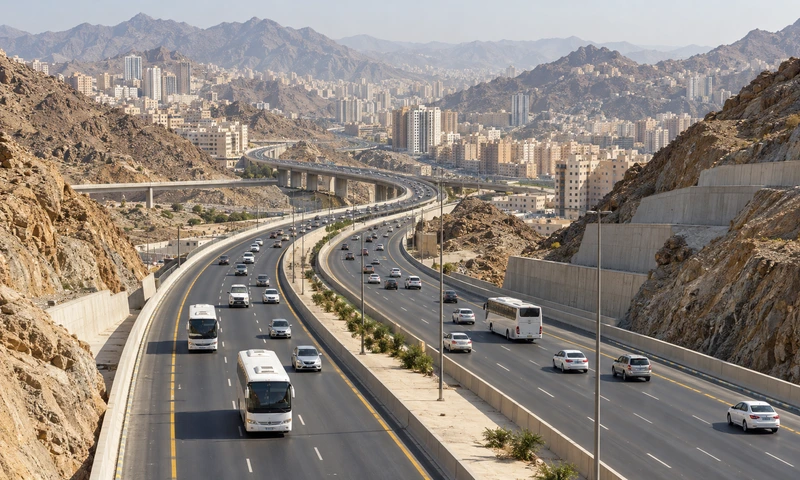
Saudi Arabia has opened a major extension of Mecca’s Third Ring Road, cutting travel times to key religious sites by up to approximately 90%. The Royal Commission for Mecca City and Holy Sites announced the opening, which improves access to the Grand Mosque and Jamarat facility in Mina. The new connection forms part of a project to complete the Third Ring Road, one of four major ring roads surrounding Mecca. Authorities said the project improves traffic efficiency during peak hours and pilgrimage seasons. It also eases access for residents and visitors in the Al-Mursalat and Al-Aziziyah districts. Grand Mosque route shortened by 10 kilometres The journey from the Prince Miteb intersection towards the Grand Mosque now covers 6.5 kilometres, down from 16.5 kilometres. Meanwhile, the route from the same intersection towards the Jamarat facility has shortened from 12 kilometres to four kilometres. The changes remove 10 kilometres from the Grand Mosque journey and eight kilometres from the Jamarat route. Read More: Grand Mosque Launches Heart Attack Treatment Zone for Pilgrims Pilgrims visit the Jamarat facility during Hajj to perform the symbolic stoning ritual, making transport connections to Mina particularly important. The commission said its project indicators showed a noticeable improvement in mobility during busy periods. The reported reduction of up to 90% concerns travel time. The shorter distances represent separate improvements and do not mean every journey covers 90% less ground. The announcement did not provide a comparison of journey times in minutes. Road can accommodate 170,000 vehicles daily The road has capacity for up to 170,000 vehicles a day across both directions, according to the commission. The new connection runs along the western section of the Third Ring Road. It extends from the Prince Miteb intersection to the Grand Mosque intersection through the Prince Sultan intersection. Officials said the project strengthens connections between major destinations and reduces traffic pressure on surrounding roads. The commission described the development as part of a wider approach that treats Mecca’s transport network as an interconnected system. That approach aims to make destinations easier to reach for residents, visitors and pilgrims while improving infrastructure readiness during Hajj and Umrah. Extension follows earlier transport improvements The opening follows other road improvements that Saudi authorities announced in September. On September 26, the Saudi Press Agency reported the opening of additional lanes on the Third Ring Road and Prince Saud Al Faisal Road. Those works included a further 1.5-kilometre stretch connecting the Prince Miteb and Grand Mosque intersections through Prince Sultan intersection. Read More: Saudi Arabia Uses 19,300-Ton Cooling System at Prophet’s Mosque Authorities also opened the final section of Prince Saud Al Faisal Road. It connects the Prince Mohammed bin Salman corridor with Abdulqadir Koshak Street through the Prince Naif bin Abdulaziz intersection. The commission continues to develop Mecca’s roads and transport connections to improve traffic flow and road safety. Its broader programme seeks to support everyday movement while accommodating the heavy demand associated with pilgrimage seasons.

Meet the 96-Year-Old Whose First Granddaughter Earned Him a Guinness Record
A 96-year-old American has earned a Guinness World Records title after becoming a grandfather for the first time at 92. Normand Tousignant was 92 years and 24 days old when his granddaughter, Madison, arrived on September 22, 2022. His family celebrated the recognition nearly four years later, during his 96th birthday party in August 2026. The milestone makes him the world’s oldest first-time grandfather, according to Guinness World Records. His record reflects his age at Madison’s birth, rather than his age when he received the recognition. Tousignant surpassed Australian Charles Smith, who became a first-time grandfather at 91 years and 209 days. Guinness described the difference between their ages at the milestone as six months. A new chapter for the family Tousignant and his wife, Mary Louise, welcomed their only daughter, Kerry, in 1990. More than three decades later, she gave birth to Madison, bringing another generation into the family. Kerry described her father’s reaction to her pregnancy as “ecstatic, emotional, and proud,” according to Guinness. She said growing up with an older father had taught her to treasure time with both parents. That awareness made family occasions particularly meaningful. At her wedding, Kerry cried within the first 10 minutes as she reflected on her father’s presence. He was 86 at the time, and she considered the occasion the happiest day of her life. “Now, it shares that honour with the day Madison was born and the day my dad learned about his record!” Tousignant and Mary Louise later moved from Virginia to Charlotte, North Carolina, to live closer to their daughter and granddaughter. Birthday surprise followed record application The family considered pursuing the title after Kerry’s cousin shared a newspaper article about the previous record holder. Kerry initially hesitated because her father values his privacy. However, the family eventually submitted his details and received confirmation shortly before his 96th birthday. They kept the news secret until the celebration. Tousignant opened the certificate box alongside Madison, and the pair wore matching record-holder T-shirts. For the family, the surprise added another memorable occasion to Madison’s birth and Kerry’s wedding. Grandfather and granddaughter bond through play Tousignant spent much of his working life as a clinical psychologist. He grew up in Gardner, Massachusetts, as one of 17 children. He later retired while Kerry was still young and took an active role in her childhood. Now, his relationship with Madison centres on everyday play. Despite hearing difficulties, he joins her at playgrounds, shares treats and playfully pretends to take her French fries. Madison also enjoys visiting her grandparents and using their community’s swimming pool. Kerry hopes her father will pass his love of reading to Madison, continuing a family interest across three generations.

Fake Cosmetics Under Scrutiny as Senate Panel Approves Regulatory Bill
The Senate Standing Committee on Science and Technology has unanimously approved the Pakistan General Cosmetics Bill, 2026, with amendments. The proposed legislation aims to strengthen cosmetics safety standards while easing industry representation. Senator Kamil Ali Agha chaired Monday’s meeting at Parliament House, where members examined the bill section by section before approving it. The proposal seeks transparent ingredient labelling, restrictions on misleading marketing and scientific safety assessments for personal care products sold in Pakistan. The committee’s approval marks a legislative step, rather than the introduction of rules already in force. The bill remains proposed legislation. Manufacturers and importers seek broader representation The Senate returned the bill to the committee on October 14, alongside amendments from Senator Saleem Mandviwalla. The science and technology secretary said officials had consulted key stakeholders following the committee’s earlier directions. Representatives from the Pakistan Cosmetic Manufacturers Association also participated in the discussions. One amendment concerned the definition of an industry association. The secretary explained that removing “General” before “Association” would broaden representation to cover all domestic manufacturers. Members accepted the revised definition, intending to accommodate both local manufacturers and importers. They also stressed that businesses should find it straightforward to establish associations across different regions. The regulatory framework, they agreed, should avoid unnecessary restrictions or operating hurdles for emerging companies. Committee questions company registrations Agha asked officials how many cosmetics companies operated in Pakistan and sought details of their registration status. His questions covered the Directorate General of Trade Organizations, Federal Board of Revenue, Securities and Exchange Commission of Pakistan and sales tax authorities. The committee stressed the importance of participation by registered industry representatives so consultations could reflect legitimate businesses’ concerns. Members also examined the relationship between local production and imported cosmetics. Agha questioned the balance between imported raw materials for domestic manufacturing and direct imports of finished products. The meeting also included the federal minister for defence production as a special invitee and the minister for science and technology. Senators Husna Bano and Dr Afnan Ullah Khan attended, alongside senior officials and the Law Division’s legal team. Counterfeit cosmetics remain a concern Earlier deliberations on October 20 focused on counterfeit cosmetics, consumer protection and safeguards against misuse of regulatory powers. Industry representatives told that meeting that their sector had operated for approximately 15 years but continued to face counterfeiting problems. They said sellers marketed fake products under established brand names, threatening consumers and legitimate businesses. Mandviwalla sought stronger oversight and greater consideration of importers’ and industry associations’ concerns. Members also examined the proposed regulatory board and overlapping requirements under Section 10. Mandviwalla proposed adding a senator and an importer representative to the eight-member board. Science and Technology Minister Khalid Hussain Magsi cautioned that impractical provisions could complicate implementation. Members also sought clear procedures and adequate time for drafting rules and facilitating registration.
US Iran War Bill Tops $47 Billion, With Major Costs Still Uncounted
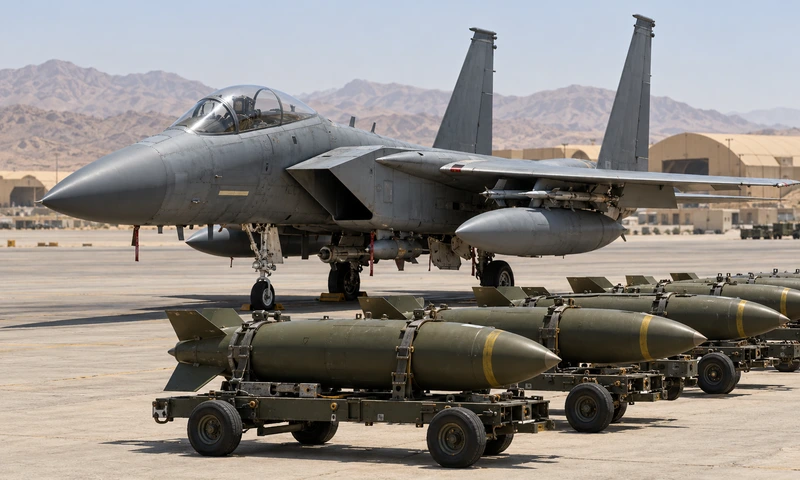
US military costs for the Iran war have exceeded $47 billion, according to Pentagon data. The total stands more than 25% above Defence Secretary Pete Hegseth’s July estimate of $37.5 billion. The disclosure comes days before the November 3 congressional elections, adding pressure on Republicans defending narrow majorities in both chambers. The vote will determine control of Congress for the next two years. Reuters reported that the unpopular conflict’s impact on global energy costs has weakened support for Republican candidates and hurt President Donald Trump’s approval ratings. The Pentagon had not publicly released the latest estimate and did not immediately answer Reuters’ request for comment. Munitions replacement drives war costs The estimate covers operational expenses and projects more than $29 billion to replace weapons used during the conflict. Replacing military equipment would require more than $6 billion. That category includes “platform losses,” covering aircraft and the many drones lost during the war. The figures also cover flight operations and cyber support. However, they do not clearly account for the substantial expense of repairing American bases after Iranian missile and drone attacks. Separate reporting by USA Today put the total at $47.1 billion through October 16, citing an estimate Central Command provided to Congress. It also reported $6.1 billion in equipment replacement costs. That leaves damage to US bases as a major unresolved part of the financial accounting. Ceasefire allowed Iran to restore defences Trump launched the war jointly with Israel in February, predicting a short conflict. His initial strategy relied on expensive precision missiles to strike Iranian defences. US forces could then switch to cheaper weapons, including plentiful air-launched JDAM gravity bombs. However, an April ceasefire gave Iran time to excavate underground storage facilities. Tehran restored some defences and regained access to missiles and drones that it previously could not reach. Trump subsequently imposed a naval blockade to cut Iran’s oil export revenue. He has also raised the possibility of restarting combat operations after the midterm elections. US officials, speaking anonymously to Reuters, said the Pentagon has prepared plans to resume heavy fighting if Trump orders it. Further fighting could lift the bill An independent Congressional Budget Office assessment adds context to the growing military bill. In September, the agency estimated that operations against Iran had cost the Defence Department approximately $38 billion through August 1. It projected additional monthly costs of $2 billion if violence remained low, rising to $3 billion at July’s intensity. Heavier fighting could push monthly expenses higher still. Those estimates include replacing weapons and lost equipment, increased flying hours, other operations and higher fuel costs. The agency cautioned that its calculations carry considerable uncertainty because the Defence Department did not respond to requests for information. Its assessment highlights how renewed combat could increase spending beyond the Pentagon’s latest total, while base repairs remain outside a clear accounting.
