

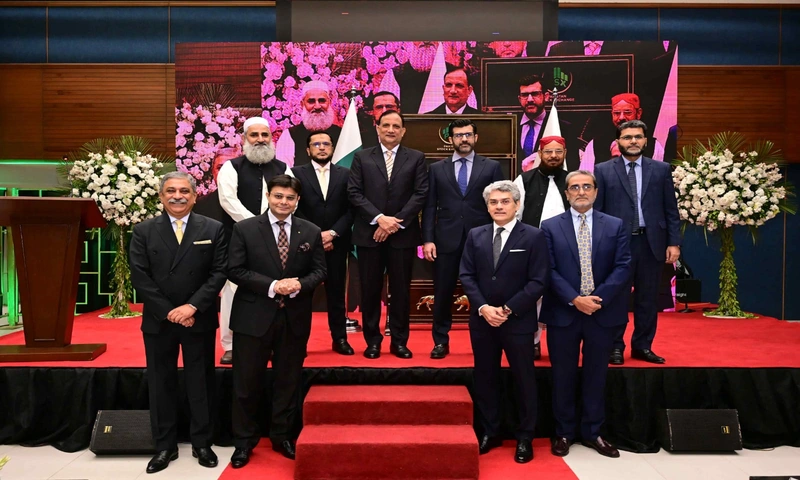
The Pakistan Stock Exchange PSX launched its Shariah-Compliant Trading Counter on October 29, giving retail and institutional investors a dedicated Islamic investing platform. The launch follows approval of the Shariah Trading Counter Regulations by the Securities and Exchange Commission of Pakistan. Thirty-nine brokers have joined the platform through Islamic windows. Two additional brokerage houses hold licences as full-fledged Shariah-compliant brokers. PSX marked the launch with a Gong Ceremony attended by Shariah scholars and participating brokerage houses. Representatives from SECP, the State Bank of Pakistan, Central Depository Company and National Clearing Company of Pakistan also attended. The Pakistan Stock Brokers Association joined the ceremony. The counter operates under procedures and regulations that PSX prescribes and SECP approves. It restricts trading to Shariah-compliant equities, Government Ijarah Sukuk and Corporate Sukuk. System controls prohibit purchases of non-compliant securities and block interest-based leverage products, including the Margin Trading System. Investors can instead access Murabaha Share Financing as the Shariah-compliant financing alternative. The counter also prohibits short selling and derivatives trading. However, investors can divest non-compliant holdings to purify their portfolios. A new Shariah Portal on the PSX Data Portal lists eligible stocks and Sukuk. Investors open accounts, including Sahulat Accounts, through a Shariah-compliant Customer Relationship and Risk Disclosure Document. PSX Managing Director and Chief Executive Officer Farrukh H. Sabzwari said the dedicated environment would support confidence and participation. “By providing a dedicated trading environment supported by system-based compliance controls, this initiative enhances investor confidence, improves accessibility to Islamic investment opportunities, and further strengthens the country’s Islamic capital market ecosystem,” he said. Sabzwari said investor accounts had surpassed 650,000, with Millennials and Gen Z driving much of the new participation. He expects the platform to attract more investors from Pakistan’s predominantly Muslim population. SECP Commissioner Imtiaz Haider highlighted the existing scale of Islamic investments and the opportunities for further growth. “With a significant proportion of listed equity securities and mutual fund assets already Shariah-compliant, this initiative will help broaden market participation, create new opportunities for investors and the brokerage industry, and further strengthen investor confidence in Shariah-compliant investment options.” Dr. Tariq Naseem, SECP’s Head of Islamic Finance, outlined further priorities. These include expanding digital retail Sukuk and introducing Shariah-compliant liquidity and risk-management tools. He also identified stronger legislation for Islamic financial services as a next step. The launch builds on earlier regulatory measures to expand Islamic brokerage services. In August, SECP reported that 33 brokerage houses operated Islamic windows. Those firms collectively represented around 52% of PSX’s total traded volume. A separate SECP directive requires relevant Shariah-compliant institutional investors to progressively use Islamic brokers. During the phase running from July 2026 through June 2027, they must route at least 20% of securities trading through such brokers. That requirement provides additional institutional context for the new counter and its expanding brokerage network.

45 NUST Researchers Among World’s Top 2% Scientists in 2026
Forty-five researchers from the National University of Sciences and Technology (NUST) have earned places among the world’s top 2% scientists for 2026. The university announced the recognition under the widely cited Stanford-Elsevier rankings. Sixteen NUST researchers have appeared in the rankings over successive years. The university described their repeated inclusion as evidence of sustained scholarly influence and a long-term commitment to advancing knowledge across disciplines. NUST said the distinction placed its researchers alongside international scholars whose work contributes to scientific progress across diverse fields. Rector Dr Muhammad Zahid Latif congratulated the researchers and linked their achievement to Pakistan’s growing visibility in the international research community. “Extending his heartiest felicitations to the distinguished researchers, Rector Nust Dr Muhammad Zahid Latif remarked that the meritorious accomplishment of our truly erudite faculty and researchers has brought immense pride to Nust and the nation, and exemplifies the calibre of scholarship that continues to elevate Pakistan’s standing in the international research community,” read the press release. The rector also highlighted NUST’s commitment to intellectual leadership, scientific inquiry and solutions to complex real-world challenges. The researchers named in the announcement include Dr Miraj Mustafa, Dr Mubasher Jamil, Dr Rafia Mumtaz and Dr Haider Abbas. Other recognised academics include Dr Tayyaba Noor, Dr Muhammad Usman Akram, Dr Safia Akram and Dr Iftikhar Hussain Gul. The list also features Dr Alvina Gul, Dr Lubna Yaqoob, Dr Muhammad Moazam Fraz and Dr Syed Ali Hassan. The recognition follows earlier appearances by NUST scholars in the same database. The university reported 47 researchers in the 2025 edition and 43 in 2024. Researchers from several other Pakistani universities also feature in the latest lists, extending the country’s representation beyond NUST. The database offers a more specific measure than a general university ranking. It assesses researchers through standardised citation indicators, which track how other scholarly publications reference their work. The 2026 update appeared in the Elsevier Data Repository on October 7. It uses Scopus author profiles from an August 1, 2026 snapshot. Its career-long assessment covers citations through the end of 2025. A separate single-year assessment examines citations received during 2025. The database groups scientists into 20 scientific fields and 174 subfields. Its composite indicator, known as the c-score, combines citation measures with information about co-authorship and authorship positions. Researchers qualify through a top-100,000 position under the composite score or placement within the top 2% of their subfield. The calculations consider results both with and without self-citations. The methodology focuses on citation impact rather than the number of publications alone. Its documentation also cautions against treating inclusion as absolute proof of scientific excellence. For NUST, the announcement recognises both the current cohort of 45 researchers and the continuing presence of 16 scholars across successive editions.
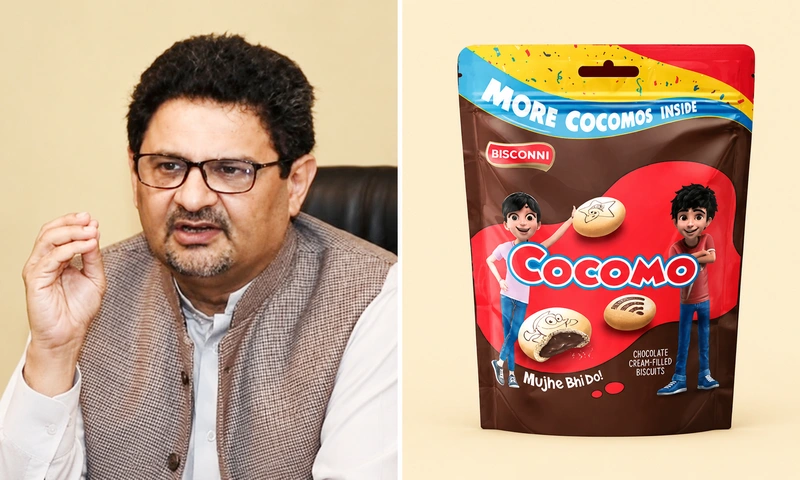
Miftah Ismail Jokes About ‘Indian Propaganda’ Over Cocomo Complaints
Former finance minister Miftah Ismail has rejected complaints about missing chocolate in Cocomo biscuits, jokingly calling them “Indian propaganda” during a podcast. Ismail, whose family business Ismail Industries makes Cocomo through its biscuit division Bisconni, challenged the host’s claim about empty biscuits. He defended the company’s quality checks and said the business sells approximately 100 million bags each month. The host raised the complaint directly: “In a packet of Cocomo, there are usually three biscuits, and out of those, two don’t even have any chocolate in them!” Ismail firmly disputed the suggestion. “That is complete nonsense and a total lie. It’s a completely fabricated statement based on falsehoods,” he responded. Read More: Cadbury Is Moving its Key Ingredient Production to Malaysia He then laughed and introduced a political joke into the discussion. “I feel like there’s some kind of Indian conspiracy behind this,” he said. Ismail argued that the chances of finding two biscuits without chocolate in a three-piece packet were negligible. “Out of three biscuits, the probability of two being empty is practically zero,” he said. He pointed to the company’s monthly sales volume while rejecting the host’s description of its products. “Not a single bag comes out where two out of three biscuits are empty. That’s just impossible,” he stated. Ismail said the company depended on quality for its livelihood and took manufacturing standards seriously. “We are extremely careful about quality control,” he added. He ended with another joke about India, this time mentioning Prime Minister Narendra Modi. “This sounds completely like Indian propaganda, yeah, pure Indian propaganda orchestrated by Modi sahib,” he joked. The exchange focused on complaints about chocolate filling. Ismail’s references to India formed part of his humorous response, rather than a substantiated allegation. Cocomo has prompted similar consumer debates before. In 2021, Twitter users complained about finding three biscuits in Rs5 packets and campaigned for at least five pieces. Other consumers reported hollow biscuits without chocolate. Singer and comedian Ali Gul Pir also joined the discussion and publicly demanded five Cocomos per packet. Ismail maintained at the time that each packet should contain four biscuits, although customers reported receiving three. He attributed the reduction from five to four to rising ingredient costs. Read More: This Chocolate Is So Thin, It Melts Before You Can Bite It He argued that the company had retained the Rs5 price despite higher production expenses. Consumers nevertheless continued questioning the number of biscuits they found inside their packets. Bisconni introduced Cocomo in 2002, according to Ismail Industries’ official history. Its chocolate centre and jingle, “Cocomo, mujhe bhi do,” helped make it one of Pakistan’s best-known snacks. Ismail is among the owners of the family business behind Bisconni and confectionery brand Candyland. The company’s 2025 annual report described a Cocomo Triple Chocolate relaunch with increased chocolate content. Actor Fahad Mustafa featured in the campaign, which promoted the product’s chocolate filling and sharing appeal.

Karachi Port Connectivity Hits Record as Pakistan Eyes Hub Role
Karachi Port’s stronger international connectivity gives Pakistan an opportunity to become a major regional transit and trade hub, its chairman said. Shifting shipping routes and geopolitical developments around the Strait of Hormuz have increased the importance of that opportunity. Karachi Port Trust (KPT) Chairman Rear Admiral Shahid Ahmed SI(M), S.Bt (Retd) delivered the keynote at the International Maritime Symposium 2026. The National Institute of Maritime Affairs (NIMA) organised the October 28 event at Bahria University in Islamabad. The symposium carried the theme “Eroding Rules-Based International Order at Sea and Maritime Security Paradigm 2.0.” Senior maritime leaders, policymakers and experts examined emerging security threats and the future of global ocean governance. Read More: Karachi Port Receives 179 Electric Buses From China Ahmed highlighted Karachi Port’s improved international rankings and record Port Liner Shipping Connectivity Index (PLSCI). He said these gains reflected stronger connections with the world’s major shipping networks. He linked Pakistan’s transit potential to changes in maritime routes and developments around the Strait of Hormuz. His address placed Karachi Port’s performance within the wider debate over maritime security, trade resilience and regional connectivity. KPT’s published performance figures provide further context for the chairman’s assessment. The authority reported that Karachi Port climbed from 99th to 69th in the Container Port Performance Index 2025. Its score increased from 30.0 to 45.7. KPT also announced in June that container handling had surpassed the previous year’s record of 2.651 million twenty-foot equivalent units. The milestone came before the close of the fiscal year. Chief of the Naval Staff Admiral Naveed Ashraf NI, NI(M), T.Bt attended Session I as chief guest. Federal Maritime Affairs Minister Junaid Anwar Chaudhry addressed Session II as chief guest. The session focused on “Pakistan’s Maritime Future: Maritime Security, Ocean Governance and Blue Economy.” Chaudhry praised Pakistan’s ports for their expanding contribution to national trade and maritime growth. He also stressed that secure sea routes remained essential to economic stability amid rising regional tensions. Read More: Four DAP Fertilizer Vessels Berth at Karachi Port The minister outlined government efforts to improve port efficiency, facilitate trade, attract investment and expand the national merchant fleet. He cited reforms in port charges and auction procedures, alongside measures supporting refrigerated cargo and faster clearance. Chaudhry also highlighted several proposed investments. These included a steel project worth approximately US$680 million at Port Qasim and an integrated maritime industrial complex exceeding US$1.4 billion. A proposed multipurpose terminal carried an estimated value of US$350 million. NIMA’s symposium framework identified threats extending beyond conventional naval competition. It highlighted cyber capabilities, autonomous systems, artificial intelligence and risks to ports and critical undersea infrastructure. The institute called for stronger international engagement and practical recommendations to support sustainable, inclusive ocean governance. Ahmed’s contribution also examined whether Pakistan’s ports could sustain their current momentum beyond periods of crisis. KPT reaffirmed its commitment to modernising infrastructure, expanding global connectivity and strengthening Pakistan’s role in international maritime trade.
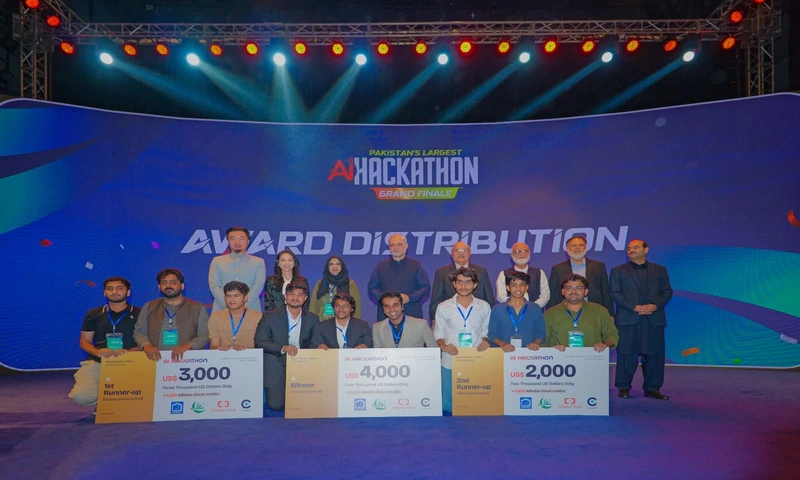
Alibaba Cloud and Alkhidmat Crown Team Salix at AI Hackathon Pakistan
Also, Team Salix won first prize at AI Hackathon Pakistan 2026, securing US$7,000 as 300 finalist teams presented technology solutions. Alibaba Cloud and Alkhidmat Foundation Pakistan jointly organised the national competition at the Pak-China Friendship Centre in Islamabad. Organisers described the event as Pakistan’s largest AI hackathon. Their October 27 announcement reported more than 16,000 AI project submissions from across the country. The competition offered a US$60,000 prize package, comprising US$30,000 in cash and US$30,000 in Alibaba Cloud credits. The credits aim to help successful teams develop and scale their projects. Second- and third-place teams also received recognition, alongside runners-up across six categories. Those categories covered Healthcare, Financial Inclusion, Education, Smart Agriculture, Open Innovation, and Urdu and Regional Languages. Participants developed practical products, supported by training, mentorship and access to advanced digital tools. Read More: Alibaba Cloud Shows Strong Interest in Punjab’s Growing IT Sector The programme’s published schedule placed the national finale on October 24. Regional rounds preceded it in Karachi on October 3, Islamabad on October 11 and Lahore on October 17. The initiative encouraged young people to build their own AI products and turn ideas into workable projects. Also, Its programme website also confirmed free participation and access to development tools. Attendees included Jamaat-e-Islami Pakistan Ameer Hafiz Naeem ur Rehman and Alkhidmat Foundation Pakistan President Dr. Hafeezur Rehman. Alibaba Cloud representatives included Pakistan Country Director Hank Shao, Vice President Eric Wan and regional marketing head Yilan Zhuang. Zhuang oversees marketing for the Middle East, Türkiye and Africa. Bano Qabil Chairman Naveed Ali Baig and CEO Shahid Iqbal also attended. Diplomatic representatives, technology experts, industry leaders and education-sector representatives joined the gathering. Dr. Hafeezur Rehman described the hackathon as a milestone in expanding youth opportunities through international technology partnerships. He said Pakistan’s young population offered enormous potential, provided it could access quality education, modern skills and meaningful opportunities. He highlighted Bano Qabil, which Alkhidmat launched three years ago to provide free IT education. The programme equips young people for employment and helps them create opportunities for others. He said Alkhidmat had expanded into AI education as the technology reshaped industries worldwide. Its Alibaba Cloud partnership helps participants explore emerging technologies, demonstrate their abilities and develop solutions with practical applications. Read More: Alibaba Cloud AI Hackathon Brings 430 Teams to Karachi Dr. Rehman said the response exceeded expectations and reflected young Pakistanis’ creativity, ambition and technological potential. He described every participant who presented a project as a winner. The initiative, he added, encouraged learning and practical innovation alongside recognising outstanding ideas. Wan praised Pakistani youth’s digital capabilities and Alkhidmat’s free IT training through Bano Qabil. He said education, advanced technology and suitable opportunities could help young people become innovators and entrepreneurs. He described the partnership as a step towards identifying and developing Pakistan’s AI talent. Wan urged participants to tackle healthcare, education, agriculture and other challenges, creating solutions with benefits for Pakistan and beyond.

Pakistan Restores Taiwanese Airlines Access Hours After Reported Ban
Pakistan has authorised China Airlines and EVA Air to use its airspace until March 27, 2027. The approval emerged hours after reports that Islamabad had barred Taiwanese carriers under its One-China policy. Documents dated October 28 grant both airlines overflight permission from October 28, 2026, through March 27, 2027. The authorisations cover passenger and cargo flights, providing clearance for services that use Pakistan’s airspace between Asia and Europe. The development followed remarks by Defence Minister Khawaja Asif, who also oversees aviation. He had said the aviation division followed the One-China policy and permitted only mainland Chinese airlines to cross Pakistani territory. “We have permitted only Chinese airlines to fly over Pakistan,” he said. However, the approval documents do not mention an earlier restriction or explain whether the authorisations formally reverse a ban. Asif offered no immediate comment after the documents emerged. Flight-tracking data showed a clear change in the carriers’ operations before the announcement. China Airlines and EVA Air stopped flying over Pakistan from the morning of October 25, according to Flightradar24 data. At least a dozen flights operated by the two airlines between Asia and Europe subsequently crossed Russian airspace. The alternative routes added flying time and fuel costs. A day before the route changes, on October 24, the two carriers operated 14 flights over Pakistan. That traffic illustrated the importance of the corridor to their international operations. Taiwanese airlines had generally avoided Russian airspace since February 2022, following Russia’s invasion of Ukraine. However, Taiwan’s Civil Aviation Administration said it had never prohibited its carriers from using those routes. The administration did not explain the latest rerouting. Both airlines also declined to comment on the initial reports. On Thursday, Taiwan’s Deputy Foreign Minister Chen Ming-chi confirmed that Pakistan had briefly closed and reopened its airspace to Taiwanese flights. He attributed the episode to suspected Chinese pressure. “We suspect definitely China was behind this,” Chen said. Neither airline independently confirmed the closure or reopening when contacted about the development. The reported restriction went further than mainland China’s own approach. Beijing allows Taiwanese airlines to cross its airspace, while the carriers also operate direct services between Taiwan and the mainland. Pakistan maintains close diplomatic and defence ties with China and supports Beijing’s One-China position. China claims Taiwan as its territory, while Taiwan rejects Beijing’s sovereignty claim. The latest permissions apply specifically to the two Taiwanese carriers. Pakistan’s separate airspace restrictions on Indian aircraft remain in place until November 24, 2026. That ban covers Indian-registered aircraft and planes owned, operated or leased by Indian airlines or operators, including military flights. The Pakistan Airports Authority’s latest extension runs until 4:59am Pakistan time on November 24. It applies to both the Karachi and Lahore flight information regions. The previous extension had been due to expire on October 24.

Samsung Q3 Profit Hits Record $80 Billion on AI Chip Boom
Samsung Electronics reported a record third-quarter operating profit of 107.4 trillion won ($80.04 billion) on Thursday, October 29. Strong demand for chips used in artificial intelligence systems drove the nearly ninefold increase. The world’s largest memory chipmaker matched its preliminary earnings estimate for the July-to-September period. Operating profit stood at 12.2 trillion won a year earlier. The results arrived as investors continued questioning how long the surge in AI infrastructure spending could last. However, strong earnings and an upbeat outlook from rival SK Hynix on Wednesday helped ease those concerns. Shares in both South Korean chipmakers rose as investors welcomed signs of continued demand. Read More: Samsung Is Giving Older Home Appliances Powerful New AI Samsung’s quarterly revenue reached a record 195.3 trillion won, rising 14% from the previous quarter. The company said it became the first technology business to exceed 100 trillion won in quarterly operating profit. Its semiconductor division generated revenue of 147.1 trillion won and operating profit of 106.5 trillion won. That represented roughly 99% of group operating earnings, highlighting the scale of the chip business’s contribution. Samsung expanded sales of HBM4, its latest high-bandwidth memory, while responding to growing demand for server storage products. Strong server demand also pushed memory prices higher across applications. The company expects competition among AI developers to sustain infrastructure investment during the fourth quarter. It plans to increase sales of high-bandwidth memory, server DRAM and solid-state drives. For 2027, Samsung expects AI infrastructure investment to reach a historic level. It also forecasts a wider gap between AI-related memory demand and available industry supply. The company’s earnings call provided further evidence of that tight market. Samsung said customers had already bought its planned HBM output for 2027 through completed supply contracts. It has signed long-term supply agreements with 10 major customers and continues negotiations with another 10. Samsung aims to secure such agreements for 60% to 70% of its total production capacity by 2030. SK Hynix’s results reinforced the positive outlook. The rival reported quarterly revenue of 104.6155 trillion won and operating profit of 83.3338 trillion won. Revenue increased 32% from the previous quarter, while operating profit climbed 38%. Read More: Samsung Expands Spotify Premium Offer Across Pakistan SK Hynix said it had secured long-term agreements covering more than half its production capacity for 2027 and 2028. It expects HBM4 to overtake HBM3E in shipment volume and revenue during the fourth quarter. Samsung’s performance outside semiconductors showed a different picture. Its Device eXperience division recorded an operating loss of 800 billion won despite an 8% quarterly revenue increase. Meanwhile, Samsung’s net profit reached 75.13 trillion won, up 514.6% from a year earlier. That fell below the 87.01 trillion won average analyst forecast compiled by Yonhap Infomax. The results extended Samsung’s run of record quarterly revenue and operating profit to four consecutive quarters.

Pakistan Scraps Vaccine Tender, Changes Pilgrim Jab Process
Pakistan’s health ministry will issue a fresh tender for meningococcal meningitis and influenza vaccines within a month. It has abolished the Border Health Services (BHS) vaccination arrangement following an inquiry into procurement irregularities. Health Minister Mustafa Kamal confirmed the suspension of the existing process for religious pilgrims and overseas job seekers. He said authorities had arrested all BHS officials involved in issuing the unauthorised tender without ministry oversight. Pilgrims must now arrange mandatory vaccinations through travel agents until the ministry’s central procurement committee issues the replacement tender. Read More: “Felt Like I Was Dying”: Musk’s Statement Fuels Vaccine Controversy “I can assure that they will be fixed for keeping the ministry in the dark,” Mr Kamal said. “I am carrying a good reputation and have remained clean throughout my career. So I will not tolerate any attempt to defame me.” Prime Minister Shehbaz Sharif ordered the inquiry after allegations that the contract raised vaccination costs to approximately Rs4,500 per pilgrim. The previous arrangement charged around Rs1,250 per dose. Seven companies also challenged alleged bidding irregularities in the Islamabad High Court. The Cabinet Division secretary chaired the five-member panel examining the contract’s legal basis, rationale and approvals. Members included the Intelligence Bureau director general and Drug Regulatory Authority of Pakistan chief executive. The Public Procurement Regulatory Authority managing director and an Attorney General’s Office representative also served. Inquiry documents showed that BHS officials created parallel committees, bypassing federal oversight. On May 9, the ministry established a six-member procurement committee under BHS Director Dr Mir Muhammad Hassan Builo. The federal director general of health headed its grievance committee. On June 10, BHS independently formed another procurement committee under Dr Pardeep Kumar. It also appointed Dr Shahbaz Ahmed Hashmi to lead a separate redressal committee, then floated the tender. An anonymous senior ministry official alleged officials had concealed the process. “The major violation was that the PPRA rules were followed for a public-private partnership. In fact, Public Private Partnership Authority rules should have been applied for the tender,” the official explained. Read More: Pakistan Polio Eradication: Rotary Renews World Polio Day Pledge “As per the agreement, the private company had to procure the vaccine, and the amount had to be deposited in a National Database and Registration Authority account. Nadra would then cut its charges and distribute the share between BHS and the private company. The positive thing was that not a single rupee had to be spent from the exchequer.” The official attributed the Rs1,250 rate in 2026 to cheaper stock. Meningitis vaccination charges stood at Rs2,555 in 2025, Rs2,244 in 2024, Rs2,476 in 2023 and Rs2,550 in 2022. Influenza vaccination cost Rs1,426 in 2025 and Rs1,670 in 2024. Another official urged the seven petitioners to supply vaccines at their cited Rs1,250 rate when bidding reopens. He put the vaccine’s maximum retail price near Rs1,300, against historical charges exceeding Rs2,000. He linked uncoordinated procurement to fake vaccination certificates, difficulties for pilgrims and government embarrassment. Saudi health guidance requires Umrah travellers to comply with vaccination and health-certificate requirements, underscoring the importance of valid documentation.
