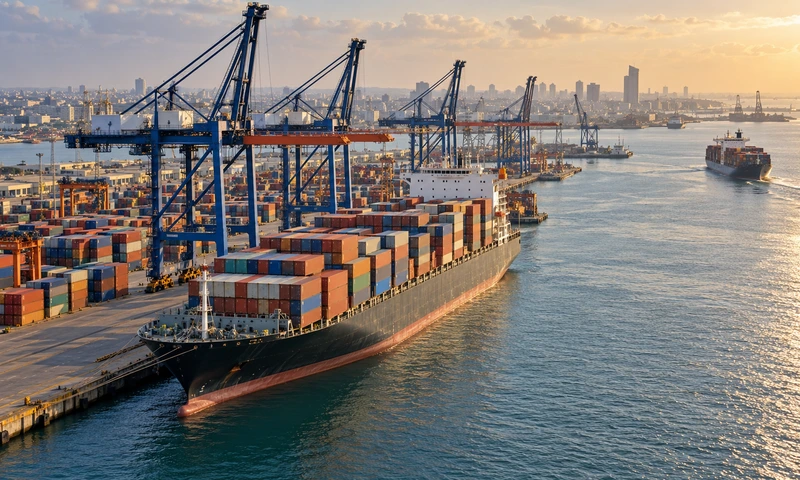
Karachi Port’s stronger international connectivity gives Pakistan an opportunity to become a major regional transit and trade hub, its chairman said. Shifting shipping routes and geopolitical developments around the Strait of Hormuz have increased the importance of that opportunity.
Karachi Port Trust (KPT) Chairman Rear Admiral Shahid Ahmed SI(M), S.Bt (Retd) delivered the keynote at the International Maritime Symposium 2026. The National Institute of Maritime Affairs (NIMA) organised the October 28 event at Bahria University in Islamabad.
The symposium carried the theme “Eroding Rules-Based International Order at Sea and Maritime Security Paradigm 2.0.” Senior maritime leaders, policymakers and experts examined emerging security threats and the future of global ocean governance.
Read More: Karachi Port Receives 179 Electric Buses From China
Ahmed highlighted Karachi Port’s improved international rankings and record Port Liner Shipping Connectivity Index (PLSCI). He said these gains reflected stronger connections with the world’s major shipping networks.
He linked Pakistan’s transit potential to changes in maritime routes and developments around the Strait of Hormuz. His address placed Karachi Port’s performance within the wider debate over maritime security, trade resilience and regional connectivity.
KPT’s published performance figures provide further context for the chairman’s assessment. The authority reported that Karachi Port climbed from 99th to 69th in the Container Port Performance Index 2025. Its score increased from 30.0 to 45.7.
KPT also announced in June that container handling had surpassed the previous year’s record of 2.651 million twenty-foot equivalent units. The milestone came before the close of the fiscal year.
Chief of the Naval Staff Admiral Naveed Ashraf NI, NI(M), T.Bt attended Session I as chief guest.
Federal Maritime Affairs Minister Junaid Anwar Chaudhry addressed Session II as chief guest. The session focused on “Pakistan’s Maritime Future: Maritime Security, Ocean Governance and Blue Economy.”
Chaudhry praised Pakistan’s ports for their expanding contribution to national trade and maritime growth. He also stressed that secure sea routes remained essential to economic stability amid rising regional tensions.
Read More: Four DAP Fertilizer Vessels Berth at Karachi Port
The minister outlined government efforts to improve port efficiency, facilitate trade, attract investment and expand the national merchant fleet. He cited reforms in port charges and auction procedures, alongside measures supporting refrigerated cargo and faster clearance.
Chaudhry also highlighted several proposed investments. These included a steel project worth approximately US$680 million at Port Qasim and an integrated maritime industrial complex exceeding US$1.4 billion. A proposed multipurpose terminal carried an estimated value of US$350 million.
NIMA’s symposium framework identified threats extending beyond conventional naval competition. It highlighted cyber capabilities, autonomous systems, artificial intelligence and risks to ports and critical undersea infrastructure.
The institute called for stronger international engagement and practical recommendations to support sustainable, inclusive ocean governance.
Ahmed’s contribution also examined whether Pakistan’s ports could sustain their current momentum beyond periods of crisis. KPT reaffirmed its commitment to modernising infrastructure, expanding global connectivity and strengthening Pakistan’s role in international maritime trade.