


The National Cyber Crime Investigation Agency’s (NCCIA) Karachi Zone has arrested a man accused of defrauding a woman through a matrimonial app. The agency alleges that he obtained approximately Rs4.45 million through false marriage promises before threatening her with manipulated photographs. In a statement dated October 29, NCCIA identified the suspect as Hassam, son of Saleem. It said he used the name “Hassam Uddin” while dealing with the complainant. According to the agency, the suspect allegedly persuaded the woman to transfer money to him through online banking transactions. He subsequently threatened to circulate manipulated photographs of her on social media to demand additional payments. The allegations therefore involve both financial deception and an attempt to obtain further money through blackmail. NCCIA registered FIR No. 117/2026 under the Prevention of Electronic Crimes Act, 2016. Its statement did not identify the specific sections invoked in the case. The agency also did not name the matrimonial app or disclose when the alleged transfers began. It provided no details about any recovery of the money. Initial investigations suggest the suspect may have approached several other women using a similar method, according to NCCIA. However, the statement did not specify how many potential victims investigators had identified. The agency urged other women with relevant complaints to come forward. It assured potential complainants that it would maintain complete confidentiality regarding their identities. NCCIA also advised the public to exercise caution when using matrimonial apps and social media platforms. It encouraged people facing online fraud or blackmail to report their complaints. The statement directed victims to NCCIA’s Cybercrime Reporting Centre Karachi at the FIA Building, Block 14, Gulistan-e-Jauhar. The agency’s official office directory separately lists its Karachi location near Darul Sehat Hospital in Gulistan-e-Johar. It provides the telephone numbers 021-99333968 and 021-99333950, alongside the mobile and WhatsApp number 0326-8399316. Official NCCIA guidance also allows people to lodge complaints through its online complaint form or the Pakistan Citizen Portal. Complainants can also visit their nearest Cybercrime Reporting Centre. For complaint registration, the agency lists a written application, a CNIC copy and copies of supporting evidence among the required documents. Its guidance says complainants must attend a reporting centre for verification. Overseas Pakistanis can nominate a relative or legal representative in Pakistan to pursue their complaint. The arrest follows another reported NCCIA Karachi operation against alleged digital financial fraud. In that separate case, the agency reported arresting 47 suspects at an alleged scam centre on Sharea Faisal. Officials accused that operation of obtaining foreign nationals’ banking information through deceptive telephone calls. That investigation concerns FIR No. 116/2026, separate from the matrimonial app case. In the matrimonial app investigation, NCCIA’s appeal focuses on identifying anyone else who may have experienced the same alleged approach.

Rashid Khan Becomes First Man to Take 200 T20I Wickets
Afghanistan leg-spinner Rashid Khan became the first bowler to reach 200 wickets in men’s Twenty20 Internationals on Thursday. He achieved the landmark against Zimbabwe during the second T20I at Sharjah Cricket Stadium on October 29. The former Afghanistan captain dismissed Tadiwanashe Marumani lbw for two in the ninth over to complete his double century. Marumani faced five deliveries before Rashid struck with the third ball of the over. The 28-year-old reached the milestone in his 120th T20 international. At the landmark, his bowling average stood at 13.96, with an economy rate of 6.13 runs per over. His record includes two five-wicket hauls and career-best figures of five wickets for three runs. Those numbers underline his combination of wicket-taking threat and control over scoring. Rashid now leads England’s Adil Rashid by 29 wickets at the top of the men’s T20I standings. The England spinner has collected 171 wickets in 153 appearances, according to the International Cricket Council. The latest achievement follows another national milestone in the longer white-ball format. Rashid became Afghanistan’s first bowler to claim 200 ODI wickets against Bangladesh in Abu Dhabi in October 2025. His record-breaking evening in Sharjah also brought a valuable contribution with the bat. Rashid smashed four sixes in six deliveries and finished unbeaten on 25. That late burst helped Afghanistan reach 221 for seven after an extraordinary recovery from an early collapse. Zimbabwe elected to field and reduced Afghanistan to five for four. A fifth wicket then fell with only 38 runs on the board. Azmatullah Omarzai and Ijaz Ahmadzai rebuilt the innings through a 142-run partnership. Their stand established a men’s T20I record for the sixth wicket. Omarzai struck 116 from 50 balls, hitting 12 sixes and five fours. Ahmadzai contributed 53, registering his second successive T20I half-century, according to the Afghanistan Cricket Board. The ICC said Omarzai became the fourth Afghanistan batter to score a T20I century. Afghanistan also became the first team to pass 200 after losing their opening four wickets for fewer than 20 runs. Their eventual score ranked as the country’s third-highest total in the format. Zimbabwe fought back through captain Sikandar Raza, who scored his second T20I century. His innings featured nine sixes and five fours. However, the visitors finished on 202 for five, leaving Afghanistan winners by 19 runs. Abdullah Ahmadzai took two wickets, while Rashid, Omarzai and Fareed Ahmad Malik claimed one each. Omarzai earned the Player of the Match award for his all-round contribution. The result gave Afghanistan an unassailable 2–0 lead in the three-match series. They had won the opening match by 37 runs on October 27. The teams meet again on November 1, when Afghanistan will seek a clean sweep after Rashid’s historic night.

Alphabet Shares Plunge 12% as AI Spending Fears Grow
Google parent Alphabet’s shares plunged more than 12% on Thursday, erasing around $480 billion in market value. Disappointing advertising and search revenue growth intensified concerns about returns from its massive artificial intelligence investments. The sell-off dragged all three major US equity indices lower. The technology-heavy Nasdaq fell 1.4%. Alphabet unsettled investors further by signalling significantly higher capital expenditure in 2027. It estimates spending of $195 billion to $205 billion for 2026. The reaction overshadowed growth elsewhere in its business. Alphabet’s earnings release showed quarterly revenue rose 25% to $127.6 billion. Google Cloud revenue jumped 103% to $30.7 billion, while Google Search and other revenue grew 12%. “I would broadly think of all of this as a long-range planning process, not a short-term allocation exercise,” Google CEO Sundar Pichai told analysts. His defence failed to calm concerns about when the spending would deliver stronger returns. The Alphabet report “is renewing concerns about AI investment returns, helping push the Nasdaq sharply lower,” said a Briefing.com note. Shareholders “want clear evidence that all of this investment will eventually translate into stronger profits,” said Angelo Kourkafas of Edward Jones. However, Kourkafas said the weakness did not extend across the entire market. Eli Lilly and Mastercard gained following their earnings reports. “Money is not exiting equities. It’s just moving around and rotating,” he said. The market retreat came alongside stronger-than-expected US economic growth. Government figures showed third-quarter gross domestic product expanded at an annualised 3.4%, supported partly by solid consumer spending. Growth accelerated from 2.2% in the second quarter, according to the Bureau of Economic Analysis. Investment and government spending also contributed. Inflation nevertheless remained elevated. The Personal Consumption Expenditures price index, the Federal Reserve’s preferred inflation gauge, rose 3.6% annually in September. That marked an increase from August. The figures followed Wednesday’s Federal Reserve decision to keep US borrowing costs unchanged despite persistent inflation. European stock markets had advanced earlier on Thursday. The European Central Bank also held its benchmark rate steady at 2.5%, matching economists’ expectations after two increases this year. ECB President Christine Lagarde’s announcement of an early departure briefly pushed the euro lower. The currency later recovered following her press conference. The ECB confirmed she would leave on February 7, 2027. Lagarde offered few clues about her next role. She said she wanted greater freedom to discuss issues beyond monetary policy. Her departure could fuel expectations of involvement in France’s presidential election campaign. The former French finance minister served in centre-right governments, although she previously ruled out seeking the presidency herself. Eurozone inflation reached a three-year high of 3.8% in September. Surging energy costs linked to the Middle East conflict drove the increase. However, the ECB said core inflation, excluding food and energy, remained under control. “While the full effects of the energy shock are still unfolding, underlying inflation has remained broadly stable so far,” Lagarde said.
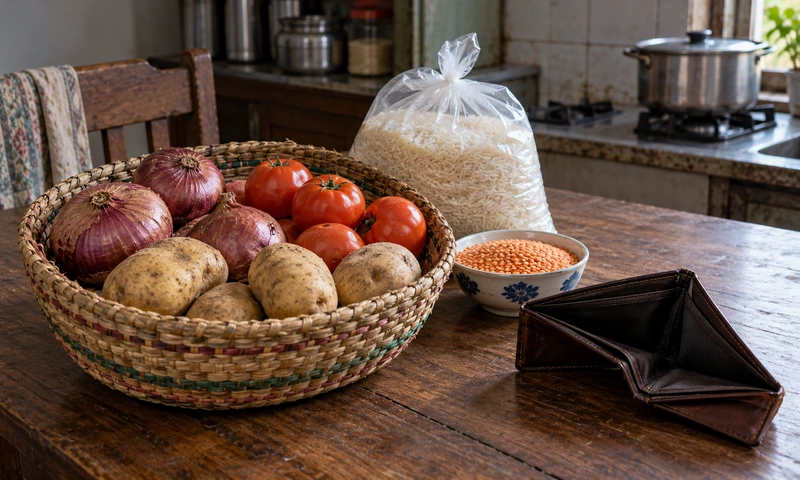
Pakistan October Inflation Forecast at 9.5–10.5% in 2026
Pakistan’s finance ministry projects inflation at 9.5% to 10.5% for October 2026 as elevated energy and food prices sustain pressure on households. However, it expects a promising economic outlook for fiscal year 2026-27, supported by a stable rupee and stronger foreign currency inflows. September inflation stood at 10.3%, compared with 5.8% a year earlier, according to the supplied report. October’s forecast therefore allows for either modest easing or a slight increase. “Headline inflation (the benchmark CPI/Consumer Price Index) is projected in the range of 9.5 to 10.5% for October 2026, with the subsequent path sensitive to international energy prices, food supplies and base effects.” The ministry outlined its assessment in the Monthly Economic Update and Outlook October 2026. It linked domestic price pressures to global trends. Official Pakistan Bureau of Statistics figures put September’s exact annual inflation rate at 10.26%. Consumer prices rose 1.27% from August. Average inflation reached 10.20% during July–September FY27. Transport prices climbed 27.43% annually, while food and non-alcoholic beverages rose 8.20%. Housing, water, electricity, gas and other fuels increased 12.39%. These figures show the pressure on essential household spending. Despite these challenges, the ministry identified several sources of economic momentum. “The recovery in the ongoing FY27 is expected to draw support from improving crop prospects, selected manufacturing industries, domestic construction activity and expanding external earnings,” it said. Stronger agricultural production should support food processing, rural incomes and trade. Machinery imports should expand productive capacity as investment projects advance. Growing services exports and workers’ remittances should also strengthen foreign exchange earnings and household incomes. The ministry said stronger reserves and wider access to external financing were improving conditions for recovery. It also highlighted fiscal discipline and structural reforms. “Fiscal policy remains focused on preserving stability through stronger revenue mobilisation, prudent expenditure management and targeted support for the vulnerable segment. The fiscal surplus provides a useful starting point…Continued progress on tax administration, energy efficiency, and state-owned enterprise reform is expected to support a durable expansion while containing pressures on the external account,” it said. During July–September, Pakistan continued to consolidate macroeconomic stability. The ministry said “stronger external inflows helped sustain the recovery amid the ongoing Middle East crisis and higher international energy prices”. Improved external financing marked the quarter’s most encouraging development, according to the report. Successful sovereign Eurobond issuance and higher foreign direct investment supported that improvement. Strong remittance growth and expanding services exports provided a continuing stream of non-debt earnings. These inflows complemented external borrowing and investment. “Backed by these buffers, the rupee remained stable, reinforcing confidence in the economy’s ability to meet its external obligations and absorb external shocks.” The ministry’s assessment nevertheless leaves the inflation outlook dependent on energy markets, food availability and base effects. Its October projection remains a forecast, rather than a final inflation reading.