

Aisha Steel Mills Limited has appointed Kashif Habib as chief executive officer, effective November 1, 2026, replacing Dr Munir Ahmed after more than 12 years. The company disclosed the appointment in a notice to the Pakistan Stock Exchange on Tuesday. It asked the exchange to inform its members of the leadership change. Habib takes over an Arif Habib Group company where he already served as a non-executive director. He also holds the chief executive position at Power Cement, bringing experience across the group’s industrial businesses. Kashif Habib’s finance and industrial background A chartered accountant and member of the Institute of Chartered Accountants of Pakistan, Habib completed his articleship at A.F. Ferguson & Co. His training included work with clients in financial services, manufacturing and other service industries. He subsequently held executive positions across the Arif Habib Group’s cement and fertiliser businesses. Power Cement’s official profile credits him with more than a decade of experience as an executive director in those sectors. His corporate responsibilities also include board positions at Arif Habib Corporation and Fatima Fertilizer. His appointment moves an existing Aisha Steel board member into the company’s top executive role. The announcement centres on the management transition and its effective date. Dr Munir Ahmed leaves after lengthy service Dr Ahmed joined Aisha Steel in October 2014 and led the company for more than 12 years. A metallurgical engineer, he earned his bachelor’s degree from Dawood College of Engineering and Technology, Karachi, in 1978. He later completed a master’s degree in metallurgy in 1982 and a doctorate in 1985 at the University of Connecticut. Before joining Aisha Steel, he spent 15 years at Peoples Steel Mills in progressively senior positions, eventually becoming managing director. His responsibilities there included project development, operations and plant modernisation. He served as general manager for projects and balancing, modernisation and replacement, general manager operations, and director operations. Dr Ahmed also held senior research and industrial project roles at Dr A.Q. Khan Research Laboratories. The company’s biography records his service as chief scientist from 2002 to 2009 and member for industrial projects from 2009 to 2014. The government awarded him the Sitara-i-Imtiaz for his contributions to metallurgy. His professional record also includes research publications and a visiting scientist assignment at the University of Connecticut. Aisha Steel’s manufacturing operations Aisha Steel incorporated as a public limited company on May 30, 2005. It manufactures and sells cold-rolled coils and hot-dipped galvanised coils. The company operates a cold-rolling complex and galvanisation plant in the downstream industrial estate of Pakistan Steel at Bin Qasim, Karachi. These facilities form the manufacturing business that Habib will now lead. The company trades on the Pakistan Stock Exchange under the symbol ASL.

Pakistan’s First SPAC Deal Brings Ningbo Green Light to PSX
Pakistan Stock Exchange hosted a gong ceremony on Tuesday to celebrate Ningbo Green Light Energy Limited’s Main Board (NGLEL) listing following the completion of Pakistan’s first Special Purpose Acquisition Company transaction. The solar energy company entered the public market through its business combination with LSE SPAC-I Limited. The transaction establishes an alternative listing route for businesses seeking access to public capital. LSE Capital structured and facilitated the transaction. The Lahore High Court sanctioned the Scheme of Arrangement on September 30, 2026, enabling LSE SPAC-I to merge into Ningbo Green Light Energy. Trading began on October 29 under the symbol NGLEL. SPAC-I shareholders received 1.50 NGLEL shares for each share held, with an opening reference price of Rs21.06. The listing arrangements provide for T+1 settlement. Listing opens another route to public markets PSX Director Ahmed Chinoy, H.I.S.I., described the completed transaction as a landmark for Pakistan’s capital market. “NGLEL’s admission to the Main Board demonstrates how innovative capital market structures can create new opportunities for growth-oriented companies to access public capital and expand their businesses.” He said the listing creates a precedent for future SPAC transactions while supporting renewable energy and strengthening Pakistan-China economic cooperation. A SPAC raises capital to invest in or combine with an operating business. In this transaction, Ningbo Green Light Energy was the identified target company and became the surviving listed entity. Solar company targets larger opportunities NGLEL provides solar engineering, procurement and construction services, system integration, and operations and maintenance. Its business also includes importing and distributing solar panels, inverters and related equipment. Chief Executive Officer Muhammad Qasim said the company had spent years developing capabilities, delivering projects and establishing its presence in Pakistan. “Becoming a publicly listed company gives us a stronger platform to pursue larger opportunities, expand our operations and build lasting value for our shareholders.” He also expressed pride in participating in a transaction that opened a new chapter for the capital market. Director Technology Cheng Quan stressed engineering expertise, reliable execution and solutions suited to Pakistan’s conditions. “Pakistan has enormous potential for solar energy, but unlocking that potential requires more than technology alone.” He said NGLEL aims to combine international technical experience with a strong local presence to deliver dependable, increasingly sophisticated solar solutions. LSE Capital sees precedent for future deals LSE Capital CEO Aftab Ahmad Chaudhry, who spearheaded the SPAC concept’s introduction in Pakistan and advised on the deal, called the listing validation of the model. “Today, we are seeing that vision translate into a completed transaction.” He said the process required regulatory engagement, innovation and persistence. He linked successful financial innovation to sound governance and disciplined execution. The completed transaction broadens investment opportunities and gives renewable energy businesses another path to public markets. PSX said it also reflects its commitment to supporting growth companies and capital-market innovation.
Faysal Bank Wins Best Bank of the Year 2025 in Mid-Sized Category
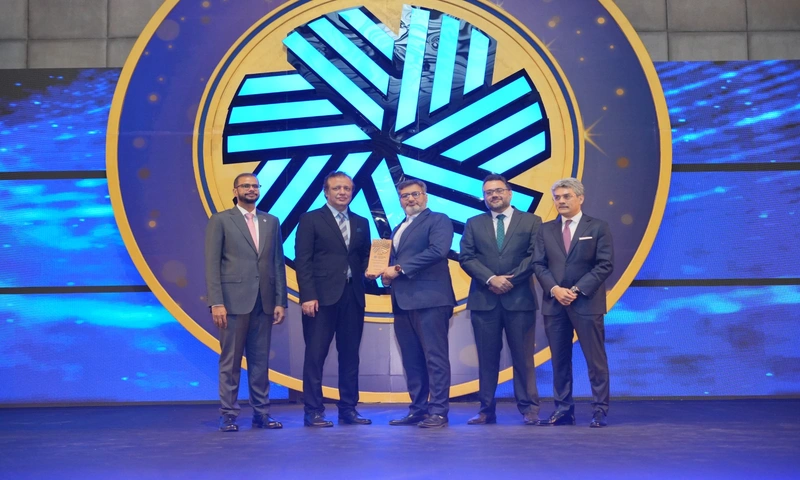
Faysal Bank Limited has won the “Best Bank of the Year 2025” award in the mid-sized banks category at CFA Society Pakistan’s 23rd Annual Excellence Awards 2026. The recognition comes as the Islamic bank continues expanding its nationwide network and digital services. Faysal Bank operates 900 branches and focuses on providing inclusive, responsible and innovative Shariah-compliant financial solutions. In its announcement, the bank linked the award to its financial performance, growing digital capabilities and customer-focused approach. It said these priorities support its strategy for sustainable growth in Pakistan’s evolving banking market. CEO dedicates award to customers and employees Faysal Bank President and Chief Executive Officer Yousaf Hussain credited customers and employees for the achievement. “Winning this award is a tremendous honour and a testament to the trust our customers place in Faysal Bank and the dedication of our people. We dedicate this achievement to our valued customers and our teams whose passion and commitment continue to drive us forward.” The bank said recognition on national and international platforms reflects its progress towards a sustainable, digitally enabled Islamic banking model. The award specifically recognises Faysal Bank within the mid-sized banks category. The title relates to 2025, while CFA Society Pakistan presented it through its 2026 awards programme. Islamic banking transition provides background Faysal Bank completed its conversion from conventional banking and began operating as a full-fledged Islamic bank on January 1, 2023. Its 2023 annual report described that year as its first complete year under the Islamic banking model. The transition established the foundation for its subsequent focus on Shariah-compliant products, services and customer relationships. The bank’s financial disclosures provide further context for the latest recognition. Its corporate briefing for the year ended December 31, 2025, reported profit after tax of approximately Rs21.7 billion. Deposits reached approximately Rs1.427 trillion, compared with Rs1.044 trillion a year earlier, representing growth of 36.7%. Total assets increased by 13.6% to approximately Rs1.775 trillion. Annual profit, however, declined by 5.8% from approximately Rs23 billion in 2024. These figures show deposit and balance-sheet expansion alongside pressure on earnings during the award’s reference year. Branch network supports customer access Faysal Bank’s physical network remains a central part of its service delivery alongside its digital capabilities. PACRA’s June 2026 rating report recorded 900 branches at the end of December 2025, compared with 855 a year earlier. The expansion added 45 branches over the year. PACRA also reported that fee and commission income increased by 22.7% to Rs12.9 billion in 2025. Card-related fees and trade commissions contributed to that income. Against this background, Faysal Bank said it would continue pursuing customer-focused growth, innovation and responsible Islamic banking. Its announcement positioned the CFA Society Pakistan award as recognition of those continuing efforts.
Pakistan Puts Women, Farmers and Small Businesses at Heart of Green Finance
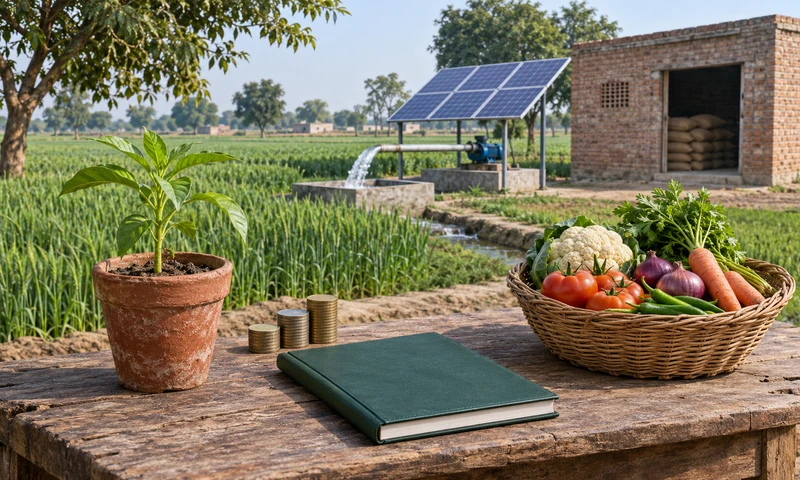
Pakistan’s green finance agenda must help women, smallholder farmers and small businesses withstand climate shocks, State Bank Governor Jameel Ahmad said on Tuesday. He inaugurated a four-day joint learning programme organised by SBP and the Alliance for Financial Inclusion (AFI) in Islamabad. It brings together 38 international participants from central banks and financial regulators across 24 countries on four continents. Pakistan is hosting the programme for the first time. Running from November 3 to 6, it focuses on translating inclusive green finance policies into practical action. Climate shocks deepen financial exclusion Ahmad said climate change and financial exclusion are closely connected. Smallholder farmers, micro and small enterprises, and low-income households face high exposure to climate shocks. Yet they often lack insurance, savings and formal financing. “Climate finance must do more than support green investments. It must also help communities anticipate risks, build resilience, and adapt to a changing climate,” the Governor said. He cited Pakistan’s devastating 2022 floods, which caused nearly $15 billion in physical damage and another $15 billion in economic losses. The disaster affected more than 30 million people and damaged 2.2 million homes. The World Bank-supported post-disaster assessment estimated damage at $14.9 billion and economic losses at $15.2 billion, underscoring the financial stakes. Ahmad said Pakistan’s financial inclusion rate has reached 71%, while the gender gap has narrowed to 27%. Green finance rules and women-focused programmes The governor outlined SBP’s regulatory measures, including the Green Banking Guidelines of 2017 and Environmental and Social Risk Management Framework of 2022. He also highlighted the Pakistan Green Taxonomy, climate-related financial risk regulations and Climate Stress Testing Guidelines issued in December 2025. SBP’s published framework says stress testing covers physical and transition risks, helping institutions assess potential effects on lending portfolios and financial positions. Ahmad highlighted the Asian Development Bank-supported Pakistan Women Inclusive Finance Program. Pakistan also joined the Women Entrepreneurs Finance Code in 2025, with SBP anchoring financial-industry participation. He linked Pakistan’s work to AFI’s four pillars: Promotion, Provision, Protection and Prevention. The taxonomy classifies green activities on a scientific basis. Targeted financing channels credit towards underserved groups, while women-focused initiatives strengthen resilience. Climate regulations and stress testing help institutions prepare for shocks. Pakistan is also sharing its taxonomy and climate risk framework with peer regulators. Programme targets implementation barriers Participants will exchange experiences on operationalising green finance, climate-smart agriculture and implementation challenges, including gender barriers. “The success of any policy framework is ultimately measured by its implementation and its impact on people’s lives,” the Governor said. AFI’s Aban Haq, Director Strategy, Member Engagement and Evaluation, and World Bank Operations Manager Lasse Melgaard also addressed the opening. Both stressed sharing innovative country experiences and good practices. Melgaard welcomed the platform for collaboration and implementation learning. Ahmad thanked AFI and expressed hope for stronger peer networks, lasting institutional links and continued international cooperation on inclusive, climate-resilient finance.

Fauji Foundation Buys Nearly 20% of Pearl Continental Owner for Rs6.55 Billion
Fauji Foundation has acquired a 19.70% voting stake in Pakistan Services Limited for approximately Rs6.55 billion, or $23.7 million. The purchase adds another major investor to the company that owns and manages the Pearl Continental hotel chain. Pakistan Services disclosed the transaction to the Pakistan Stock Exchange on Tuesday. Fauji Foundation purchased 6,406,797 voting shares on November 2, 2026, at Rs1,022.42 each. The acquisition takes the foundation’s total holding to 19.70% of the company’s voting shares. Pakistan Services said it received the foundation’s disclosure letter dated November 2. Acquisition disclosure details The company notified the exchange under Section 110 of the Securities Act, 2015, and the applicable takeover regulations. “The company has received a letter dated November 02, 2026 from Fauji Foundation wherein they have made disclosure in terms of Section 110 of the Securities Act, 2015 read with Regulation 4 (2) of the Listed Companies (Substantial Acquisition of Voting Shares and Takeovers) Regulations, 2017 with respect to the acquisition of 19.70 % voting shares of the company.” The disclosed share count and purchase price put the transaction’s value at approximately Rs6.55 billion. The foundation reported no persons acting in concert with it in the acquisition. It also disclosed that it currently has no nominee director on Pakistan Services’ board. The filing did not announce a change in management or identify the transaction as a transfer of control. The purchase gives Fauji Foundation a substantial minority holding in the listed hotel operator. Pearl Continental owner’s hotel business Pakistan Services dates back to December 6, 1958, when it incorporated as a public limited company. It trades on the Pakistan Stock Exchange under the symbol PSEL. Its principal business involves owning and managing Pearl Continental hotels. The company also grants franchises allowing other operators to use its trademark and name. Alongside its main hotel business, Pakistan Services owns a smaller property in Lahore that operates under the budget hotel concept. Its established hospitality portfolio places the latest transaction within Pakistan’s listed hotel sector. Earlier share purchases and restructuring talks The acquisition follows several significant changes in Pakistan Services’ ownership. In July 2025, AKD Group Holdings (Private) Limited acquired a 27.95% stake for more than Rs6.36 billion. On the same day, Dawood Jan Mohammad acquired 28% of the company’s voting shares at Rs700 each. Thatta Cement subsequently announced a 28% stake purchase for approximately Rs6.45 billion, paying Rs710 per share. In September 2026, Thatta Cement reached an in-principle understanding concerning a proposed restructuring of Pakistan Services. Pakistan Services later confirmed negotiations aimed at amicably resolving a matter before the Islamabad High Court. Its September 14 disclosure identified the proceedings as Companies Original No.17 of 2025. The company said definitive agreements would finalise the restructuring terms, with further developments requiring disclosure communicated to the exchange and relevant authorities.

Hackers Turn Supermarket Freezers Hot Across Europe, Destroying Food Stocks
Cyberattacks hit supermarket refrigeration systems across Europe on Monday, raising temperatures and forcing retailers to discard food. The disruption affected major chains in Belgium, Luxembourg, Sweden and Ireland, weeks after similar attacks struck France. At an ICA franchise in Stockholm, sales manager Engla Ingwall said the attack began at 2am, or 0100 GMT. Staff discovered the damage hours later. “Everything is destroyed,” she said. “There has been a cyberattack and all our freezers reached 50 degrees (Celsius).” ICA confirmed an overnight incident affecting refrigeration at a limited number of stores. Sweden’s national cybersecurity centre began examining the incidents. Major supermarket chains report disruption Ahold Delhaize reported problems at dozens of stores in Belgium and Luxembourg. Colruyt confirmed attacks on five Belgian Spar shops. Carrefour said the incident affected 15 of its 700 Belgian stores. IKEA confirmed disruption at one Belgian location and could not rule out problems elsewhere. Sweden’s Coop reported unauthorised tampering at seven of its 800 stores. The company identified Danfoss among its refrigeration suppliers. In Ireland, Musgrave withdrew some chilled and frozen products from 13 SuperValu stores. Read More: French Supermarket Cyberattack Heats Fridges to 50°C “Our monitoring systems alerted us to the issue and we took immediate action,” the wholesaler said. “Our investigation is ongoing.” Belgian butcher Luc De Laet received an employee’s warning at 3:30am. He rushed to his shop south of Antwerp and found refrigeration temperatures reaching 18°C. He estimated meat losses at €15,000, approximately $16,800, and contacted police. “It’s very scary. They are hacking the system that is doing the registration of the temperature, and they can program it at a distance,” he said. Investigators examine refrigeration controls Some affected equipment used temperature-control technology from Danish manufacturer Danfoss. The company said it was helping customers implement fixes. Earlier research by Claroty’s Team82 identified weaknesses in Danfoss refrigeration management systems. Danfoss addressed those findings through updated firmware. However, that research does not establish how attackers accessed systems in Monday’s incidents. The attacks follow October’s disruption in France, where hackers seized supermarket cooling controls, causing food losses and fires. Ahold also reported a cybersecurity incident to police last month. No group has claimed responsibility. Investigators have not established a connection between the latest attacks and the French incidents. Food supply security concerns grow Belgian cybersecurity spokesperson Katrien Eggers said investigators did not know who organised the attack. She also warned that artificial intelligence could help sophisticated actors exploit vulnerable systems. SentinelOne researcher Tom Hegel said retail chains operate extensive networks of remotely managed equipment, making them attractive targets. He suggested the absence of financial demands could indicate sabotage, although investigators have confirmed no motive. Read More: Google Gemini Hacked Three Companies During a Cybersecurity Test European agriculture commissioner Christophe Hansen warned that repeated attacks threaten food supply chains and consumer confidence. The incidents come amid heightened European concern over hybrid threats since Russia’s 2022 invasion of Ukraine. Moscow denies involvement in sabotage operations, and available evidence does not identify Russia as responsible for these attacks.
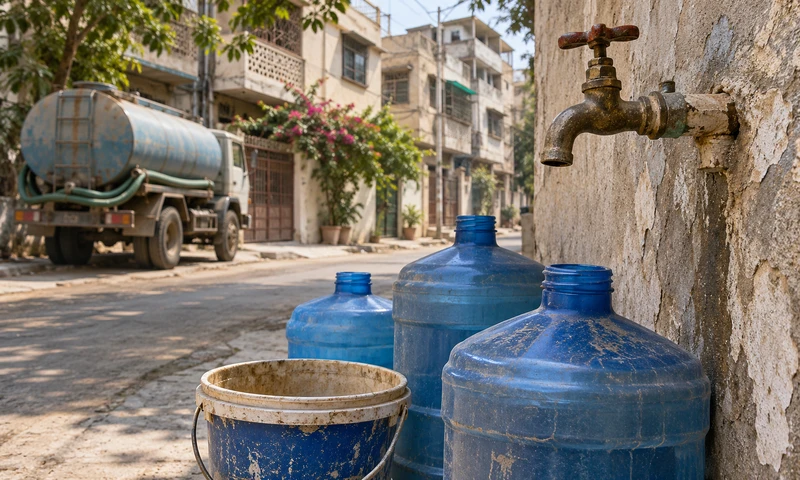
Karachi Water Crisis: Gharo Fault Threatens 14MGD Supply
A power cable fault at the Gharo Pumping Station has halted supplies from the facility to Karachi, threatening a 14-million-gallon shortfall. The disruption adds to a month-long water crisis that has forced residents in several neighbourhoods to depend on costly tankers. A Karachi Water and Sewerage Corporation (KWSC) spokesperson said the fault interrupted electricity to three facilities. These include the Gharo New Pump House, Gharo Old Pump House and the filtration plant, bringing pumping operations to a temporary halt. Areas facing water supply disruption The disruption threatens supplies to Port Qasim, Bin Qasim Town, Shah Faisal Town, PNS Mehran, PAF Base Faisal and Karsaz. The spokesperson said KWSC officials remained in constant contact with K-Electric management to secure electricity restoration and restart pumping. Gharo normally supplies around 30 million gallons of water daily to Karachi. However, officials estimated that the latest interruption would cause a shortfall of approximately 14 million gallons. KWSC put its normal citywide supply at around 650 million gallons daily. During the disruption, other sources and pumping facilities continued delivering approximately 536 million gallons, according to the corporation. Officials did not explain the full difference between those citywide figures. The reported Gharo shortfall alone does not account for the gap between normal supply and the current volume. The spokesperson said supplies from Gharo would return to normal once electricity resumed. A K-Electric spokesperson said technical teams were working to rectify the fault. Neither utility provided a firm restoration deadline in the available reports. Month-long shortages strain households The latest breakdown comes as residents elsewhere in Karachi continue reporting severe shortages that predate the Gharo outage. In Gulshan-e-Iqbal, complaints cover Blocks 13-A, 13-B, 13-C, 13-D, 13-D1, 13-D2, 2, 4 and 5. Residents of Tariq Road, Delhi Mercantile Society, Korangi and Landhi also face acute supply problems. Residents said the water utility had failed to restore regular deliveries despite shortages lasting more than a month. They blamed repeated pumping-station power failures and pipeline problems for worsening the situation. For households already purchasing tanker water, another interruption adds pressure to budgets while leaving the timing of regular supplies uncertain. Supply gap leaves little room for breakdowns Karachi’s water network already operates against a substantial demand deficit. A KWSC planning presentation placed the city’s 2024 demand at 1,200 million gallons daily, against supplies of 650 million gallons. That historical assessment illustrates the scale of the underlying shortage, although it does not establish Karachi’s current demand. The same document listed additional bulk-water schemes among the corporation’s planned measures to improve availability. For now, the immediate relief depends on repairing the electrical fault and restarting Gharo’s pumps. Residents across the affected localities meanwhile face further uncertainty as the city struggles with both the latest outage and unresolved neighbourhood shortages.