

Pakistan’s Federal Board of Revenue (FBR) has added an option to its IRIS portal for amending or cancelling electronic sales tax invoices after the 72-hour deadline. Taxpayers can now apply online, but the relevant Commissioner Inland Revenue (CIR) must approve the request before any change takes effect. The new option puts an existing approval requirement into practice. Under Sales Tax General Order No. 1 of 2026, integrated taxpayers can edit, delete or cancel valid electronic invoices that they generated through a genuine mistake. The standard window runs for 72 hours from the time the taxpayer generates the invoice. Any change after that window requires the commissioner’s prior approval. How to request an invoice change in IRIS Pakistan Revenue Automation (Private) Limited, or PRAL, issued a user manual for the new feature on November 5. The manual describes how taxpayers can address errors and discrepancies once the standard editing window closes. Taxpayers first log in to IRIS and open the Sales Tax applications section. From there, they select “Application for Amendment in Electronic Sales Tax Invoice (after 72 hrs).” They then choose the relevant tax period and identify each invoice using its FBR Invoice Transaction Number. Read More: FBR Extends 2026 Tax Return Deadline to October 31 Applicants can attach supporting documents in PDF format. Tax officers can also ask for further explanations through the portal’s Internal Correspondence feature before a decision. For each invoice, taxpayers must choose either amendment or cancellation. IRIS prevents them from selecting both actions for the same invoice in one application. What happens to Annexure-C while a request is pending? IRIS blocks taxpayers from submitting Annexure-C (Sales) of their sales tax return while the commissioner considers the application. Taxpayers can submit the annexure once the commissioner issues a decision. If the commissioner approves an amendment, IRIS makes the corrected invoice available for inclusion in Annexure-C, subject to system checks. If the commissioner rejects the application, the original invoice remains in effect. IRIS then loads the original invoice into Annexure-C and the Federal Excise Return, wherever applicable. Which sales tax invoices are eligible? Taxpayers can submit more than one application for the same tax period, but each application must cover different eligible invoices. IRIS excludes invoices that already appear in Annexure-C of a sales tax return or that link to a Federal Excise Return. The portal also excludes invoices that the commissioner previously approved under another application. Read More: YouTube Tax Pakistan: FBR’s Rs195 Benchmark Explained An invoice that already featured in an earlier application cannot go back into the queue. That restriction also covers invoices that the commissioner has rejected and those still awaiting a decision. For taxpayers correcting several invoices in the same period, the distinction is important. IRIS allows separate applications for different invoices, while a pending request still prevents submission of Annexure-C (Sales).
Pakistan External Debt Nearly Doubles to $135.1 Billion
Pakistan’s external debt rose nearly 97 per cent over the decade to 2025, reaching $135.107 billion. The World Bank’s International Debt Report 2026 puts the 2015 figure at $68.673 billion. China remained Pakistan’s largest individual creditor, with $22.4 billion outstanding. Who holds Pakistan’s external debt? Public and publicly guaranteed debt accounted for $107.076 billion of the total. Private debt without a public guarantee stood at $17.58 billion, while short-term debt totalled $10.45 billion. Within the public and publicly guaranteed category, Pakistan owed multilateral creditors $56.83 billion and bilateral creditors $42.43 billion. Private creditors held another $7.8 billion in that category. The World Bank followed China with $19.2 billion outstanding, while the Asian Development Bank held $16.83 billion. Read More: Pakistan Cuts Interest Payments by 22%, but Its Debt Keeps Growing Official loans carried an average interest rate of 3.6 per cent, with a 16-year maturity and four-year grace period. Private credit averaged 8.6 per cent interest, with three years for repayment and a one-year grace period. China extended maturities on $2 billion in Pakistani loans in 2025. The World Bank report puts new IMF disbursements at $2.3 billion across the Extended Fund Facility and Resilience and Sustainability Facility. The IMF’s December review separately put cumulative disbursements under both arrangements at about $3.3 billion. Debt-service and interest ratios improved across the Middle East, North Africa, Afghanistan and Pakistan region. However, external debt rose from 26.7 to 29.4 per cent of regional gross national income, the largest increase among regions. Developing economies’ external debt hits $9.4 trillion External debt across low- and middle-income economies grew 5.5 per cent to a record $9.4 trillion. That marked the fastest rise in four years. A rebound in bond issuance, renewed private lending and a weaker US dollar contributed to the increase. Currency effects accounted for 28.2 per cent of the increase in public and publicly guaranteed debt. Private creditors held $5 trillion, up 5.2 per cent. Bondholder claims rose 5.7 per cent to $2.4 trillion. Claims held by commercial banks and other private lenders rose 4.7 per cent to $2.7 trillion. Meanwhile, gross national income grew 5.1 per cent. Read More: Pakistan Wins Panda Bond Award, Plans More Debt Issues in China Debt rose 8.1 per cent to $1.3 trillion in countries eligible for International Development Association financing. Low-income countries recorded an 8.9 per cent increase to $262.4 billion, their steepest rise since 2020. New private credit for IDA-eligible borrowers averaged 8.2 per cent, the highest since 1989. Their rate gap between official and private credit widened from 3.4 percentage points in 2016 to 5.5 in 2025. Countries eligible only for IBRD lending paid 5.5 per cent on new bonds, down from 5.8 per cent. Debt-service payments climbed for a fifth straight year, rising 1.9 per cent to $1.4 trillion. Payments to bondholders rose 13.7 per cent to $363.1 billion. From 2022 through 2025, debt service exceeded new financing by $436.1 billion. Even so, net long-term debt flows swung from a $118.4 billion outflow in 2024 to a $45.4 billion inflow in 2025.
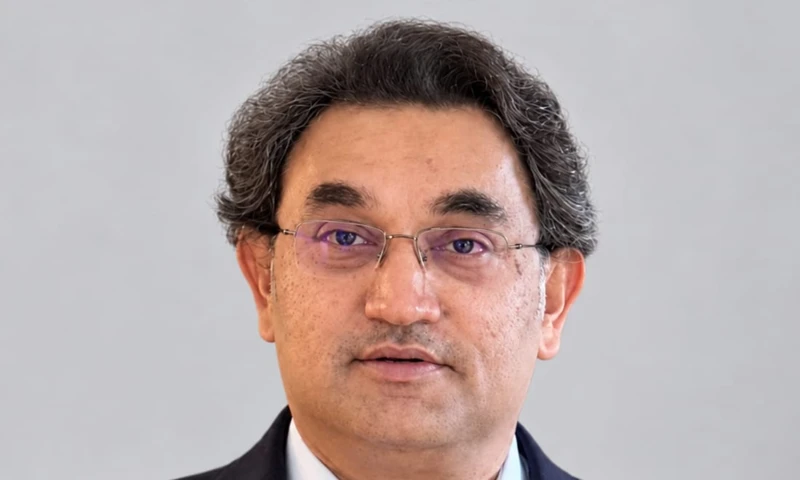
Mustafa Ramday Appointed PSO Chairman for Three Years
The federal government has appointed Mustafa Ramday as chairman of Pakistan State Oil Company Limited (PSO) with immediate effect. Ramday will also serve as an independent director for a three-year term, according to the company’s press release. The government reconstituted PSO’s Board of Management as part of the same decision. Ramday said he would serve in an honorary capacity. He will forgo directors’ fees and waive reimbursement for travel, accommodation and other expenses related to PSO work. The commitment covers assignments both in Pakistan and abroad. “I would like to make it clear, to the company and to everyone else, that I will not charge PSO any directors’ fee, travel, boarding, lodging or other costs to which I would be entitled for any PSO work, whether within or outside Pakistan.” Mustafa Ramday’s legal and energy-sector experience Ramday brings more than 28 years of experience in constitutional, commercial and energy-sector law. He is an advocate of the Supreme Court of Pakistan and previously served as advocate general of Punjab. He has advised on the legal framework for the China-Pakistan Economic Corridor (CPEC), as well as on power generation and clean energy projects. His work also includes representing oil, gas and power-sector entities in international arbitration. Chambers & Partners lists him in Band 3 for general commercial dispute resolution in Pakistan. Who sits on the reconstituted PSO board? The nine-member board has five independent directors, including Ramday, and four ex-officio directors. Muneeb-ul-Haq, Aftab Hussain, Imtiaz Hussain Kazi and Saira Shahid Hussain are the other independent directors. Read More: What PSO Just Announced for Its 3,600 Fuel Stations The secretaries of the Petroleum, Power and Finance divisions sit on the board as ex-officio directors. Each secretary may designate a representative of at least BS-20 rank. The chief executive officer of Pakistan LNG Limited holds the fourth ex-officio seat. The reshuffle follows the expiry of the previous board’s statutory term. On October 26, the Cabinet Committee on State-Owned Enterprises approved two independent director nominations, including one for a woman. The committee considered the nominations as part of the board’s reconstitution. PSO’s role in Pakistan’s fuel supply PSO sources and distributes petrol, high-speed diesel, jet fuel and liquefied natural gas, among other products. In its FY2025 annual report summary, the company reported 3,649 retail outlets and storage capacity of 1.24 million tonnes. Its network also included nine terminals, 19 depots and 15 airport refuelling facilities. PSO sourced fuel from local refineries and through imports. Read More: PSO names former Shell executive Jawwad Cheema as CEO PSO’s management and employees welcomed Ramday and the reconstituted board. They said they looked forward to the board’s guidance on strengthening corporate governance and upholding transparency and accountability. The company also pointed to two priorities for the board’s tenure: creating long-term value for shareholders and fulfilling PSO’s responsibility to meet Pakistan’s energy needs.
