

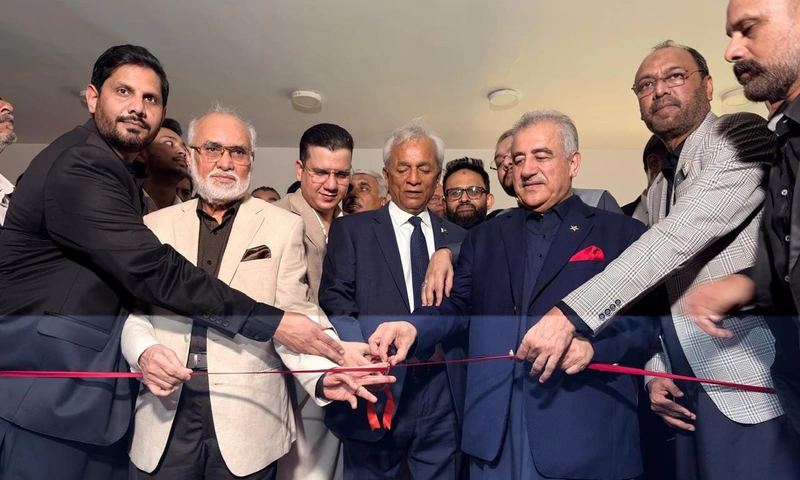
Sindh Local Government Minister Syed Nasir Hussain Shah announced a one-window office at ABAD House on Friday. He said the office would simplify construction approvals, address builders’ complaints and promote investment. Shah made the announcement while opening the three-day construction materials exhibition with Association of Builders and Developers Chairman Muhammad Hanif Gohar. Sindh plans to digitise construction approvals Shah said Sindh was moving to digitise services alongside the one-window rollout. The Sindh Building Control Authority (SBCA) director general and provincial officials are coordinating to address construction-sector problems, he said. He called the exhibition an opportunity for builders and allied industries. Read More: Tax Filing Pressure Mounts as ABAD Joins Calls for More Time Governor Syed Nihal Hashmi attended as guest of honour and toured stalls with Shah. ABAD officeholders Danish Bin Rauf, Syed Khurshid Alam and Syed Moez Zaidi attended. SBCA and Karachi Development Authority heads joined other officials, exhibitors, builders and developers. The expo runs through November 15, from 10:30am to 6:30pm. The exhibition brought together 23 companies, including Porcelano, Popular, The City Tiles, GM Tiles and World Ceramics. Displays included tiles, furniture, fans and other building materials. Hashmi credited Gohar with bringing suppliers together at ABAD House and urged exhibitors to pursue export markets. Shah cites road works and calls for investment Shah said work was underway on more than 150 roads across Sindh, including small and major routes. “Our desire is that discussions should focus on Pakistan’s development, business opportunities and the promotion of investment. Pakistan is receiving positive recognition internationally, and we should benefit from this favourable environment,” he said. Read More: Pakistani Investors Struggle to Recover Millions From Dubai He called for better facilities to attract local and foreign investment and keep capital in Pakistan. Shah said PPP Chairman Bilawal Bhutto Zardari and Sindh’s chief minister were ready to support businesses. He also cited efforts to improve Provincial and National Finance Commission matters and called for greater attention to governance. Asked about Gohar, Shah said the ABAD chairman maintained relations with everyone. He asked Gohar to identify anyone who had taken money from him and pledged action if he did. Shah said the government’s accountability system used rewards and penalties and that it had suspended several officials. Minister addresses questions on Sindh’s boundaries Shah said President Asif Ali Zardari and Bilawal had made clear that Sindh’s people would decide the province’s future. He said a referendum could take place and the constitutional process would still apply. Under Article 239, an amendment changing provincial boundaries requires support from two-thirds of the affected assembly’s total membership. Read More: Hanif Gohar Wins ABAD Chairmanship Without a Contest Asked about the Muttahida Qaumi Movement, he said, “We do not take MQM seriously. It does not even have a leader, although we sympathise with it.” Shah described Mohsin Naqvi’s meeting with Zardari as personal and called links to provincial matters speculation.
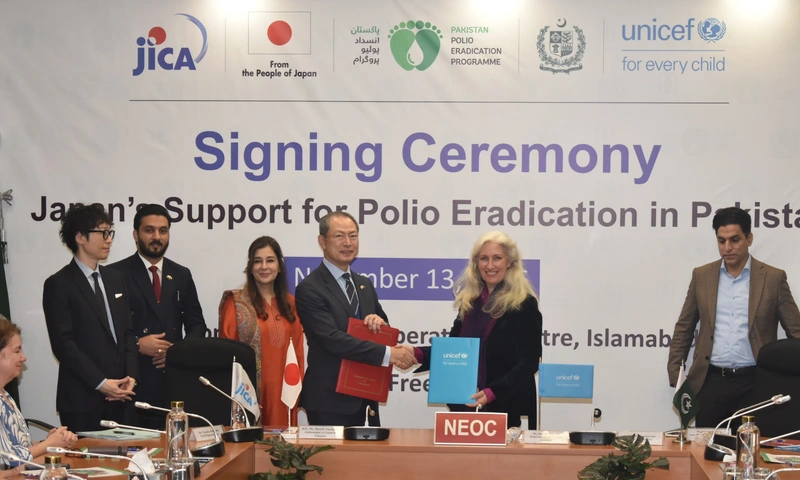
Japan Announces $4.3 Million Polio Grant for Pakistan
Japan announced a $4.3 million grant on Friday to support Pakistan’s 2027 polio vaccination campaigns. Pakistan’s Polio Eradication Initiative will use the funding to buy and deliver more than 28 million doses of oral polio vaccine. Pakistan aims to stop polio transmission by the end of 2027 Afghanistan and Pakistan remain the only countries that have never interrupted wild poliovirus transmission. Pakistan recorded 74 cases in 2024 and 31 in 2025. Its polio programme reported nine cases so far in 2026, including four in southern Khyber Pakhtunkhwa. The Japanese Embassy’s release cited eight cases, including six in southern KP. Insecurity and access constraints continue to hamper vaccination in the region. Read More: Pakistan Polio Eradication: Rotary Renews World Polio Day Pledge Pakistan aims to interrupt transmission by the end of 2027. Its National Emergency Action Plan 2026–27 sets out that target under the Roadmap to Zero. Each nationwide drive targets more than 45 million children under five. More than 400,000 frontline health workers support those campaigns. “The Government of Japan’s contribution comes at a critical time as Pakistan intensifies its efforts to interrupt poliovirus transmission and end this preventable disease,” said Ayesha Raza Farooq, the prime minister’s focal person on polio eradication. “Every dose of vaccine supported through Japan’s contribution brings us closer to a polio-free Pakistan. We are grateful to the Government and people of Japan for their continued commitment and partnership in Pakistan’s efforts to eradicate polio and protect every child.” Japan’s polio support tops $248 million since 1996 Japan has provided more than $248 million in grants and loans through UNICEF since 1996. The new grant is larger than last year’s. “Since 1996, Japan has consistently supported Pakistan’s polio eradication efforts, working closely with UNICEF and other partners. Today’s new grant, which has been increased from last year, demonstrates Japan’s continued support for our shared goal of achieving a polio-free Pakistan” said Japanese Ambassador Akamatsu Shuichi. “Japan fully supports Pakistan’s determination to achieve the goal of interrupting poliovirus transmission by the end of 2027.” Read More: Pakistan Scraps Vaccine Tender, Changes Pilgrim Jab Process “Let us continue working together until the day when no child suffers from polio,” said Yusuke Shinozaki, chief representative of the JICA Pakistan Office. “We sincerely commend the strong commitment of the Government of Pakistan, the dedication of frontline health workers who continue to serve communities under challenging circumstances, and the tireless efforts of UNICEF and all other partners to deliver life-saving vaccines to every child.” “Japan has been a steadfast partner in Pakistan’s efforts to end polio, and this contribution will help sustain the high-quality vaccination campaigns needed to interrupt transmission,” said Pernille Ironside, UNICEF’s representative in Pakistan. “UNICEF deeply appreciates Japan’s continued partnership. By ensuring every child is reached with the polio vaccine, we can bring Pakistan closer to a polio-free future and leave no child behind.”
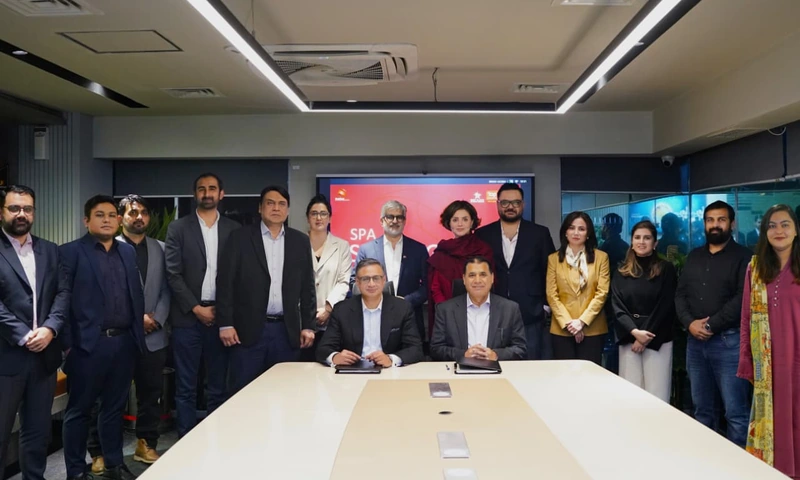
Mobilink Bank Signs Deal for 82.51% of Apna Bank
Mobilink Bank has signed a sale and purchase agreement to acquire an 82.51% stake in Apna Microfinance Bank Limited. The deal would give Mobilink Bank control of the Pakistan Stock Exchange-listed lender. It requires legal and regulatory approvals, including clearance from the State Bank of Pakistan and the Competition Commission of Pakistan. Mobilink Bank President and CEO Haaris M. Chaudhary and Apna Bank Chairman Muhammad Akram Shahid signed the agreement. Senior leaders from both banks and JazzWorld attended the signing. VEON, Mobilink Bank’s parent company, said it would disclose the purchase price and expected capital requirements after regulators grant approval. What the deal means for Apna Bank customers Mobilink Bank said Apna Bank customers would retain access to their accounts and services throughout the transaction. After completion, customers would gain access to Mobilink Bank’s wider nationwide network, Islamic banking products and digital financial services through JazzCash. The bank said the deal aims to protect depositors’ interests, maintain stakeholder confidence and give Apna Bank a stronger base for growth. “Mobilink Bank has built strong digital capabilities, scale and customer reach over time,” Chaudhary said. He said teams from both banks would work closely to keep services running and help customers move to the larger institution. “This agreement marks the beginning of an important new chapter for Apna Bank,” said Nazish Ali, the lender’s acting CEO. She said customers would gain access to stronger digital infrastructure and a wider range of financial services. She also named customers, depositors, employees and other stakeholders as priorities during the transition. Mobilink Bank targets rural banking and small businesses Apna Bank has an extensive branch network across Pakistan. Its loan portfolio focuses on agriculture and small businesses, including borrowers in rural communities with limited access to formal banking. Mobilink Bank said the proposed acquisition forms part of its “Growth with Purpose” strategy. The bank linked the deal to its goals of expanding financial inclusion and strengthening Pakistan’s banking sector. Aamir Ibrahim, Mobilink Bank chairman and JazzWorld CEO, said the deal fits into a broader financial services business. He pointed to JazzCash’s reach in payments and to insurance offerings from JazzSure Insurance, formerly TPL Insurance, and FikrFree. He said insurance penetration in Pakistan remains low. Mobilink Bank extends the same effort into banking for agriculture and micro-enterprises, he added. Ibrahim said the businesses complement one another. He described the goal as giving people access to financial tools “regardless of where they live or how they earn a living”. For Apna Bank customers, access to Mobilink Bank’s wider services depends on the deal clearing regulators and closing.
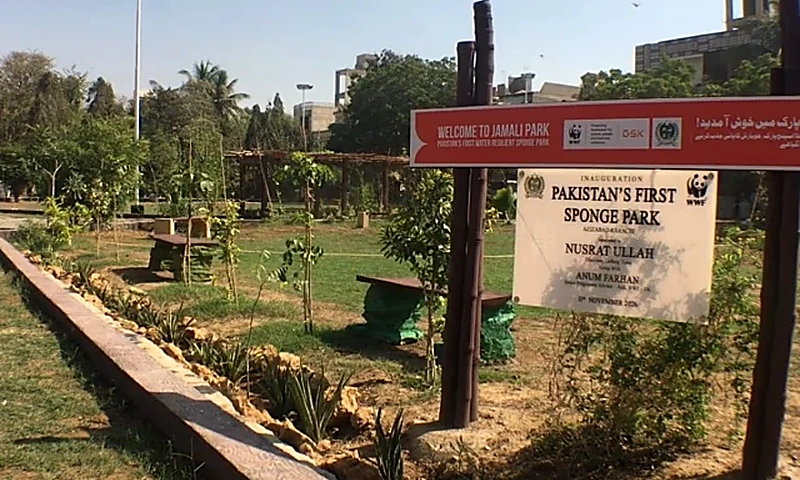
Pakistan’s First Sponge Park Opens in Karachi. How Does It Work?
Karachi inaugurated Pakistan’s first experimental sponge park on Thursday at Jamali Park in Gulberg Block 2. The project captures rainwater that would otherwise run through city drains into the sea. It aims to recharge groundwater, ease pressure on drains during heavy rain and provide filtered water for irrigation. WWF-Pakistan, Gulberg Town Municipal Corporation and private-sector partners completed the project in six months. How Karachi’s sponge park filters and reuses water The park collects rainwater and water from the ablution facilities of a nearby mosque. Both pass through locally developed filters beneath the park’s water channels. Gravel and larger stones catch soil and debris, while sand and silica trap finer particles. Activated carbon and biochar capture chemical and organic pollutants. A layer of zeolite helps reduce certain heavy metals and other contaminants. Filtered water can seep underground or enter storage tanks for use on the park’s trees and plants. Naim Ashraf Raja, the federal climate ministry’s biodiversity director, said extensive extraction through boreholes had depleted underground freshwater reserves. He said replenishing them could help protect future water supplies for people and animals. Gulberg Town Chairman Nusratullah called the opening a milestone. He pointed to climate impacts in Europe and urged swift action to conserve water. Sohail Ali Rizvi, WWF-Pakistan’s freshwater programme director, said the organisation revised its strategy about 15 years ago. It began working with private partners on water projects in Lahore in 2012. He said the Karachi team used local materials, including soil and small stones, to build the filters. Residents can scan barcodes to obtain saplings, including tamarind, almond, peepal and gulmohar. They commit to caring for the plants and staying in touch with park staff, who monitor their growth. The park also has dedicated spaces for butterflies and other biodiversity. What the pilot could mean for urban flooding Across Karachi, paved roads, concrete and tiles limit how much rain soaks into the ground. Sponge parks slow runoff and give water time to seep into the soil, easing pressure on conventional drains. More vegetation can also cool public spaces. China launched its sponge city programme in 2014. Wuhan and Shanghai adopted measures such as wetlands, reservoirs, green roofs and permeable paving. Copenhagen drew up a cloudburst plan after severe flooding in 2011. Rotterdam’s Benthemplein water square can hold about 1.7 million litres, while Singapore’s Active, Beautiful, Clean Waters programme integrates waterways with public spaces. Berlin, New York and Auckland have also adopted green infrastructure to manage runoff. If the Jamali Park pilot succeeds, Karachi could extend the model to other parks and public spaces. Its performance will depend on soil conditions, how quickly the ground absorbs water, groundwater quality, rainfall volumes and regular maintenance.
AI Makes Some Coursework ‘Close to Impossible’ to Assess, England’s Universities Warn
England’s higher education regulator has urged universities to bring back more supervised exams and in-person presentations. The Office for Students (OfS) warned on November 11 that widespread AI use in essays, dissertations and open-book exams could undermine confidence in degrees. Lecturers told researchers that AI had made it “close to impossible” to assess students’ work in some areas. Universities and colleges could face sanctions if their assessments fail to measure what students know and can do. Under the regulator’s existing Condition B4, providers must assess students effectively and ensure each assessment is valid and reliable. They must also design academic regulations that protect the credibility of their qualifications. Read More: FBR’s AI will cross-check your tax return. What can it flag? Josh Fleming, the OfS director of strategy and delivery, said AI “presents a generational risk to the system as it stands, threatening to undermine students’ learning and institutions’ ability to assess them”. He called for wider use of AI-free assessment. He said the speed and scale of change posed a challenge for universities and the regulator. The OfS would continue working with institutions to help them use AI while managing the risks, he added. Students say classmates used ChatGPT and escaped detection The OfS and Advance HE gathered evidence from more than 300 students and staff across 127 universities and colleges. The research ran from June to September and examined teaching, assessment and AI literacy. Students said some classmates used AI to finish assignments within minutes and earned grades similar to peers who completed the work themselves. Some could barely recall what they had submitted. One student recalled classmates admitting, ‘I wrote this whole essay with ChatGPT’. The student said classmates repeated the tactic after escaping detection. Read More: ChatGPT Locked Chats: PIN Protection and Reset Warning Lecturers described batches of submissions that cited the same literature and sounded alike. One academic said AI had put academic integrity at serious risk, with students using it to write some or all of their coursework. Another questioned whether existing assessments could still measure students’ knowledge and skills. Universities turn to oral exams and supervised assessments Some institutions already use more supervised written exams, live presentations and oral examinations known as vivas. Others ask students to critique or edit AI-generated work. Another approach asks students to document how they researched and produced an assignment, giving lecturers evidence of the work behind the submission. Universities UK, which represents 147 higher education institutions, said many had already made substantial changes. It cited assessments that allow AI under controlled conditions alongside supervised exams and assignments that track students’ work. The Department for Education said it expected the OfS to enforce existing standards and move quickly to clarify its rules on AI.

Dollar Rate in Pakistan: Rupee Closes at Rs276.61
The Pakistani rupee gained one paisa against the US dollar on Thursday, closing at Rs276.61 in the interbank market. It had settled at Rs276.62 on Wednesday. The local currency extended its marginal gains as the dollar climbed to a 19-month high against major currencies overseas. The interbank bid stood at Rs276.61 per dollar, while the offer stood at Rs276.81. Separately, the State Bank of Pakistan (SBP) listed a ready rate of Rs276.6137 for authorised dealers’ mark-to-market revaluation. Open-market dollar selling rate falls to Rs278.23 In the open market, the rupee gained three paise on the dollar buying rate and 10 paise on the selling rate. Exchange companies closed at Rs277.09 for buying and Rs278.23 for selling. The open-market selling rate ended Rs1.42 above the interbank offer. Read More: Cisco Upgrades State Bank of Pakistan’s Core Network in Multimillion-Dollar Project The rupee posted a larger gain against the euro. It strengthened by Rs1.72 on the buying side and Rs1.69 on the selling side. The euro closed at Rs306.65 for buying and Rs309.92 for selling. The rupee gained one paisa on both sides against the UAE dirham, which closed at Rs75.47 for buying and Rs76.09 for selling. The Saudi riyal buying rate held at Rs73.79. The rupee gained two paise on the selling side, bringing that rate to Rs74.36. US dollar hits 19-month high as Fed hike bets grow The dollar index rose 0.15% to 103.02, its highest level since April 2025. The index tracks the dollar against a basket of major currencies. Traders increased their bets on further Federal Reserve tightening after October inflation came in stronger than expected. Fed officials flagged persistent inflation and left open the possibility of a 50-basis-point increase. Some major brokerages, including Goldman Sachs, expect a December hike and another in early 2027. The dollar reversed an earlier decline against the Japanese yen and traded 0.04% higher at 159.83 yen. It had reached a more than two-month high earlier on Thursday. A dovish speech by a Japanese central banker and a wide interest-rate gap helped push the yen close to 160 per dollar. Oil recovers as SBP reserves rise Crude prices recovered as geopolitical tensions in the Middle East and Russia offset pressure from rising output. At 1425 GMT, Brent futures were up 65 cents at $93.40 a barrel. US West Texas Intermediate gained one cent to $86.54. Both contracts had lost more than $1 a barrel in early Asian trading and remained on track for weekly declines. Read More: Exchange Companies’ Dollar Sales Jump 30% as Inflows Surge Separately, the SBP reported a rise in its foreign exchange reserves. “During the week ended on 06-Nov-2026, SBP’s FX reserves increased by US$ 11 million to US$ 21,572.5 million,” the central bank said. Commercial banks held $5.27 billion in net foreign reserves, putting Pakistan’s total liquid foreign reserves at $26.84 billion.
Pakistan Mineral Exploration Targets Copper, Gold and Lithium
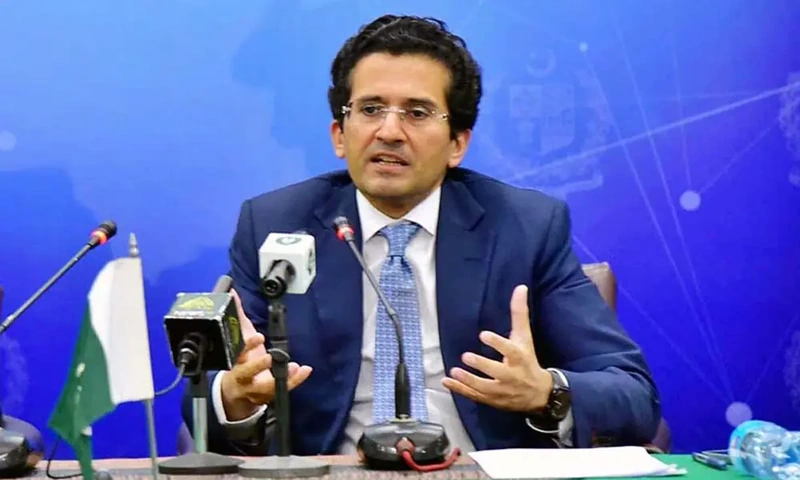
Pakistan is stepping up exploration for copper, gold, lithium and other strategic minerals to attract foreign investment. Petroleum Minister Ali Pervaiz Malik outlined the priorities on Friday at the Pakistan Minerals Investment Forum 2026 (PMIF26). He also highlighted plans to expand domestic copper processing and improve transport links between mining regions and export markets. The two-day forum opened in Islamabad on Thursday, drawing delegations, exhibitors and other participants from abroad. Pakistan showcased resources ranging from coal and salt to gold and critical minerals. Officials pledged predictable, investor-friendly policies, institutional support and security. Pakistan maps mineral prospects across three regions Malik identified Chagai and western Balochistan as priorities for copper and gold exploration. He pointed to lithium, tin and tungsten in Gilgit-Baltistan, and to antimony and base metals in Khyber Pakhtunkhwa. He said Pakistan was backing that work with “modern geochemical and geophysical surveys, exploratory drilling, and upgrading of our geoscience advanced research laboratories with sophisticated analytical technologies”. Read More: Why Pakistan Wants to Replace Two Gas Utilities With Five The Geological Survey of Pakistan is leading efforts to improve the scientific data available to explorers. “The government’s accelerated geological mapping programme, including detailed surveys at a scale of 1:50,000, is helping identify mineral prospects across the country.” Malik also cited the UK Pakistan Geoscience Capacity Building Programme, saying “we are strengthening expertise in digital mapping, airborne surveys and mineral assessment”. “We are also digitising decades of geological information to give investors greater access to reliable data, reduce exploration uncertainty, and enable informed investment decisions,” he said. Copper smelting and rail links feature in investment pitch Pakistan has long exported raw ore and imported finished products to meet domestic demand, Malik said. “We are now advancing copper smelting to capture more of the value chain from the mine to the finished metal,” he added. Malik said a discovery was only the first step towards a commercially viable mine. Mining projects also need electricity, water, roads, railways and access to international markets. Read More: Pakistan Invites Chinese Companies to Pakistan Minerals Investment Forum 2026 “That is why infrastructure development is aligned with our mineral ambitions,” he said. He called the planned Rohri-Nokundi railway upgrade, connectivity to Port Qasim and supporting infrastructure around Reko Diq “important steps” towards connecting mineral-rich regions with global markets. The investment push also produced a copper and gold exploration agreement. Ivanhoe Mines and Mari Minerals signed the agreement on the sidelines of the forum on Thursday, according to the Press Information Department. Malik held separate talks with Barrick Mining Chairman John Thornton and Weir Chief Executive Andrew Neilson. He also met delegations from Trafigura, Türkiye’s Çalık Holding and Ivanhoe Mines. The meetings brought mining companies, an engineering supplier and a metals trader into the government’s investment discussions.
