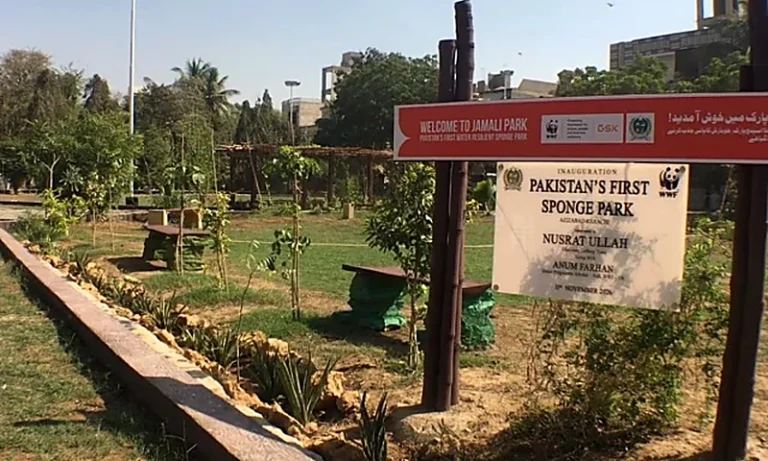
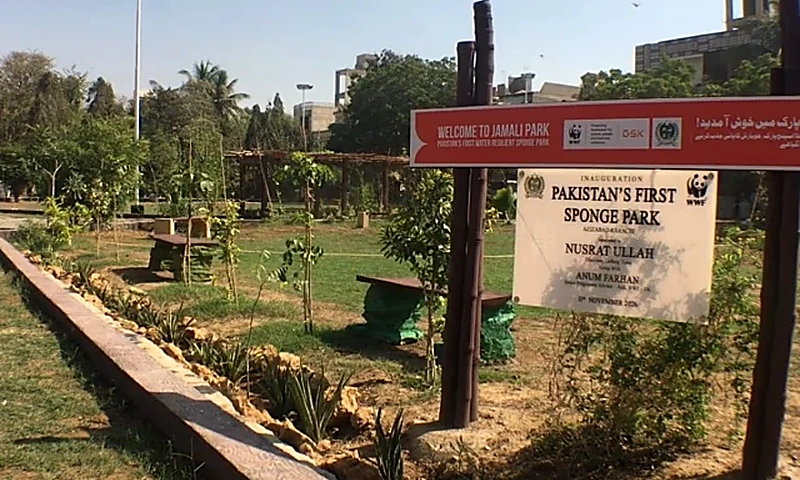
Karachi inaugurated Pakistan’s first experimental sponge park on Thursday at Jamali Park in Gulberg Block 2. The project captures rainwater that would otherwise run through city drains into the sea. It aims to recharge groundwater, ease pressure on drains during heavy rain and provide filtered water for irrigation. WWF-Pakistan, Gulberg Town Municipal Corporation and private-sector partners completed the project in six months.
How Karachi’s sponge park filters and reuses water
The park collects rainwater and water from the ablution facilities of a nearby mosque. Both pass through locally developed filters beneath the park’s water channels. Gravel and larger stones catch soil and debris, while sand and silica trap finer particles. Activated carbon and biochar capture chemical and organic pollutants. A layer of zeolite helps reduce certain heavy metals and other contaminants. Filtered water can seep underground or enter storage tanks for use on the park’s trees and plants.
Naim Ashraf Raja, the federal climate ministry’s biodiversity director, said extensive extraction through boreholes had depleted underground freshwater reserves. He said replenishing them could help protect future water supplies for people and animals. Gulberg Town Chairman Nusratullah called the opening a milestone. He pointed to climate impacts in Europe and urged swift action to conserve water.
Sohail Ali Rizvi, WWF-Pakistan’s freshwater programme director, said the organisation revised its strategy about 15 years ago. It began working with private partners on water projects in Lahore in 2012. He said the Karachi team used local materials, including soil and small stones, to build the filters.
Residents can scan barcodes to obtain saplings, including tamarind, almond, peepal and gulmohar. They commit to caring for the plants and staying in touch with park staff, who monitor their growth. The park also has dedicated spaces for butterflies and other biodiversity.
What the pilot could mean for urban flooding
Across Karachi, paved roads, concrete and tiles limit how much rain soaks into the ground. Sponge parks slow runoff and give water time to seep into the soil, easing pressure on conventional drains. More vegetation can also cool public spaces.
China launched its sponge city programme in 2014. Wuhan and Shanghai adopted measures such as wetlands, reservoirs, green roofs and permeable paving. Copenhagen drew up a cloudburst plan after severe flooding in 2011. Rotterdam’s Benthemplein water square can hold about 1.7 million litres, while Singapore’s Active, Beautiful, Clean Waters programme integrates waterways with public spaces. Berlin, New York and Auckland have also adopted green infrastructure to manage runoff.
If the Jamali Park pilot succeeds, Karachi could extend the model to other parks and public spaces. Its performance will depend on soil conditions, how quickly the ground absorbs water, groundwater quality, rainfall volumes and regular maintenance.