

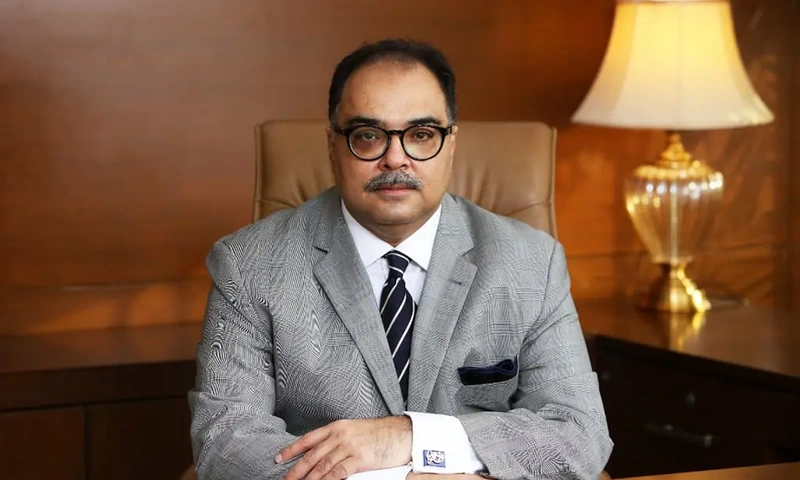
The Bank of Punjab (BOP) has extended Zafar Masud’s term as president and chief executive officer for three years. The new term begins on April 16, 2027, and keeps him in both roles until April 2030. The board approved the extension at its 339th emergency meeting on November 16, 2026. Punjab’s Finance Department issued its notification on the same date. Read More: Bank of Punjab Leads Rs17bn Deal for Islamabad Hospital With UK Affiliation In a notice to the Pakistan Stock Exchange (PSX), the bank said the board “approved the extension of the employment contract of Zafar Masud as President & CEO of The Bank of Punjab for a further period of three years w.e.f. April 16, 2027”. Masud first took charge on April 16, 2020. He will have completed seven years at the bank when the new term begins. Masud’s role in Pakistan’s banking industry Masud also chairs the Pakistan Banks’ Association (PBA). He first took the chair in March 2024, succeeding Muhammad Aurangzeb. The association elected him again in December 2025. Before becoming chairman, he served as the association’s senior vice chairman. He previously headed National Savings at the Ministry of Finance and served on the boards of the State Bank of Pakistan and National Bank of Pakistan. His private-sector career included senior roles at Barclays in Southern Africa, Citigroup, Dubai Islamic Bank and American Express Bank. As PBA chairman, Masud has highlighted the banking sector’s contribution to federal revenues. He put the industry’s 2024 contribution to the national exchequer at Rs1.6 trillion. His breakdown included Rs856 billion in direct corporate and income taxes and Rs63 billion in sales and excise duties. The sector also collected more than Rs685 billion in withholding tax, according to the figures he cited. Bank of Punjab reports higher nine-month earnings The board’s decision follows a rise in the bank’s standalone earnings for the first nine months of 2026. Profit after tax climbed 22% year on year to Rs14.53 billion, while profit before tax rose 15% to Rs30.46 billion. The bank reported earnings per share of Rs4.44 for the period ended September 30. Read More: Bank of Punjab Leads Rs17bn Deal for Islamabad Hospital With UK Affiliation Net interest income rose 19% to Rs69.40 billion. Non-markup income, excluding gains, increased 47% to Rs18.04 billion. Operating profit before provisions and gains climbed 34% to Rs34.42 billion. Gross advances increased 28% year on year, while current deposits grew 16%. Average current deposits rose 25% from the same period a year earlier. The bank cited stronger core earnings and control of expenses as factors behind the improvement in profitability.

Pakistan Inflation to Ease Towards 5% to 7% in FY27: SBP
The State Bank of Pakistan (SBP) expects consumer inflation to ease gradually towards its 5% to 7% target range during FY27. In its annual report released on November 16, the central bank projected real GDP growth of 3.5% to 4.5%. It forecast a current account deficit of 0% to 1% of GDP and a fiscal deficit of 3% to 4%. October inflation stood at 9.61% year on year, according to the Pakistan Bureau of Statistics. Manufacturing and remittances supported Pakistan’s economy in FY26 The SBP credited prudent monetary policy, fiscal consolidation and reforms under the International Monetary Fund programme with helping Pakistan withstand several shocks. These included shifting US tariffs, early monsoon floods and the Middle East conflict that began in late February 2026. The resulting energy shock pushed annual inflation into double digits from April. Even so, average FY26 inflation remained near the upper end of the target range. Lower interest payments and continued fiscal consolidation improved the government’s finances. Read More: SBP Raises Policy Rate to 12% as Inflation Risks Rise A large-scale manufacturing rebound drove faster growth and supported activity in agriculture and services. The recovery lifted import volumes, while weak global conditions limited exports. Workers’ remittances helped keep the current account deficit at 0.1% of GDP. SBP foreign exchange purchases and lower forward liabilities strengthened reserves. Official inflows, Eurobond and Panda bond issuances, and Roshan Digital Account inflows added support. SBP sees reserves approaching four months of imports Pakistan entered FY27 on firmer footing after sovereign credit rating upgrades. The SBP expects domestic demand to recover further, with recent fiscal measures supporting activity. Worsening El Niño conditions threaten agriculture, though early estimates point to higher sugarcane, rice and maize output. Stronger commodity-producing sectors should help services expand. #SBP has released the Annual Report on the State of Pakistan’s Economy for Financial Year 2025-26. See PR: https://t.co/8A0JQRqg2m Read Report: https://t.co/LoZxV2TjAo https://t.co/89VH4ryxe7 — SBP (@StateBank_Pak) November 16, 2026 The bank expects growth, tariff changes and higher global commodity prices to lift imports. Policy incentives and slightly better global demand could support a modest export recovery. Remittances should help contain the current account gap. The $3 billion September Eurobond issuance, foreign exchange purchases and expected official inflows should help reserves approach four months of import cover. The bank still expects the energy shock to put upward pressure on prices as inflation gradually eases. SBP calls for reforms to create jobs The report’s chapter “Structural Challenges to Job Creation in Pakistan” links weak, volatile growth and slow structural change to limited employment gains. It flags premature deindustrialisation, low female labour force participation, high youth unemployment and widespread informal work. It also identifies Industry 4.0, the green transition and geoeconomic fragmentation as emerging pressures. Read More: SBP Banking on Equality Policy 2026: New Targets for Women The SBP called for better infrastructure, technology and skills, simpler tax administration, and clearer fiscal and regulatory rules. It also urged earlier preparation for climate shocks and solar strategies that protect farmland and food security. The bank said these changes could attract investment, create jobs and reduce exposure to global supply disruptions.

Tesla Offers Its $29,990 Cybercab to Select Buyers
Tesla began inviting select customers on Friday, November 13, to buy its Cybercab for personal use. The company posted the offer on X alongside an image of the gold two-seater, which has upward-opening butterfly doors. Tesla listed the driverless electric vehicle at $29,990 and advertised an “Autonomy Subscription” for $299 a month. The invitation marks a step towards putting Tesla’s purpose-built robotaxi in private hands. Read More: Tesla Flying Roadster Revealed: Thrusters, Speed and Launch The order page lists a $1,000 non-refundable deposit and gives Austin, Texas, as the delivery location. Tesla estimates that deliveries will begin in December 2026. The purchase price excludes taxes and includes the first month of the subscription. The order page says owners need an active subscription to operate the vehicle. Elon Musk questions the $299 monthly fee “The monthly fee is too high,” Tesla Chief Executive Elon Musk wrote on X. He said the fee should match what Tesla charges for Full Self Driving and connectivity on its other models, about $115 a month. At the advertised rate, 12 paid months would cost $3,588. Musk’s comment sets out his preferred price, while Tesla’s initial offer lists $299. Musk said the Cybercab “will be available nationwide, as we receive regulatory approval.” Lars Moravy, Tesla’s vice president of vehicle engineering, said in October that the company aimed to begin public sales by the end of 2026. The first invitations cover a select group of customers. The December estimate applies to the Austin offer. Where owners can use the Tesla Cybercab Ashok Elluswamy, Tesla’s head of artificial intelligence, said privately owned Cybercabs would operate without supervision in the same geographic areas as Tesla’s Robotaxi service. Those vehicles would be “just serving the owners’ needs,” he wrote on X. The two-seater has no steering wheel or pedals. Tesla says cameras and sensors help it navigate streets, intersections and parking lots. Read More: Uber, Lucid & Nuro Unveil Futuristic Robotaxi Set to Hit Streets in 2026 Tesla’s Robotaxi rollout began in Austin in June 2025. The company expanded the service to Dallas and Houston in April 2026 and Miami in July. Tesla’s support page also lists Model Y Robotaxi service in Fort Worth, San Antonio and Tampa. It lists Cybercab rides specifically in limited parts of Austin. That means the ride-hailing network already covers more ground than the areas where riders can currently book a Cybercab. For the first buyers, the purchase price is only part of the decision. They also have to factor in the recurring subscription and check whether Tesla’s service boundaries cover their usual trips. Those boundaries matter for a vehicle with no manual driving controls. How soon buyers elsewhere can place an order depends on the regulatory approvals Musk cited.

International Student Enrollment Falls 9% at US Colleges as Visa Rules Tighten
International student enrollment at surveyed US colleges fell 9% this autumn from a year earlier. The number of new students entering the country for the first time dropped 15%, according to a survey. College leaders point to tighter visa restrictions, stricter screening and delays in getting interviews. The figures come as President Donald Trump’s administration seeks tighter limits on student visas and post-graduation work. US universities face enrollment and tuition pressure International enrollment at the University of Washington’s Seattle campus fell for a second year, reaching its lowest level in at least a decade. Ohio State University recorded a nearly 13% decline, leaving it with its fewest international students in 16 years. Illinois Institute of Technology plans to borrow up to $200 million from its endowment as overseas enrollment falls. International students often pay full tuition, helping colleges fund financial aid and services for domestic students. Ohio State spokesperson Benjamin Johnson said their enrollment “strengthens the academic experience”. At Denison University, where international students make up 17% of enrollment, President Adam Weinberg said “we expect pretty steep declines.” Wesleyan University’s international enrollment has held steady, but President Michael Roth said the proposed work fees would put the programme beyond the university’s budget. Read More: NBP, Habib University Offer Scholarships for 13 Women Trinity Washington University President Patricia McGuire said immigration enforcement had heightened anxiety among students and staff. She said an international student who suffered an assault near a Washington metro station avoided calling police because she feared deportation. House Education and Workforce Chair Tim Walberg defended the administration’s approach, arguing that colleges should prioritise places for qualified American students. Trump administration proposes $70,000 work training fee The Department of Homeland Security has proposed charging universities $70,000 for each initial Optional Practical Training (OPT) recommendation. Subsequent recommendations would cost $30,000 each. OPT lets F-1 students work temporarily in jobs related to their studies and can provide a route to employer-sponsored H-1B status. Education advocates warn that universities could pass the charges on to students. A federal judge separately blocked a rule in September that would generally require students to seek permission to stay beyond four years. Read More: Wealth University Babsol Deal Targets $10m Revenue by 2027 Administration officials say tighter rules deter fraud and protect US workers. The State Department says qualified students remain welcome and urges applicants to apply early. Secretary of State Marco Rubio has said “a visa is a privilege, not a right.” Meanwhile, a survey by Studyportals, NAFSA and Oxford Test of English found that half of responding continental European institutions reported higher international undergraduate enrollment. In Asia, 59% reported higher international postgraduate enrollment. NAFSA chief Fanta Aw said getting visa appointments this summer was “even more difficult” than during the pandemic, when first-time international enrollment in the US fell 46%.

Why Punjab Is Handing Its Gulfstream G500 Jet Operations to the PAF
The Punjab cabinet has approved a plan to hand operational control and maintenance of the provincial government’s Gulfstream G500 to the Pakistan Air Force (PAF). The decision follows technical difficulties at Punjab’s VIP Flight Wing, which has limited capacity to operate and service the jet on its own, according to provincial government documents. The cabinet also approved the jet’s deregistration from the Pakistan Civil Aviation Authority (PCAA) and the allocation of a PAF tail number. The documents say the aircraft has already come off the civil register. The air force has also assigned it a tail number. Three PAF pilots join Punjab’s flight operations Three serving PAF pilots are on deputation to the Punjab government. They are already conducting flight operations alongside the province’s own pilots, according to the documents. That staffing arrangement is in place as the province prepares to formalise the wider handover. Read More: Power Bank Fire on IndiGo Flight Puts Baggage Rules in Focus The VIP Flight Wing consulted the PAF before proposing the change. Its assessment found that the aircraft’s systems require specialised expertise, trained crews and maintenance facilities that the provincial wing has limited capacity to provide. The documents say the PAF has the personnel and infrastructure to support the aircraft. During consultations, both sides identified safe flights, continuous operational readiness and round-the-clock availability as priorities. The cabinet approved a draft memorandum of understanding with the air force. It covers maintenance, technical responsibilities and financial arrangements. The additional secretary for welfare in Punjab’s Services and General Administration Department can sign the agreement on the province’s behalf. The reports detailing the cabinet decision gave no cost breakdown for the arrangement or date for signing the agreement. Punjab calls G500 handover a routine decision Punjab Information Minister Azma Bokhari described the move as a routine administrative decision. In a statement issued through the provincial government’s public relations directorate, she said the PAF already maintains aircraft used by the prime minister and other senior officials. Read More: PIA Manchester Flights Top 100,000 Passengers The VIP-configured aircraft arrived in Lahore from North America in December 2025 and began flying locally in February 2026. The purchase drew criticism at the time, with reports putting the cost at around Rs10 billion. Bokhari had said the aircraft formed part of a fleet for Air Punjab, the provincial airline Chief Minister Maryam Nawaz announced in April 2025. Gulfstream lists the G500 as a twin-engine business jet powered by two Pratt & Whitney PW814GA engines. The manufacturer lists a theoretical range of 5,300 nautical miles, or 9,816 kilometres, at Mach 0.85 with eight passengers and three crew. It also lists a maximum cruise altitude of 51,000 feet. The model can seat up to 19 people, depending on the cabin configuration. Each of those figures describes the G500 model. Punjab’s decision concerns who flies and maintains its own VIP-configured aircraft.
China’s 19-Seat Electric Plane Just Flew With a Crew. What Did the Test Prove?
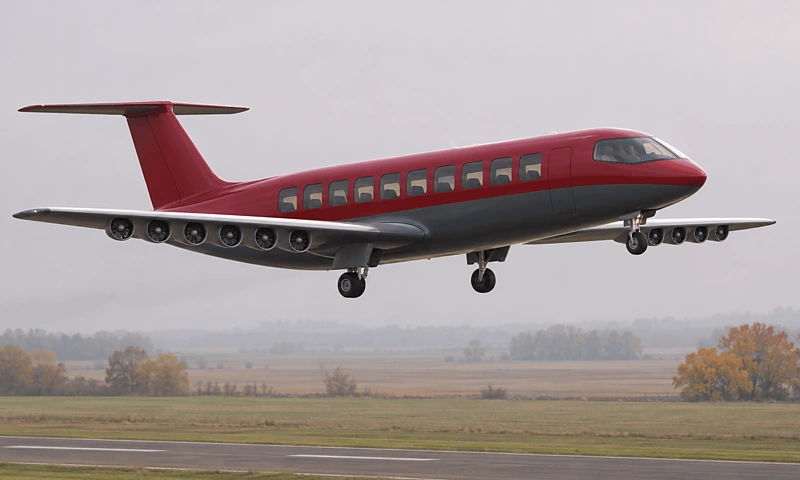
China’s CE-25A electric aircraft completed its first crewed flight on November 14, taking off and landing in Binzhou, Shandong province. Two pilots and a flight-test engineer were aboard. The prototype stayed airborne for 16 minutes and 38 seconds and covered 60.4 kilometres. The full test, including ground operations, lasted 57 minutes and 46 seconds. The Commercial Aircraft Corporation of China (COMAC) said the aircraft “operated normally” and that all performance indicators met expectations. The CE-25A first flew autonomously without a crew on February 2, 2026. It completed 19 uncrewed flight tests before Saturday’s trial. The latest flight demonstrated that the prototype could take off, fly and land under electric power with a test crew aboard. What the CE-25A’s 400 km range means The CE-25A is COMAC’s first electric commercial aircraft design. It targets short intercity routes and has a proposed capacity of 19 passengers. Its 10-tonne maximum take-off weight covers the entire aircraft and everything aboard. COMAC lists a design cruising speed of 300 km/h, a cruising altitude of 2,400 metres and a range of 400 km. Read More: South Air Gilgit Flights: G-B Plans Aircraft Lease Deal The test covered about 15% of that design range and carried no paying passengers. COMAC has yet to publish how much battery charge the flight used. Testing still needs to establish whether the aircraft can carry 19 passengers over 400 km while keeping enough energy in reserve. Ten electric fans power the prototype Electric motors drive 10 enclosed fans, with five mounted along each wing. COMAC is developing the aircraft with battery maker CATL, Shanghai Jiao Tong University and other partners. The partners have yet to disclose the battery chemistry, installed capacity or pack weight. Batteries store less energy per kilogram than aviation fuel. A heavier battery pack can leave less capacity for passengers and bags. Airlines would also need to account for bad weather, diversions, battery ageing and charging time between flights. Electric propulsion can reduce local emissions and noise. The overall climate benefit also depends on how manufacturers make the batteries and how operators source electricity. Certification comes before passenger flights Other manufacturers are also testing larger electric aircraft. Heart Aerospace flew its battery-electric X1 demonstrator for 27 minutes at Plattsburgh International Airport in New York on August 12, 2026. The US test took place under an experimental airworthiness certificate. Heart is using the X1 to develop its proposed 30-seat ES-30 hybrid-electric regional aircraft. Read More: PIA Manchester Flights Top 100,000 Passengers The Civil Aviation Administration of China has accepted COMAC’s application for a type certificate under its transport aircraft rules. That starts regulatory review of the design. COMAC still needs further testing and approvals before regular passenger flights can begin. The company has yet to announce a launch date, airline customer or passenger route.
Why This UK School Has 14-Year-Olds Practising Job Interviews
Year 10 pupils at Sandbach High School and Sixth Form College in Cheshire sit opposite one another and take turns interviewing for a job. The 14- and 15-year-olds practise firm handshakes, eye contact and introductions. Then come the questions. When did they last work in a team? How would they explain a mistake they made at work? The school holds dedicated careers lessons every fortnight alongside regular classes. Future sessions will cover CV writing and workplace rights. Careers education starts in Year 7 For Ati, 14, one of the lessons was how to walk into a room and introduce herself. Myla, also 14, said Year 10 was “not too early” to start. She expects to look for part-time work in about two years and says practising now helps with nerves. Careers teacher Paisley Charlton wants pupils to feel confident seeking work experience, attending interviews and talking about their strengths. Read More: 45 NUST Researchers Among World’s Top 2% Scientists in 2026 Head teacher Ellen Walton starts careers education as soon as pupils join. Year 7 pupils meet local employers one to one at a speed-networking event. Teachers reinforce nine employability principles, including resilience and problem-solving, in everyday lessons. The school says every student who has left at 18 since the careers programme changed has gone into education, employment or training. Nearly one in eight young people outside work or education The Office for National Statistics estimates that 981,000 people aged 16 to 24 were outside education, employment or training from April to June 2026. That was 13% of the age group, or roughly one in eight. The figure rose by 30,000 from a year earlier. Prime Minister Andy Burnham has called it a “moral failure” and an “economic catastrophe”. Former Labour health secretary Alan Milburn is due to publish an independent review this week. He has proposed a legal guarantee of a job, training or employment support. Young people who refuse that help could lose benefits under his proposal. Milburn wants spending redirected towards employment support. He says the government spends 25 times as much on youth benefits as on preparing young people for work. Read More: NBP, Habib University Offer Scholarships for 13 Women The government has separately announced a Great Britain rollout of six-month funded jobs for eligible Universal Credit claimants aged 18 to 24. It expects the scheme to help more than 90,000 young people. Schools could face greater expectations to prepare leavers for work. England already plans to offer new vocational GCSEs from age 14. Youth Careers Collective works with dozens of London schools. It brings employers into classrooms and gives disadvantaged pupils opportunities to meet people at work. Chief executive Matt Lent wants those experiences to become routine. He said “employers also need to take responsibility for creating accessible opportunities”.
Lahore Fort’s Akbari Gate to Reopen After Nearly 200 Years
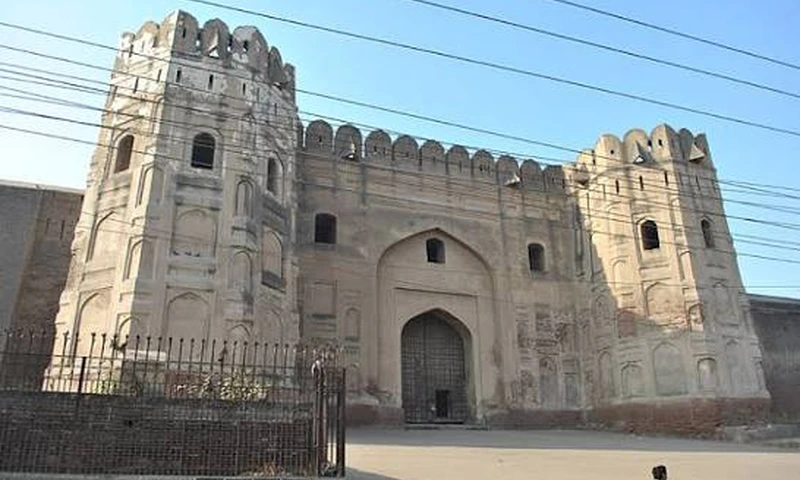
Lahore Fort’s historic Akbari Gate is expected to reopen in December 2026 after nearly two centuries of closure. The restoration will let visitors enter the fort through an eastern gateway once used by residents, traders and royal delegations. Lahore Fort official Owais Raza said the public would be able to use the historic route when the gate opens. The gate once connected Lahore’s Walled City with the royal citadel. It faces the market and the Mariam Zamani Mosque, which Emperor Jahangir built for his mother. The two-storey gateway contains chambers that may have housed guards. Its wooden doors are wide enough for an elephant to pass through. Read More: Punjab Workers’ Children Can Now Study Free at GCU Lahore A conservation official described Akbari Gate as one of the fort’s earliest structures. Later rulers expanded the complex westward and added other entrances. The official said British authorities closed the gate as part of an administrative policy intended to assert their authority. Accounts differ on when the gateway took shape. Recent reports trace it to Emperor Akbar’s reign, while the heritage authority dates the gate to 1666. The authority dates Akbar’s rebuilding of the fort in brick to around 1566. UNESCO added Lahore Fort and the Shalamar Gardens to its World Heritage List in 1981. Restoration uncovers frescoes and an old drainage system The restoration began in 2023 to bring the gateway back into use for tourism and public activities. The Punjab Walled Cities and Heritage Areas Authority worked with the French Development Agency (AFD) and Aga Khan Cultural Service Pakistan (AKCSP). Crews removed layers of plaster that dated to the Sikh and British periods. Beneath them, they uncovered historic frescoes, including images of Hindu deities. The team took steps to protect the paintings. Excavations in the courtyard also uncovered an old drainage system, which the team incorporated into the restoration. Read More: Basant 2027 Will Look Different in Lahore Under These New Rules Project engineer Yasir Ali said years of disuse had left the heavy wooden gate jammed and out of alignment. Crews repaired the doors and made them functional again. They also built an approach and ramp from the market side to improve access. What visitors can expect at Akbari Gate The plans call for a ticket booth on the ground floor and a gallery upstairs. The gallery will display historical photographs and documents. The site will also have a CCTV monitoring room, wheelchair access and parking. Read More: First Sikh Student Secures Position in Lahore Board’s History Raza said work continues to conserve other historic structures and adapt them for public use. Plans for those sites include galleries, cafés and other visitor facilities. The gate restoration forms part of a wider effort to improve access to Lahore Fort. That work also covers road repairs and better lighting around the site. For visitors entering from the Walled City, the December reopening will restore a direct link between the old market area and the fort.
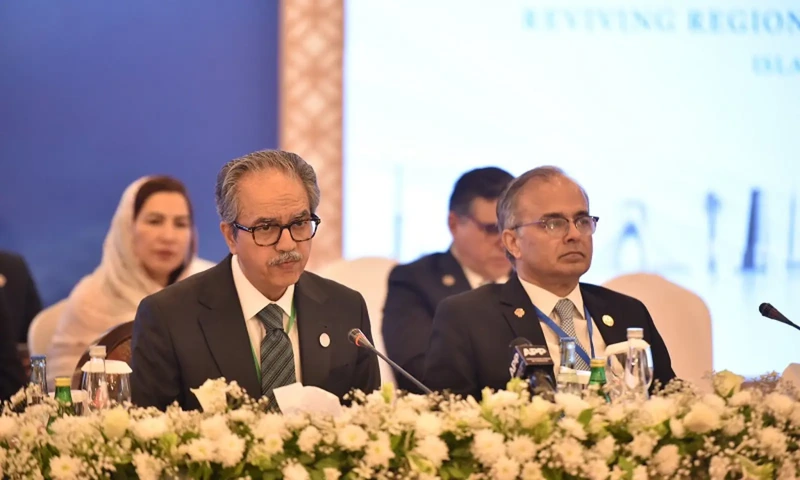
ECO Officials Finalise Islamabad Agenda With Vision 2035 in Focus
Senior officials of the Economic Cooperation Organisation (ECO) finalised the agenda and draft Islamabad Communiqué on Sunday. They prepared both documents for the group’s 30th Council of Ministers meeting in Islamabad on Monday, November 16. The ministerial agenda includes ECO Vision 2035, a proposed framework for closer regional economic ties. Foreign Secretary Ambassador Asim Iftikhar Ahmad chaired the Senior Officials Meeting on November 15, Pakistan’s Ministry of Foreign Affairs said. Senior officials from member states attended alongside ECO Secretariat representatives. Delegates from the organisation’s specialised agencies and regional institutions also took part. The Sunday session opened the two-day programme, with foreign ministers and heads of delegation due to take up the agenda on Monday. Read More: IMF Imposes New Conditions on Pakistan for $1.2bn Loan Officials reviewed preparations for the ministerial session and agreed on the draft communiqué for ministers to consider. They assessed the secretariat’s work over the past year, including ongoing programmes and initiatives. The review also covered decisions from sectoral ministerial meetings and the work of subsidiary bodies and specialised institutions. Participants discussed administrative and financial matters and exchanged proposals to make the organisation more effective. The preparatory session gives governments a chance to assess progress, raise shared concerns and settle draft language before ministers meet. ECO Vision 2035 on the Islamabad agenda Deputy Prime Minister and Foreign Minister Ishaq Dar will chair the ministerial session. The foreign ministers and delegation heads are expected to discuss and adopt ECO Vision 2035. The 10-year framework aims to improve regional connectivity, deepen economic integration and support sustainable growth. The ECO’s 10 members are Pakistan, Afghanistan, Azerbaijan, Tajikistan, Iran, Türkiye, Kazakhstan, Turkmenistan, the Kyrgyz Republic and Uzbekistan. On Sunday, Dar met ECO Secretary General Asad Majeed Khan and stressed the importance of strengthening “regional cooperation, connectivity and economic integration”. He also reaffirmed Pakistan’s commitment to hosting an ECO summit in 2027. Among the officials who arrived for the Islamabad meeting were Azerbaijan’s Deputy Foreign Minister Elnur Mammadov and Kazakhstan’s Deputy Foreign Minister Arman Issagaliyev. Pakistan’s trade and transit priorities as ECO chair Pakistan holds the ECO chairmanship for 2026–27 under the theme “Reviving Regionalism for a Resilient ECO”. The Foreign Office says Pakistan wants to strengthen regional partnerships and position itself as a hub for connectivity and logistics. Islamabad also plans to push for progress on the ECO Trade Agreement and the Transit Transport Framework Agreement. Those agreements aim to make trade and cross-border movement easier across the region. Read More: Pakistan’s Economy Hits $450.4 Billion, Yet Growth Falls Short The proposed Uzbekistan-Afghanistan-Pakistan railway is one project Islamabad plans to highlight during the meeting. Pakistan also wants to build on bilateral trade agreements with Uzbekistan, Tajikistan, Kyrgyzstan, Azerbaijan and Kazakhstan. The talks will cover practical steps to expand commerce, improve transit arrangements and strengthen regional supply chains. These discussions put trade routes and freight movement alongside the longer-term goals of ECO Vision 2035.