
A video of a woman scratching her husband’s back gave Zhang Xiaoqiao an unusual business idea. Viewers said they would pay someone to do the same for them. Zhang took them seriously. The 32-year-old from China’s Hubei province now runs two back-scratching salons in Shenzhen and says they bring in around 100,000 yuan (about US$15,000) a month in combined revenue. The clip reminded Zhang of falling asleep as a child while his father gently scratched his back. By the time he saw a business in that memory, he had already tried several careers. He changed jobs seven times in his first year after university. Two ventures went out of business, and a later attempt at creating social media content failed to take off. Zhang opened his first Suma salon in Shenzhen’s Bao’an district on May 5, 2026. A second followed in the city’s Futian district about a month later. Zhang told Chinese media that the first salon took in 80,000 yuan in its opening month. He says the business has since passed break-even and begun turning a profit. What happens at Shenzhen’s back-scratching salons? Customers lie face down on beds, much as they would for a massage. Staff wear pointed plastic fingernails and gently scratch the back or other areas the customer requests. Zhang said he spent more than four months testing techniques on friends and social media followers. He said he developed his own approach because he had no comparable local service to learn from. One report puts the price at 300 yuan, or roughly US$41, for an hour. Other coverage cites a 299 yuan package that lasts 80 minutes. The salons also offer ear cleaning and massage, although scratching accounts for more than 70% of revenue, Zhang told Chinese media. Men make up about 70% of customers, he said. Zhang markets the service to people who want to unwind or sleep better. “People in big cities generally have high stress levels, and demand for this kind of service is strong,” Zhang told Sinchew Daily, according to the supplied account. “Some customers tell us our service is more relaxing than a massage, and we already have many regulars.” From two Shenzhen salons to a nationwide plan Zhang wants to build a network of 100 outlets across China. He also wants customers and workers to see professional scratching as a recognised occupation. For now, his two Shenzhen salons have given him a paying market for a service that began with strangers saying online that they would buy it.
NCCIA Arrests Five in Karachi Online Gambling Probe, Secures Rs1 Billion in a Day
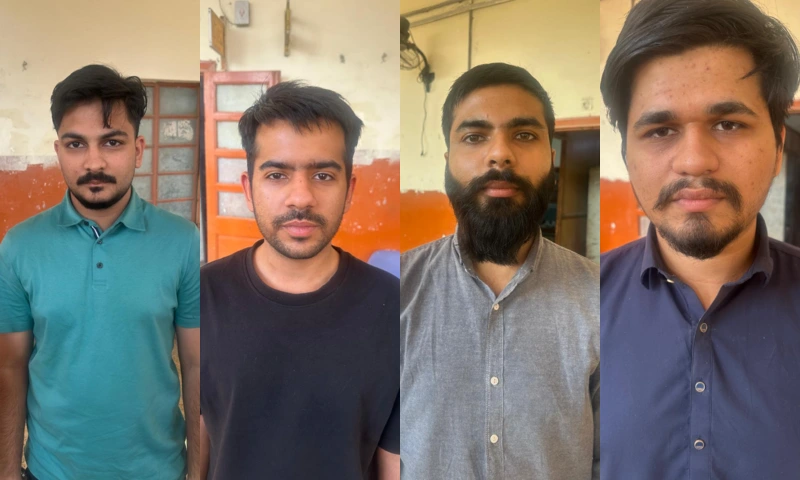
The National Cyber Crime Investigation Agency (NCCIA) arrested five suspects in Karachi after raids targeting an alleged online gambling and money laundering network. Its Karachi Zone estimated that transactions under scrutiny could reach about Rs1 trillion. The agency’s statement gave no confirmed figure for losses to the national exchequer. NCCIA Additional Director Shehzad Akbar told a news conference that Rs240 billion had moved through suspicious accounts linked to the network. He also cited Rs6.15 billion in transactions that investigators identified as suspicious. The agency did not explain how those figures relate to the broader estimate in its written statement. NCCIA reports securing Rs1 billion in one day The Karachi Zone said it secured about Rs1 billion across multiple financial accounts in a single day, blocking further withdrawals or transfers. Its statement also reported the seizure of 70,000 USDT from digital wallets. Separately, Akbar said officers recovered Rs7.3 million in cash from one suspect. Aaj News reported a different figure for the crypto assets, and the amounts could not be reconciled. The NCCIA opened the investigation after receiving reports of suspicious activity through the State Bank of Pakistan (SBP). Investigators examined transactions across commercial banks, microfinance banks and digital wallets. The agency cited payments linked to 1XBet, Stake, X777, X555, 99c444, X111 and MelBet. It said suspects allegedly collected payments through Easypaisa and JazzCash and moved funds through companies and third-party accounts to conceal their origin and beneficiaries. Investigators also reported suspected fraudulent sub-merchant registrations, forged identity documents and fictitious businesses. One suspected settlement account received Rs3.718 billion in about 22 months. Another company account received Rs2.431 billion. Suspected rented or mule accounts received Rs1.969 billion. The agency said the volumes far exceeded the account holders’ declared business activity and financial capacity. FIR names 40 individuals and businesses The NCCIA registered FIR No. 133/2026 on November 18 against 40 individuals and business entities. The agency said those named included 32 company CEOs and foreign nationals. Akbar said the five people arrested included three chief executives and two company directors. The FIR cites provisions of the Prevention of Electronic Crimes Act 2016, as amended in 2025, and the Pakistan Penal Code. The FIR alleges that some bank officials allowed suspicious accounts to remain active despite anti-money laundering alerts. Investigators are examining bank records, financial documents and digital evidence for possible lapses. The inquiry also covers payment facilitators, company directors, business operators and account holders. The NCCIA said further raids are underway to locate remaining suspects, identify other beneficiaries and trace where the money went, including possible transfers abroad.
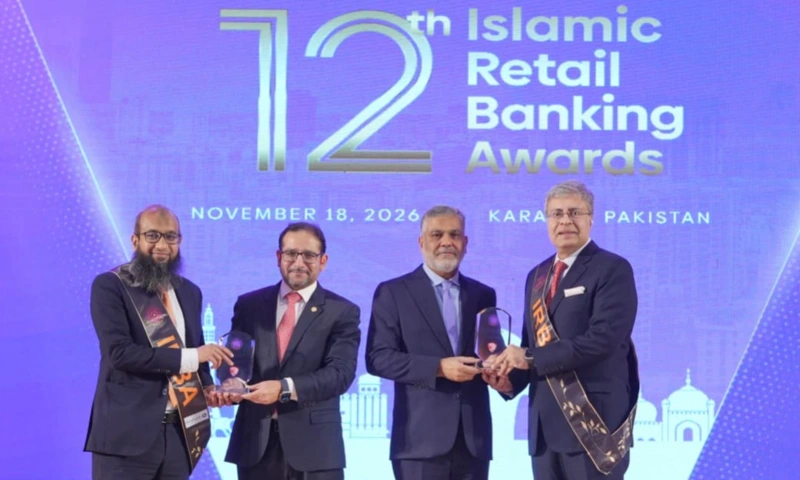
Faysal Bank Wins Two Islamic Banking Awards at IRBA 2026
Faysal Bank Limited (FBL) won two honours at the 12th Islamic Retail Banking Awards (IRBA) 2026. Cambridge IFA named Faysal Bank Best Mid-Sized Islamic Retail Bank in Pakistan 2026. The bank also received the IRBA Excellence Award for Islamic Banking Growth in Pakistan 2026. The mid-sized retail banking win follows a similar honour for Faysal Bank at the 2025 awards. This year’s second award recognises its growth in Islamic banking. Faysal Bank said the two honours reflect its efforts to widen access to Shariah-compliant services and develop products around customer needs. Read More: Faysal Bank Wins Best Bank of the Year 2025 in Mid-Sized Category Faysal Bank President and CEO Yousaf Hussain said in the bank’s November 19 statement: “These recognitions are a reflection of our collective commitment to advancing Islamic banking in Pakistan. Our journey towards becoming a full-fledged Islamic bank has been driven by a clear vision to make Shariah-compliant banking more accessible, innovative and responsive to the evolving needs of our customers. We dedicate these accolades to our customers for their continued trust and to our people whose dedication and commitment make this progress possible.” Cambridge IFA uses an efficiency study for awards in its strongest Islamic retail bank categories. A committee of Islamic banking experts selects the Critics’ Choice winners using a broader set of criteria. Faysal Bank’s shift to Islamic banking Faysal Bank surrendered its conventional banking licence on December 31, 2022. It began fully Shariah-compliant operations the next day under an Islamic banking licence from the State Bank of Pakistan (SBP). Its September 2026 quarterly report listed 900 branches across more than 360 cities. The bank serves retail customers, companies, small businesses and agricultural clients. It plans to expand its branch network and invest in digital services to reach more customers. The bank’s deposits rose 9.3% from December 2025 to Rs1.56 trillion by the end of September 2026. Current account balances rose 20% to more than Rs642 billion, taking their share of deposits to 41.2% from 37.5%. Faysal Bank reported standalone profit after tax of Rs15.17 billion for the first nine months of 2026. Total assets reached Rs1.88 trillion at the end of September. Islamic banking gains market share in Pakistan The awards come as Islamic banks account for a growing share of Pakistan’s banking market. The SBP reported that Islamic banking institutions held 23.7% of the sector’s assets at the end of June 2026. That compares with 20.7% a year earlier. Their share of deposits rose from 25.5% to 29.2% over the same period. The Islamic banking network grew from 6,395 to 7,757 branches. By June, seven fully Islamic banks and 16 conventional banks with Islamic banking operations served the market.
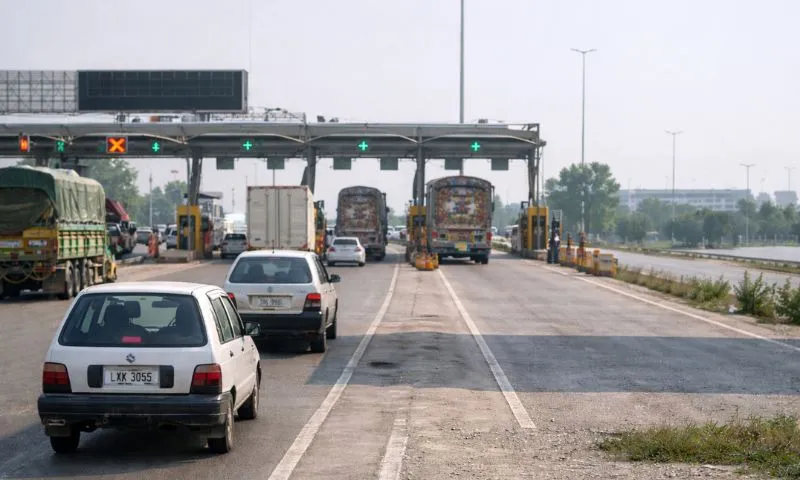
Hyderabad to Sukkur in Three Hours? M-6 Motorway Clears a Major Hurdle
The Public-Private Partnership Authority (P3A) board approved two sections of the Hyderabad-Sukkur Motorway (M-6) on November 18. Sections I and II span about 121 kilometres, and each will have a separate concession agreement. The approval moves Pakistan closer to completing its north-south motorway corridor and opens the two sections to private investment. Muhammad Ali chaired the authority’s 46th board meeting. He serves as the prime minister’s adviser on privatisation and chairs both the Privatisation Commission and the P3A board. Section I covers 57.38 kilometres from Hyderabad to Tando Adam. Section II runs 63.51 kilometres from Tando Adam to Nawabshah. How the M-6 motorway concessions will work Private investors will develop and operate each section under a 25-year concession and recover their investment through tolls. They will handle repairs and maintenance during the concession. When it ends, they must return each section to the National Highway Authority (NHA) in good working condition. The government will receive a share of project revenues and avoid bearing the full upfront cost. Read More: Motorway Travellers Alerted After PFA Seals Hardee’s Branch The government will provide viability gap funding (VGF) for Section I only. The funding aims to make that stretch commercially viable while keeping tolls affordable. The Asian Development Bank (ADB) serves as the NHA’s transaction adviser for both sections under an agreement signed in April 2026. The NHA will invite bids from qualified Pakistani and foreign investors through an international competitive process. “M-6 is not just a road; it completes a critical link in Pakistan’s motorway network,” Ali said after the meeting. He said the government wanted to combine public-sector oversight with private capital and expertise. He said its focus was “attracting credible investors, ensuring transparent procurement and moving projects from preparation to implementation”. Hyderabad-Sukkur travel time could drop to three hours The full M-6 will run 306 kilometres across five sections, with six lanes and controlled access. It will connect the Karachi-Hyderabad M-9 to the Sukkur-Multan M-5. Officials expect the completed motorway to cut the Hyderabad-Sukkur journey from about six hours to three. Traffic currently uses the N-5 National Highway, where heavy trucks share crowded stretches through towns and settlements with local vehicles. That mix has long raised road safety concerns. Read More: Pakistan Brings Back 120 km/h Speed Limit for Cars on Motorways The remaining three sections, from Nawabshah to Sukkur, are in procurement. Sovereign loans from the OPEC Fund and the Islamic Development Bank finance those stretches. The OPEC Fund approved a $230 million loan in three tranches for the 64.6-kilometre Section III. The Islamic Development Bank is financing Sections IV and V. Officials expect faster freight movement between Karachi’s ports, industrial centres, farming regions and northern markets. They say the motorway could lower logistics costs and create business opportunities in interior Sindh. The government has brought privatisation and public-private partnerships under one institutional framework. Its pipeline also includes projects in healthcare, water, aviation and tourism.
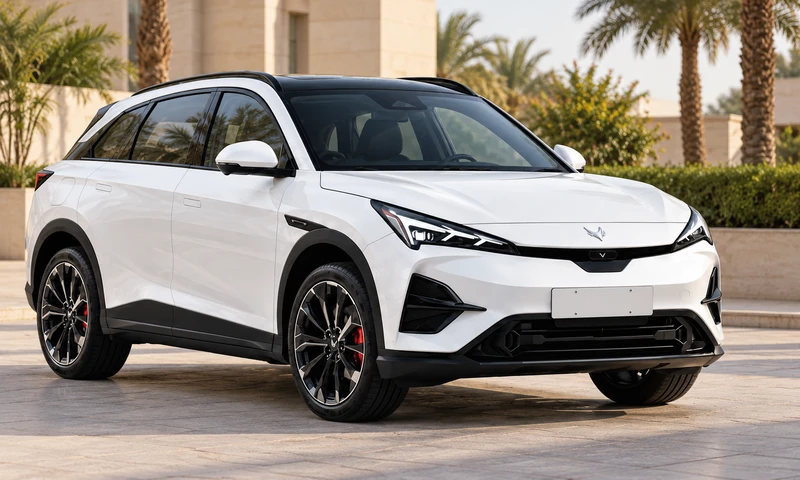
FBR REEV Ruling Keeps Two SUVs in EV Customs Category
The Federal Board of Revenue (FBR) has upheld the electric vehicle customs classification of two range-extended electric vehicles (REEVs) after an appeal by Indus Motor Company (IMC). The November 16, 2026 order covers the Deepal S05 REEV and Forthing Friday REEV. Both models remain under Pakistan Customs Tariff (PCT) subheading 8703.80, which covers vehicles that use only electric motors for propulsion. Indus Motor, which assembles Toyota vehicles in Pakistan, had asked the FBR to classify both models as hybrids. The company argued that the presence of an internal combustion engine warranted hybrid treatment. The dispute had tax implications because electric vehicles can qualify for lower taxes than hybrids. The FBR heard the appeal on November 5 at its headquarters in Islamabad. Why the petrol engine did not make these models hybrids The dispute turned on what the petrol engine does. In both models, an electric motor drives the wheels. The petrol engine runs a generator that supplies electricity, allowing the vehicle to travel beyond its battery-only range. The engine has no mechanical connection that lets it drive the wheels. Read More: Kia Raises Hybrid Prices by Up to Rs1.2 Million in Pakistan In its earlier ruling, the customs classification committee found that an engine used solely to charge the battery does not constitute a “motor for propulsion”. The committee said the relevant hybrid subheadings require both the combustion engine and the electric motor to contribute to propulsion. It therefore placed the two models under the more specific Pakistani tariff code 8703.8090. That notice identified Master Changan Motors with the Deepal S05 and Capital Smart Motors as the importer of the Forthing Friday. The committee limited its determination to the technical configurations it examined. For automakers considering other range-extended models, the ruling shows why the powertrain layout matters when customs officials assess an import. What the FBR ruling means for taxes and car prices The decision gives importers and automakers more clarity on the tariff code for the two models. Eligibility for any duty concession, exemption or incentive remains a separate question. The committee’s original notice said its authority extended only to determining the correct tariff classification. The appeal outcome itself changes neither the applicable tax rates nor the retail prices of the two vehicles. Read More: Don’t Miss Out: Forthing Friday REEV Gets Limited-Time Price Cut International tariff rules will also distinguish this type of vehicle more explicitly. The World Customs Organization’s 2028 Harmonized System creates subheading 8703.81 for vehicles that use electric propulsion and carry a combustion engine to charge the battery. The customs committee said the existing framework would continue to govern the two models until Pakistan implements the 2028 system or creates a specific national subheading
Could SBP’s New Lending Rules Make More Homes Eligible for Mortgages?
The State Bank of Pakistan (SBP) has revised its lending rules for builders and developers to increase the supply of homes that qualify for mortgages. The November 18 circular replaces guidelines from April 2014 and applies to banks and development finance institutions (DFIs). It aims to improve access to project financing while keeping lending in line with corporate and commercial banking regulations and international risk management practices. The SBP identified limited access to credit for creditworthy developers as a barrier to building more homes. Rapid urbanisation has added to demand, particularly for affordable housing in cities. “Banks and DFIs are encouraged to establish specialised units for expanding the developers/builders financing portfolio while ensuring compliance with these guidelines,” the central bank said. Who qualifies for financing under the new SBP rules? Real estate investment trusts (REITs) and public and private builders and developers can qualify. Eligible public bodies include the Federal Government Employees Housing Authority and the PHA Foundation. The framework also covers housing authorities, agencies and town planning bodies under provincial or territorial government ownership or control. Other public sector special purpose vehicles can qualify if they have a housing mandate and receive formal notification. Read More: Apna Ghar Goes Simpler: How to Apply Online for Housing Finance Borrowers need a valid developer licence from the relevant building control authority, where applicable. An approved contract from a competent public authority can also meet this requirement. Private developers must show a credible track record and list their recently completed projects. Developers must hold clear title to project land, free of encumbrances, charges and liens. The framework counts the land’s value as equity from the builder or project sponsors. What banks can ask developers to submit Banks may ask for registration certificates, constitutional documents, land title records and approved building and master plans. They may also seek permission to mortgage the property and a certificate confirming the land has no encumbrances. Other documents include no-objection certificates for construction and sales, plus a predefined list of contractors and subcontractors. Projects may need clearance from the Civil Aviation Authority and federal or provincial environmental protection agencies. Read More: Why Pakistan’s Housing Scheme Is Struggling to Deliver Homes Projects must show they can generate enough cash to repay outstanding debt. Banks must arrange an independent technical review by a reputable engineering firm with professional registration, such as with the Pakistan Engineering Council. A reputable audit firm must endorse the financial feasibility report. That report must cover expected economic conditions, capital requirements, financial projections and the project’s completion timeline. For homebuyers, the intended benefit is a wider choice of properties that banks can finance. In a separate October 9 circular, the SBP simplified mortgage paperwork for borrowers. That change allows lenders to secure housing loans of up to Rs5 million by recording a lien with the relevant land records authority.
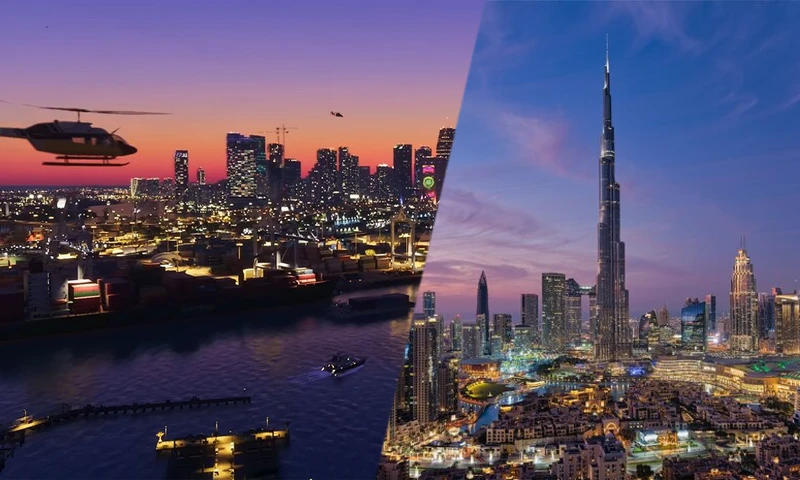
Did GTA 6 Really Cost More Than the $1.5 Billion Burj Khalifa?
Grand Theft Auto VI launches on November 19 for PlayStation 5 and Xbox Series X|S with a budget that has drawn comparisons to Dubai’s Burj Khalifa. The world’s tallest building opened in 2010 after roughly six years of construction and reportedly cost $1.5 billion. Rockstar spent roughly 12 years making GTA 6. Rockstar publishing chief Jennifer Kolbe disputed reports that the game cost more than the tower. Neither Rockstar nor its parent, Take-Two Interactive, has disclosed the budget. Estimates run from $1 billion to $2 billion. The scale of the work puts GTA 6 in contention for the most expensive video game ever made. Where the GTA 6 budget went Industry estimates put development alone at $1 billion to $1.5 billion, with payroll likely the biggest expense. UK filings show Rockstar’s Edinburgh studio spent more than £2.14 billion on staff between 2019 and 2025. That figure covers the entire studio. Motion capture, voice acting, art, engineering, testing and localisation added to production costs. Marketing, online infrastructure and post-launch support carry separate costs. Read More: Fans Shocked as GTA 6 Cost Rumors Cross $3 Billion The Standard Edition costs $79.99, while the digital Ultimate Edition costs $99.99. That works out to about Dh299.16 and Dh373.96, respectively. Even the boxed Standard Edition contains a download code, limiting resale. Console storefronts typically take around 30% of digital sales. GTA 6 sales could reach $5.2 billion by launch week Newzoo projects $3.25 billion to $5.2 billion in cumulative global sales by the end of launch week, including pre-orders. Two of its scenarios imply roughly 37 million and 51 million copies, respectively. Take-Two CEO Strauss Zelnick said on November 9, “The launch of Grand Theft Auto VI is ten days away and, with pre-orders continuing to reach unprecedented levels, we expect to deliver an historic year for our company.” Take-Two forecasts $3.35 billion to $3.5 billion in companywide quarterly net bookings and $1.30 to $1.44 in diluted earnings per share. It expects $8 billion to $8.2 billion in bookings for the year ending March 2027, up from $6.72 billion. JPMorgan sees sales in the mid-30 millions. Morgan Stanley expects 40 million copies this fiscal year, while Wells Fargo now projects 65 million. How GTA 6 compares with GTA V GTA V cost an estimated $265 million to develop and market. It sold about 11 million copies on day one and grossed $1 billion in three days. Take-Two reports more than 230 million copies shipped worldwide. Other reported budgets include $370 million to $500 million for Red Dead Redemption 2, $316 million for Cyberpunk 2077 and about $700 million for Call of Duty: Black Ops Cold War. The film Avatar: The Way of Water cost an estimated $460 million. Read More: PlayStation to End Game Discs From 2028 as Sony Moves Fully to Digital GTA 6 skips PC and PS4 at launch. UK PS5 sales rose 33% and Xbox Series sales climbed 34% in the week of Netflix’s August 27 preview. Sony passed 100 million PS5 shipments by November 10, and Take-Two’s finance chief expects the release to lift console sales despite higher hardware prices.