

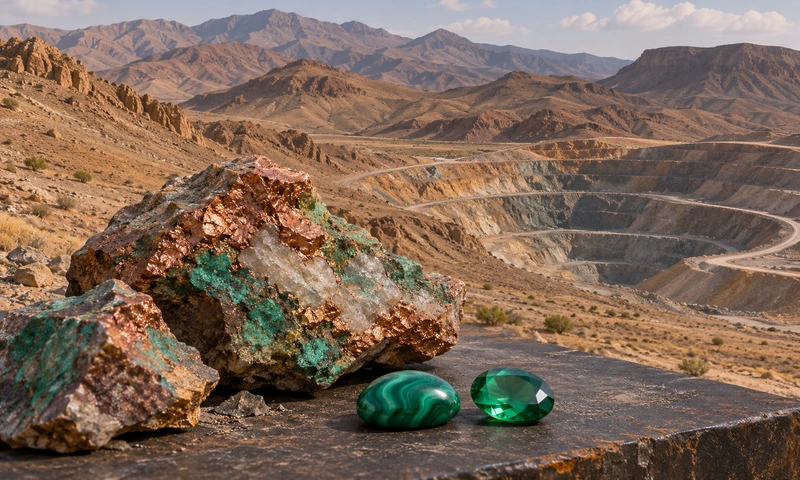
Pakistan has invited South African companies to invest in its mining and critical minerals sectors. The pitch covers mineral processing, gemstone cutting and polishing, and jewellery manufacturing. It came as both countries looked to turn longstanding political ties into stronger trade and investment links. Federal Commerce Minister Jam Kamal Khan met a South African business delegation in Islamabad, according to a statement released on Friday. Dr Gwen Malegwala Ramokgopa led the delegation. She serves as Treasurer-General of the African National Congress and Group Chair of the Progressive Business Forum. Read More: Pakistan Mineral Exploration Targets Copper, Gold and Lithium Khan said businesses and chambers of commerce in both countries should work more closely to identify trade barriers. He also urged them to explore investment opportunities and form joint ventures. The talks covered agriculture, dairy, livestock, halal products and information technology. Khan pointed to Pakistan’s growing IT sector and skilled young workforce as areas for collaboration. Pakistan pitches mineral processing and gemstone manufacturing The invitation puts mineral processing and manufacturing on the agenda alongside extraction. Khan asked South African investors to consider processing minerals in Pakistan and producing finished goods such as polished gemstones and jewellery. He briefed the delegation on how the Special Investment Facilitation Council helps investors navigate projects in Pakistan. He also outlined the role of EXIM Bank of Pakistan in supporting export-oriented businesses, particularly small and medium-sized enterprises. The bank offers trade credit insurance to help Pakistani exporters protect themselves against non-payment by overseas buyers. Ramokgopa called for the two countries to build practical economic partnerships on the strength of their historic ties. She identified mining, local processing, research, innovation and investment by institutions as areas for cooperation. She also encouraged Pakistani businesses to attend South African investment forums, including Mining Indaba. The next Mining Indaba takes place from February 8 to 11, 2027, at the Cape Town International Convention Centre. The Islamabad meeting statement named no specific mining project or investment commitment. Pakistan and South Africa discuss trade links Khan welcomed the delegation’s meetings with manufacturers and educational institutions during stops in Karachi, Lahore and Islamabad. The two sides discussed academic exchanges, closer links between universities and industry, and tourism. They also considered better air connections and lower-cost shipping services to make trade easier. Read More: Pakistan Invites Chinese Companies to Pakistan Minerals Investment Forum 2026 Pakistan and South Africa established full diplomatic relations in 1994. Pakistan’s Foreign Ministry puts annual bilateral trade at around $2 billion. South Africa also hosted the third Pakistan Africa Trade Conference and Single Country Exhibition in 2022 under Islamabad’s Engage Africa initiative. The latest talks brought transport costs into the same discussion as investment. For manufacturers and exporters, more affordable shipping would affect whether new commercial partnerships can compete. For mining investors, the Islamabad pitch extended from extracting minerals to processing them and making finished products in Pakistan.
Karachi to Get 500 Electric Buses Across 17 Routes. What Do We Know So Far?
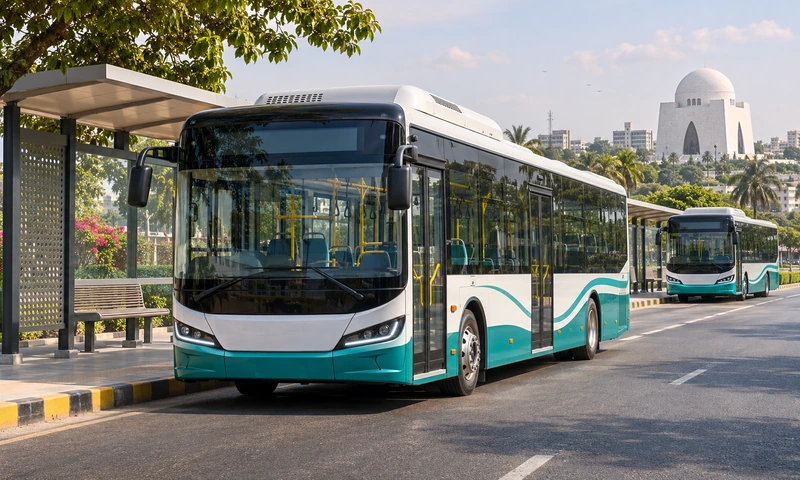
The Sindh cabinet has approved a Rs37.97 billion project to put 500 electric buses on 17 routes across Karachi. The project will add 12 routes and serve five existing Peoples Bus Service routes, Sindh Transport Minister Sharjeel Inam Memon said. Chief Minister Murad Ali Shah chaired the cabinet meeting at CM House. The cabinet approved a government-to-government agreement between the Sindh Mass Transit Authority (SMTA) and Heavy Industries Taxila (HIT). The deal covers bus supply, construction work, fleet operations and maintenance. Karachi electric bus project includes 125 chargers and 499 shelters The fleet will include 300 buses measuring 12 metres and 200 smaller vehicles. The project also provides for 125 charging units, three depots and 499 bus shelters. The depots and charging units will support daily fleet operations, while the shelters will give passengers designated places to wait. The agreement also includes an intelligent transport system to help manage bus operations and automated fare collection for passengers. The cabinet announcement gave the breakdown of the 17 routes but did not identify the new corridors. It also gave no launch date or fare schedule for the fleet. Read More: Karachi Port Receives 179 Electric Buses From China Karachi introduced its Peoples EV Bus Service in January 2023. The first route ran from Tank Chowk on Jinnah Avenue to Clock Tower at Sea View via the airport and Sharea Faisal. In July 2024, Sindh added the 55-kilometre EV-4 route between Bahria Town and Numaish Chowrangi. That route started with 12 electric buses. When the transport department sought cabinet approval in September, Memon said “the purpose of the new routes is to provide citizens with affordable and better travelling facilities”. He also said the province wanted to expand modern public transport beyond Karachi. The current agreement covers the Karachi fleet. How Sindh will fund the electric buses The cabinet approved an annual allocation of Rs6.06 billion for 10 years to recover capital costs. Those payments will depend on annual budget appropriations and may face deductions linked to performance. The cabinet also approved a one-time reimbursement of Rs234 million for electricity grid connections. It authorised the transfer of the land needed for the project to the SMTA. Read More: Good News for Tourists as Electric Buses Arrive in Murree Under the agreement, Heavy Industries Taxila will share 10% of gross fare revenue with the Sindh government. The province will also receive 50% of carbon-credit revenue. The cabinet announcement gave no estimate for how much either revenue stream could bring in. The cabinet approval sets out the fleet size, infrastructure and financing terms. For commuters, the details still to come are where the 12 new routes will run, which five existing routes will receive the buses, and when passengers can start using them.
Rs100,000 for Hunting One Houbara? Inside Sindh’s Proposed Penalty
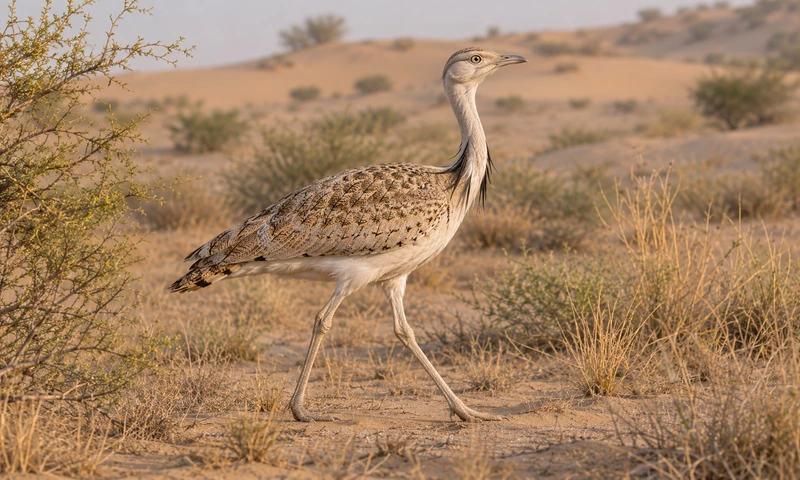
The Sindh cabinet has backed tougher penalties for illegal bird hunting, including a proposed Rs100,000 fine per houbara bustard. Chief Minister Murad Ali Shah also directed the Forest and Wildlife Department to stop issuing fresh permits for the 2026–27 game bird hunting season. Read More: Pelicans Eyes Stitched Shut in Shocking Wildlife Smuggling Case The cabinet ratified a subcommittee’s wildlife conservation recommendations and authorised the department to notify the start of the season. Under the decision, only applicants who renewed their hunting licences in 2026 can obtain a seasonal permit. Those who qualify will face lower limits on the number of birds they can hunt. Sindh Senior Minister Sharjeel Inam Memon confirmed the permit freeze and the tighter hunting limits at a briefing after the cabinet meeting. Sindh cuts game bird limits for 2026–27 The cabinet reduced the quail limit from 50 to 20 birds per permit. For partridges and sandgrouse, the limit fell from 10 to five. Hunters can take up to five birds per permit in the other specified waterfowl and game bird categories, down from 15. Quail still carry the highest allowance among the categories covered by the decision. The steepest reduction applies to the other specified waterfowl and game birds, where the cabinet cut the previous allowance by two-thirds. Cabinet backs tougher fines and jail terms Sindh’s existing wildlife law lists penalties of up to three months in jail and Rs5,000 per bird for several bird offences. The cabinet backed a maximum prison term of one year and a fine of up to Rs50,000 per bird. The subcommittee proposed a higher fine of Rs100,000 for each houbara bustard hunted illegally. Read More: Karachi Mangrove Loss Raises Flood and Erosion Risks The recommendations also call for making bird trapping and netting non-bailable offences. They include a separate houbara hunting limit for foreign dignitaries. Published accounts of the cabinet decision gave no figure for that limit or effective date for the proposed houbara fine. The cabinet authorised the Forest and Wildlife Department to fill 399 vacant Wildlife Guard posts. The department can use a third-party testing service to recruit guards for the BS-05 positions. Why the houbara bustard faces a higher proposed fine The Asian houbara, also known as MacQueen’s bustard, inhabits deserts and semi-arid grasslands. Pakistan hosts resident birds as well as migrants that arrive for the winter. Migratory populations travel south from breeding grounds in Central and East Asia. Read More: 75 Baby Sea Turtles Reach the Pacific After a First for the US West Coast The International Union for Conservation of Nature lists the Asian houbara as vulnerable and reports a declining global population. Its assessment estimates between 33,000 and 67,000 mature birds worldwide. Conservation assessments identify hunting and habitat loss as threats to the species. The proposed Rs100,000 fine would be twice the cabinet-backed maximum for other birds covered by the illegal hunting measures.
Tesla Is Planning a Model Y With No Steering Wheel or Pedals
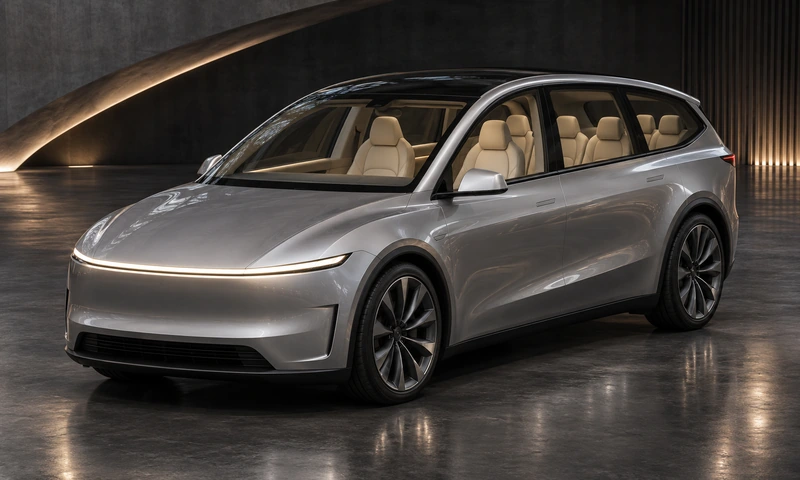
Tesla plans to build a driverless Model Y without a steering wheel or pedals, CEO Elon Musk said on November 18. The electric SUV would carry six or seven people, giving Tesla’s Robotaxi service an option for families and groups that cannot fit in its two-seat Cybercab. Speaking at The New York Times DealBook Summit, Musk said the autonomous Model Y “wouldn’t have steering wheels and pedals” and would be suitable for “transporting groups of six or seven people.” He gave no launch date, price or production location. Read More: Tesla Offers Its $29,990 Cybercab to Select Buyers The proposal came up when interviewer Andrew Ross Sorkin asked whether Tesla would keep selling cars or eventually focus on robotaxis. Musk left that question open. He had just suggested shifting all Model Y production to the longer Model Y L, saying customers appeared to prefer it. Why Tesla is considering a bigger robotaxi Musk estimated that the average car carries about 1.2 people. On that basis, he said the two-seat Cybercab could cover about 90% of passenger miles. He pointed to groups of four or six, including families travelling together, as a reason to offer a bigger vehicle. Musk named the Model Y without specifying a trim. The long-wheelbase Model Y L is a likely candidate because its three-row cabin already has six seats. Tesla previously offered seven-seat versions of the standard Model Y. Musk did not explain how the proposed SUV would accommodate a seventh passenger. Tesla previously pointed riders needing more than two seats toward the Model Y or Model X. Its current Model Y Robotaxi can carry up to four passengers. Tesla ended Model S and Model X production earlier this year and began converting their Fremont factory lines for its Optimus robots. The Model Y L has more cabin space than the standard Model Y. Its faster cabin cooling and improved range in hot weather could also benefit a ride-hailing fleet. Could Tesla sell the driverless Model Y to the public? Tesla has invited select customers to buy a Cybercab for personal use at $29,990, with a required $299 monthly autonomy subscription. Musk did not say whether Tesla would offer the larger vehicle to private buyers or reserve it for its own fleet. Read More: Tesla Offers Its $29,990 Cybercab to Select Buyers Camera cleaning is another design question. The Cybercab has washers for all its exterior cameras, while the current Model Y L has a washer only for its front bumper camera. Tesla could add washers to the other cameras on a driverless version and eventually bring that hardware to the regular SUV. Meanwhile, Tesla is ramping up Cybercab production. It is also developing a silver version with a smaller 40 kWh battery that would aim for similar range through efficiency gains. The larger Model Y would address a different problem: how to carry an entire family in one robotaxi.
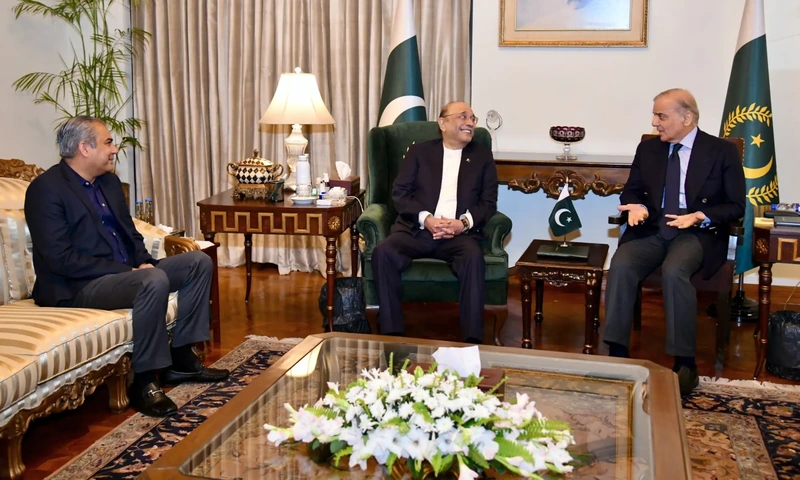
Zardari, Shehbaz Agree to Talks Amid New Provinces Debate
President Asif Ali Zardari and Prime Minister Shehbaz Sharif agreed on Thursday to resolve outstanding issues through dialogue. Their November 19 meeting at Aiwan-e-Sadr came amid rising tensions between the PML-N and PPP over proposals for new provinces. Interior Minister Mohsin Naqvi joined the meeting. The leaders reviewed the domestic political situation and discussed the Middle East conflict. The Presidency said they would “sit down together on all matters and resolve them through consultation”. Read More: Toshakhana List 2026: Shehbaz Gets 34 Gifts, Dar 25 “The previous constitutional amendments were passed through mutual consultation among all allied parties,” Zardari’s office said. It was their second meeting in less than a week. At Shehbaz’s Model Town residence in Lahore on November 14, the two leaders agreed to follow the constitutional process for any new provinces, according to officials familiar with the talks. Article 239(4) requires approval from at least two-thirds of the affected provincial assembly’s total membership before a constitutional bill changing its boundaries can go to the president. Bilawal rejects referendum on new provinces Naqvi opened the debate in July when he called for a governance “reset”. He later suggested a referendum to gauge public opinion. Information Minister Attaullah Tarar backed that approach. The PPP, which governs Sindh, points to a unanimous Sindh Assembly resolution opposing any division of the province. Zardari has yet to address the matter publicly. وزیراعظم شہباز شریف اور صدر مملکت آصف علی زرداری کی ملاقات۔ ملاقات میں موجودہ صورتحال پر گفتگو ہوئی ملاقات کے دوران مشرقِ وسطیٰ کی صورتحال پر بھی بات چیت ہوئی۔ ملاقات میں موجودہ سیاسی صورتحال کا بھی تفصیلی جائزہ لیا گیا تمام معاملات کا حل بات چیت کے ذریعے نکالا جائے گا۔ ملاقات کے دوران گفتگو پچھلی آئینی ترامیم تمام اتحادی جماعتوں کی باہمی مشاورت سے کیں گئیں۔ تمام معاملات پر مل کر بیٹھیں گے اور مشاورت سے ان کا حل نکالا جائے گا۔ ملاقات میں اتفاق ۔۔۔۔۔ — The President of Pakistan (@PresOfPakistan) November 19, 2026 At a Meet the Press event in Karachi on Tuesday, PPP Chairman Bilawal Bhutto-Zardari questioned the “intent” behind a referendum. He said PPP lawmakers faced “pressure” and would resist it. He also claimed government officials had raised the matter with neither him nor Zardari. His warning that a “forced” division of Sindh could lead to bloodshed drew criticism from the PML-N and coalition ally MQM-P. Bilawal also questioned public confidence in the judiciary and said a “brute majority” pushed through the 27th Amendment, which he had previously championed. He later said he was not “disowning” the amendment and called for wider consensus. He urged a “political and democratic reset” to address economic challenges and rebuild the opposition’s confidence in Parliament. PML-N pledges consensus on major decisions Minister of State for Interior Tallal Chaudhry said the coalition’s legislative committee consults allies before bills reach Parliament, including constitutional amendments. “Who said this was happening or was about to happen?” he said of new provinces. He described governance reform as a nationwide discussion and said major decisions required consensus. He also stressed both parties’ “shared responsibility” for the coalition. Read More: Ban Vigo Dala Khawaja Asif’s Remarks Spark Debate in Assembly “We have the courage to hear criticism and we will keep doing so,” Chaudhry added. Asked about Bilawal’s suggestion to return reserved seats to PTI, Chaudhry cited the May 9 riots, protests in Islamabad and mass resignations from assemblies. On possible talks with PTI over governor’s rule in Khyber Pakhtunkhwa, he said the government had no political aims and that any understanding would take time.
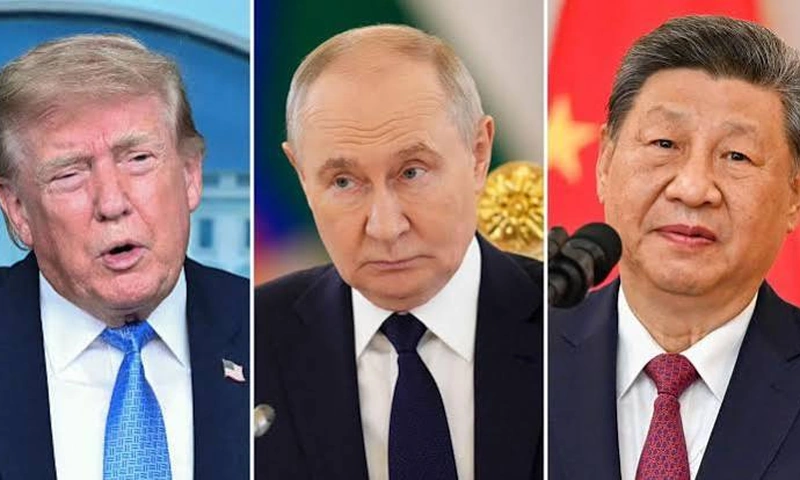
Trump, Xi and Putin’s Four-Point Peace Declaration Explained
U.S. President Donald Trump, Chinese President Xi Jinping and Russian President Vladimir Putin issued a four-point peace declaration on Thursday, November 19. The leaders pledged to discuss nuclear risks after their first-ever three-way summit. Their statement also covered United Nations reform, refined fuel supplies and the jurisdiction of the International Criminal Court. Read More: Trump, Xi and Putin to Meet at Shenzhen APEC Summit China and Russia released the declaration after the roughly 90-minute meeting at the lakeside Kylin Villa in Shenzhen. The leaders met on the sidelines of the Asia-Pacific Economic Cooperation summit. They spoke publicly at the start and then continued their talks behind closed doors. What the four-point Shenzhen declaration says UN reform. China, Russia and the United States are permanent members of the UN Security Council. The declaration says they are “committed to promoting UN reform so that it may respond more effectively to global challenges.” It also ties reform to the UN’s mission of maintaining international peace and security. Fuel supplies. The three countries plan to “increase the production and supply of refined petroleum products for the benefit of all nations.” They stressed the importance of stable energy flows. The declaration gives no production targets or timetable. Read More: Islamabad Agreement Returns to Focus as Xi Meets Trump International Criminal Court. The leaders agreed “that the International Criminal Court and other similar bodies must not abuse their jurisdiction.” They also stressed the importance of state consent and respect for the immunity of state officials. Nuclear risks. The leaders reaffirmed that a nuclear war cannot be won and must never be fought. “The three countries will conduct a dialogue on reducing nuclear risks and preventing the proliferation of nuclear weapons,” the declaration says. It sets no date for that dialogue and contains no commitments to cut nuclear arsenals. Ukraine and Iran absent from the declaration “We have a special responsibility to maintain open, respectful, and productive dialogue on issues impacting not just our people but the entire planet,” Trump said before the private talks began. “Too often, past leaders avoided talking to nations with whom they had disagreements, and we feel the opposite,” he continued. “I think that we are sure about that. No problems were ever solved under the old school, refusing to talk about it. No peace was ever forged by declining opportunities for engagement and speech.” Read More: Trump Proposes Tougher US Green Card Rules for Skilled Workers Ahead of the summit, Trump said he wanted to discuss Russia’s war in Ukraine, the conflict with Iran and denuclearization. The declaration mentions neither war. Washington has backed Ukraine against Russia’s invasion, while Beijing has supported Moscow. U.S. intelligence assessments have also found that China and Russia provided military support to Iran in its war with the United States. Beijing has resisted three-way arms control talks as it expands its nuclear arsenal. It argues that its stockpile remains smaller than those of Washington and Moscow. During his separate meeting with Trump, Xi said “nuclear weapons should be comprehensively banned and thoroughly destroyed, building a nuclear-free world.”
