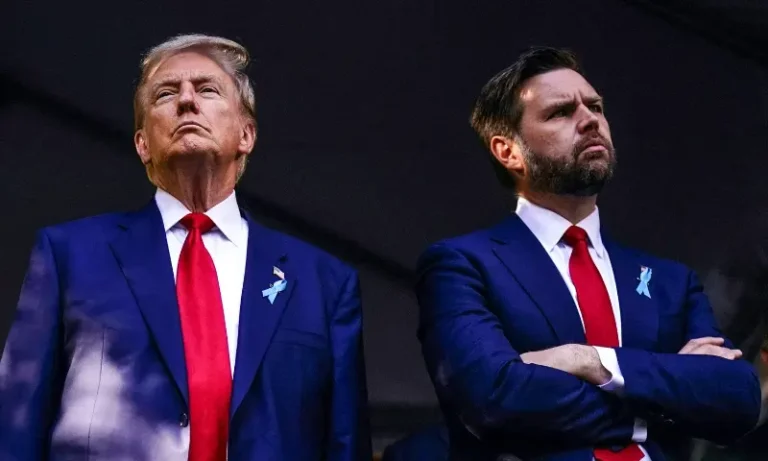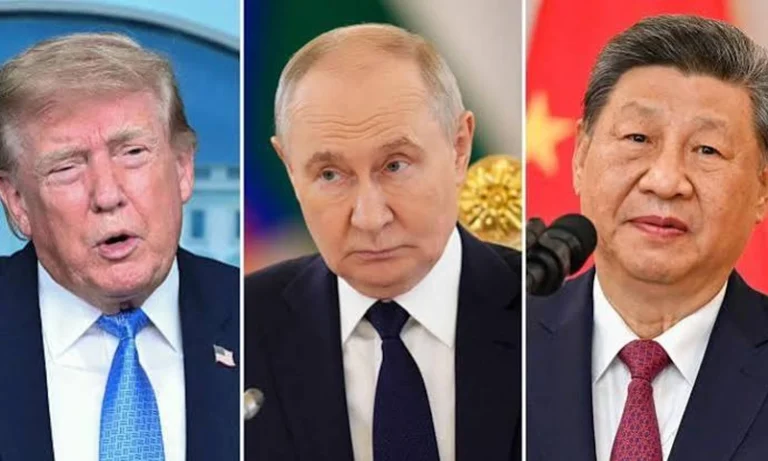
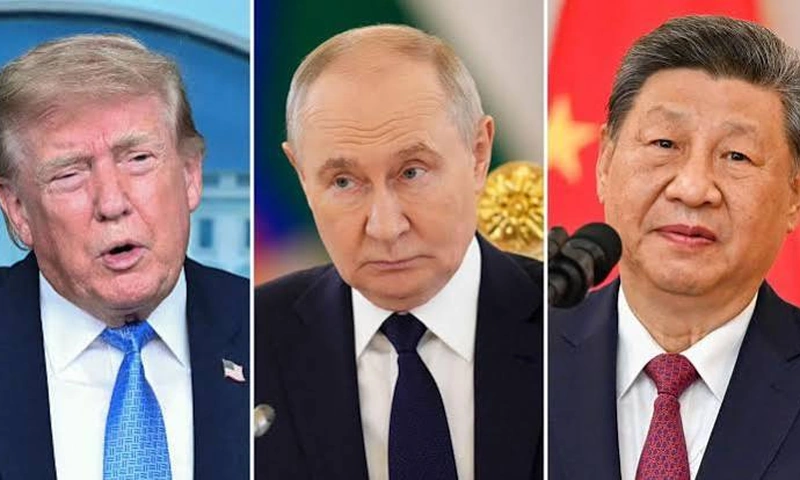
U.S. President Donald Trump, Chinese President Xi Jinping and Russian President Vladimir Putin issued a four-point peace declaration on Thursday, November 19. The leaders pledged to discuss nuclear risks after their first-ever three-way summit. Their statement also covered United Nations reform, refined fuel supplies and the jurisdiction of the International Criminal Court.
Read More: Trump, Xi and Putin to Meet at Shenzhen APEC Summit
China and Russia released the declaration after the roughly 90-minute meeting at the lakeside Kylin Villa in Shenzhen. The leaders met on the sidelines of the Asia-Pacific Economic Cooperation summit. They spoke publicly at the start and then continued their talks behind closed doors.
What the four-point Shenzhen declaration says
UN reform. China, Russia and the United States are permanent members of the UN Security Council. The declaration says they are “committed to promoting UN reform so that it may respond more effectively to global challenges.” It also ties reform to the UN’s mission of maintaining international peace and security.
Fuel supplies. The three countries plan to “increase the production and supply of refined petroleum products for the benefit of all nations.” They stressed the importance of stable energy flows. The declaration gives no production targets or timetable.
Read More: Islamabad Agreement Returns to Focus as Xi Meets Trump
International Criminal Court. The leaders agreed “that the International Criminal Court and other similar bodies must not abuse their jurisdiction.” They also stressed the importance of state consent and respect for the immunity of state officials.
Nuclear risks. The leaders reaffirmed that a nuclear war cannot be won and must never be fought. “The three countries will conduct a dialogue on reducing nuclear risks and preventing the proliferation of nuclear weapons,” the declaration says. It sets no date for that dialogue and contains no commitments to cut nuclear arsenals.
Ukraine and Iran absent from the declaration
“We have a special responsibility to maintain open, respectful, and productive dialogue on issues impacting not just our people but the entire planet,” Trump said before the private talks began.
“Too often, past leaders avoided talking to nations with whom they had disagreements, and we feel the opposite,” he continued. “I think that we are sure about that. No problems were ever solved under the old school, refusing to talk about it. No peace was ever forged by declining opportunities for engagement and speech.”
Read More: Trump Proposes Tougher US Green Card Rules for Skilled Workers
Ahead of the summit, Trump said he wanted to discuss Russia’s war in Ukraine, the conflict with Iran and denuclearization. The declaration mentions neither war. Washington has backed Ukraine against Russia’s invasion, while Beijing has supported Moscow. U.S. intelligence assessments have also found that China and Russia provided military support to Iran in its war with the United States.
Beijing has resisted three-way arms control talks as it expands its nuclear arsenal. It argues that its stockpile remains smaller than those of Washington and Moscow. During his separate meeting with Trump, Xi said “nuclear weapons should be comprehensively banned and thoroughly destroyed, building a nuclear-free world.”