

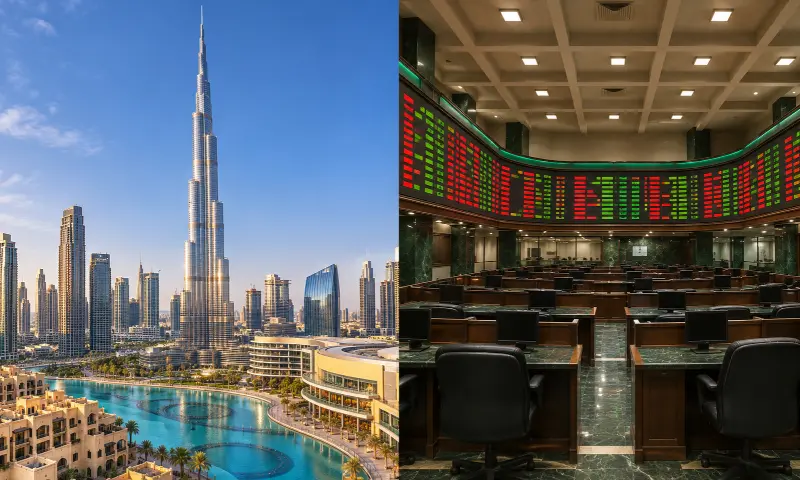
| A stable rupee and expectations of lower interest rates are making the Pakistan Stock Exchange (PSX) more attractive to domestic investors, according to Topline Securities. The brokerage expects local equities to remain a preferred option in 2027. It says domestic investors have become the main buyers, absorbing shares that foreign investors have sold. The outlook points to a stronger case for investing at home for Pakistanis who might otherwise look to Dubai. However, PSX trading figures show who bought and sold local shares. They do not show whether Pakistani investors reduced their holdings or new purchases in Dubai. Topline expects the State Bank of Pakistan (SBP) to keep its policy rate at 12% through the first half of 2027. It then forecasts a cut of 100 basis points, taking the rate to 11% in the second half. The SBP raised the rate from 11.5% to 12% in October 2026. At the time, policymakers cited persistently high global energy prices and a worsening inflation outlook. Minutes from that meeting also showed the rupee had gained 0.2% against the US dollar since the previous policy review. Topline expects inflation to ease from April 2027, creating room for a rate cut later in the year. The brokerage projects economic growth of 3.5% to 4% in FY27 and 4% to 4.5% in FY28. Cheaper financing could support companies with substantial borrowing. It could also lift demand in sectors that depend on households and businesses taking out loans. Topline set a December 2027 target of 220,000 points for the benchmark KSE-100 Index. Its outlook assumes a forward price-to-earnings multiple of seven times and an estimated dividend yield of 7%. The index closed at 177,383 on Friday, November 20, down 490 points over the week. The brokerage identified banks, cement, pharmaceuticals, oil and gas exploration and production companies, and automakers as sectors to watch. It singled out cement and automobile companies as potential beneficiaries of cheaper financing. It also pointed to dividend yields as a reason banks could continue drawing investor interest. Portfolio data compiled from the National Clearing Company of Pakistan showed foreign investors sold a net $9.92 million in equities in November through the 19th. They were net buyers in five of those 13 sessions. That pattern provides a snapshot of the foreign selling domestic buyers have absorbed. Topline’s outlook for the year ahead rests on a further easing in inflation and a policy rate cut in the second half of 2027.
Port Clearance Has Started for Seven Series Hybrids. Will Buyers See Lower Prices?
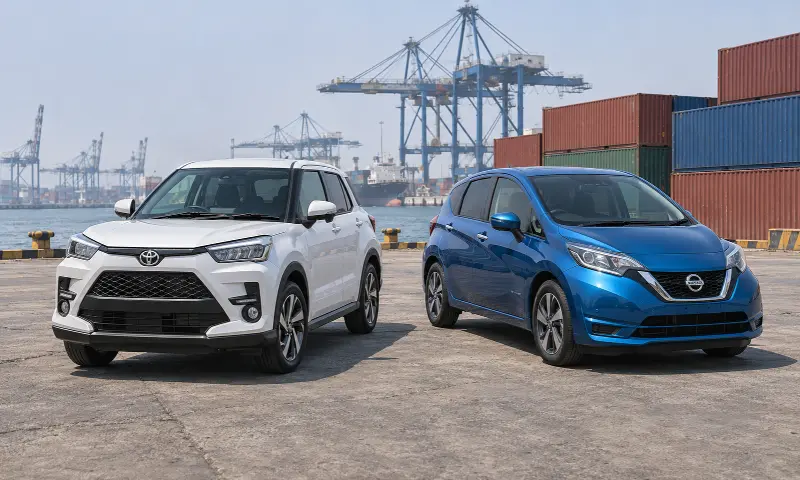
Pakistan Customs has classified seven imported series-hybrid model lines as electric vehicles for customs purposes. The decision covers versions of the Nissan Note and Toyota Raize whose wheels run solely on electric power. Clearance of the affected vehicles has begun at Pakistani ports. The Collectorate of Customs Appraisement (East), Karachi, issued the ruling on November 21, 2026, in letter No. C-76/KAPE/DC-PCT/2026. It covers the series-hybrid versions of the Nissan Kicks, X-Trail, Note/Aura and Serena, as well as the Daihatsu Rocky, Toyota Raize and Subaru Rex. The classification applies to the powertrain reviewed by customs, so the model name alone does not establish which tariff code applies. The Customs Classification Committee examined how the vehicles deliver power to their wheels. It found that the internal combustion engine has no mechanical connection to the wheels and cannot transmit torque to them under any operating condition. Instead, the petrol engine generates electricity. The electric traction motor alone drives the wheels. Nissan describes the same setup in its e-POWER system, where the engine can generate electricity according to factors such as battery charge and acceleration. The committee assigned the imports to Pakistan Customs Tariff code 8703.8090, which covers vehicles with “only electric motor for propulsion”. Customs had applied the same principle in Public Notice No. 02/2026, dated February 2, 2026. That notice classified range-extended electric vehicles (REEVs) such as the Deepal S05 and Forthing Friday as EVs for tariff purposes. Indus Motor Company, Toyota’s local assembler, challenged the February notice before the Federal Board of Revenue’s Member (Customs Policy). The company sought hybrid classification for REEVs, arguing that the EV category attracted lower taxes. The FBR rejected the appeal in its November 16 order and upheld the electric vehicle classification. Five days later, the Karachi ruling applied the same test to the specified series hybrids. For both decisions, the deciding factor was which motor drives the wheels. The presence of a petrol engine did not change the classification because its role was limited to generating electricity. The ruling offers relief to used-car importers who faced clearance delays and heavy penalties on vehicles such as the Toyota Raize and Nissan Note. It also gives local assemblers a clearer basis for assessing how customs will treat future range-extended models. The decision could reduce import costs for qualifying vehicles under the Auto Policy 2026–31. Any savings will depend on the duties and taxes that apply to each import. For buyers, the immediate change is that port clearance has started. A lower showroom price remains a possibility.
Can AI Create More Jobs? What APEC Leaders Agreed in Shenzhen
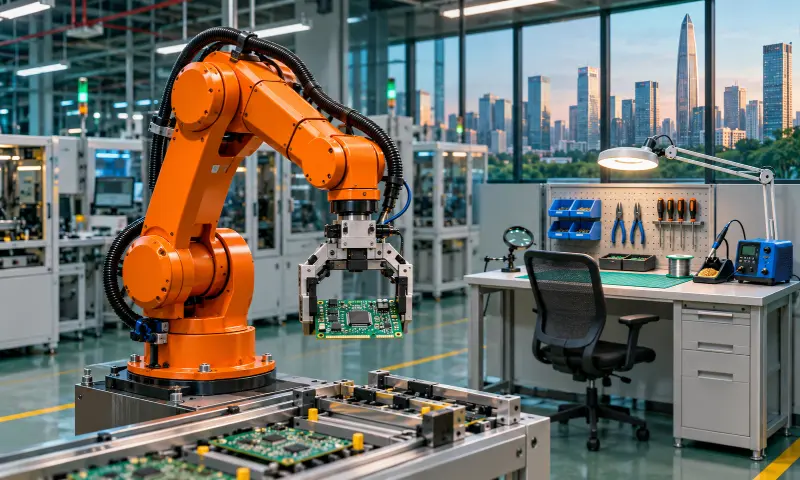
Leaders from 21 Asia-Pacific economies adopted a statement on digital technology and employment at the 33rd APEC Economic Leaders’ Meeting. Chinese President Xi Jinping chaired the meeting in Shenzhen. The statement calls on economies to use new technology to boost productivity, encourage innovation and support full employment. It also links industrial upgrades to skills training and stronger protections for workers. Leaders encouraged the use of digital technology to facilitate trade and support innovation in energy and agriculture. They also backed its use in education, transport and healthcare. The aim is to improve the quality of public services and make them easier to access. Micro, small and medium-sized enterprises are a focus of the plan. In September, APEC ministers said small and medium-sized firms accounted for more than 97% of businesses across the Asia-Pacific. The Shenzhen declaration calls for better access to capital, skills training and affordable digital tools. These measures could help businesses improve efficiency, reach new markets and create jobs. APEC also wants digital adoption to help businesses and workers move from informal activity into the formal economy. Jiang Tianjiao, an associate professor at Fudan University’s Development Institute, said APEC could help narrow the AI divide between economies. He pointed to open technologies, shared examples of how to use them and cooperation on managing risks. In a November 12 interview, Canadian researcher Alejandro Reyes said businesses need the skills and resources to use technology effectively. Reyes is a senior fellow at the University of Hong Kong’s Center on Contemporary China and the World. He highlighted shared computing resources, open AI models for Asian languages and worker training. He said cooperation in these areas was especially important for developing economies. The statement calls for wider internet access, stronger digital literacy and more vocational training. It encourages economies to help workers upgrade existing skills or learn new ones as employers’ needs change. Public and private employment services could also use digital tools to connect job seekers with vacancies. Leaders urged economies to protect workers’ rights as businesses introduce new technologies. They also called for using digital tools to improve job quality, working conditions, and occupational safety and health. The APEC Human Resource Development Working Group will coordinate implementation with other APEC bodies. It can also work with the APEC Business Advisory Council and the Pacific Economic Cooperation Council where appropriate. APEC will report progress in its annual Senior Officials’ Report on Economic and Technical Cooperation.
