


Many founders now ask: “How much AI should already be built into this business?” Yet experts warn that speed alone does not produce better businesses. JPMorganChase Institute research based on small-business banking data shows how quickly adoption has accelerated. Companies launched in 2019 took 77 months to reach a 10 percent AI adoption rate. Businesses launched in 2025 reached the same milestone in about six months. AI now helps new companies draft customer emails, manage accounts and handle routine work before they take their first order. However, founders who automate without structure may simply scale existing weaknesses. Build Accountability Into AI Systems Marko Kling, vice-president of solution architecture at financial automation company Serrala, has advised global enterprises for 17 years. He argues that businesses must treat oversight as a system-design requirement instead of relying only on workplace culture. “Trust erodes quickly when accountability cannot keep pace with automation,” Kling said. Read More: Nvidia Warns Customers of Major AI Server Price Increase Companies should identify who owns the outcome of every automated process before they activate it. They also need clear reviews, data controls and audit trails. Without these safeguards, errors can damage trust among customers, regulators and investors. The principle applies to both new companies building AI into operations and established businesses adding it to older systems. Reward Human Judgment Over Output AI has weakened the advantage that once came from producing more content, campaigns and operational tests. When every company can access similar tools, output alone no longer separates one business from another. “In AI-powered organizations, value is shifting away from volume and toward discernment,” said Kathleen Ulrich, managing director of marketing at Brillio. “It’s no longer about producing more assets or running more tests. The value comes from knowing when to deploy technology, how to adapt strategies in real time, and how to keep a human lens on every decision.” Entrepreneurs can encourage this approach by rewarding employees for sound decisions, not just speed or production. Performance reviews should examine which tasks employees chose not to automate and why. Use AI to Strengthen Customer Relationships The strongest automation removes routine work while giving employees more time for difficult or sensitive customer interactions. Zendesk says its AI agents can autonomously resolve up to 80 percent of customer interactions. That leaves human teams to handle the remaining cases, which often involve emotion, unusual problems or higher risks. Businesses can automate scheduling, follow-ups and routine questions. Employees can then focus on rebuilding trust, solving complicated problems and making customers feel heard. Read More This approach can make service feel more personal because technology handles repetitive work quietly in the background. Founders should therefore measure AI success by more than the number of automated tasks. A more useful measure is how much additional attention employees can give to customers and decisions that matter. As Power concluded, “The entrepreneurs I’d bet on are choosing better, and letting bigger follow.”
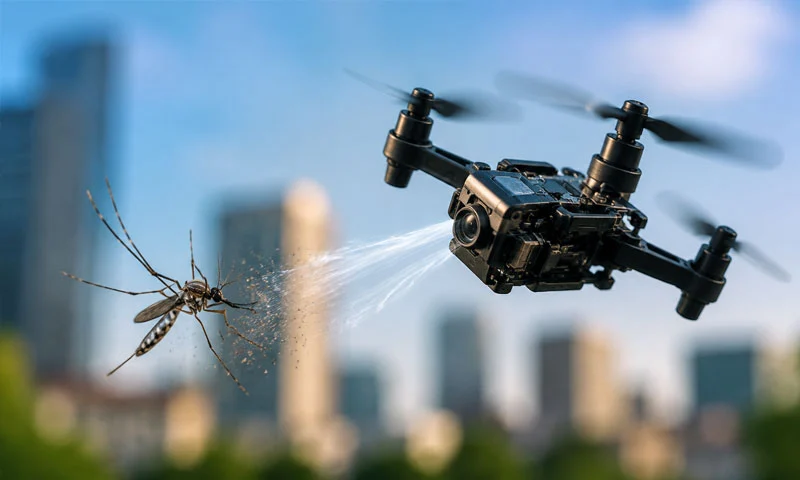
Meet the AI Drone That Hunts and Kills Mosquitoes Mid-Air
Engineers at Tornyol, a US startup backed by Y Combinator, are developing an AI-powered micro-drone designed to hunt mosquitoes in flight. The company says the technology could reduce mosquito-control costs by as much as 100 times. The project aims to replace or supplement chemical spraying and other costly control methods. Instead, swarms of lightweight drones could patrol homes, gardens and wider urban spaces. They would identify mosquitoes and destroy them through direct mid-air interception. Read More: Routine Dental Check Ends in Controversy After Patient Loses 12 Teeth Tornyol was founded by engineers Alex Toussaint and Clovis Piedallu. According to Y Combinator, the startup uses low-cost components, including smartphone microphones and sensors commonly found in vehicle parking systems. Its custom software then turns small toy-style drones into autonomous mosquito hunters. Drone Records First Mid-Air Insect Kill On July 14, Toussaint posted a video showing what he called the company’s “first air-to-air kill”. The footage showed a small drone chasing and eventually bringing down a moth inside a controlled testing area. The drone did not fire a projectile. Instead, it intercepted the insect and struck it with its spinning propellers. Extremely excited to announce our first air-to-air kill of a flying moth by an autonomous micro-drone. This is a big step towards completely eradicating mosquitoes. pic.twitter.com/UhtNqwXCQI — Alex Toussaint (@alextoussss) July 14, 2026 The test did not involve a mosquito, while the flight area remained limited. However, Tornyol considers it an important step toward building a system that can detect, follow and eliminate much smaller insects in real time. Reports on the demonstration said the 40-gram, palm-sized drone tracked the moth without direct human control. The company still needs to prove that the system can reliably detect real mosquitoes in larger and less predictable environments. The current prototype also faces practical limits. Reports suggest its battery supports only a few minutes of flight before the drone must return to its charging station. Therefore, a larger deployment would likely require several drones operating on coordinated schedules. How the Mosquito-Tracking System Works Tornyol’s stated goal is to develop drones weighing about 40 grams. They would rely on smartphone-grade microphones, ultrasonic sensors and custom signal-processing software. Read More: Same Elephant Kills Four Family Members Over 14 Years The system sends ultrasonic pulses and listens for returning echoes through a microphone array. Mosquito wings produce a distinct acoustic and Doppler signature. In theory, the software could use that signal to distinguish mosquitoes from moths, bees and other insects. Scientific research has already shown that smartphone microphones and machine-learning models can identify mosquito species through wingbeat sounds. However, real-world accuracy can fall because of wind, background noise and overlapping signals. Urban Mosquito Control Without Chemicals Toussaint and Piedallu hope to deploy swarms across urban areas. The company estimates that around 10 drones could clear mosquitoes from one square kilometre, although that claim has not yet been demonstrated independently. Read More: Couple Climbs Empire State Tower for Love and Lands in Custody The potential public health impact remains significant. The World Health Organization estimated 282 million malaria cases and 610,000 deaths worldwide in 2024. Mosquitoes also transmit dengue, Zika, chikungunya and West Nile virus. For now, Tornyol’s drone remains experimental. The moth test shows that autonomous interception is possible, but large-scale mosquito eradication will require longer battery life, accurate species identification and extensive outdoor trials.

Pakistanis Can Earn Up to $50,000 From OpenAI. Here’s How
Pakistani researchers working in artificial intelligence security, cybersecurity and biosafety can now apply to participate in OpenAI’s newly launched Bio Bounty Program, which offers rewards of up to $50,000 for identifying critical vulnerabilities in advanced AI systems. The program aims to strengthen the biological safety safeguards built into OpenAI’s frontier AI models. It invites qualified researchers to uncover “universal jailbreaks” that could bypass the company’s predefined biosafety protections. By identifying these weaknesses before malicious actors do, participants will help improve the security and reliability of future AI systems. Pakistan is among the eligible countries listed on the application form, allowing local experts to compete alongside researchers from around the world. However, the initiative is not open to the general public. Instead, OpenAI requires interested researchers to submit an application outlining their experience and qualifications. The company will review applications on a rolling basis and invite only selected candidates to join the private testing platform. Successful applicants must also have an existing ChatGPT account and sign a non disclosure agreement before participating. Rewards double to encourage advanced AI safety research OpenAI has increased the program’s top reward from $25,000 to $50,000, reflecting the growing importance of external security research as AI systems become more capable. The Bio Bounty Program evolved from the earlier GPT 5.5 Bio Bug Bounty into an ongoing initiative that will initially focus on GPT 5.6 and future frontier models. Researchers must identify a universal jailbreak capable of defeating OpenAI’s biological safety challenge rather than finding conventional software bugs or infrastructure vulnerabilities. Unlike traditional bug bounty programs that focus on websites or applications, OpenAI’s initiative specifically targets biological misuse risks. The company wants experts to test whether advanced AI models can be manipulated into bypassing safeguards designed to prevent the generation of dangerous biological information. Researchers who discover significant vulnerabilities could receive payouts of up to $50,000, while OpenAI may also grant smaller rewards for partial findings at its discretion. Growing global focus on responsible AI development The launch of the expanded Bio Bounty Program reflects a broader international effort to ensure increasingly powerful AI models remain safe and resistant to misuse. Governments, technology companies and research institutions have intensified efforts to strengthen AI governance as frontier models become more capable across scientific and technical fields. External red teaming has become a key part of that strategy because independent researchers can identify weaknesses that internal testing may overlook. For Pakistan, inclusion in the program provides an opportunity for researchers to contribute directly to global AI safety while gaining international recognition for their expertise in cybersecurity, AI security and biosafety. Although selection is competitive, the initiative gives qualified Pakistani experts access to one of the world’s most advanced AI safety testing programs. Their findings could influence the development of future OpenAI models while helping reduce biological risks associated with advanced artificial intelligence. OpenAI said the Bio Bounty Program will continue to expand as it develops new frontier models and strengthens safeguards against emerging threats in the rapidly evolving AI landscape.aa
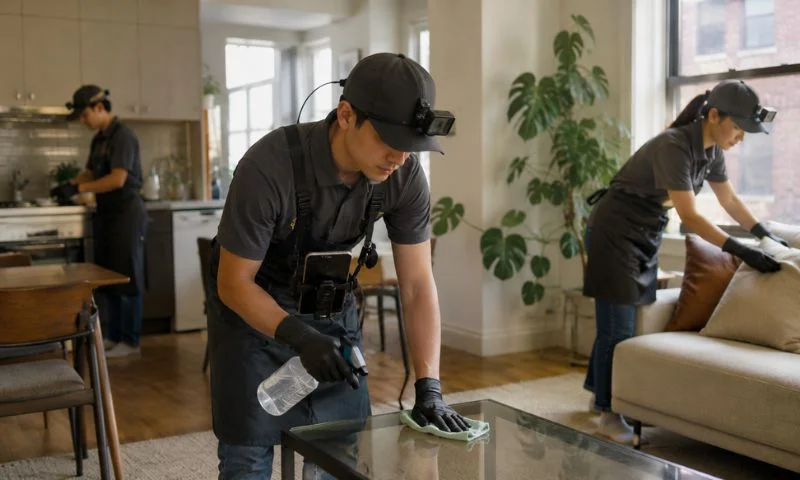
AI Startup Records Every Corner of Homes to Train Future Robots
A New York startup is offering residents free apartment cleaning and even private chef services. In return, it records nearly everything that happens inside their homes. The initiative, called Shift, comes from AI company Micro AGI. The firm says it wants to gather real-world data to train future household robots that can clean, cook and perform other daily tasks. The programme has sparked excitement among AI enthusiasts. It has also raised concerns among privacy advocates who warn that consumers may be giving away valuable personal information for a service that appears free. Cameras, Cleaning and AI Training The project recently drew attention after a BBC reporter invited Shift cleaners into his Upper East Side apartment in New York City. The workers looked like ordinary cleaners. However, each wore a camera mounted on a cap and connected to a mobile phone. The devices recorded their work as they cleaned kitchens, bathrooms and living spaces. According to Shift founder Bercan Kilic, the company needs large amounts of real-world data to help robots learn how to operate in constantly changing environments. “The goal of the data-gathering exercise is to advance humanity,” Kilic told the BBC. He compared the challenge to training large language models such as ChatGPT. While language models learn from text available online, robots must learn how to interact with physical objects in different settings. Read More: Four Leading AI Models Failed This Elite Maths Challenge “In the real world, every object is different, the lighting is different and nothing is the same as it was a couple of hours earlier. Models need to learn how their hands, cameras and environments work together,” he said. The company says it collects “tonnes” of data from homes. It then anonymises the information and sells datasets to robotics and AI firms developing autonomous machines. Kilic said Shift could eventually provide free or discounted services covering “any skill humanity can demonstrate.” Besides apartment cleaning in New York, the company also uses mechanics in Turkey to collect similar training data. The effort comes as technology companies race to develop humanoid robots capable of handling household chores, elderly care and other labour-intensive tasks. Firms such as Tesla, Figure AI and Agility Robotics are investing heavily in human-like robots designed for everyday environments. Privacy Concerns Grow Privacy experts say consumers should carefully consider the trade-off before allowing cameras inside their homes. Rory Mir of the Electronic Frontier Foundation said the organisation has seen a “concerning increase in ‘pay-for-privacy’ and ‘data-bribing’ practices from companies”. “While it might come with money or a service upfront, the data you share has a way of coming back to bite you,” he said. Calli Schroeder of the Electronic Privacy Information Center described the model as “a diabolically creative way to sell privacy invasion.” She warned that home recordings could capture highly sensitive information. She also argued that the data may prove far more valuable than the cleaning service itself. Kilic defended the approach and said Shift remains transparent about how it uses customer information. “Clearly your data is being used every single day, but you don’t know what for and you are not being paid,” he said. “If you don’t want to do it, you don’t have to. We don’t expect everyone to like it and that is fine.” As AI companies push to build robots for everyday life, Shift’s experiment highlights a growing debate. Consumers may soon have to decide whether convenience is worth the cost of sharing more of their private lives.
The End of Keyboards? Tech Giants Are Building Computers That Work for You
The world’s biggest technology companies are intensifying efforts to create computers that can complete complex tasks with little human input, betting that a new generation of AI agents will transform how people interact with their devices. For years, digital assistants such as Siri, Alexa and Google Assistant promised to simplify everyday computing. In practice, most users relied on them for basic tasks such as setting alarms, playing music or checking the weather. Now companies including Nvidia, Microsoft and Google believe advances in generative AI can finally unlock a more capable generation of digital assistants that understand instructions, make decisions and carry out multi-step tasks independently. “The goal eventually is to figure out, ‘Hey, how do I just tell the computer essentially what I want it to do, and then have it do it?’” said Bob O’Donnell, founder and chief analyst at technology research firm Technalysis. The shift comes as AI adoption accelerates worldwide following the launch of OpenAI’s ChatGPT in late 2022. Since then, technology firms have invested billions of dollars in AI infrastructure, software and hardware designed to support increasingly autonomous systems. New Hardware Powers the AI Push Nvidia, Microsoft and Google unveiled several new AI-focused products in recent days as competition intensifies. Nvidia introduced the RTX Spark chip for Windows laptops on June 1. The company says the processor can run powerful AI agents directly on a device without relying on cloud computing. Dell, HP and Lenovo plan to launch laptops powered by the chip later this year. At the same time, Microsoft is redesigning parts of Windows and expanding AI capabilities across its software ecosystem. The company recently announced Scout, a new Microsoft 365 agent built using OpenClaw technology. Microsoft says Scout can work across files stored on a user’s computer, cloud services and workplace applications such as Outlook and Teams. The agent could monitor emails, track conversations and help organise work with minimal supervision. Google is also developing new AI features that can suggest actions based on what appears on a user’s screen. Future versions of Google’s software could propose scheduling meetings or managing tasks when users hover over relevant information. Promise Meets Practical Challenges Supporters argue that AI agents could fundamentally change how people use computers. Nvidia CEO Jensen Huang recently demonstrated how AI agents could move between design applications to assist with planning a house. Meanwhile, developers increasingly use OpenClaw to conduct research and complete complex workflows while communicating with the system through messaging apps. “Things are quite different now because more people have now become quite used to using like Chat GPT or Gemini or Anthropic,” said David Naranjo, associate director at Counterpoint Research. Despite the excitement, analysts caution that widespread adoption may still take years. High hardware costs remain a challenge. Many consumers also question whether AI systems can reliably handle important tasks without making costly mistakes. “There’s a whole host of issues that need to be resolved before this becomes mass market,” said Jitesh Ubrani, research manager at International Data Corporation. “But are we on the right track? Yes.” Analysts say businesses will likely adopt AI agents faster than consumers because local AI processing offers greater security and lower long-term operating costs. The success of the technology may ultimately depend on whether users trust computers to make decisions on their behalf.
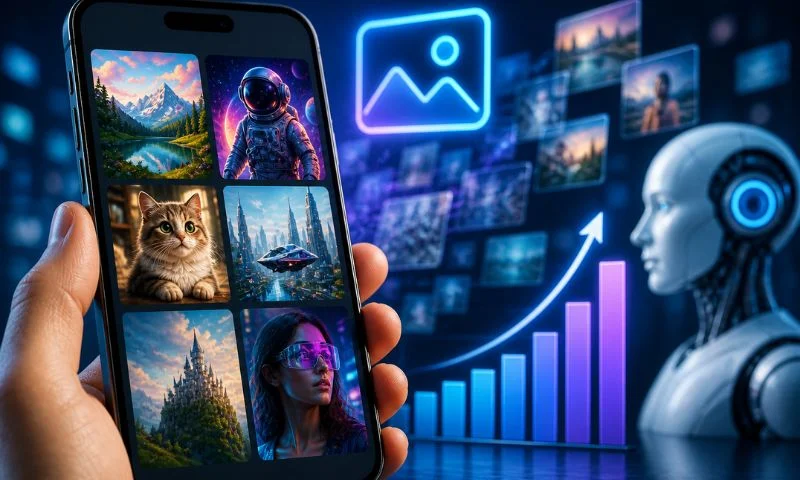
ChatGPT and Gemini See Explosive Growth After Image Features
New image-generation features are driving a sharp rise in downloads for AI mobile apps, signaling a shift in user demand, according to a report by Appfigures. The study found that releases of image models generate 6.5 times more downloads than traditional updates tied to conversational AI. Earlier growth often followed chatbot improvements or features such as voice interfaces. Now, visual capabilities appear to lead user interest. Apps like ChatGPT and Gemini recorded tens of millions of new downloads after launching image-generation tools, the report said. Gemini and ChatGPT lead download surge For Gemini, the launch of its image model Nano Banana triggered a major spike. The app gained more than 22 million additional downloads in the 28 days after introducing the Gemini 2.5 Flash image model last August. This increase pushed downloads to more than four times their usual level during that period. ChatGPT also saw strong growth. The app added over 12 million incremental installs in the 28 days following the release of its GPT-4o image model in March last year. Appfigures noted that this figure was about 4.5 times higher than the downloads generated by other model releases, including GPT-4o, GPT-4.5, and GPT-5 updates focused on text or general capabilities. Other platforms followed similar trends, though at a smaller scale. Meta Platforms recorded about 2.6 million extra downloads after launching its AI video feature Vibes in September 2025. Downloads rise, but revenue tells a different story Despite the surge in installs, the report warned that higher downloads do not always translate into revenue growth. Instead, image features often attract new users who want to test visual capabilities. Many do not convert into paying subscribers. For example, Nano Banana generated only about $181,000 in estimated consumer spending in the 28 days after its release. This came despite a larger download spike than ChatGPT’s image model launch. Meta’s Vibes feature also increased downloads but did not deliver meaningful revenue gains. Among the apps analyzed, only ChatGPT turned user interest into significant income. Its GPT-4o image model generated an estimated $70 million in consumer spending during the same 28-day window. The report suggests that monetization strategies remain uneven across the sector. Companies continue to experiment with pricing models and premium features. Curiosity and innovation drive user behavior Appfigures also examined DeepSeek R1, which drove 28 million downloads after its January 2025 release. However, the report said this case did not follow the same pattern. DeepSeek gained attention as a breakthrough moment. It drew interest due to its low-cost training methods rather than image-generation features. Analysts say curiosity remains a powerful driver of downloads in the AI space. Breakthrough innovations can quickly attract millions of users, even without strong monetization. The findings highlight a broader trend. Visual AI tools are becoming a key battleground for user growth. Companies now focus on image and video capabilities to attract attention in an increasingly crowded market.
