

Today, Cristiano Ronaldo is synonymous with excess and excellence. His garage reportedly houses some of the world’s most exclusive machines—Bugattis worth millions, bespoke Ferraris, and ultra-luxury Rolls-Royces. The “CR7” brand represents peak success, power, and polish. But long before the supercars, private jets, and record-breaking contracts, Ronaldo’s first taste of automotive endorsement was far more down to earth. His earliest car partnership wasn’t with an elite luxury brand. It was with a compact hatchback built for everyday roads: the Suzuki Swift. A Snapshot From 2004 Rewind to 2004. Ronaldo was just 19 years old and newly signed by Manchester United. He was raw, electric, and instantly recognisable—bleached tips, flashy boots, and fearless confidence. Football fans could sense something special was coming, even if the trophies were still years away. Around the same time, Suzuki was introducing a new generation of the Swift. It wasn’t designed to impress with luxury or size. Instead, it focused on agility, affordability, and fun behind the wheel. For Suzuki, the goal wasn’t prestige—it was personality. That’s where Ronaldo fit perfectly. Why the Match Made Sense On the surface, a future football icon and a modest hatchback might seem like an odd pairing. In reality, it was smart branding on both sides. Ronaldo’s game was built on speed, sharp movement, and flair. The Swift was marketed around nimble handling and urban performance. Both were young, energetic, and aimed at a new generation. Neither was trying to be traditional. Both were trying to stand out. It wasn’t about luxury. It was about momentum. Two Very Different Journeys—Same Outcome What makes the story compelling is what followed. Ronaldo went on to redefine modern football, collecting five Ballon d’Or trophies and becoming one of the most recognisable athletes in history. Meanwhile, the Suzuki Swift quietly built its own legacy. Over the years, it evolved into one of the world’s most successful compact cars, recently surpassing 10 million units sold globally. While Ronaldo dominated stadiums, the Swift conquered city streets. Both succeeded by mastering their lane. The Bigger Takeaway In an era obsessed with instant luxury and online flexing, this early chapter of Ronaldo’s career is a reminder that greatness often starts with practical choices. The Swift wasn’t a compromise—it was a smart, focused product that delivered exactly what it promised. Ronaldo moved on to hypercars. The Swift stayed true to efficiency, reliability, and fun. Decades later, both are still relevant, respected, and iconic. Legends don’t always begin in supercars. Sometimes, they start in a Swift.
Honda’s China Plants Stay Offline as Semiconductor Supply Remains Unstable
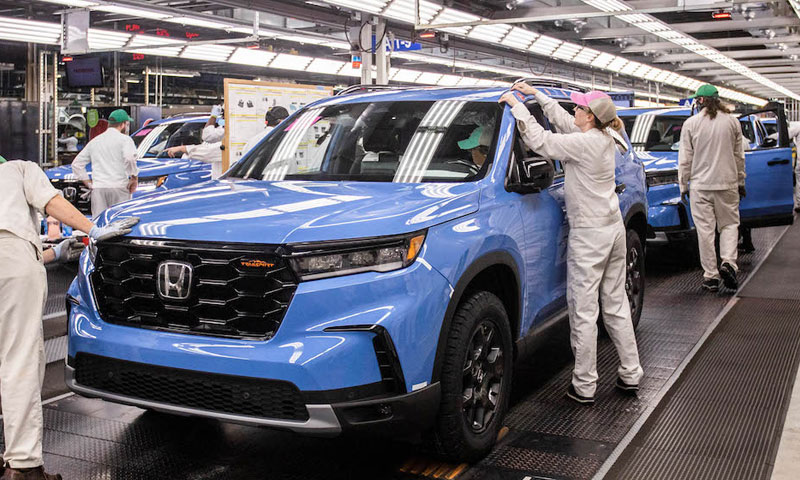
Honda Motor Co. has announced an extended production halt at three of its joint-venture manufacturing plants in China, citing continued shortages of semiconductor chips. The facilities, operated in partnership with Guangzhou Automobile Group (GAC), will now remain idle until January 19, 2026, instead of resuming operations on January 5, according to Reuters. In a statement to Global Times, Honda described the extension as a short-term production adjustment, stressing that the impact on overall output would be “relatively control lable.” The automaker said it expects to make up for lost production later in the year and does not foresee delays in vehicle deliveries to customers. Ongoing chip supply pressures The move highlights the lingering strain on global automotive supply chains, where access to semiconductor chips remains uneven. While the most severe shortages seen during the peak of the COVID-19 pandemic have eased, automakers continue to face intermittent bottlenecks due to delivery delays, logistics disruptions, and uneven recovery among chip suppliers. Honda faced similar challenges earlier in 2025, when it was forced to scale back or temporarily suspend production at several North American plants. Industry analysts note that delays from major semiconductor manufacturers — including firms such as Nexperia — have affected multiple automakers, although Honda has not attributed the China halt to any single supplier. China’s role in Honda’s strategy China remains one of Honda’s most important global markets, with the Guangzhou joint-venture plants playing a key role in supplying vehicles for both domestic buyers and overseas markets. While the prolonged shutdown may temporarily widen the gap between planned and actual production volumes, Honda believes it can recover output once supply conditions stabilize. Longer-term industry response Automotive experts say the situation underscores the need for diversified chip sourcing, stronger supplier coordination, and more flexible production planning. Despite years of adaptation since the pandemic, the semiconductor supply chain remains vulnerable to disruptions — a challenge that continues to test automakers operating in highly competitive global markets. Honda’s decision reflects the delicate balance manufacturers must strike between managing supply constraints and meeting demand, even as the industry works toward more resilient long-term solutions.
Toyota Launches Shockingly Affordable Electric Sedan in China — Here’s What Makes It Special
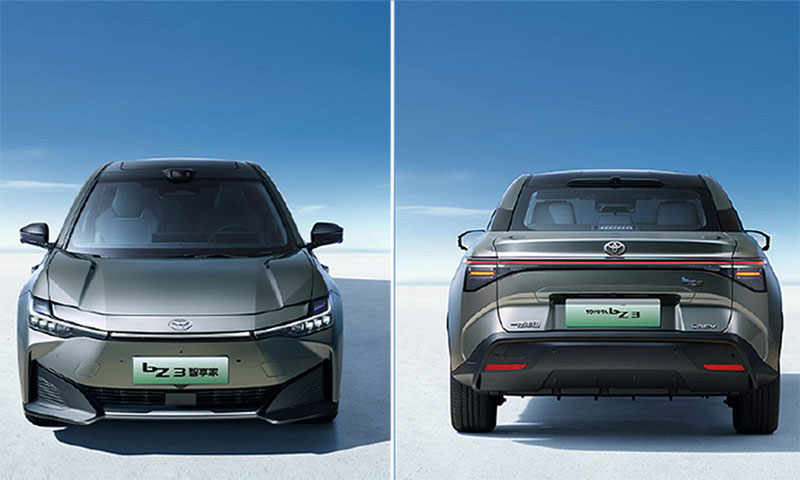
Toyota has taken a bold step in the electric vehicle race by launching the bZ3 Smart Home Edition in China—an electric sedan that is turning heads primarily because of its unexpectedly low price. The new model is priced from 109,800 yuan (roughly Rp262 million), positioning it as one of the most affordable electric sedans in its class. The bZ3 is the result of Toyota’s partnership with China’s FAW Group and has been developed exclusively for the Chinese market. Originally introduced in 2022 and refreshed in 2024, the Smart Home Edition represents the most advanced and cost-competitive version of the bZ3 so far. Two variants, aggressive pricing Toyota is offering the bZ3 Smart Home Edition in two variants. The Joy version starts at 109,800 yuan, while the more powerful Pro variant is priced at 129,800 yuan (around Rp309 million). At this price point, industry observers note that if the bZ3 were sold in the United States, it could easily undercut every new electric car currently on sale there—especially as the sub-$20,000 new car segment has nearly disappeared. For comparison, Nissan recently discontinued the Versa, once the cheapest new car in the US at $18,330, while Mitsubishi ended production of the Mirage in late 2024. Advanced tech at a budget price Despite its affordability, the bZ3 Smart Home Edition comes packed with technology. It features the Momenta 5.0 driving assistance system, offering Level 2 autonomous capabilities. To support this, Toyota has equipped the car with 32 sensors, including a roof-mounted LiDAR unit, millimeter-wave radars, ultrasonic sensors, and multiple cameras. These are powered by a high-performance computing chip delivering up to 544 TOPS of processing power. Design, dimensions, and performance Visually, the bZ3 has been refreshed with Toyota’s latest “hammerhead” front-end design, while the rear now features vertical taillights instead of the earlier horizontal layout. A new exterior color, Dark Cloud Green, has also been added. Dimensionally, the car remains unchanged, measuring 4,725 mm in length, 1,835 mm in width, and 1,475 mm in height, with a 2,880 mm wheelbase—typical proportions for a modern electric sedan. The Joy variant uses a front-mounted electric motor producing 181 horsepower, paired with a 49.9 kWh lithium iron phosphate Blade battery supplied by BYD, offering a claimed range of 517 km under Chinese testing standards. The Pro version steps up to 241 horsepower and a larger 65.3 kWh battery, extending the range to 616 km on a single charge. Cabin and launch timeline Inside, the bZ3 Smart Home Edition offers a futuristic cabin featuring a 15.6-inch horizontal touchscreen, an additional 12.8-inch display, a digital instrument cluster, ambient lighting, and an AI-powered voice assistant. Toyota says the model will soon enter mass production, with sales to begin in China in the first quarter of 2026. With its aggressive pricing, long range, and advanced technology, the bZ3 Smart Home Edition signals how serious Toyota has become about making electric cars affordable—at least in China.
