
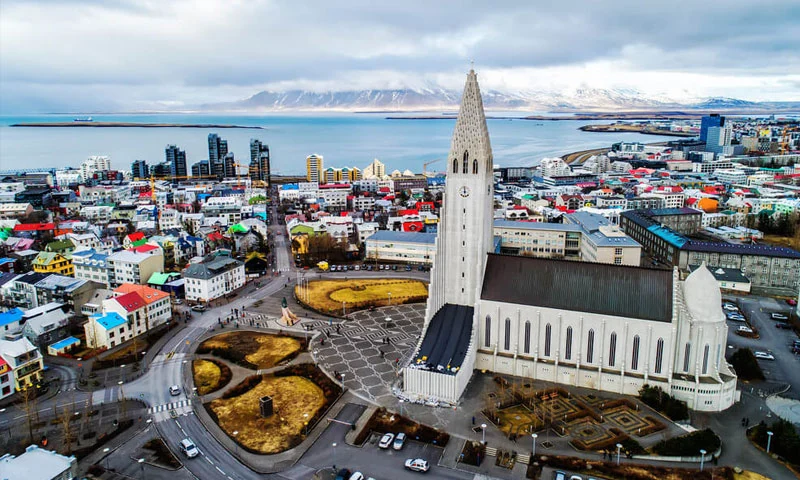
The world’s most peaceful countries for 2026 have been revealed, with Iceland once again securing the top position in the latest Global Peace Index compiled by the Institute for Economics and Peace (IEP). The annual index assessed 163 countries and territories using 23 indicators that measure peace and stability. Researchers examined factors such as crime levels, political stability, internal and international conflicts, militarisation and the impact of terrorism. According to the report, global peacefulness continued to decline during the past year. However, a select group of nations maintained exceptionally high levels of safety, security and social cohesion. Iceland Iceland retained its position as the world’s most peaceful country for the 17th consecutive year. Researchers credited the country’s low crime rates, strong institutions and high levels of public trust for its continued success. Iceland has consistently topped the rankings since 2008 and remains one of the safest places to live and visit. Ireland Ireland ranked second in the 2026 Global Peace Index. The country benefited from effective democratic institutions, a long-standing policy of neutrality and low incarceration rates. Analysts also highlighted Ireland’s stable political environment and strong social cohesion. New Zealand New Zealand climbed two places to secure third position globally. The country also emerged as the most peaceful nation in the Asia-Pacific region. Researchers pointed to its low crime levels, stable government and strong rule of law. Austria Austria maintained its place among the world’s safest countries by securing fourth position. Its stable political environment, high quality of life and strong public institutions contributed to its ranking. Switzerland Switzerland ranked fifth and continued its tradition of neutrality and political stability. The country achieved strong scores in public safety and recorded low levels of violent crime compared to many other developed nations. Singapore Singapore emerged as the highest-ranked country in Southeast Asia, taking sixth place overall. The city-state posted excellent results in public safety, law enforcement and social stability. It also remained free from major internal or external conflicts. Portugal Portugal secured seventh place in the rankings. The report noted that continuous investment in social development and public welfare programmes helped strengthen safety perceptions and overall stability. Denmark Denmark claimed eighth position and remained one of the safest countries in Northern Europe. High living standards, strong governance and low crime rates helped Denmark maintain its place among the world’s most peaceful nations. Slovenia Slovenia ranked ninth in the latest index. Researchers highlighted its effective governance, political stability and peaceful social environment as key factors behind its strong performance. Finland Finland completed the top 10 list. The Nordic country improved several safety indicators despite facing a more challenging geopolitical environment in Northern Europe. Analysts said Finland’s strong institutions and social trust continued to support its ranking. What Makes These Countries Stand Out? Experts say the countries at the top of the Global Peace Index share several common traits. They invest heavily in education, healthcare and social welfare. They also maintain strong institutions, low corruption levels and effective governance. The Institute for Economics and Peace noted that peaceful societies tend to enjoy stronger economic performance, higher quality of life and greater resilience during periods of global uncertainty. As conflicts and geopolitical tensions continue to affect many regions, the latest rankings highlight the importance of stability, trust and good governance in building peaceful societies.

“Never Experienced This Before”: World No. 3 Anders Antonsen Quits India Open Over Delhi’s Air
Denmark’s men’s singles world number three Anders Antonsen has withdrawn from the ongoing India Open, citing what he described as “extreme” air pollution in the Indian capital — a decision that will cost him a $5,000 fine under Badminton World Federation (BWF) regulations. Antonsen announced his withdrawal in a detailed statement on Instagram, where he explained that continuing to compete in the prevailing conditions posed serious health risks. “Many is curious to why I have pulled out of the India Open for the third consecutive year. Due to the extreme pollution in Delhi at the moment I don’t thinks it’s a place to host a badminton tournament. Crossing my fingers that it will be better in the Summer when the World Championships will take place in Delhi. As a result BWF once again has fined me 5000 USD,” Antonsen wrote on his Instagram story. Accepts Fine but Prioritises Health Under BWF tournament rules, players who withdraw after the draw has been made are subject to financial penalties. Antonsen confirmed he would accept a $5,000 fine, stating that the cost was secondary to protecting his long-term well-being. The Danish shuttler, a former World Championship silver medallist and one of the tournament’s top seeds, was widely seen as a strong title contender before his exit. Antonsen also referenced fellow Danish player Mia Blichfeldt, saying she had also been affected by the poor air quality in Delhi. “Mia has also been struggling with the conditions,” he noted, highlighting that the issue was not limited to one athlete but was impacting players more broadly. Renewed Focus on Delhi’s Air Quality The withdrawal has once again drawn international attention to Delhi’s persistent air pollution problem. The city frequently ranks among the world’s most polluted, with hazardous levels of particulate matter caused by traffic emissions, industrial pollution, construction dust, and seasonal factors. Medical experts warn that high pollution levels can severely affect lung function — a critical concern for elite badminton players, whose sport demands intense cardiovascular exertion and rapid recovery. Wider Debate on Athlete Safety Antonsen’s decision has reignited debate over whether international sporting events should proceed in cities facing severe environmental conditions. In recent years, athletes across multiple sports have raised concerns about competing in polluted environments, arguing that air quality should be treated as a core safety issue rather than a secondary concern. As the India Open continues, the withdrawal of one of its biggest stars stands as a stark reminder that environmental conditions can directly influence participation, performance, and the credibility of global sporting events.
The End of an Era: Denmark Shuts Down Letter Delivery After Four Centuries
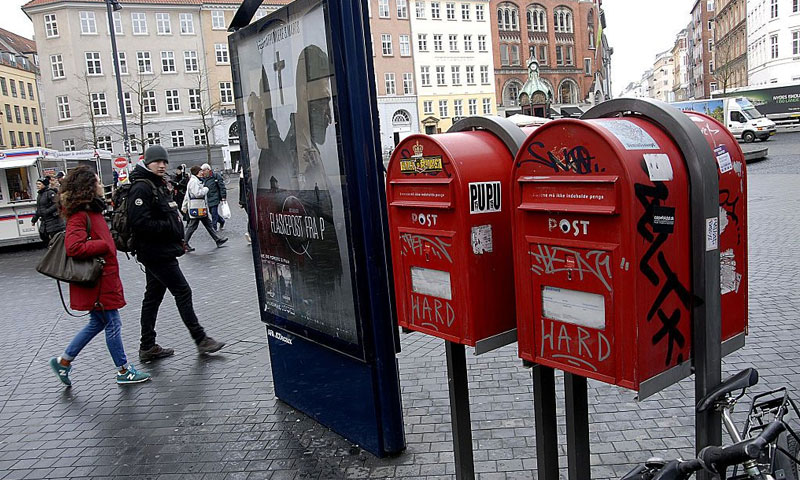
When was the last time you mailed a handwritten letter? For many people, it’s a distant memory—replaced by emails, instant messages and social media. Now, one country has formally closed the chapter on traditional mail. Denmark has become the first nation in the world to shut down its national letter delivery service, marking the end of more than four centuries of postal history. After 401 years, the country’s postal operator, PostNord, has concluded that physical letters are no longer essential—or financially sustainable—in an overwhelmingly digital society. “For the past two decades, letter volumes in Denmark have declined sharply. Most communication today is electronic,” said Isabella Beck Jørgensen, PostNord’s head of press, in an interview with ABC. “We are among the most digitalised countries in the world.” The numbers tell the story clearly. Letter deliveries in Denmark have fallen by 90 percent over the last 25 years. In 2000, nearly 1.5 billion letters were delivered nationwide. By last year, that figure had dropped to just 110 million. As volumes collapsed, costs rose. Sending a standard letter now costs more than 29 Danish krone—roughly $6.80—making traditional mail an expensive option for most households. PostNord described the decision to end letter delivery as painful but unavoidable. Around 1,500 jobs—nearly one-third of its workforce—will be cut as the company shifts its full focus to parcel delivery, a sector that continues to expand with the growth of online shopping. According to the company, public reaction has largely been accepting. “Many people honestly can’t remember the last time they sent a letter,” Jørgensen said. Still, the move has sparked concern among advocacy groups who fear parts of society could be left behind. Marlene Rishoj Cordes from DaneAge warned that elderly citizens and people in remote areas still rely heavily on physical mail. “Hospital appointments, vaccination notices and home-care decisions are often sent by letter,” she told Denmark’s TV2. “The digital shift is happening very fast.” Since June, PostNord has begun removing its 1,500 iconic red mailboxes from streets across the country. Public interest in them has been overwhelming: the first 1,000 boxes were sold for charity within just three hours, with many fetching hundreds of dollars. Some will be preserved in museums, while more are set to be auctioned next year. PostNord will continue handling letters destined for neighbouring Sweden, where digital adoption is lower. Within Denmark, however, letter delivery will now be handled entirely by private companies. Danes can still send Christmas cards or handwritten notes in 2026—but they will need to drop them off at shops or pay extra for home collection via apps or online services. Under Danish law, citizens must always have access to letter-sending services. If private providers ever withdraw, the government would be required to step in and appoint a new operator. For now, though, Denmark has quietly accepted a historic reality: the age of the handwritten letter has officially come to an end.
