When was the last time you mailed a handwritten letter? For many people, it’s a distant memory—replaced by emails, instant messages and social media.
Now, one country has formally closed the chapter on traditional mail.
Denmark has become the first nation in the world to shut down its national letter delivery service, marking the end of more than four centuries of postal history. After 401 years, the country’s postal operator, PostNord, has concluded that physical letters are no longer essential—or financially sustainable—in an overwhelmingly digital society.
“For the past two decades, letter volumes in Denmark have declined sharply. Most communication today is electronic,” said Isabella Beck Jørgensen, PostNord’s head of press, in an interview with ABC. “We are among the most digitalised countries in the world.”
The numbers tell the story clearly. Letter deliveries in Denmark have fallen by 90 percent over the last 25 years. In 2000, nearly 1.5 billion letters were delivered nationwide. By last year, that figure had dropped to just 110 million.
As volumes collapsed, costs rose. Sending a standard letter now costs more than 29 Danish krone—roughly $6.80—making traditional mail an expensive option for most households.
PostNord described the decision to end letter delivery as painful but unavoidable. Around 1,500 jobs—nearly one-third of its workforce—will be cut as the company shifts its full focus to parcel delivery, a sector that continues to expand with the growth of online shopping.
According to the company, public reaction has largely been accepting. “Many people honestly can’t remember the last time they sent a letter,” Jørgensen said.
Still, the move has sparked concern among advocacy groups who fear parts of society could be left behind. Marlene Rishoj Cordes from DaneAge warned that elderly citizens and people in remote areas still rely heavily on physical mail.
“Hospital appointments, vaccination notices and home-care decisions are often sent by letter,” she told Denmark’s TV2. “The digital shift is happening very fast.”
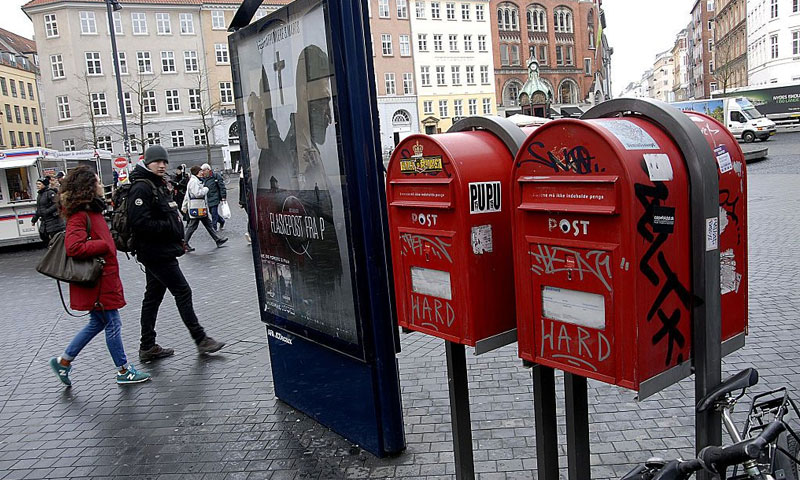
Since June, PostNord has begun removing its 1,500 iconic red mailboxes from streets across the country. Public interest in them has been overwhelming: the first 1,000 boxes were sold for charity within just three hours, with many fetching hundreds of dollars. Some will be preserved in museums, while more are set to be auctioned next year.
PostNord will continue handling letters destined for neighbouring Sweden, where digital adoption is lower. Within Denmark, however, letter delivery will now be handled entirely by private companies.
Danes can still send Christmas cards or handwritten notes in 2026—but they will need to drop them off at shops or pay extra for home collection via apps or online services.
Under Danish law, citizens must always have access to letter-sending services. If private providers ever withdraw, the government would be required to step in and appoint a new operator.
For now, though, Denmark has quietly accepted a historic reality: the age of the handwritten letter has officially come to an end.