
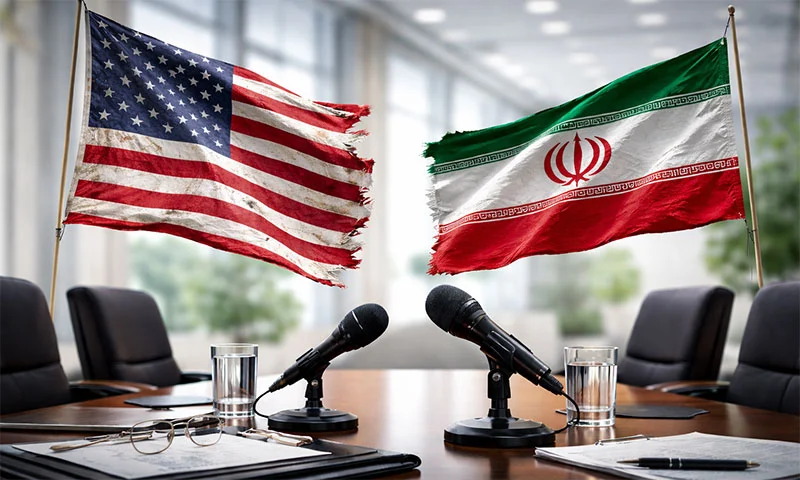
The United States and Iran exchanged sharp statements after high-stakes talks in Islamabad ended without a breakthrough, with both sides blaming each other for the failure to reach an agreement and casting uncertainty over the fragile ceasefire. The negotiations, held in Pakistan’s capital and lasting several hours, were aimed at extending a two-week halt in hostilities following recent escalation in the region. However, the talks concluded without consensus on key issues, including sanctions relief, regional security concerns and broader strategic commitments. US says Iran rejected key proposals US officials said Tehran failed to accept what they described as a clear and comprehensive proposal put forward during the negotiations. Vice President JD Vance said Iran was not willing to move forward on terms that Washington considered essential for progress. According to the US position, any agreement required meaningful steps from Iran, including commitments related to regional stability and confidence-building measures. Officials indicated that the lack of agreement on these points prevented the talks from moving toward a formal deal. President Donald Trump also signalled a firm stance following the outcome, warning that further options remained on the table if diplomacy failed to deliver results. Iran accuses US of inflexibility Iranian officials, however, rejected the US narrative and blamed Washington for the deadlock, saying the American side presented unrealistic and uncompromising demands during the discussions. Members of the Iranian delegation said the US approach lacked the flexibility needed for meaningful negotiations and failed to build trust. They stressed that any sustainable agreement would require mutual respect and a willingness to accommodate core concerns on both sides. Iranian representatives also indicated that they did not expect a final agreement in a single round of talks, suggesting that further engagement would be necessary to bridge differences. Uncertainty after diplomatic setback The collapse of the talks has added fresh uncertainty to an already tense situation, with the current ceasefire timeline approaching its end. Diplomats and observers say the exchange of blame highlights the deep divisions that remain between the two sides. Pakistan, which hosted the talks and played a facilitating role in bringing both parties to the table, has reiterated its commitment to supporting dialogue and helping both sides move toward a lasting and durable solution. Despite the setback, diplomatic channels are expected to remain open, with the possibility of further rounds of negotiations in the coming days. However, the immediate focus has shifted to whether the ceasefire can hold amid rising tensions and competing narratives. The outcome of the Islamabad talks underscores the challenges of resolving a complex conflict shaped by longstanding mistrust, even as international stakeholders continue to push for de-escalation
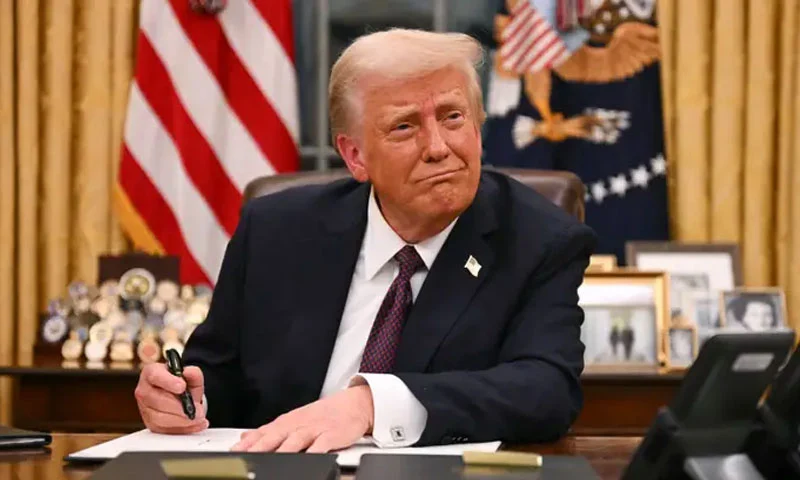
Trump Says US Will ‘Work Closely’ with Iran After Pakistan-Brokered Ceasefire
US President Donald Trump has said Washington will “work closely” with Iran following a fragile ceasefire brokered by Pakistan, signalling a potential shift from military confrontation to cautious diplomacy after weeks of conflict. The remarks came after the United States and Iran agreed to a two-week ceasefire, a deal facilitated through Islamabad’s backchannel efforts at a critical moment when both sides were on the brink of further escalation. The truce, announced just hours before a US-imposed deadline for potential strikes, has temporarily halted hostilities while opening space for negotiations. In a post on Truth Social, Trump said, “The United States will work closely with Iran,” adding that the country had gone through what he described as a “very productive Regime Change!” He also indicated that discussions were underway on tariffs and sanctions relief, noting that “many of the 15 points have already been agreed to.” Shift from confrontation to cautious engagement The ceasefire marks a significant turning point in a conflict that has rattled global markets and heightened fears of a broader regional war. Trump had earlier threatened extensive strikes on Iranian infrastructure if Tehran failed to meet his demands, including reopening the Strait of Hormuz, a critical global oil route. However, the last-minute agreement has paused those plans, with both sides now exploring diplomatic options. Trump also warned that any country supplying weapons to Iran would face steep tariffs, saying such nations would be “immediately tariffed… 50%.” Despite the conciliatory tone, major disagreements remain unresolved. Washington continues to push for limits on Iran’s nuclear programme, with Trump reiterating that “there will be no enrichment of Uranium,” while Iran has historically resisted such demands. Analysts say the current phase reflects a tactical pause rather than a full resolution. Both countries retain military readiness, and the ceasefire is tied to specific conditions, including maintaining safe passage through the Strait of Hormuz, which is vital for global energy supplies. Pakistan’s role draws global attention Pakistan’s mediation has emerged as a central element in the ceasefire process. Officials in both Washington and Tehran have acknowledged Islamabad’s role in facilitating communication and preventing further escalation. The truce followed a series of diplomatic efforts led by Pakistan, including proposals for a phased ceasefire and appeals to extend deadlines to allow negotiations to take shape. The agreement is now expected to lead to formal talks in Islamabad, where both sides will attempt to build on the temporary pause and address deeper issues. Global reactions have largely welcomed the ceasefire, with several countries praising Pakistan’s role in reducing tensions. However, uncertainty remains over whether the current momentum can translate into a lasting peace. For now, Trump’s statement that the US will “work closely” with Iran has raised cautious optimism, but the path ahead remains complex. The coming days, particularly the planned talks in Pakistan, are likely to determine whether this ceasefire becomes the foundation for a broader agreement or simply a brief pause in an ongoing conflict.
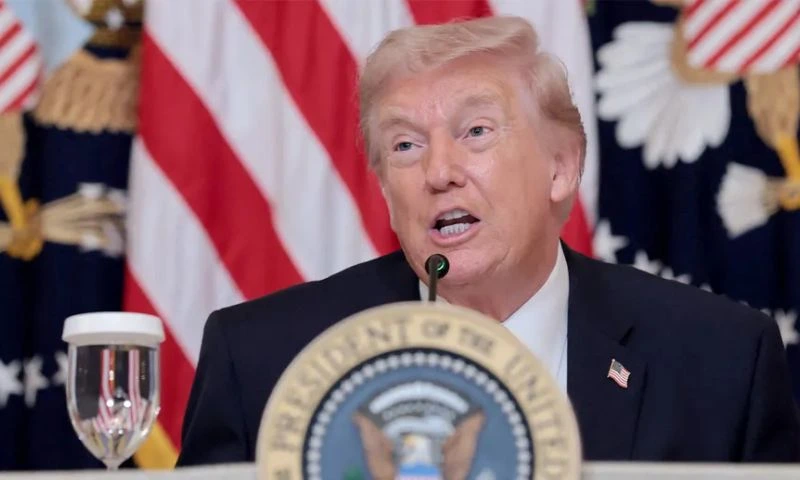
Mixed Signals: Trump Talks Peace as War Escalates
US President Donald Trump has indicated that Washington is considering scaling back its military campaign against Iran, even as tensions continue to escalate following reported strikes on key nuclear infrastructure. Speaking amid ongoing conflict in the region, Trump said the United States is “considering winding down” the war, suggesting a potential shift in strategy after weeks of intense military operations. Natanz Nuclear Facility Targeted The development comes as Iranian media reported that US and Israeli forces had attacked the Shahid Ahmadi-Roshan enrichment complex in Natanz, one of Iran’s most critical nuclear facilities. According to reports, “technical experts found that no radioactive leaks had occurred and nearby residents were not at risk.” The International Atomic Energy Agency confirmed it is investigating the incident, while Russia condemned the attack, calling it “a blatant violation of international law.” Israel, however, said it was unaware of any such strike, adding further uncertainty around the incident. War Continues Despite De-Escalation Signals Despite Trump’s remarks about potentially winding down the conflict, military activity in the region has not slowed. The United States has continued deploying additional troops and naval assets to the Middle East, highlighting the contradiction between diplomatic messaging and operational reality. The ongoing conflict, which began with coordinated US-Israeli strikes on Iranian targets earlier this year, has expanded into a broader regional confrontation involving multiple actors. Iran has responded with missile and drone attacks targeting US and allied positions, as well as energy infrastructure across the Gulf, intensifying fears of a wider regional war. Strategic Importance of Natanz The Natanz facility holds significant importance in Iran’s nuclear program, serving as a major uranium enrichment site. It has been targeted multiple times in past conflicts due to its role in advancing Iran’s nuclear capabilities. Experts warn that any attack on such facilities carries serious risks, including potential environmental hazards and escalation of geopolitical tensions. Global Reactions and Concerns The reported strike has drawn strong international reactions. Russia has criticized the move, while global powers have called for restraint and de-escalation. The International Atomic Energy Agency’s involvement underscores the seriousness of the situation, particularly given concerns about nuclear safety and regional stability. Uncertain Path Ahead Trump’s suggestion of winding down the war introduces uncertainty into an already volatile situation. Analysts believe that while the statement may signal an attempt to reduce tensions, the continued military buildup suggests that the conflict remains far from resolved. For global markets, especially energy and shipping, the situation remains critical. Any disruption in the region, particularly near key oil routes, could have widespread economic consequences. The coming days are expected to be crucial in determining whether diplomatic efforts can reduce tensions or if the conflict will continue to escalate further.
