
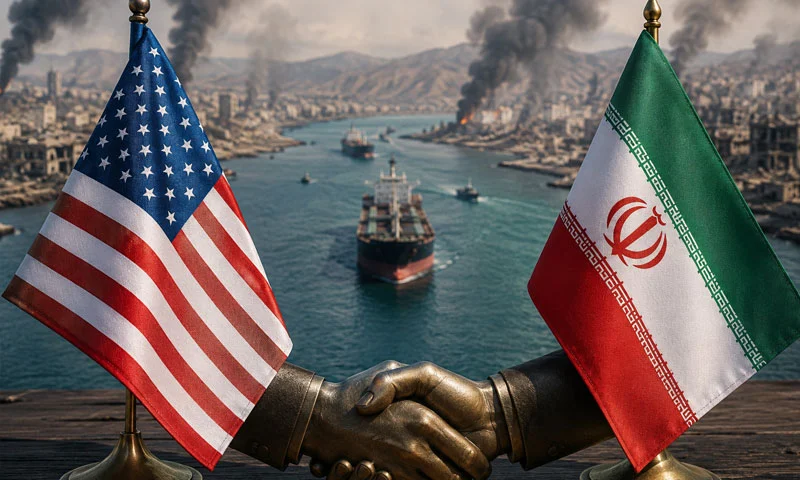
US President Donald Trump said on Monday that the United States and Iran had signed a preliminary agreement aimed at ending a conflict that has shaken the Middle East for nearly four months, though both sides acknowledged that negotiations on a permanent peace settlement remain unfinished. Speaking after arriving in France for the Group of Seven summit, Trump said the agreement would extend a fragile ceasefire announced in April and create a framework for broader negotiations. “The deal’s all signed,” Trump told reporters. He added that Vice President JD Vance would attend a formal signing ceremony in Geneva on Friday. The agreement marks the most significant diplomatic breakthrough since the conflict erupted in late February, when US and Israeli forces launched strikes on Iran. The war has since killed more than 7,000 people, most of them in Iran and Lebanon, according to regional estimates. Under the preliminary arrangement, the ceasefire will continue for another 60 days while negotiators work on unresolved issues, including Iran’s nuclear programme, sanctions relief and regional security concerns. Strait of Hormuz Reopening Brings Relief to Global Energy Markets One of the agreement’s most closely watched provisions involves the Strait of Hormuz, a strategic shipping route through which roughly one-fifth of global oil supplies pass. Iran has effectively restricted traffic through the waterway since the conflict began, contributing to sharp volatility in global energy markets. Following news of the agreement, oil prices fell to their lowest level since March 10, reflecting investor optimism that energy supplies could stabilize. Trump said the Strait of Hormuz would reopen under the agreement. “Ships of the world, start your engines. Let the oil flow!” he wrote earlier on social media. US officials said the memorandum includes significant sanctions relief for Iran. Vice President Vance described the document as brief but important. “The signed memorandum was only about 1-1/2 pages and so it is a very general document,” Vance told CNN. Officials said details would become public within days. .@VP on Iran: "There hasn't been a single dollar of sanctions relief or unfrozen assets, either from the United States or any of our allies in the Gulf… They only get that benefit if they meet their obligations under the agreement." https://t.co/hg0NRSxDuK pic.twitter.com/9eHgjOLrRF— Rapid Response 47 (@RapidResponse47) June 15, 2026 According to US and Iranian sources, the deal could eventually unlock frozen Iranian assets, ease sanctions and establish a reconstruction fund worth up to $300 billion financed by Gulf states. Key Issues Remain Unresolved Despite the breakthrough, major disagreements remain. Iranian President Masoud Pezeshkian described the memorandum as an “important step” but stressed that a permanent settlement still requires further negotiations. “A final agreement for a lasting truce has yet to take shape,” he wrote on social media. آنچه تفاهم شده، گامی مهم برای توقف جنگ و شروع مذاکره است و هنوز توافق نهایی شکل نگرفته است.جمهوری اسلامی ایران خود را برای همه گزینهها آماده کرده است و تمرکز دولت با یا بدون توافق خدمت صادقانه به مردم است. ملت ایران از امام شهیدش آموخته که زیر بار ذلت نرود.— Masoud Pezeshkian (@drpezeshkian) June 15, 2026 US officials insist that Iran must permanently abandon any effort to develop nuclear weapons and reduce support for armed regional groups before receiving the full economic benefits outlined in the agreement. The future of Iran’s enriched uranium stockpile also remains unresolved. Lebanon continues to represent another major obstacle. Iran has called for a complete end to hostilities involving Hezbollah, while Israeli Prime Minister Benjamin Netanyahu said Israeli forces would remain in southern Lebanon. “Iran wanted us to withdraw from it, but I stood firm,” Netanyahu told reporters. Although fighting has decreased since the announcement, security sources reported that clashes and military operations have not stopped entirely. Diplomats nevertheless view the agreement as the strongest opportunity yet to prevent further escalation and restore stability to a region battered by months of conflict.
Iran and US Close to Gulf War Agreement, Report Says
The United States and Iran are moving closer to a possible agreement aimed at ending the conflict in the Gulf, according to sources familiar with the talks. The proposed deal could ease tensions around the Strait of Hormuz after weeks of military escalation and disruptions to global energy supplies. A source confirmed that a report by Axios on a one page memorandum between Washington and Tehran was accurate. “We will close this very soon. We are getting close,” the source said. Read More: US pauses ‘Project Freedom’ amid breakthrough talks with Iran The development came shortly after US President Donald Trump paused “Project Freedom,” a naval mission launched to escort commercial ships through the blocked strait. Trump said negotiations with Iran had shown “great progress.” “We have mutually agreed that, while the Blockade will remain in full force and effect, Project Freedom (The Movement of Ships through the Strait of Hormuz) will be paused for a short period of time to see whether or not the Agreement can be finalised and signed,” Trump wrote on social media. 14-point memorandum under negotiation According to Axios, the proposed memorandum contains 14 points and could formally end the war while launching a 30 day negotiation period for a broader agreement. The talks reportedly involve US envoys Steve Witkoff and Jared Kushner alongside Iranian officials, both directly and through mediators. Pakistan has played a central mediation role throughout the crisis. Last month, it hosted the only peace talks between the two sides and continues to relay proposals between Washington and Tehran. The proposed framework includes a temporary halt to Iran’s nuclear enrichment activities. In return, the United States would gradually lift sanctions and release billions of dollars in frozen Iranian funds. Both countries would also begin removing restrictions around shipping through the Strait of Hormuz. Read More: Oil Falls as US Moves to Free Stranded Ships in Strait of Hormuz The White House and Iran’s foreign ministry have not officially commented on the details. However, CNBC quoted an Iranian foreign ministry spokesperson as saying Tehran was evaluating the 14 point US proposal. Oil prices tumble as markets react Financial markets reacted quickly to the reports. Brent crude futures dropped more than eight percent and fell near the $100 per barrel mark. Global stock markets also climbed as investors anticipated a possible end to the conflict. The Strait of Hormuz has remained largely shut since the United States and Israel launched strikes on Iran on February 28. Iran later restricted most commercial shipping through the route, while Washington imposed a blockade on Iranian ports in April. Trump’s naval escort mission struggled to restore confidence among shipping companies. At the same time, Iran intensified attacks on vessels and targets near the Gulf. Read More: New Passport Design in US to Include Trump Picture A French shipping company reported Wednesday that one of its container ships had been struck in the strait a day earlier. The company confirmed that authorities evacuated injured crew members. Iranian Foreign Minister Abbas Araqchi, speaking during a visit to China, did not directly address Trump’s announcement. However, he said Tehran continued to seek “a fair and comprehensive agreement.” Despite the optimism, uncertainty remains high. One US official told Axios that Washington could restore the blockade or resume military operations if negotiations collapse.
