


The Aircraft Owners and Operators Association (AOOA) has urged Pakistan’s government to conduct a five-year forensic tax audit of every airline operating in the country. The association estimates an annual gap of $2 billion to $2.4 billion in airline ticket revenue. It wants regulators to determine whether airlines processed ticket payments overseas and met their tax obligations in Pakistan. AOOA founder Imran Aslam Khan called for immediate intervention in a November 11 letter to the federal minister for finance and revenue. He raised concerns that offshore payment gateways could keep ticket proceeds outside Pakistan’s banking system and beyond the view of tax authorities. The association’s estimate reflects a gap in the figures it compiled. Its letter provides no transaction-level evidence to confirm how much money moved offshore or whether any airline evaded tax. How the association calculated the $2.4bn gap The AOOA put annual ticket revenue at $3.2 billion to $3.6 billion, based on historical sales estimates from industry sources. It attributed about $750 million to Pakistan International Airlines (PIA) and $65 million to other domestic carriers. The letter put officially recorded foreign remittances at $80 million to $411 million. Using the upper remittance figure, the association accounted for $1.226 billion across those categories. That left a gap of roughly $2 billion to $2.4 billion in its calculation. The letter also cited market estimates of more than $6 billion for Pakistan’s broader flight market. The AOOA estimated that roughly 40 to 42 scheduled airlines serve Pakistan, including four domestic carriers and around 36 or 37 foreign operators. It said foreign carriers account for nearly two-thirds of Pakistan’s international ticket revenue. The letter also questioned why some domestic airlines use foreign payment gateways. AOOA calls for SBP payment controls and direct FBR collection Khan wants all ticket sales for travel to or from Pakistan to go through gateways that the State Bank of Pakistan (SBP) regulates. He proposed collecting applicable taxes in real time through the Federal Board of Revenue (FBR) at the point of sale, “with zero exemptions permitted.” He also called for airlines to submit verified passenger manifests and sales records for every flight through an automated system. Khan urged the government to hire three leading international audit firms to carry out separate forensic reviews. The audits would cover five years of passenger and sales taxes across all operating airlines. He called for immediate recovery of any shortfalls the auditors identify. The SBP’s Foreign Exchange Manual already allows foreign airlines to remit surplus passenger and freight collections after accounting for local expenses and taxes. For passenger fares, banks can authorise remittance only after travellers complete their journeys. The rules also require supporting sales records, including statements from the International Air Transport Association’s Billing and Settlement Plan and detailed counter sales reports.
PIA Manchester Flights Top 100,000 Passengers
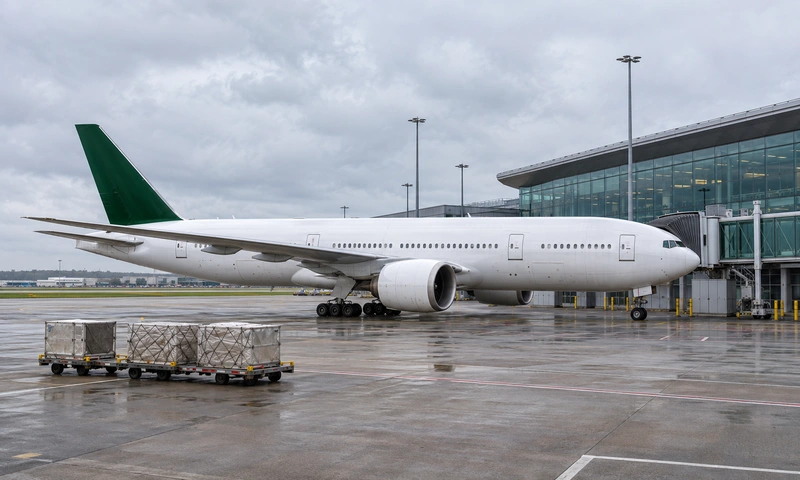
Pakistan International Airlines (PIA) has carried 104,845 passengers on its direct Manchester flights to Islamabad and Lahore. Manchester Airport announced the figures as Pakistan’s flag carrier marked a year since restoring direct service to the northern UK hub. The two routes also carried 1,541 tonnes of cargo. PIA Doubles Manchester-Islamabad Flights PIA launched its Manchester-Islamabad service on 25 October 2025. The route marked the airline’s return to Britain after a five-year suspension. A Boeing 777 operated the first flight from Islamabad to Manchester. The airline added its direct Lahore service in July 2026. Read More: PIA Fleet Expansion: Two Aircraft Due in January 2027 The Islamabad route began with two flights a week. PIA doubled the frequency in response to demand. Flights now leave Manchester for Islamabad on Mondays, Tuesdays, Thursdays and Saturdays. The Lahore service runs once a week, on Wednesdays. Manchester Routes Carry 1,541 Tonnes of Cargo The UK received 1,412 tonnes of cargo on the two routes. Another 129 tonnes went from Manchester to Pakistan. Fresh fruit, vegetables, nuts, pharmaceuticals, clothing and fabrics ranked among the largest import categories by volume. Manchester Airport said the cargo traffic generated millions for the northern economy. The routes also serve a large Pakistani diaspora. More than 300,000 British Pakistanis lived in northern England, according to 2021 figures cited by the airport. Manchester and Bradford had significant concentrations. Manchester Airport Managing Director Chris Woodroofe said the routes connect families, support economic development and help attract investment. He pointed to the airport’s decade-long, £1.5 billion investment in Terminal 2 as a basis for expanding its network. “Our direct links to Pakistan with PIA encapsulate all of these different strands of connection and the vital role the airport plays in that,” he said. Read More: PIA Adds Three More London Flights as Travel Demand Grows Yasmin Qureshi, MP for Bolton South and Walkden, chairs the All-Party Parliamentary Group on Pakistan. She said the direct flights made trips cheaper and more convenient for British Pakistanis. “I’m delighted to see that this service has been so successful and that flights have increased, allowing families to have more choice over when they travel,” she said. Afzal Khan CBE, MP for Manchester Rusholme, chairs the Greater Manchester Pakistan Forum. “Even though the flight path has only been open a year it has already proven to be a massive success for our region,” he said. Khan said more than 350,000 people in North West England fly from the UK to Islamabad each year. He cited family visits, trips to see friends and business travel. He said the route had benefited local communities and boosted the regional economy. Khan’s estimate refers to travel from the UK to Islamabad. The airport’s 104,845 figure covers PIA passengers on both Manchester routes combined.
flyadeal Connects Karachi With Saudi City in Major Expansion
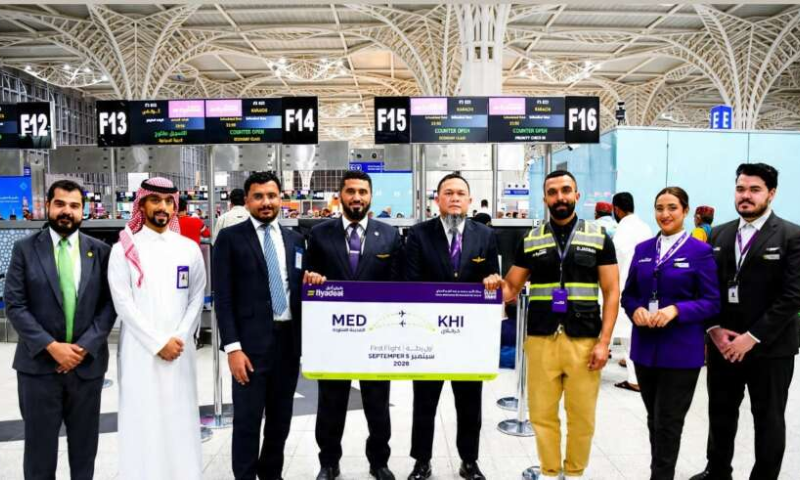
Saudi low-cost carrier flyadeal launched direct flights between Madinah and Karachi on Sunday, September 6, strengthening air links between Saudi Arabia and Pakistan. The inaugural flight from Madinah landed at Karachi’s Jinnah International Airport on Sunday. The launch gives passengers another direct option between Pakistan’s largest city and one of Saudi Arabia’s most important religious destinations. flyadeal will operate two weekly flights on the new route. The airline will use Airbus A320neo aircraft with 186 seats in an all-Economy Class configuration. Each seat offers either a USB-A or USB-C charging port. The aircraft also feature Airbus’ Airspace cabin interiors, which include larger overhead storage bins and mood lighting. The service will support religious travel, family visits, business trips and leisure journeys. It may particularly benefit passengers travelling to Madinah for religious purposes. flyadeal’s official booking platform has started listing flights between Madinah and Karachi. The route appears alongside the carrier’s existing services linking Karachi with Jeddah and Riyadh. Seventh flyadeal route to Pakistan Madinah has become the third Saudi city connected with Karachi through flyadeal’s growing international network. The airline already operates flights to Karachi from Jeddah and Riyadh. The new service takes flyadeal’s Pakistan network to seven routes. The carrier entered the Pakistani market with two routes last year and has expanded rapidly since then. Capt Abdulaziz Bahri, Chief Operating Officer of flyadeal, said growing demand had encouraged the airline to strengthen its Pakistani operations. “Launching our new Madinah–Karachi route reflects our commitment to the Pakistan market, which continues to see strong growth and demand within our international network. Starting with two routes just last year, we are delighted to inaugurate our seventh route to Pakistan. This pace underscores the depth of the economic, cultural and people-to-people ties between Saudi Arabia and Pakistan, as well as demand for flyadeal’s modern, efficient, friendly and affordable services.” Karachi serves as Pakistan’s main commercial and financial centre. It also has a large population with close family, employment and business connections in Saudi Arabia. The airline expects the route to offer greater flexibility to travellers while supporting economic and cultural links between the two countries. Fleet expansion supports Vision 2030 flyadeal operates as part of Saudia Group and ranks among the GCC’s largest low-cost airlines. Its international expansion forms part of a wider strategy to connect Saudi Arabia with high-demand regional markets. The airline plans to more than double its fleet and network by 2030. This expansion supports Saudi Vision 2030, which aims to develop tourism, aviation and international connectivity. Airbus A321neo aircraft will join flyadeal’s existing A320 fleet as the airline adds capacity. The carrier will also introduce Airbus A330-900neo widebody aircraft from 2027. Airbus confirmed in 2025 that Saudia Group had ordered 10 A330-900 aircraft for flyadeal. The deal will allow the carrier to enter longer-distance markets and serve routes with heavier passenger demand. The Madinah-Karachi service adds another important link as flyadeal continues expanding across Pakistan and the wider region.
Only 18 Planes Flying: PIA Faces Mounting Challenges Ahead of Privatization
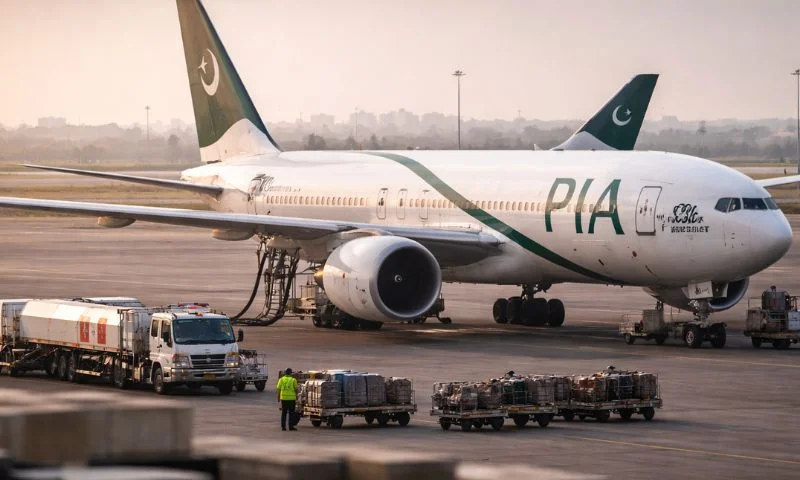
Pakistan International Airlines continues to face serious operational challenges even as plans for privatization and fleet expansion move forward, with only 18 aircraft currently operational, highlighting the gap between policy ambitions and on-ground realities. The figure was shared by Arif Habib, chairman of the Arif Habib Consortium, during an interaction with industrialists at the Korangi Association of Trade and Industry (KATI) in Karachi, where he outlined the current state of the national carrier. The limited number of operational aircraft has significantly constrained the airline’s capacity, affecting flight schedules, route coverage and overall service reliability. The disclosure comes at a time when the government is pushing ahead with efforts to privatize the airline, positioning the move as a long-term solution to its financial and operational struggles. However, analysts say the current situation suggests that structural issues within the airline cannot be resolved through ownership changes alone. Limited fleet, mounting pressure PIA’s fleet constraints have long been a source of concern. While the airline owns more aircraft on paper, a large number remain grounded due to maintenance issues, financial limitations and delayed overhauls. As a result, the airline is operating at a fraction of its potential capacity. The reduced fleet has forced PIA to cut back on several routes, particularly international destinations, limiting its competitiveness against regional and global carriers. Industry experts note that an airline’s profitability is closely tied to fleet availability, utilization rates and network strength, areas where PIA continues to lag. Arif Habib also indicated that there are plans to gradually expand the fleet, with long-term targets suggesting an increase to around 60 aircraft. However, he acknowledged that achieving this goal would take time and sustained investment. Expansion plans yet to translate into reality Separately, officials within the airline have pointed to plans for near-term expansion. According to recent developments, PIA is looking to induct around eight additional aircraft in the coming year as part of its restructuring efforts. Despite these announcements, aviation experts caution that fleet expansion alone will not address the airline’s deeper challenges. Issues related to governance, financial management, operational efficiency and regulatory compliance continue to weigh heavily on its performance. The privatization process, which is expected to bring in new investors and management practices, is seen as a step in the right direction. However, potential buyers are likely to closely assess liabilities, workforce size and operational constraints before committing to any deal. The airline’s history of accumulated losses and dependence on government support further complicates the path forward. Analysts say meaningful reform will require a combination of financial restructuring, operational overhaul and strategic direction. For now, the contrast between expansion plans and the current operational fleet underscores the scale of the challenge. While privatization may offer a pathway to recovery, the immediate reality remains that PIA is operating with limited resources in a highly competitive aviation market.