

Pakistan is likely to celebrate Eid ul Adha on May 27 after SUPARCO forecast strong chances of sighting the Zil Hajj moon on May 17. The national space agency released preliminary astronomical projections on Tuesday regarding the start of Zil Hajj 1447 Hijri. SUPARCO said atmospheric and astronomical conditions may support moon visibility in several parts of the country on the evening of May 17. A spokesperson said, “The age of the new moon at the time of sunset on May 17 will be approximately 18 hours and 30 minutes.” The official added that astronomers generally consider such conditions suitable for crescent visibility. SUPARCO also said the moon will likely be born at 1:01am on May 17. The spokesperson said coastal regions may offer clearer viewing conditions than inland areas. “The gap between sunset and moonset in coastal areas is expected to remain around 60 minutes, which significantly improves the probability of the moon being visible,” the spokesperson added. Based on these projections, Pakistan may begin Zil Hajj on Monday, May 18. The country will likely celebrate Eid ul Adha on Wednesday, May 27. However, SUPARCO clarified that the Central Ruet-e-Hilal Committee will make the final announcement. Ruet-e-Hilal Committee to announce official decision Pakistan follows the Islamic lunar calendar, which depends on crescent sightings. The Central Ruet-e-Hilal Committee usually meets before major Islamic occasions, including Ramadan and both Eids. Religious scholars, meteorologists and SUPARCO officials attend these meetings. They review eyewitness accounts and scientific data before announcing the official decision. Pakistan has increased the use of astronomical forecasts during moon sighting discussions in recent years. SUPARCO now regularly issues visibility projections before important Islamic months. Saudi Arabia and several Gulf countries will also begin moon observations around the same time. If Saudi authorities sight the crescent on May 17, the kingdom may celebrate Eid ul Adha on May 26. Pakistan often marks the festival a day later because geographical conditions affect moon visibility. Eid preparations gain momentum across Pakistan Preparations for Eid ul Adha have already started in several cities. Livestock markets have begun operating in Karachi, Lahore and Islamabad ahead of the festival. Local administrations are also preparing security, sanitation and traffic management plans. Eid ul Adha commemorates Prophet Ibrahim’s willingness to sacrifice his son in obedience to God’s command. Muslims around the world celebrate the occasion by offering animal sacrifices and sharing meat with relatives and the needy.

Pakistan on Heatwave Alert as Karachi Hits 44°C, 10 Dead
Pakistan moved into emergency mode as a severe heatwave intensified, with the National Disaster Management Authority warning that temperatures will stay above normal through May and June. The NDMA on Monday directed federal ministries, provincial governments, and rescue agencies to activate response plans. It asked all stakeholders to act quickly and reduce risks. Read More: Heatwaves Put Children at Risk Here’s How to Protect Them In a press statement, the authority’s Early Warning Team said daytime temperatures would remain above normal. It urged immediate action across the country. Karachi records hottest day, deaths reported In Karachi, the Pakistan Meteorological Department recorded temperatures above 44 degrees Celsius. This marked the city’s hottest day of the year. At least 10 people died due to the extreme heat, according to the Edhi Foundation and Chhipa Welfare Association. They said most victims were unidentified and appeared to be drug users. Volunteers found bodies in multiple areas across the city. These included Manghopir, Gulshan-i-Hadeed, Defence Phase VIII, Boat Basin, Liaquatabad, Superhighway, Surjani Town, Mauripur Road, Baldia Town, and North Karachi. Read More: Heatwave Alert Simple Steps to Stay Safe as Temperatures Rise Volunteers shifted the bodies to Abbasi Shaheed Hospital, Civil Hospital Karachi, and Jinnah Postgraduate Medical Centre. Officials said dry continental winds worsened the heat. Residents also struggled with water shortages and power outages. Nationwide preparedness and health measures The NDMA directed provincial and district authorities to launch awareness campaigns. It stressed the need to protect children in schools. Authorities may adjust school timings or close institutions if conditions worsen. The NDMA ordered officials to identify high-risk areas. It also called for heatstroke centres with medical staff, equipment, and water. It urged the Ministry of National Health Services Regulations and Coordination to improve hospital readiness. Authorities must stock emergency supplies. These include first aid kits, oral rehydration salts, electrolyte drinks, and cooling facilities. The NDMA also warned about glacial lake outburst flood risks. It directed the Khyber Pakhtunkhwa Provincial Disaster Management Authority and Gilgit-Baltistan Disaster Management Authority to monitor vulnerable areas. Read More: Heatwaves Trigger Rise in Domestic Violence Against Women Officials also raised concerns about forest and urban fires. They asked departments to stay alert and act early. Public advised to take precautions The NDMA urged citizens to stay hydrated and avoid sunlight during peak hours from 10am to 5pm. People should wear light, loose clothing and use sunscreen. They should seek medical help if they feel dizziness, nausea, or weakness. Climate experts warn that Pakistan faces rising risks from extreme heat. Heatwaves across South Asia now last longer and occur more often. Authorities now face growing pressure to protect vulnerable communities as temperatures continue to rise.
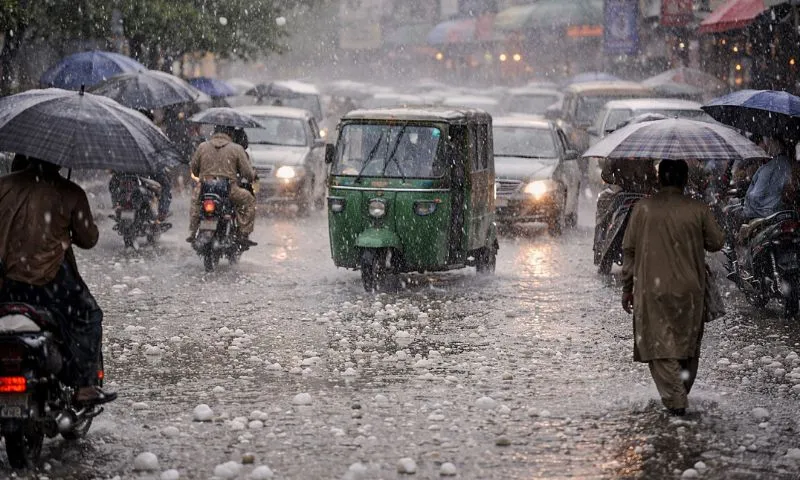
Nationwide Rain and Hailstorm Alert Issued Across Pakistan Until April 4
The Pakistan Meteorological Department has issued a nationwide weather alert, forecasting widespread rain, wind, thunderstorms, and hailstorms across multiple regions from April 1 to April 4, as a strong weather system approaches the country. According to the Met Office, a westerly wave is expected to enter southwestern Balochistan on April 1 and persist until April 4, triggering unstable weather conditions across most provinces. Rain, Hailstorms Expected in Multiple Regions The advisory warns that Balochistan will experience heavy rain and thunderstorms, along with isolated hailstorms, particularly in areas such as Panjgur, Turbat, Kech, Awaran, and along the Makran coast. Khyber Pakhtunkhwa is also expected to receive rainfall and thunderstorms, with snowfall in mountainous regions including Chitral, Dir, Swat, and Kalam. Authorities have warned of isolated heavy downpours and hailstorms in several areas. In Punjab and Islamabad, cities including Lahore, Rawalpindi, Murree, and Sargodha are likely to experience rain accompanied by strong winds and occasional hailstorms. Heavy rainfall is particularly expected in Dera Ghazi Khan and surrounding areas. Gilgit-Baltistan and Azad Jammu and Kashmir are also expected to see rain, wind, and thunderstorms, with snowfall in higher altitudes. Meanwhile, Sindh, including Karachi, Hyderabad, Sukkur, Thatta, and Badin, is forecast to receive rain and thunderstorms with isolated hailstorms between April 2 and April 4. Flood and Landslide Risks The PMD has warned of potential flash floods in northeast Balochistan, including Khuzdar, Awaran, and Kharan, as well as in streams and nullahs of Khyber Pakhtunkhwa from April 2 to April 4. Additionally, landslide risks have been highlighted in vulnerable regions of upper KP, Gilgit-Baltistan, and Azad Kashmir due to heavy rainfall and melting snow. Recent weather patterns have already shown the destructive potential of such systems. Heavy rains in KP have led to fatalities and infrastructure damage, raising concerns about preparedness during the upcoming spell. Damage Risks and Public Advisory The weather advisory cautions that windstorms and hailstorms may damage weak structures such as electric poles, billboards, and solar panels. Farmers have been advised to take precautionary measures to protect crops from potential losses. Tourists and travelers have been urged to avoid unnecessary travel, especially in mountainous and flood-prone areas. Authorities have also advised citizens to remain vigilant and follow official weather updates. The PMD further warned that daytime temperatures are expected to drop across the country during this period, bringing temporary relief from heat but increasing risks associated with severe weather. Authorities on Alert The Meteorological Department has called on all relevant authorities to stay alert and take preventive measures to avoid damage and ensure public safety. Officials have also indicated that the weather system may continue beyond April 4, suggesting that further updates and advisories may follow depending on conditions.

PMD Warns of Rain in Karachi, Sindh on First Day of Eid
The Pakistan Meteorological Department has forecast rain and thunderstorms in Karachi and several parts of Sindh on the first day of Eid ul Fitr, raising concerns about weather disruptions during one of the country’s busiest festive periods. According to the Met Office, a westerly weather system is currently affecting large parts of Pakistan and is expected to bring unstable weather conditions to Sindh, including Karachi, during Eid celebrations. Officials said the system may cause “rain, wind and thunderstorms” in Karachi as well as other cities in Sindh, with the possibility of moderate to heavy rainfall in some areas. Westerly System Behind Weather Change The change in weather is being driven by a seasonal westerly wave that entered Pakistan earlier this week. Meteorologists say such systems often bring rain, gusty winds, and thunderstorms, especially during seasonal transitions. The PMD has warned that “a westerly wave is affecting most parts of the country,” which could result in scattered rainfall across southern regions during Eid. Karachi is expected to experience partly cloudy conditions with chances of thunderstorms and occasional heavy showers. Wind patterns are also likely to shift, with humid conditions prevailing in the city. Impact on Eid Celebrations The forecast comes at a time when millions of people are preparing for Eid prayers, family gatherings, and travel. Rainfall on the first day of Eid could affect outdoor activities, especially in major urban centers like Karachi. Authorities have advised citizens to remain cautious and stay updated with weather alerts. In previous instances, heavy rain in Karachi has disrupted traffic, caused waterlogging, and affected daily life. Weather experts say that while rain during Eid may bring relief from heat, it can also create logistical challenges, particularly in areas with weak drainage infrastructure. Wider Impact Across Sindh and Pakistan The weather system is not limited to Karachi. Other cities in Sindh are also expected to receive rainfall, while different parts of the country may experience varying conditions. The PMD has indicated that the system will gradually weaken after passing through southern regions, but not before bringing widespread weather changes across multiple provinces. Elsewhere in Pakistan, northern areas could see cooler temperatures, while parts of Balochistan and Punjab may also experience rain and thunderstorms. A Familiar Pattern for Karachi Karachi has a history of being vulnerable to heavy rainfall events. The city’s infrastructure has often struggled to cope with sudden downpours, leading to flooding and disruptions. Experts note that while Eid rainfall is not uncommon, preparedness remains key to minimizing its impact on public life and celebrations.
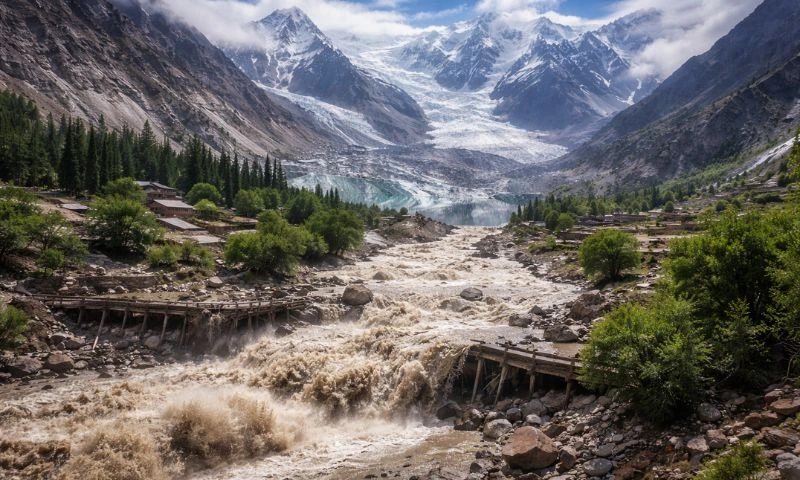
Rising Winter Heat Could Trigger Glacier Floods in Pakistan
Northern Pakistan is now confronting an unusual winter heat wave that has scientists and officials warning about the rising threat of glacial lake outburst floods. Recent weather data show daytime temperatures recorded as much as 3 to 5°C above normal, creating a dangerous combination of reduced snowfall, accelerated glacier melt, and growing flood risks in the country’s mountainous north. The Pakistan Meteorological Department (PMD) says that below-normal rainfall and limited snowfall this winter have left the region warmer and drier than usual. The warming has been particularly intense in areas like Gilgit, Bunji, Chilas, and Astore, where higher minimum temperatures are affecting overnight ice refreezing. Climate Trends Fuel Glacier Melt According to the PMD, stable atmospheric conditions and prolonged clear skies have allowed heat to build up, reducing the usual cold relief of winter nights. With less overnight cooling, snow and glacier surfaces do not refreeze as they normally would, increasing meltwater runoff into glacial lakes that sit behind natural ice and moraine dams. “Reduced nighttime cooling further enhances meltwater runoff into glacial lakes,” the PMD said in a statement, adding that rapid melting increases water accumulation in these lakes. The growing water volume raises the likelihood of Glacial Lake Outburst Floods (GLOFs) in downstream valleys, officials warned. Glacial lake outburst floods can occur suddenly and without warning, triggering flash floods that sweep through river valleys, damaging infrastructure and posing serious risks to mountain communities. Read More: Heatwaves and Floods Hit Pakistan’s Economy Hard, Officials Reveal Vulnerable Regions and Glaciers The areas most at risk include Gilgit, Ghizar, Hunza, Bunji, Chilas, and Astore, where temperature anomalies were especially high in February. Between February 1 and 22, daytime temperatures in Gilgit reached 4.7°C above normal, while nighttime increases hit 3.4°C in Chilas. Pakistan’s northern highlands, mainly in Gilgit-Baltistan, host some of the world’s major glaciers, including the Batura and Baltoro glaciers, which feed rivers and sustain local ecosystems. These ice masses are vital sources of freshwater but are already responding to warming trends. Scientific observations have shown that many glaciers in the Hindu Kush Himalaya region are receding as temperatures rise. Melting ice increases water flow into glacial lakes, a phenomenon that may both strengthen water availability in the short term and increase flood risk. In the long run, however, faster glacier loss threatens freshwater security for downstream populations. Climate Change Links and Long-Term Threats Climate experts say rising temperatures and altered precipitation patterns across South Asia are tied to broader global warming trends. Research shows that warmer air can hold more moisture and elevate melting rates, especially when snowfall is low. Pakistan is considered one of the countries most vulnerable to the impacts of climate change, facing cycles of drought, heat waves, extreme rainfall, and flood events. Historical data also tell a cautionary tale. The catastrophic 2010 Pakistan floods, which affected millions and caused massive destruction, were linked to heavy monsoon rains combined with landscape changes intensified by climate variability. Read More: The Hotspot Effect: How Warming Is Reshaping Everyday Life in South Asia What Authorities Are Doing The PMD says it is closely monitoring temperature trends, glacier melt conditions, and hydrometeorological parameters. It plans to issue timely advisories to authorities and local communities to prepare for possible GLOF events. Early warning systems and community awareness campaigns are essential in reducing disaster risk in high-altitude villages and along river valleys. Adapting to these shifting climate patterns will require both local preparedness and national strategies to strengthen infrastructure, provide early warnings, and support communities at risk.
