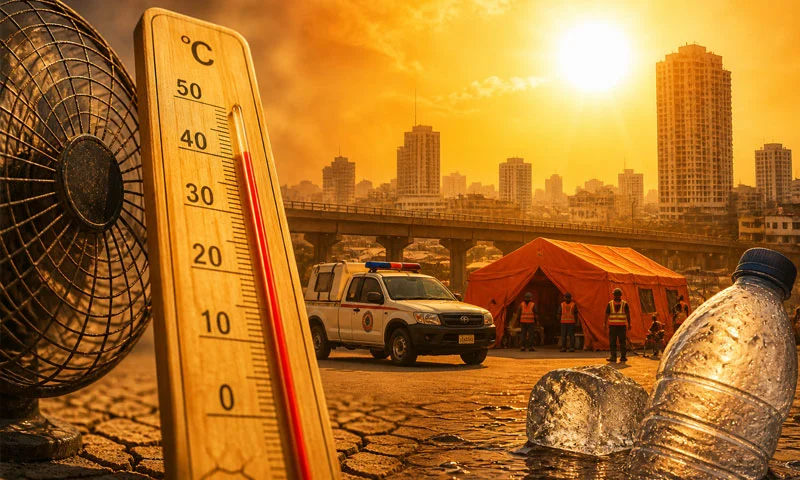
Pakistan moved into emergency mode as a severe heatwave intensified, with the National Disaster Management Authority warning that temperatures will stay above normal through May and June.
The NDMA on Monday directed federal ministries, provincial governments, and rescue agencies to activate response plans. It asked all stakeholders to act quickly and reduce risks.
Read More: Heatwaves Put Children at Risk Here’s How to Protect Them
In a press statement, the authority’s Early Warning Team said daytime temperatures would remain above normal. It urged immediate action across the country.
Karachi records hottest day, deaths reported
In Karachi, the Pakistan Meteorological Department recorded temperatures above 44 degrees Celsius. This marked the city’s hottest day of the year.
At least 10 people died due to the extreme heat, according to the Edhi Foundation and Chhipa Welfare Association.
They said most victims were unidentified and appeared to be drug users. Volunteers found bodies in multiple areas across the city.
These included Manghopir, Gulshan-i-Hadeed, Defence Phase VIII, Boat Basin, Liaquatabad, Superhighway, Surjani Town, Mauripur Road, Baldia Town, and North Karachi.
Read More: Heatwave Alert Simple Steps to Stay Safe as Temperatures Rise
Volunteers shifted the bodies to Abbasi Shaheed Hospital, Civil Hospital Karachi, and Jinnah Postgraduate Medical Centre.
Officials said dry continental winds worsened the heat. Residents also struggled with water shortages and power outages.
Nationwide preparedness and health measures
The NDMA directed provincial and district authorities to launch awareness campaigns. It stressed the need to protect children in schools.
Authorities may adjust school timings or close institutions if conditions worsen.
The NDMA ordered officials to identify high-risk areas. It also called for heatstroke centres with medical staff, equipment, and water.
It urged the Ministry of National Health Services Regulations and Coordination to improve hospital readiness.
Authorities must stock emergency supplies. These include first aid kits, oral rehydration salts, electrolyte drinks, and cooling facilities.
The NDMA also warned about glacial lake outburst flood risks. It directed the Khyber Pakhtunkhwa Provincial Disaster Management Authority and Gilgit-Baltistan Disaster Management Authority to monitor vulnerable areas.
Read More: Heatwaves Trigger Rise in Domestic Violence Against Women
Officials also raised concerns about forest and urban fires. They asked departments to stay alert and act early.
Public advised to take precautions
The NDMA urged citizens to stay hydrated and avoid sunlight during peak hours from 10am to 5pm.
People should wear light, loose clothing and use sunscreen. They should seek medical help if they feel dizziness, nausea, or weakness.
Climate experts warn that Pakistan faces rising risks from extreme heat. Heatwaves across South Asia now last longer and occur more often.
Authorities now face growing pressure to protect vulnerable communities as temperatures continue to rise.