

The federal government has initiated a major overhaul of Pakistan’s paper currency, formally approving the redesign of several high-value banknotes as part of a broader effort to modernize the country’s monetary system. The decision was finalized during a federal cabinet meeting held in Islamabad, presided over by Prime Minister Shehbaz Sharif, where the finance ministry presented a detailed briefing on the scope and objectives of the proposed changes. According to officials familiar with the discussions, the State Bank of Pakistan has already begun work on the new banknote designs, aligning them with contemporary global standards. International specialists have also been brought on board to ensure the notes incorporate advanced security and design features used by leading economies. The redesigned series will cover Rs100, Rs500, Rs1,000, and Rs5,000 denominations, representing the most significant visual update to Pakistan’s currency in years. The emphasis, officials said, is not just aesthetic but also functional. Enhanced security elements, including modern security threads and upgraded anti-counterfeiting features, will be embedded into the new notes. These measures are intended to curb the circulation of fake currency and reinforce public trust in Pakistan’s financial system. Beyond security, the new designs aim to project a stronger national identity. The cabinet was informed that the banknotes will highlight Pakistan’s geographical and regional diversity, alongside notable historical and cultural landmarks from across the country. The proposed designs will also carry symbolic messaging. Social themes such as women’s contribution to national progress and the growing impact of climate change are expected to be reflected, signaling a shift toward more inclusive and forward-looking currency imagery. Before the redesigned notes are issued to the public, the federal cabinet has set up a dedicated committee to review the proposals in detail and oversee the final stages of the process.
New Look for Pakistan’s Currency: What’s Changing in Rs100 to Rs5,000 Notes?
The federal government has initiated a major overhaul of Pakistan’s paper currency, formally approving the redesign of several high-value banknotes as part of a broader effort to modernize the country’s monetary system. The decision was finalized during a federal cabinet meeting held in Islamabad, presided over by Prime Minister Shehbaz Sharif, where the finance ministry presented a detailed briefing on the scope and objectives of the proposed changes. According to officials familiar with the discussions, the State Bank of Pakistan has already begun work on the new banknote designs, aligning them with contemporary global standards. International specialists have also been brought on board to ensure the notes incorporate advanced security and design features used by leading economies. The redesigned series will cover Rs100, Rs500, Rs1,000, and Rs5,000 denominations, representing the most significant visual update to Pakistan’s currency in years. The emphasis, officials said, is not just aesthetic but also functional. Enhanced security elements, including modern security threads and upgraded anti-counterfeiting features, will be embedded into the new notes. These measures are intended to curb the circulation of fake currency and reinforce public trust in Pakistan’s financial system. Beyond security, the new designs aim to project a stronger national identity. The cabinet was informed that the banknotes will highlight Pakistan’s geographical and regional diversity, alongside notable historical and cultural landmarks from across the country. The proposed designs will also carry symbolic messaging. Social themes such as women’s contribution to national progress and the growing impact of climate change are expected to be reflected, signaling a shift toward more inclusive and forward-looking currency imagery. Before the redesigned notes are issued to the public, the federal cabinet has set up a dedicated committee to review the proposals in detail and oversee the final stages of the process.
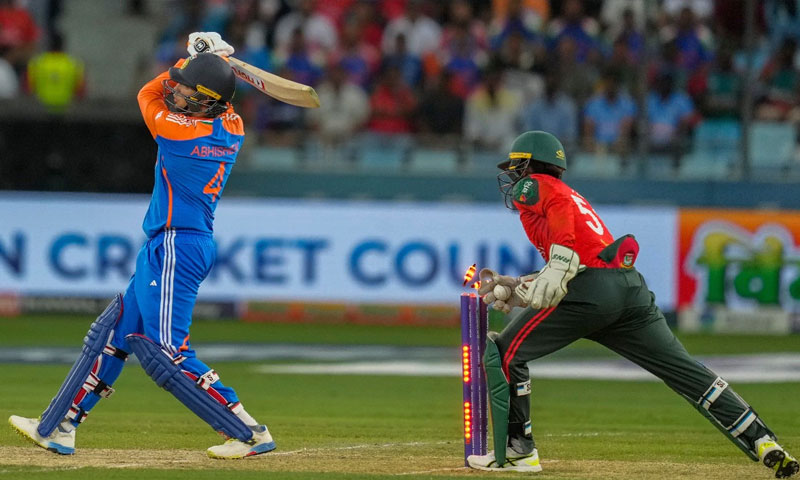
T20 World Cup: ICC Considers Venue Change for Bangladesh Matches, BCCI Responds
The International Cricket Council is examining possible changes to the venues for Bangladesh Cricket Board matches in the upcoming T20 World Cup, following a formal request from Bangladesh citing security concerns. India and Sri Lanka are scheduled to co-host the T20 World Cup, which begins on February 7. Bangladesh’s cricket board recently wrote to the ICC, asking that its matches be shifted to Sri Lanka amid rising tensions between the two neighbouring countries. According to BCB officials, the ICC has acknowledged the request and assured them that the matter is under consideration. ICC exploring alternative venues Recent media reports suggest that while Sri Lanka was Bangladesh’s preferred alternative, the ICC is instead evaluating Indian venues as a possible solution. Chennai and Thiruvananthapuram have reportedly emerged as potential options, replacing the originally assigned venues of Kolkata and Mumbai. However, no official announcement has been made by the ICC so far. The ICC, as the tournament’s governing body, is understood to be assessing logistical, security and operational aspects before taking a final call. Any change would require coordination with the host board and other stakeholders involved in the tournament schedule. BCCI says no communication received Reacting to the reports, Board of Control for Cricket in India secretary Devajit Saikia said the Indian board has not received any formal communication from the ICC regarding a venue change for Bangladesh’s matches. “The BCCI has not received any update about shifting Bangladesh matches to Chennai or any other venue. This matter is between the BCB and the ICC, as the ICC is the governing authority,” Saikia said in a statement to IANS. “If the ICC communicates any decision to us, the BCCI, as a host, will take the necessary steps. At present, we are not aware of any such development.” Bangladesh’s current schedule As per the existing fixture list, Bangladesh are set to play three group matches in Kolkata — against the West Indies on February 7, Italy on February 9, and England on February 14. The team is then scheduled to travel to Mumbai to face Nepal on February 17. For now, the schedule remains unchanged, with the ICC expected to take a final decision after consultations with all concerned boards.
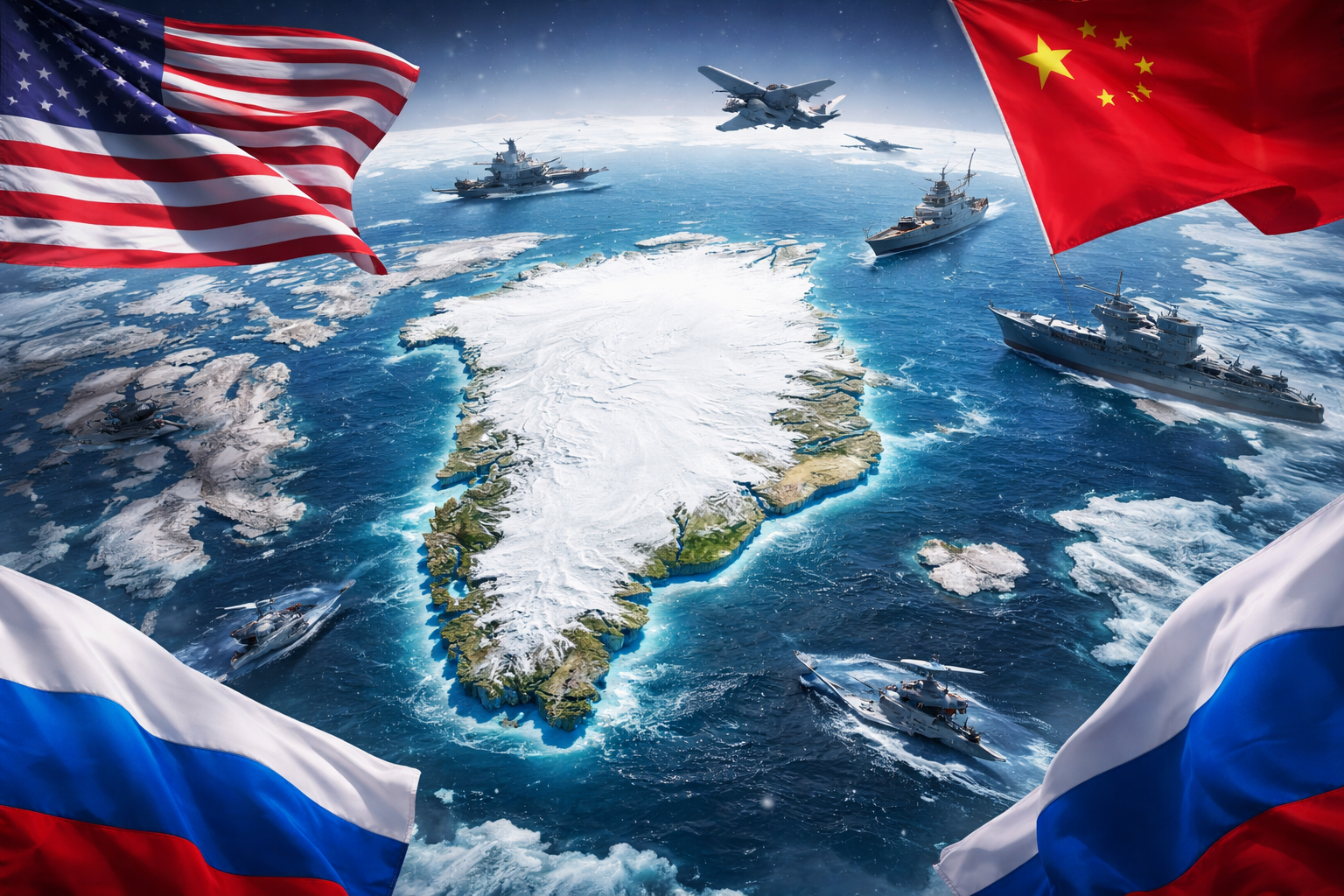
Greenland in Focus: Why the US, China and Russia Are Eyeing the Arctic Island
Greenland has emerged as an unlikely but critical focal point in global geopolitics, drawing the attention of the United States, Russia, and China. While it is sparsely populated and largely covered in ice, the world’s largest island holds strategic value far beyond its size — a fact increasingly shaping international competition in the Arctic. Recent remarks by US President Donald Trump have once again thrust Greenland into the spotlight. Trump has repeatedly argued that the United States must ensure Greenland does not fall under the influence of rival powers, particularly Russia and China, warning that losing ground in the Arctic would threaten American security interests. Greenland isn’t a joke anymore. “Easy way or hard way.” That’s not talk. That’s intent. Who blinks first? • Does Denmark concede expanded U.S. basing rights? • Does Greenland block cooperation and escalate? • Does NATO formalize Arctic security guarantees? • Does China… pic.twitter.com/AUrf9Lj1rf — BRKT 👑 (@BRKTgg) January 10, 2026 But the strategic interest in Greenland did not begin with political rhetoric. It is rooted in geography, security, and resources. A Strategic Arctic Crossroads Greenland sits at a vital junction between North America and Europe, overlooking key air and sea corridors in the North Atlantic and Arctic. As climate change continues to reduce ice coverage, the Arctic is becoming more accessible, increasing its importance for shipping routes, military movement, and surveillance. Control or influence over Greenland offers a commanding position in this rapidly evolving region. A Pillar of US Defence The United States already maintains a long-standing military presence in Greenland through the Pituffik Space Base, a critical installation for missile detection, space monitoring, and early-warning systems. This base forms part of the broader North American defence shield and plays a role that cannot easily be replicated elsewhere. For Washington, Greenland is not just territory — it is a cornerstone of strategic defence planning. Russia and China’s Growing Arctic Interest Russia has steadily expanded its Arctic military infrastructure, reopening Cold War-era bases and increasing patrols along northern routes. China, meanwhile, has adopted a long-term economic and scientific approach, declaring itself a “near-Arctic” stakeholder and investing in research, infrastructure projects, and potential future shipping lanes linked to its global trade ambitions. While China has no territorial claims in the Arctic, Western analysts increasingly view its presence as part of a broader strategy to secure influence over future trade routes and critical resources. Hidden Wealth Beneath the Ice Greenland is believed to hold significant reserves of rare earth minerals and other critical resources essential for modern technologies, renewable energy systems, and defence industries. As countries seek to reduce dependence on limited supply chains, Greenland’s resource potential has become increasingly attractive — despite the high costs and environmental challenges of extraction. Sovereignty Still Matters Despite external interest, Greenland remains a self-governing territory within the Kingdom of Denmark, and its leaders have firmly rejected the idea that the island is open for acquisition or external control. Greenlandic officials have consistently stressed that decisions about the island’s future will be made by its people, not foreign powers. The Bigger Picture Greenland’s rising profile reflects a larger shift in global power dynamics. As the Arctic transitions from a frozen frontier to a contested strategic zone, competition among major powers is intensifying. Geography, defence, resources, and climate change have combined to transform Greenland from a remote landmass into a geopolitical prize. Whether through diplomacy, defence cooperation, or economic engagement, one reality is clear: Greenland is no longer on the margins of global politics — it is firmly at the centre of a new Arctic rivalry.
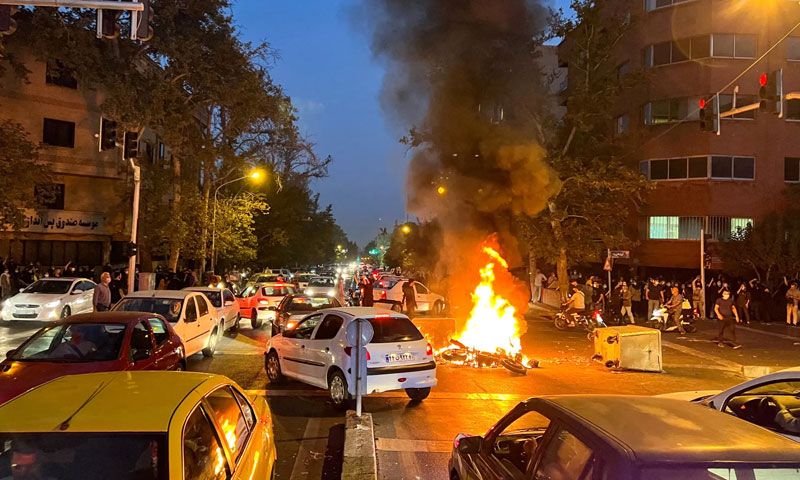
Pakistan Advises Nationals to Avoid Travel to Iran Amid Nationwide Protests
Pakistan Foreign Office has issued a fresh travel advisory urging Pakistani citizens to avoid all non-essential travel to Iran amid widening anti-government unrest across the country. In an official statement released on Saturday, Foreign Office Spokesperson Tahir Andrabi said the advisory was issued purely in the interest of public safety, as the situation inside Iran continues to evolve rapidly. Pakistani nationals currently residing in Iran have been advised to remain extremely cautious, limit movement to essential needs only, and stay alert to local developments. The spokesperson also urged citizens to maintain close contact with Pakistan’s diplomatic missions in Iran and to use emergency helplines whenever assistance is required. The Pakistani embassies in Tehran, Zahidan, and Mashhad have been instructed to remain accessible to citizens during this period of instability. Contact numbers for landline and mobile services have been shared to ensure round-the-clock communication and support. The advisory comes as protests that initially erupted in Tehran last month have now spread across all 31 provinces of Iran, signalling a deepening national crisis. What began as economic anger—particularly among shopkeepers in Tehran’s historic Grand Bazaar over the sharp depreciation of the Iranian rial—has expanded into broader demonstrations against the government. Unlike earlier protest movements, analysts note that the current wave is being driven largely by young men, rather than women and girls who were central to the Amini protests. Observers say this shift reflects a wider base of dissatisfaction within Iranian society. At the same time, Iran’s leadership is facing increasing international scrutiny, while domestically struggling to contain growing unrest. Political analysts argue that the developments point to a widening crisis of legitimacy for the ruling clerical establishment. According to the US-based Human Rights Activists News Agency (HRANA), at least 34 protesters and four members of security forces have been killed so far. The agency also reports that more than 2,200 people have been arrested during the demonstrations, underlining the scale of the unrest and the force used to suppress it. Given the volatile situation, Pakistani authorities have reiterated their call for caution, advising citizens to prioritise safety until conditions stabilise. Embassy Contact Numbers for Pakistani Nationals in Iran Embassy of Pakistan – Tehran☎ +98-21-66-9413-88 / 89 / 90 / 91 (Landline)☎ +98-21-66-9448-88 / 90 (Landline)📱 +98 910 764 8298 (Mobile) Consulate of Pakistan – Zahidan☎ +98 54 33 22 3389 (Landline)📱 +98 904 614 5412 (Mobile) Consulate of Pakistan – Mashhad📱 +98 910 762 5302📱 +98 937 180 7175
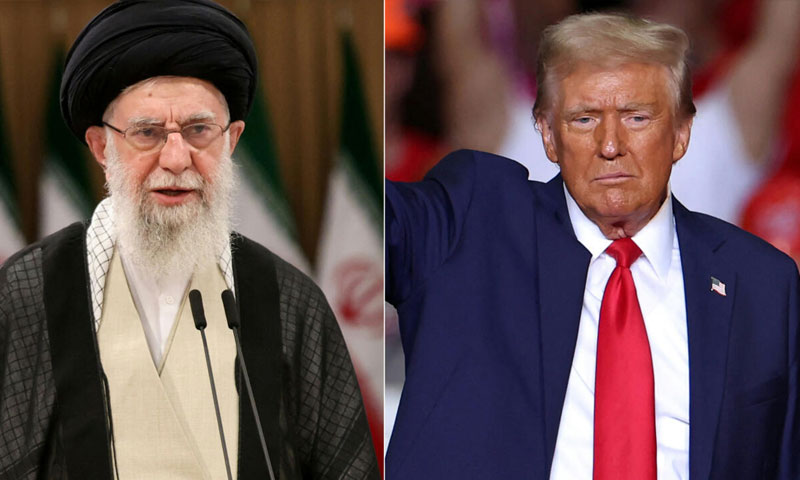
Khamenei Blames Iran Unrest on US Influence, Warns of Tougher Crackdown
Iran’s Supreme Leader Ayatollah Ali Khamenei on Friday signalled a harder line against ongoing anti-government protests, accusing demonstrators of acting in the interests of foreign powers — particularly the United States — as unrest persisted across several Iranian cities under a sweeping communications blackout. In a short address broadcast on state television, the 86-year-old leader said some protesters were “destroying their own streets to please the president of another country,” a clear reference to Donald Trump. Responding to chants of “Death to America” from the audience, Khamenei warned that the Islamic Republic would not tolerate individuals he described as “mercenaries” working on behalf of external forces. Khamenei also lashed out at Trump directly, urging him to focus on domestic challenges in the United States rather than commenting on Iran’s internal affairs. Iranian officials have repeatedly accused Washington, Israel, and their allies of encouraging instability inside the country. Defiant Rhetoric and Historical Warnings Striking a defiant tone, Khamenei dismissed what he described as threats from Trump, drawing comparisons with historical figures he said were removed from power despite their dominance. He named Pharaoh, Nimrod, Reza Khan, and Mohammad Reza Pahlavi as examples of rulers who, he claimed, fell at the height of their authority — adding that Trump would meet a similar fate. The remarks underscored the leadership’s determination to frame the unrest as a foreign-backed plot rather than a domestic uprising. Protests Continue Despite Blackout The true scale of the demonstrations remains difficult to verify due to extensive internet shutdowns and restrictions on international phone services. However, the unrest is widely seen as the most serious challenge to Iran’s leadership in several years. The protests began on December 28 over rising prices, unemployment, and economic hardship. Since then, they have evolved into broader expressions of political anger, with demonstrators openly challenging the ruling system. Exiled Royal Figure Reappears in Public Discourse The protests have also revived debate over the influence of exiled crown prince Reza Pahlavi, who has urged Iranians to sustain demonstrations. Some rallies reportedly featured chants supporting the former shah — a taboo act in the past that once carried severe punishment — highlighting the depth of public frustration. Scenes of Unrest and Official Response Short video clips shared by activists online showed crowds chanting anti-government slogans around bonfires, with debris scattered across streets in Tehran and other cities. State media later acknowledged the unrest but blamed what it called “terrorist elements” linked to the US and Israel for setting fires and inciting violence, reporting casualties without providing details. Despite official warnings and an increased security presence, protesters were reported to have continued marching into Friday morning, defying authorities as international scrutiny of Iran’s response intensified.

Security Shock in Cincinnati as US Vice President JD Vance’s Home Is Targeted
A security scare unfolded early Monday morning outside the Cincinnati residence of US Vice President JD Vance, prompting a swift response from local police and the US Secret Service. Authorities confirmed that a suspect has been taken into custody following reports of suspicious activity and property damage. The incident occurred shortly after midnight in the East Walnut Hills neighbourhood, where law enforcement officers were dispatched after receiving reports of a possible break-in. According to officials, responding officers observed an individual running eastbound near the vice president’s home, triggering an immediate search of the area. When police arrived at the property, they discovered multiple shattered windows, raising concerns about a potential intrusion. Officers quickly secured the scene, and a suspect was arrested nearby soon afterward. Authorities have not yet disclosed the individual’s identity, motive, or the specific charges that may be filed. Officials stressed that the investigation remains active, and further details will be released once more information is confirmed. Vance and family were not home Vice President Vance and his family were not present at the residence at the time of the incident. According to reports, Vance departed Cincinnati on Sunday afternoon. Notably, the city had recently lifted road closures and security checkpoints around the property before the incident occurred. 🧐Un terroriste de gauche à brisé des fenêtres de la maison de JD Vance dans l’Ohio Heureusement, sa famille n’était PAS là. La gauche ne s’arrêterapas, jamais.pic.twitter.com/YR5NuLfQIR — ⚜ France for Trump ⚜ (@VirginiePerez15) January 5, 2026 Investigators are still working to determine whether the suspect managed to enter the home. While broken windows were clearly visible, authorities said there is no confirmed evidence yet that the house was breached beyond the exterior damage. Secret Service response The US Secret Service joined Cincinnati police officers at the scene and assisted with securing the property and conducting the initial investigation. After several hours, Secret Service agents left the area, while local police continued monitoring and inspecting the home throughout the morning. Residents in the neighbourhood reported a heavy police presence, with patrol vehicles and police tape surrounding the property as investigators worked. Neighbours and passersby gathered at a distance, watching developments unfold. Investigation ongoing Cincinnati officials have so far released limited information. They confirmed that a suspect is in custody but declined to comment on whether the incident was politically motivated or a random act of vandalism. Authorities said they are collecting evidence and reviewing security footage. Police indicated that an official update is expected later in the day as investigators assess the full extent of the damage and clarify what occurred.
