

The new owners of Pakistan International Airlines have laid out an ambitious turnaround plan, acknowledging that the national carrier will continue to incur losses for at least one year before moving towards profitability. Speaking in an exclusive interaction, Arif Habib, founder of the Arif Habib Group, said that PIA currently employs around 9,000 people — a number he believes is not excessive. “The concern should not be about how many people are employed, but whether they are performing effectively,” he said, adding that no employees would be laid off for at least one year. Habib stressed that the focus would not be on replacing the management overnight, but on improving systems, training, and accountability. “Despite all its problems, PIA is still operating today. That itself shows there is potential. We will invest in training and capacity-building to fix what is broken,” he noted. Safety, according to Habib, will remain non-negotiable. He said there would be zero tolerance for violations of standard operating procedures (SOPs). “Passengers must feel that if they are flying PIA, they are safe. There will be no compromises on safety under any circumstances,” he said. The airline is currently facing a loss of Rs54 billion, which is expected to rise to around Rs65 billion. Habib confirmed that the losses will be absorbed for one year as part of the restructuring phase. “This is a low-margin business with intense competition. Organization and discipline are critical,” he explained. Highlighting operational realities, Habib said profitability depends heavily on load factor. “If bookings exceed 85 percent, the airline makes money. Anything below that results in losses,” he said. He pointed out that PIA has a strong built-in market, including Hajj and Umrah operations and nearly 70 million overseas Pakistanis who travel regularly. “People want to fly PIA, but poor service and aircraft condition push them away. Fix the service and planes, and they will come back,” he said. Under the investment plan, aircraft engines will be purchased and grounded planes restored. The fleet is expected to expand from 16–17 aircraft to around 38 over time. Habib said PIA also benefits from direct international routes, a key competitive advantage. The airline has received Rs125 billion, which will be used for new engines, debt servicing, and operational costs. A dedicated plan has also been prepared to improve the cargo business. PIA’s total liabilities stand at Rs181 billion, while many assets have already been shifted to a holding company. Habib concluded that the government should not be running businesses. “Losses in state-owned entities grew due to personal interests of officials. Business is the job of the private sector — and we intend to prove that PIA can be profitable within a year.” The turnaround plan will be driven by a private consortium that has acquired a 75 percent stake in Pakistan International Airlines for Rs135 billion (approximately $482 million). The group is scheduled to formally take operational control of the airline in April 2026, after which it plans to immediately roll out its restructuring and investment roadmap. This privatization represents one of Pakistan’s largest and most consequential divestments of a state-owned enterprise in recent years, reflecting the government’s broader effort to offload chronically loss-making entities that have placed a sustained burden on public finances. The ownership structure of the consortium brings together some of the country’s leading corporate players. Fauji Fertilizer will hold a 25 percent stake, while another 25 percent will be jointly controlled by Arif Habib’s investment group and Fatima Fertilizer. The remaining 25 percent stake will be shared among other consortium partners, completing the private-sector-led ownership structure.
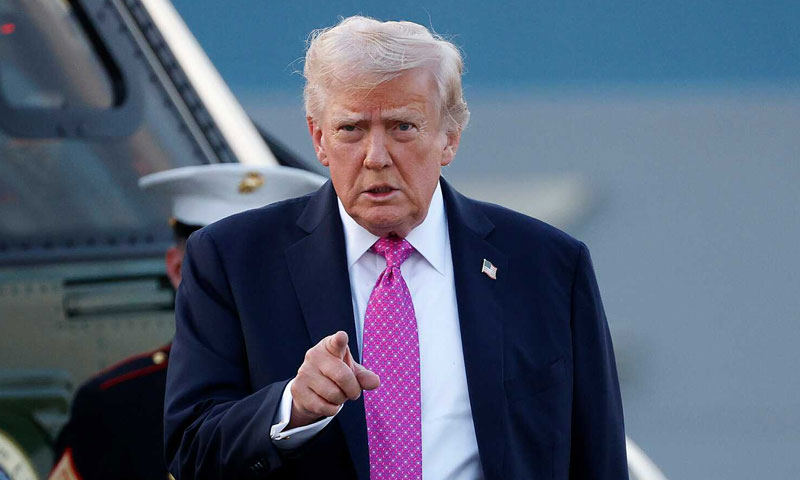
Big Spending, Bigger Warnings: US President Donald Trump Proposes Record $1.5 Trillion US Defence Budget
US President Donald Trump has announced plans to dramatically expand America’s military spending, proposing a defence budget of $1.5 trillion for the next fiscal year — a 50 per cent jump that would mark the largest military outlay in US history. Speaking on Wednesday, Trump said the increase was necessary to confront what he described as “very troubled and dangerous times,” arguing that the current level of defence spending was no longer sufficient for America’s global security needs. In a post on his Truth Social platform, Trump said he had decided that the military budget for 2027 should rise well beyond the previously discussed $1 trillion mark. He claimed the expanded funding would help create what he called a “dream military” capable of deterring any adversary and ensuring the country’s safety. pic.twitter.com/S79vvQ6jFD — Rapid Response 47 (@RapidResponse47) January 7, 2026 Since returning to office, Trump has relied heavily on US military power, authorising strikes against Yemeni rebels, Iranian nuclear facilities and suspected drug-smuggling vessels. His administration has also carried out a high-risk special forces operation to seize Venezuelan leader Nicolás Maduro, underscoring his aggressive approach to foreign and security policy. Trump said the massive spending increase would be financed through revenue generated by the sweeping tariffs his administration has imposed on both allies and rivals. The United States already spends more on defence than any other country by a wide margin. A rise to $1.5 trillion would further widen the gap with competitors such as China and Russia, while potentially fuelling concerns about a renewed global arms race. Defence Industry Under Fire Despite proposing a budget that would significantly benefit defence manufacturers, Trump simultaneously launched a public attack on major arms contractors, accusing them of prioritising shareholder payouts over industrial investment. He said defence firms were issuing “massive dividends and stock buybacks” while underinvesting in factories and production capacity. Trump also criticised executive compensation in the sector, calling pay packages “exorbitant and unjustifiable.” The president said he wanted to cap defence executive salaries at $5 million and halt dividends and buybacks until companies increased investment in plants and equipment, though he did not outline how such measures would be enforced. The comments rattled financial markets. Shares of major defence companies, including Lockheed Martin and General Dynamics, fell more than four per cent, while Northrop Grumman dropped over five per cent. Trump singled out Raytheon, saying the Pentagon had described it as the slowest and least responsive contractor in scaling up production. He warned that the company risked losing government contracts if it failed to boost investment in manufacturing capacity. The announcement also follows last year’s decision by NATO allies to commit to raising defence spending to five per cent of GDP by 2035 — a move widely seen as a response to sustained pressure from Trump.
