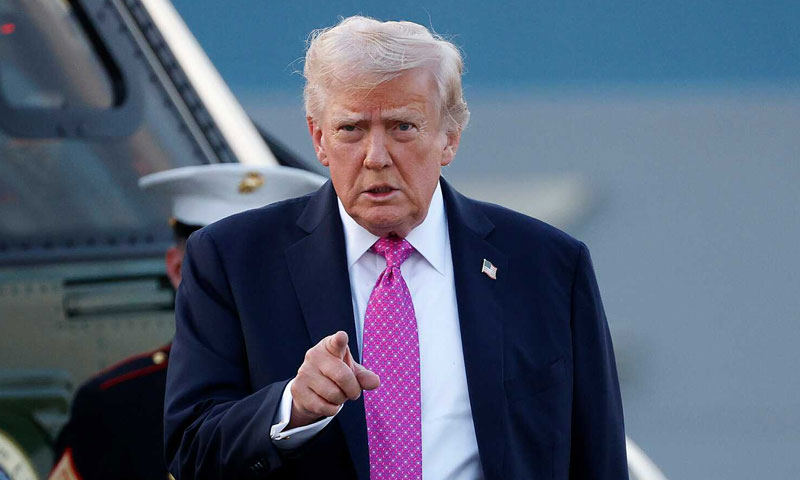
US President Donald Trump has announced plans to dramatically expand America’s military spending, proposing a defence budget of $1.5 trillion for the next fiscal year — a 50 per cent jump that would mark the largest military outlay in US history.
Speaking on Wednesday, Trump said the increase was necessary to confront what he described as “very troubled and dangerous times,” arguing that the current level of defence spending was no longer sufficient for America’s global security needs.
In a post on his Truth Social platform, Trump said he had decided that the military budget for 2027 should rise well beyond the previously discussed $1 trillion mark. He claimed the expanded funding would help create what he called a “dream military” capable of deterring any adversary and ensuring the country’s safety.
— Rapid Response 47 (@RapidResponse47) January 7, 2026
Since returning to office, Trump has relied heavily on US military power, authorising strikes against Yemeni rebels, Iranian nuclear facilities and suspected drug-smuggling vessels. His administration has also carried out a high-risk special forces operation to seize Venezuelan leader Nicolás Maduro, underscoring his aggressive approach to foreign and security policy.
Trump said the massive spending increase would be financed through revenue generated by the sweeping tariffs his administration has imposed on both allies and rivals.
The United States already spends more on defence than any other country by a wide margin. A rise to $1.5 trillion would further widen the gap with competitors such as China and Russia, while potentially fuelling concerns about a renewed global arms race.
Defence Industry Under Fire
Despite proposing a budget that would significantly benefit defence manufacturers, Trump simultaneously launched a public attack on major arms contractors, accusing them of prioritising shareholder payouts over industrial investment.
He said defence firms were issuing “massive dividends and stock buybacks” while underinvesting in factories and production capacity. Trump also criticised executive compensation in the sector, calling pay packages “exorbitant and unjustifiable.”
The president said he wanted to cap defence executive salaries at $5 million and halt dividends and buybacks until companies increased investment in plants and equipment, though he did not outline how such measures would be enforced.
The comments rattled financial markets. Shares of major defence companies, including Lockheed Martin and General Dynamics, fell more than four per cent, while Northrop Grumman dropped over five per cent.
Trump singled out Raytheon, saying the Pentagon had described it as the slowest and least responsive contractor in scaling up production. He warned that the company risked losing government contracts if it failed to boost investment in manufacturing capacity.
The announcement also follows last year’s decision by NATO allies to commit to raising defence spending to five per cent of GDP by 2035 — a move widely seen as a response to sustained pressure from Trump.