

For more than a decade, the global digital economy has been built around a simple assumption: bigger data centres mean better technology. Vast warehouses packed with servers have powered everything from video streaming and online banking to artificial intelligence. But that model is now facing its most serious challenge yet. The question gaining traction across the tech world is no longer whether data centres will grow — but whether they will remain the centre of AI at all. A Challenge from the Pocket The debate was recently reignited by Aravind Srinivas, chief executive of AI company Perplexity, who argued that the dominance of large data centres could one day be undercut by something far smaller: the smartphone. Speaking on a podcast, Srinivas suggested that as artificial intelligence becomes more efficient and personalised, powerful AI tools could run directly on consumer devices. Instead of constantly sending data back and forth to distant servers, processing could happen locally — on phones, laptops, routers, or even set-top boxes. This would represent a fundamental shift away from the centralised computing model that currently defines AI. Early Signs of a Shift The idea is no longer theoretical. Apple’s latest devices already process some AI tasks directly on-device through Apple Intelligence, using specialised chips to improve speed and privacy. Microsoft has followed a similar path with Copilot+ laptops, which include built-in AI processing capabilities. Yet these remain premium products. Most consumer hardware still lacks the power needed to run advanced AI locally, meaning large data centres remain essential — for now. The Scale of the Data Centre Machine Today’s data centres are enormous operations. Often covering the size of multiple football fields, they house thousands of servers performing everything from cloud storage to AI training. Almost every online service relies on them in some way. Tech giants continue to double down on this infrastructure. Billions of dollars are being invested globally, with around 100 new data centres currently planned or under construction in the UK alone. Their energy consumption is vast, and environmental concerns are growing. Nvidia chief executive Jensen Huang has described these facilities as “AI factories”, arguing that rapid advances in artificial intelligence would not be possible without them. The Case for Smaller, Localised Alternatives Despite the investment surge, a quieter counter-movement is taking shape. Instead of fewer data centres, some experts envision many smaller ones. Consultants and engineers argue that compact “edge” data centres located close to population centres could reduce latency, improve efficiency, and cut energy waste. Some experimental projects already exist — from small data centres heating public swimming pools to household-sized units warming private homes. The idea is simple: if computing generates heat, why waste it? Advocates say future cities could integrate small data centres into public buildings, housing estates, or unused commercial spaces, linking them into networks when large-scale processing is required. Even Space Is Being Considered Others are looking far beyond city limits. Companies are exploring the possibility of placing compact data centres in orbit, where cooling and energy efficiency could be improved. While still experimental, the idea reflects growing discomfort with the ever-expanding footprint of ground-based mega facilities. Is the “Bigger Is Better” Model Cracking? For years, the AI industry believed that scaling was everything — more data, more computing power, better results. But that assumption is now being questioned. As AI models become more specialised, they may require less brute-force computing. Critics argue that not every AI system needs the vast capabilities of today’s large language models. A tool designed for medical diagnosis, for example, does not also need to generate poetry or pop lyrics. If AI becomes smaller, smarter, and more targeted, the pressure to centralise everything inside massive data centres could ease. A Gradual Shift, Not a Collapse Few experts believe large data centres will disappear anytime soon. Demand for cloud services and AI continues to grow. But their role may evolve — from being the sole engine of AI to one component in a far more distributed system. The future may not belong exclusively to either giant data centres or handheld devices, but to a hybrid world where processing happens wherever it makes the most sense. And in that world, the dominance of the mega data centre may no longer be guaranteed.

Meta Appoints Former Trump Adviser Dina Powell McCormick as President and Vice Chairman
US technology giant Meta has announced a major leadership appointment, naming Dina Powell McCormick as its new President and Vice Chairman, marking a significant expansion of her role within the company. In an official statement released on Monday, Meta said Powell McCormick will join its senior management team after previously serving on the company’s board of directors. The move comes as Meta intensifies its long-term focus on advanced artificial intelligence, large-scale computing infrastructure, and what it describes as the pursuit of “personal superintelligence.” Meta founder and CEO Mark Zuckerberg said Powell McCormick’s global experience and policy background make her a strong fit for the company’s next phase. “Dina’s leadership experience, combined with her deep relationships across governments, finance, and international institutions, positions her uniquely to help guide Meta’s strategy as we scale our most ambitious technologies,” Zuckerberg said. In her new role, Powell McCormick will help shape Meta’s overall strategic direction and oversee execution at the highest level. She will also work closely with teams responsible for compute capacity and infrastructure — areas that have become central to Meta’s AI ambitions. The company added that she will lead efforts to secure new strategic capital partnerships and explore innovative funding models aimed at expanding Meta’s long-term investment capabilities. The appointment drew a public reaction from US President Donald Trump, who congratulated Powell McCormick in a post on his social media platform Truth Social. Calling the decision “a great choice,” Trump praised her past service, saying she had represented his administration “with strength and distinction.” Powell McCormick previously served as deputy national security adviser during Trump’s first term. Earlier in her career, she held senior roles in the George W. Bush administration, including assistant secretary of state and senior White House adviser, building a long résumé spanning diplomacy, national security, and global finance. She stepped down from Meta’s board in December 2025, a move that fueled speculation about a broader operational role — speculation now confirmed with her elevation to one of the company’s top leadership positions. Her appointment underscores Meta’s growing emphasis on blending political, financial, and technological expertise as it positions itself at the forefront of the next wave of artificial intelligence development.

China Develops World’s First Software to Keep Time on the Moon
Chinese scientists have developed the world’s first dedicated software system for tracking time on the Moon, a breakthrough that could play a critical role in the next phase of lunar exploration as multiple missions prepare to operate simultaneously on the lunar surface. Researchers from Purple Mountain Observatory have created a high-precision model that accounts for the Moon’s unique gravitational environment and orbital motion. Unlike Earth, time on the Moon runs slightly faster — by around 56 microseconds per day — a difference explained by Einstein’s theory of general relativity. While imperceptible in everyday life, such discrepancies can cause serious errors in spacecraft navigation and landing systems. The newly released software, known as LTE440 (Lunar Time Ephemeris), converts these complex relativistic effects into a practical, automated tool. Instead of relying on manual corrections based on Earth time, mission planners can now directly compare lunar time with terrestrial clocks in a single step. According to the research team, the system can maintain accuracy within tens of nanoseconds over a period of 1,000 years, making it suitable for long-term lunar operations. The findings were published in the peer-reviewed journal Astronomy and Astrophysics in December. Why lunar time now matters For decades, space missions simply followed Earth-based time standards, applying occasional adjustments when necessary. However, experts say that approach is no longer sufficient. With several spacecraft — and eventually humans — expected to operate on the Moon at the same time, a unified and reliable lunar time reference has become an engineering necessity. Harvard-based astronomer and space historian Jonathan McDowell noted that even a one-microsecond timing error could translate into meaningful navigation mistakes. He said that any future lunar positioning system — effectively a “GPS for the Moon” — would depend on extremely precise and shared timekeeping. McDowell added that while similar research is being conducted in the United States, no other publicly accessible lunar timekeeping software currently exists. He described the Chinese release as timely, given the increasing complexity of planned Moon missions. Part of a broader global effort The development comes amid a renewed global push toward long-term lunar presence. The US-led Artemis programme, China’s Chang’e missions, and private companies such as SpaceX are all planning sustained activity around and on the Moon. Acknowledging this momentum, the International Astronomical Union introduced a formal framework in 2024 for a dedicated lunar time reference — often described as a future “Moon Standard Time.” The LTE440 software builds on that framework, translating theoretical models into a usable engineering tool. The Nanjing-based team used highly accurate orbital data to model how time gradually diverges between Earth and the Moon, packaging those calculations into a lightweight program. While LTE440 currently serves as a proof of concept, researchers aim to expand it to support real-time navigation and synchronised lunar clock networks. If further developed, the system could become a cornerstone of future lunar infrastructure, enabling safer landings, reliable communications, and coordinated operations — and perhaps one day allowing astronauts to set their clocks not to Earth time, but to Moon time.

From Roads to Eco Bricks: How the World Is Turning Plastic Waste into an Industry — and Pakistan Is Catching Up
As environmental pollution and climate change accelerate worldwide, plastic recycling has evolved from a basic waste-management tool into a multi-billion-dollar global industry. Across continents, countries are converting plastic waste into roads, construction material, furniture, and reusable plastic — a transformation that Pakistan has now begun to replicate through initiatives such as Eco Bricks and government-backed recycling programmes. How the World Recycles Plastic In countries such as Germany, Japan, and South Korea, plastic bottles and packaging are recycled back into raw material used for manufacturing new products. Strict waste segregation laws, deposit-return systems, and advanced recycling plants have helped reduce landfill waste and reliance on virgin plastic. Meanwhile, India and the Netherlands have pioneered the use of plastic waste in road construction. By mixing shredded plastic with bitumen, these countries have built stronger, more durable, and water-resistant roads, turning waste into long-lasting infrastructure. In United States and the United Kingdom, recycled plastic is widely used to produce outdoor furniture, fencing, railway sleepers, and building components. African nations such as Kenya are even converting plastic waste into low-cost construction bricks, helping address housing shortages while reducing pollution. Pakistan’s Entry: Eco Bricks and Recycling Push Pakistan, one of the countries most vulnerable to climate change, has historically struggled with plastic waste management. However, a notable shift began in July last year, when the country started producing environment-friendly Eco Bricks for the first time. These bricks are made by blending 15 to 20 percent plastic waste with cement, sand, and gravel. The Eco Bricks can be used in flooring and external boundary walls, offering a sustainable alternative to traditional construction materials while cutting down plastic pollution. According to Pakistan’s Ministry of Climate Change and Environmental Coordination, the country generates 3.9 million tonnes of plastic waste annually. Much of it ends up being burned or dumped due to weak collection systems and limited recycling infrastructure, worsening air and environmental pollution. Punjab’s Green Credit Programme To address these challenges, Punjab has introduced multiple policies, including the Green Credit Programme, aimed at laying the groundwork for an emissions trading system. The initiative seeks to engage youth, students, women, and local communities in positive environmental action by encouraging recycling and sustainable practices. As part of this effort, the government has partnered with a private company to recycle single-use plastic. From next month, locally manufactured recycling machines — developed using Chinese technology — will be installed at four major universities in Lahore, with plans to expand their placement to city markets. Recycling as an Industry The Federation of Pakistan Chambers of Commerce and Industry has urged the government to formally recognise plastic recycling as an industry and support it through policy and incentives. FPCCI notes that many countries earn billions from recycling, while Pakistan’s recycling sector already provides employment to nearly one million people. Pakistan currently has over 200 recycling factories processing paper, plastic, and other waste. Yet, a report estimates that in 2020, the country generated 250 million tonnes of waste, with around 5 million tonnes of plastic going unrecycled due to lack of awareness and infrastructure. Innovation from Within Kashif Akhtar, founder of Eco Bricks, says the initiative was born out of necessity. “In Pakistan, most waste is burned because it is neither properly collected nor recycled,” she said. “We decided to convert waste into a usable product, and that’s how Eco Bricks were developed.” She added that Eco Bricks have already been used in collaboration with the Capital Development Authority (CDA) at a memorial site near F-9 Park in Islamabad, demonstrating their practical viability. The Road Ahead Global experience shows that plastic recycling can simultaneously reduce pollution, create jobs, and support sustainable growth. Experts believe that by improving waste segregation, investing in recycling technology, and formally recognising recycling as an industry, Pakistan can follow the same path — turning plastic waste from an environmental threat into an economic opportunity.

OpenAI’s Vision for 2026: ChatGPT to Become a Personal Super Assistant
OpenAI is preparing to redefine what people expect from artificial intelligence, with plans to turn ChatGPT into something far more powerful than a question-answering tool. By 2026, the company envisions ChatGPT functioning as a personal “super assistant” that actively helps users manage their lives, rather than simply responding to prompts. The strategy is being driven by Fidji Simo, who oversees OpenAI’s applications division. In a recent post, Simo described a future in which ChatGPT becomes deeply aware of users’ goals, remembers important context over time, and plays an ongoing role in helping people move forward in their personal and professional lives. Rather than operating as a standalone chatbot, the next generation of ChatGPT is expected to behave more like a smart digital partner. It could track long-term objectives, adapt to individual preferences, and offer timely suggestions instead of waiting for instructions. OpenAI’s broader ambition is to make the assistant feel less transactional and more supportive—something users rely on regularly, not just when they need quick answers. Today, ChatGPT is commonly used for writing help, explanations, and basic productivity tasks. OpenAI wants to expand that role so the system can assist with planning work, organising daily responsibilities, learning new skills, and managing personal projects over extended periods. The company believes this shift will make AI more practical and meaningful in everyday life. Collaboration is also expected to be a key focus. OpenAI is exploring features that allow shared conversations and teamwork, enabling users to work together more effectively with AI support. Improvements are also planned in areas such as education, writing, health-related guidance, shopping decisions, and personal finance—fields where consistent assistance can make a real difference. Businesses stand to benefit as well. OpenAI is positioning ChatGPT as a productivity tool for offices, where it could help draft documents, analyse information, support coding tasks, and reduce routine workloads. In this vision, ChatGPT would act like a digital colleague that understands workflows and adapts to organisational needs. Developers will be encouraged to build new services and tools around these capabilities. However, the plan comes with challenges. Advanced AI systems require significant resources, and OpenAI must ensure that the added intelligence translates into clear, practical value. Simo has acknowledged that turning cutting-edge AI into products people are willing to pay for is complex, but critical for the company’s future. If OpenAI succeeds, ChatGPT’s role could shift dramatically over the next few years. By 2026, it may no longer feel like just another app on a screen, but a constant digital companion—one that helps users stay organised, focused, and productive across all aspects of life.

Low Crime, High Security: Abu Dhabi and Dubai Lead 2025 Solo Travel Safety Index
Abu Dhabi and Dubai ranked among the world’s safest cities for solo travelers in 2025, according to a new study released by UK-based tour operator Travelbag. The report assessed global destinations based on daytime and nighttime safety scores, drawing on crime perception data and traveler feedback. Abu Dhabi recorded a daytime safety score of 92 and a nighttime score of 87, while Dubai posted scores of 91 during the day and 83 at night. The study cited low crime levels, public security measures, and monitored transport systems as key factors influencing the rankings. Abu Dhabi Tops the List Abu Dhabi placed first in the global ranking. The study noted that public areas, including waterfronts and major tourist sites, are generally regarded as safe for individuals traveling alone. Safety scores were supported by perceptions of police visibility, lighting in public spaces, and the use of surveillance technology. The report also referenced leisure and cultural locations that remain accessible during evening hours, contributing to higher nighttime safety scores. Dubai Ranks Second Dubai ranked second, supported by safety indicators linked to public transport, commercial districts, and tourist areas. The study found that theft and violent crime rates remain low compared to many global cities. Data used in the assessment indicated that walking alone at night and using public transport were perceived as relatively safe by residents and visitors. Top 10 Safest Cities for Solo Travelers According to the report, the top ten safest cities for solo travelers in 2025 are: Abu Dhabi, UAE Dubai, UAE Chiang Mai, Thailand Muscat, Oman Queenstown, New Zealand Seoul, South Korea Siem Reap, Cambodia Montreal, Canada Tokyo, Japan Phuket, Thailand Methodology and Broader Rankings The rankings were compiled using data from Numbeo’s Crime Index, which relies on crowd-sourced information related to crime levels, safety while walking alone, and risks of theft or assault. Other cities, including Doha and Sharjah, also featured in extended safety lists in related global studies but did not place in the top ten of this ranking. The report noted that while safety concerns linked to global travel persist, perceptions of personal security remain a significant factor influencing destination choices for solo travelers in 2025.

Toyota Launches Shockingly Affordable Electric Sedan in China — Here’s What Makes It Special
Toyota has taken a bold step in the electric vehicle race by launching the bZ3 Smart Home Edition in China—an electric sedan that is turning heads primarily because of its unexpectedly low price. The new model is priced from 109,800 yuan (roughly Rp262 million), positioning it as one of the most affordable electric sedans in its class. The bZ3 is the result of Toyota’s partnership with China’s FAW Group and has been developed exclusively for the Chinese market. Originally introduced in 2022 and refreshed in 2024, the Smart Home Edition represents the most advanced and cost-competitive version of the bZ3 so far. Two variants, aggressive pricing Toyota is offering the bZ3 Smart Home Edition in two variants. The Joy version starts at 109,800 yuan, while the more powerful Pro variant is priced at 129,800 yuan (around Rp309 million). At this price point, industry observers note that if the bZ3 were sold in the United States, it could easily undercut every new electric car currently on sale there—especially as the sub-$20,000 new car segment has nearly disappeared. For comparison, Nissan recently discontinued the Versa, once the cheapest new car in the US at $18,330, while Mitsubishi ended production of the Mirage in late 2024. Advanced tech at a budget price Despite its affordability, the bZ3 Smart Home Edition comes packed with technology. It features the Momenta 5.0 driving assistance system, offering Level 2 autonomous capabilities. To support this, Toyota has equipped the car with 32 sensors, including a roof-mounted LiDAR unit, millimeter-wave radars, ultrasonic sensors, and multiple cameras. These are powered by a high-performance computing chip delivering up to 544 TOPS of processing power. Design, dimensions, and performance Visually, the bZ3 has been refreshed with Toyota’s latest “hammerhead” front-end design, while the rear now features vertical taillights instead of the earlier horizontal layout. A new exterior color, Dark Cloud Green, has also been added. Dimensionally, the car remains unchanged, measuring 4,725 mm in length, 1,835 mm in width, and 1,475 mm in height, with a 2,880 mm wheelbase—typical proportions for a modern electric sedan. The Joy variant uses a front-mounted electric motor producing 181 horsepower, paired with a 49.9 kWh lithium iron phosphate Blade battery supplied by BYD, offering a claimed range of 517 km under Chinese testing standards. The Pro version steps up to 241 horsepower and a larger 65.3 kWh battery, extending the range to 616 km on a single charge. Cabin and launch timeline Inside, the bZ3 Smart Home Edition offers a futuristic cabin featuring a 15.6-inch horizontal touchscreen, an additional 12.8-inch display, a digital instrument cluster, ambient lighting, and an AI-powered voice assistant. Toyota says the model will soon enter mass production, with sales to begin in China in the first quarter of 2026. With its aggressive pricing, long range, and advanced technology, the bZ3 Smart Home Edition signals how serious Toyota has become about making electric cars affordable—at least in China.
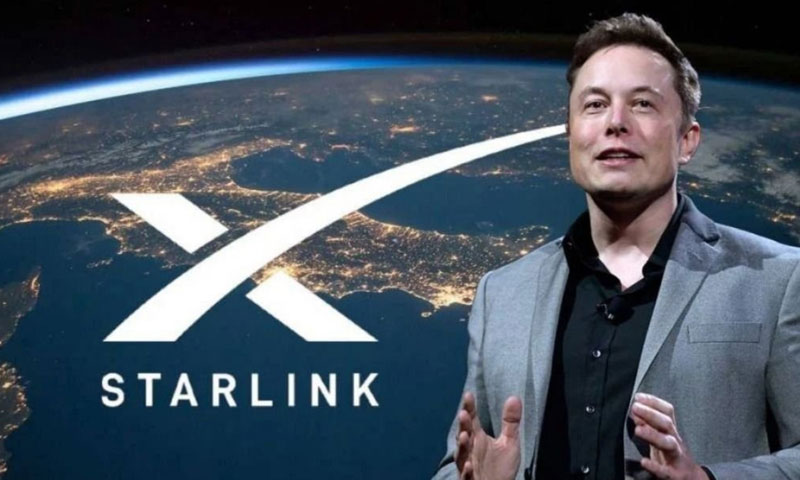
Elon Musk Backs Venezuelans as Starlink Offers Free Internet After Maduro’s Removal
Billionaire entrepreneur Elon Musk has voiced public support for the people of Venezuela as Starlink, operated by SpaceX, announced it would provide free broadband internet access across the country for a limited period amid dramatic political changes. In a post on X on Sunday, Musk wrote, “In support of the people of Venezuela,” while sharing Starlink’s official announcement. The company said it would offer free broadband service through February 3, aiming to maintain connectivity during a period of political uncertainty. In support of the people of Venezuela 🇻🇪 https://t.co/JKxOFWsikP — Elon Musk (@elonmusk) January 4, 2026 The announcement followed a stunning development in Caracas, where the United States confirmed the capture of Venezuelan leader Nicolás Maduro. Footage released by US authorities showed Maduro in handcuffs during a staged perp walk, where he appeared calm and briefly addressed reporters and US Drug Enforcement Administration agents before being taken into custody. The sudden removal of Maduro created an immediate leadership vacuum in Venezuela. Within hours, the country’s Supreme Court issued an emergency ruling assigning interim authority to Vice President Delcy Rodríguez. Reading the decision on state television channel VTV, Supreme Court Justice Tania D’Amelio said Maduro was in a “material and temporary impossibility to exercise his functions.” The court ordered Rodríguez to assume all presidential powers to ensure administrative continuity and what it described as the comprehensive defense of the state. The ruling cited provisions in Venezuela’s constitution that require the vice president to take over executive authority in the event of a president’s temporary or absolute absence. Musk reacted positively to Maduro’s arrest earlier, posting in Spanish: “Venezuela ahora puede tener la prosperidad que merece” (“Venezuela can now have the prosperity it deserves”). His comments quickly gained traction online, especially among Venezuelans who have long struggled with internet restrictions, censorship, and infrastructure breakdowns. Reliable internet access has been a persistent challenge in Venezuela, where outages and state control have limited digital communication. Starlink’s temporary intervention is expected to help citizens stay connected to news, emergency services, and family abroad during the transition period.

Pakistan Air Force Successfully Tests Indigenous Taimoor Air-Launched Cruise Missile
The Pakistan Air Force has successfully conducted the flight test of the indigenously developed Taimoor Weapon System, marking a significant advancement in Pakistan’s aerospace and defence capabilities. According to a statement issued by the Inter-Services Public Relations (ISPR), the Taimoor Air-Launched Cruise Missile (ALCM) demonstrated high accuracy during the test and is capable of engaging both land and sea-based targets at a range of up to 600 kilometres. The missile is designed to carry a conventional warhead. The ISPR said the weapon system is equipped with a state-of-the-art navigation and guidance suite and is capable of flying at very low altitudes, allowing it to evade enemy radar, air defence, and missile interception systems. The missile’s precision-strike capability significantly enhances the Pakistan Air Force’s conventional deterrence and operational flexibility, the statement added. The successful test underscores the growing technical maturity, innovation, and self-reliance of Pakistan’s defence industry. Senior officers of the Pakistan Armed Forces, along with scientists and engineers associated with the programme, witnessed the launch. PAKISTAN AIR FORCE CONDUCTS SUCCESSFUL FLIGHT TEST OF TAIMOOR WEAPON SYSTEM 03 January, 2026: Pakistan Air Force has successfully conducted the flight test of the indigenously developed Taimoor Weapon System, marking another significant milestone in the advancement of national… pic.twitter.com/pRSQkXgOXb — DGPR (AIR FORCE) (@DGPR_PAF) January 3, 2026 Zaheer Ahmed Baber Sidhu, Chief of Air Staff, congratulated the scientists, engineers, and the Pakistan Air Force team on what he described as a major national achievement. He praised their professionalism, dedication, and unwavering commitment to strengthening Pakistan’s defence capabilities. The air chief stated that such milestones reflect Pakistan’s determination to achieve technological self-sufficiency while maintaining a credible conventional deterrent amid an evolving regional security landscape. He added that the successful test reaffirmed the PAF’s focus on operational readiness, technological superiority, and the protection of national security interests. Shehbaz Sharif also extended his congratulations to the nation and the Pakistan Air Force on the successful flight test. He lauded the leadership of the armed forces, including Field Marshal Syed Asim Munir, Chief of Army Staff and Chief of Defence Staff, and Air Chief Marshal Zaheer Ahmed Baber Sidhu, as well as the scientists and engineers involved in the missile’s development. “The successful test of the Taimoor Weapon System reflects the innovation, technical expertise, and self-reliance of Pakistan’s defence industry,” the prime minister said. He added that the system would further strengthen Pakistan’s defensive posture and demonstrated the armed forces’ continuous efforts to maintain a technological edge and ensure national security.
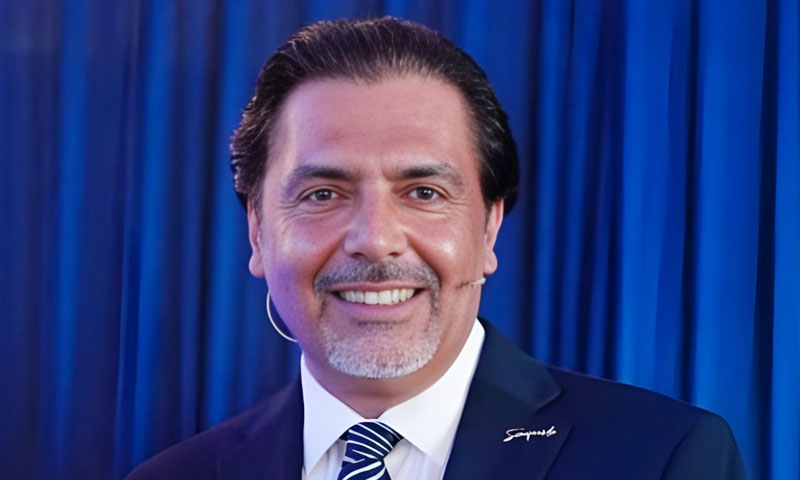
Saquib Ahmad Appointed Global Chief Growth Officer at Systems Limited
Saquib Ahmad has been appointed Global Chief Growth Officer at Systems Limited, marking a strategic move as the technology and business process outsourcing firm sharpens its focus on global expansion. In his new role, Saquib will lead the company’s international growth agenda, with responsibility for scaling operations across key global markets, deepening client relationships, and driving strategic market entry initiatives in both mature and emerging regions. Bringing more than 27 years of senior leadership experience in the telecom and information technology sectors, Saquib is widely recognized for building high-impact sales organizations, spearheading enterprise growth strategies, and delivering consistent, large-scale revenue expansion across diverse geographies. Before joining Systems Limited, he served as Country Managing Director for SAP, overseeing operations across Pakistan, Afghanistan, Iraq, and Bahrain. Over the course of his career, he has held senior leadership roles at global technology firms including Oracle, Comptel, Nokia Siemens Networks, and Siemens, with professional stints spanning the UAE, Germany, Spain, and other international markets. Saquib’s professional achievements are complemented by his academic distinction as a recipient of the Presidential Award Aizaz-e-Sabqat for excellence. He has also remained actively engaged with Pakistan’s business and innovation ecosystem through contributions to organizations such as The Indus Entrepreneurs (TIE) Islamabad, the Overseas Investors Chamber of Commerce and Industry (OICCI), and the Pakistan Business Council. His appointment comes as Systems Limited continues to strengthen its position as a global technology partner, leveraging leadership depth to accelerate sustainable growth beyond its traditional markets.
