
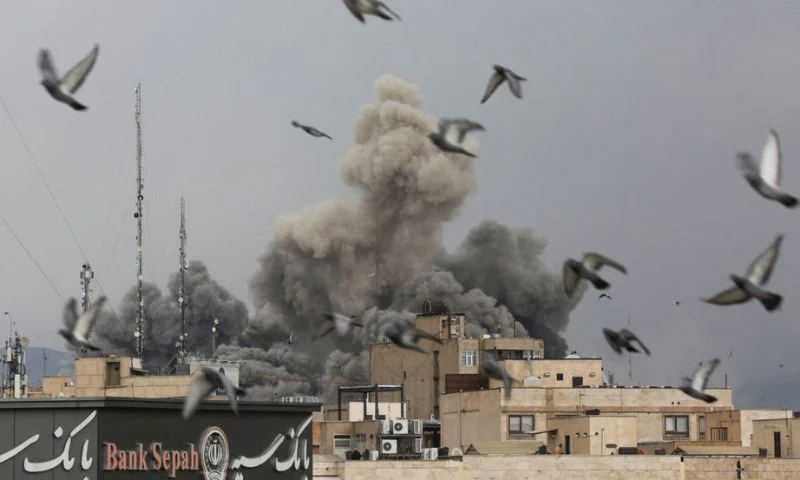
The United States and Iran exchanged fresh air and missile strikes on Thursday for a second consecutive day, deepening tensions and casting fresh doubt on a fragile ceasefire that has struggled to hold since April. The latest escalation followed the downing of a US Apache helicopter near the Strait of Hormuz earlier this week, an incident that triggered a new round of military action across the Gulf region. The US military said it carried out strikes targeting Iranian military surveillance systems, communication networks and air defence sites. According to US Central Command, the operation aimed to counter what it described as Tehran’s “unwarranted and continued aggression.” President Donald Trump signalled that military pressure would continue unless Iran accepted a peace agreement with Washington. Fox News correspondent Trey Yingst reported on X that Trump said the strikes would end shortly but warned he would resume heavy bombing if Iranian leaders did not immediately sign a deal with the United States. The renewed fighting marks the most serious challenge yet to the ceasefire reached in April. The truce followed weeks of intense warfare that began in late February after large-scale US and Israeli air strikes on Iran. Oil markets reacted swiftly. Crude prices jumped nearly $3 after Trump’s latest warning and extended gains during early Asian trading, reflecting concerns over disruptions to global energy supplies. Iran Launches Counterattacks Across Gulf Iran’s Islamic Revolutionary Guard Corps (IRGC) said it responded by targeting 18 US military positions, including facilities in Kuwait and Bahrain and the headquarters of the US Navy’s Fifth Fleet. The IRGC also announced a second consecutive night of missile attacks on the al-Azraq air base in Jordan, saying it launched 12 ballistic missiles at the installation. Kuwait’s military reported that its air defences were engaging hostile aerial targets, while Bahraini authorities said they intercepted and destroyed incoming Iranian threats. Iran’s top joint military command also warned that any vessel attempting to pass through the Strait of Hormuz could come under fire. Iranian state media claimed forces had fired on two US ships in the strategic waterway. Read More: Iran Conflict Triggers $100 Billion Shock for Global Airlines US Central Command rejected those claims and insisted commercial vessels continued to transit the strait despite Iranian threats. Iranian media reported explosions in several cities, including Sirik, Kargan, Bandar Abbas, Minab, Karaj and Varamin. US Defence Secretary Pete Hegseth defended the military action during a visit to Central Command headquarters in Florida. The strikes would “advance our military interests and also enhance our diplomatic position,” he said. “We will strike them hard tonight, and hopefully Iran makes a good decision,” Hegseth added. “If we need to negotiate with bombs, we’ll negotiate with bombs.” Hormuz Dispute, Lebanon Fighting Complicate Peace Efforts The Strait of Hormuz remains at the centre of the crisis. Iran says it has effectively closed the vital shipping route, while US officials deny the claim and maintain that maritime traffic continues. The waterway handles roughly one-fifth of the world’s crude oil and liquefied natural gas shipments, making it one of the most important energy corridors on the planet. Iran accused the United States of striking reservoirs that supplied drinking water to 10 villages. “This is not collateral damage – it is a calculated war crime and a flagrant violation of human rights,” Iranian Foreign Ministry spokesperson Esmaeil Baghei said. At the same time, fighting continued in Lebanon. Lebanese security sources said Israeli air strikes in southern Lebanon killed at least 13 people on Wednesday. Hezbollah later claimed new attacks against Israeli forces, while Israel reported launches near areas where its troops were operating. Diplomatic efforts remain stalled despite repeated claims from Trump that a deal is within reach. Tehran continues to demand an end to Israeli attacks in Lebanon, the lifting of sanctions, the release of frozen Iranian assets and recognition of its control over the Strait of Hormuz. Washington insists any agreement must guarantee freedom of navigation through Hormuz and prevent Iran from developing a nuclear weapon, an ambition Tehran continues to deny.
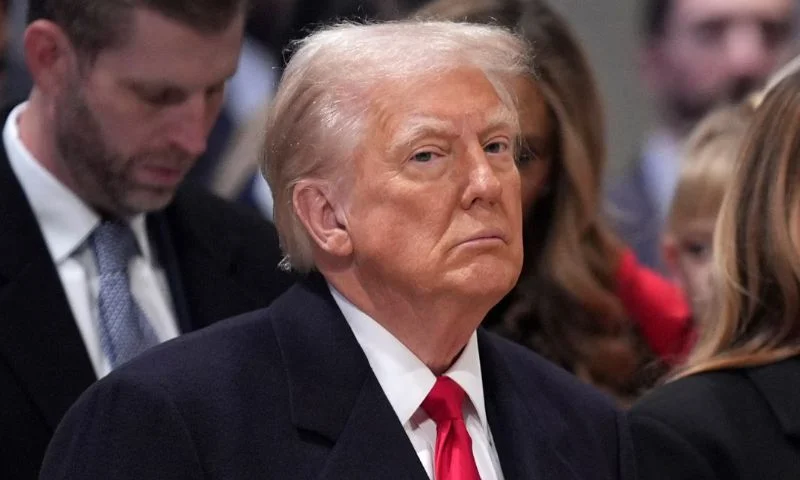
Trump Suffers Major Blow as Republican-Led House Votes to End Iran War
In a significant political setback for President Donald Trump, the Republican-led US House of Representatives on Wednesday approved a resolution aimed at ending American involvement in the war against Iran, reflecting growing unease within the president’s own party over a conflict that has stretched into its fourth month. The House voted 215-208 in favour of the war powers resolution, with four Republicans joining Democrats to support the measure. The resolution directs Trump to withdraw US troops from Iran unless Congress formally declares war or authorises the use of military force. Statement from Ranking Member @RepGregoryMeeks on the passage of his War Powers Resolution terminating U.S. hostilities against Iran: pic.twitter.com/ShtZ500Jzh — House Foreign Affairs Committee Dems (@HouseForeign) June 3, 2026 >The four Republicans who broke ranks were Representatives Tom Barrett of Michigan, Warren Davidson of Ohio, Brian Fitzpatrick of Pennsylvania and Thomas Massie of Kentucky. No Democrats voted against the measure, while seven House members did not cast votes. The vote marked the first time the Republican-controlled House has approved legislation seeking to force Trump to scale back military operations against Tehran since the conflict began following joint US-Israeli air strikes on Iran on February 28. Growing Republican Unease Although the resolution is largely symbolic for now, it represents a rare bipartisan challenge to presidential war powers and highlights increasing frustration in Congress over the administration’s handling of the conflict. The measure must still pass the Senate before it can take effect, and legal experts continue to debate whether such resolutions are constitutional. Three previous House attempts to curb Trump’s war powers failed by narrow margins. Last month, Republican leaders even postponed a scheduled vote when it appeared likely to pass. The Senate has also shown signs of shifting sentiment. In May, senators advanced a similar resolution in a procedural vote after several earlier efforts failed. Further action on that measure has not yet been scheduled. The House vote came amid broader Republican resistance to several Trump initiatives. On the same day, lawmakers advanced the Ukraine Support Act and criticised Trump’s choice of Bill Pulte, a mortgage regulator with no national security background, to serve as acting director of national intelligence. Debate Over War Powers Democrats argue that the US Constitution grants Congress, not the president, the authority to declare war. They have repeatedly called on Trump to seek congressional approval for military action against Iran. Lawmakers have also linked the conflict to rising prices for fuel, food and consumer goods, making economic concerns a major issue ahead of November’s midterm elections. US producer prices recorded their largest increase in four years in April as war-related costs climbed. “The passage of this WPR today signals a significant turning point: more and more Republicans are listening to their constituents who do not want another open-ended war in the Middle East,” Representative Gregory Meeks said after the vote. 🚨BREAKING🚨 The House just PASSED @RepGregoryMeeks‘ Iran War Powers Resolution. This is a loud and unambiguous message to Donald Trump on behalf of the American people: it’s time to end his deeply unpopular and illegal war of choice in Iran. pic.twitter.com/xhHU1djuzp — House Foreign Affairs Committee Dems (@HouseForeign) June 3, 2026 In a separate statement, House Foreign Affairs Committee Democrats declared: “This is a loud and unambiguous message to Donald Trump on behalf of the American people: it’s time to end his deeply unpopular and illegal war of choice in Iran.” The Trump administration has defended the military campaign, arguing that it is necessary to prevent Iran from developing a nuclear weapon and to protect US national security interests. Republican critics of the resolution dismissed it as political grandstanding designed to weaken the president.
Iran Reviews US Offer While Trump Signals Fast End to Conflict
US President Donald Trump said the ongoing conflict involving Iran could end “quickly,” while Tehran confirmed it was still reviewing a US proposal delivered through Pakistani mediation aimed at easing tensions over the Strait of Hormuz and Iran’s nuclear programme. Speaking during a tele-rally for Georgia Republican governor candidate Burt Jones, Trump defended Washington’s actions and framed them around Iran’s nuclear ambitions. Read More: Iran and US Close to Gulf War Agreement, Report Says “When you look at the kind of things that are happening, we are doing that for one very important reason: We cannot allow them to have a nuclear weapon,” Trump said. “So I think most people understand that. They understand that what we are doing is right, and it’ll be over quickly.” His remarks came as diplomatic activity intensified behind the scenes following weeks of military escalation and growing fears over disruptions in global oil shipping routes through the Strait of Hormuz, one of the world’s most critical energy corridors. Iran says proposal still under review Iran’s Foreign Ministry spokesman Esmaeil Baghaei told Iran’s semi-official ISNA news agency on Wednesday that Tehran had not yet reached a final decision on the latest US proposal. Baghaei said the message conveyed through Pakistani mediation remained under review and that Iran would communicate its official response after completing internal assessments. @IRIMFA_SPOX told #ISNA that the #US plan and proposal remain under consideration, and once #Iran concludes its assessment, it will convey its views to the Pakistani side.https://t.co/EU6Z4mx3Do pic.twitter.com/HTA4HDuhRj— Isna English (@Isna_English) May 6, 2026 According to ISNA, parts of a report published by US outlet Axios regarding a possible breakthrough agreement between Tehran and Washington amounted to “media speculation.” The agency added that Iran’s negotiating team remained focused on “ending the war completely.” The report also said nuclear issues “were not under discussion at this stage” of negotiations. Iran’s semi-official Tasnim News Agency separately reported that Tehran had not formally responded because several provisions in the US proposal were viewed as unacceptable. Baghaei had earlier said during a Monday press conference that Washington continued to present “unreasonable demands,” despite ongoing diplomatic contacts through intermediaries. He also addressed reports surrounding Iran’s reported “14-point initiative,” saying issues involving uranium enrichment and nuclear material remained speculative and had not reached any final understanding. Hormuz, sanctions and inspections central to talks Earlier Wednesday, Axios reported that Iran and the US were moving closer to a preliminary understanding that could halt the current conflict and open broader negotiations. According to the report, the proposed memorandum would formally end hostilities and launch a 30-day negotiation process covering the Strait of Hormuz, Iran’s nuclear programme and sanctions relief. Axios said discussions included a temporary moratorium on uranium enrichment, phased sanctions relief and expanded international inspections of Iran’s nuclear facilities. However, the report stressed that negotiators had not finalised any agreement. The developments come as international concern grows over potential disruption to shipping through the Strait of Hormuz, a narrow waterway through which roughly one-fifth of global oil supplies pass. Energy markets have remained volatile amid fears that a prolonged conflict could trigger wider regional instability. Read More: US pauses ‘Project Freedom’ amid breakthrough talks with Iran Pakistan has not publicly disclosed details of its mediation role, but Iranian officials have repeatedly acknowledged that messages between Tehran and Washington were being exchanged through Pakistani channels. Analysts say any temporary understanding between the two sides could help ease military tensions in the Gulf and stabilise global energy prices, though significant disagreements over Iran’s nuclear activities remain unresolved.
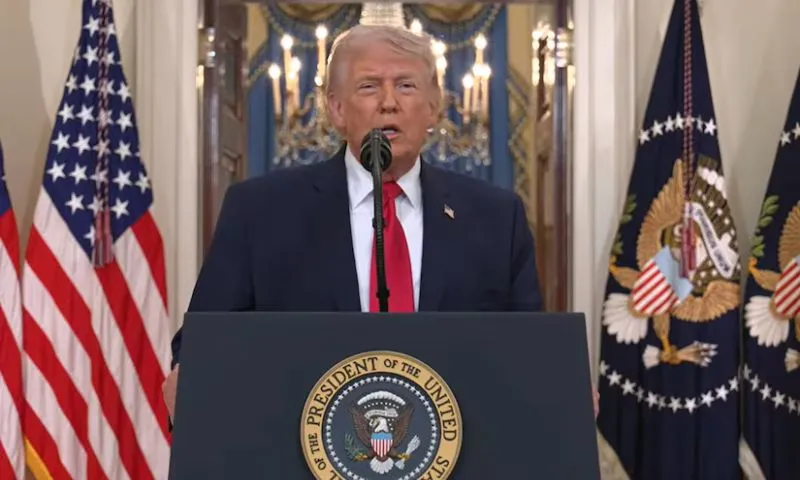
“A Lot of Good Things Are Coming” : Trump’s First Message After Iran Ceasefire
Donald Trump has described the latest developments in the Iran conflict as a “big day for world peace,” after Tehran signalled willingness to de-escalate and enter negotiations following weeks of intense military escalation. The statement marks a sharp shift in tone from the US president, who had earlier issued some of the strongest threats of the conflict, warning of devastating strikes if Iran failed to comply with American demands. Speaking after agreeing to a temporary pause in hostilities, Trump said the situation was moving in a positive direction, presenting the ceasefire as a major diplomatic breakthrough. “This is a big day for world peace,” he said, framing the development as a result of pressure tactics that forced Iran to the negotiating table. From threats to diplomacy Trump’s remarks come just days after he warned that a “whole civilization” could be destroyed if Iran failed to meet his deadline, underscoring the dramatic shift in messaging as negotiations began to take shape. Earlier in the conflict, Trump had repeatedly threatened to target Iran’s infrastructure, including energy facilities and strategic assets, if the Strait of Hormuz remained closed. However, following mediation efforts led by Pakistan and backchannel diplomacy involving regional powers, both sides agreed to a temporary ceasefire, creating space for negotiations. Trump also described the agreement as a “total and complete victory,” reinforcing his claim that US objectives had been achieved despite the absence of a final settlement. Analysts say the shift reflects a broader strategy of applying maximum pressure before pivoting toward negotiations, a pattern that has defined much of the administration’s approach during the conflict. Fragile ceasefire and uncertain path ahead Despite Trump’s optimism, the ceasefire remains fragile. Reports of continued missile exchanges in the region highlight the volatility of the situation and the risk of renewed escalation. Iran has indicated it is prepared to halt counter-attacks if hostilities cease, while also maintaining its key demands on sanctions relief, military withdrawal and control over strategic routes such as the Strait of Hormuz. The conflict, now in its sixth week, has already disrupted global energy markets, with oil prices fluctuating sharply due to fears over supply disruptions. Trump, however, has continued to strike an upbeat tone, suggesting that negotiations could lead to broader economic and geopolitical benefits. He said the developments could mark the beginning of a new phase in the region, raising hopes for stability after weeks of escalating violence. Still, experts caution that significant gaps remain between the two sides, particularly on issues such as Iran’s nuclear programme and regional influence. For now, Trump’s declaration of a “big day for world peace” reflects a moment of cautious optimism, even as the path toward a lasting agreement remains uncertain.
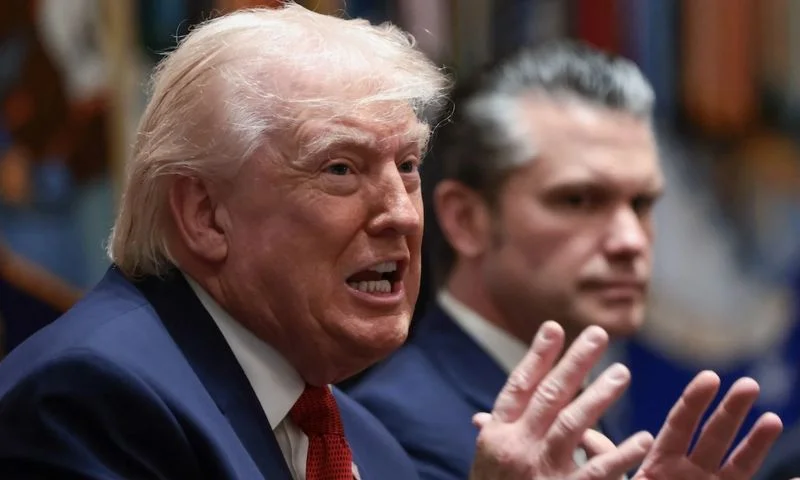
A Timeline of contradictions: Trump’s Most Confusing War Comments Against Iran
Since the start of the Iran war, statements from Donald Trump have followed a pattern that analysts say is as striking as it is confusing. Over a span of just a few weeks, Trump’s remarks have swung between declaring victory, demanding military escalation, threatening allies, rejecting help, and then seeking cooperation. The rapidly changing tone has raised concerns among diplomats and observers about clarity in US messaging during a volatile geopolitical moment. From early declarations of victory to later warnings and contradictory positions on NATO and Iran, the timeline reflects what experts describe as a highly inconsistent communication strategy. A timeline of contradictions The sequence of statements paints a picture of shifting priorities and messaging, sometimes within the same day: Mar 3: “We won the war.”Mar 7: “We defeated Iran.”Mar 9: “We must attack Iran.”Mar 9: “The war is ending almost completely, and very beautifully.”Mar 11: “You never like to say too early you won. We won. In the first hour it was over.”Mar 12: “We did win, but we haven’t won completely yet.”Mar 13: “We won the war.”Mar 14: “Please help us.”Mar 15: “If you don’t help us, I will certainly remember it.”Mar 16: “Actually, we don’t need any help at all.”Mar 16: “I was just testing to see who’s listening to me.”Mar 16: “If NATO doesn’t help, they will suffer something very bad.”Mar 17: “We neither need nor want NATO’s help.”Mar 17: “I don’t need Congressional approval to withdraw from NATO.”Mar 18: “Our allies must cooperate in reopening the Strait of Hormuz.”Mar 19: “US allies need to get a grip – step up and help open the Strait of Hormuz.”Mar 20: “NATO are cowards.”Mar 21: “The Strait of Hormuz must be protected by the countries that use it. We don’t use it, we don’t need to open it.”Mar 22: “This is the last time. I will give Iran 48 hours. Open the strait”Mar 22: “Iran is Dead”Mar 23: “We had very good and productive talks with Iran.”Mar 24: “We’re making progress.”Mar 25: “They gave us a present and the present arrived today. And it was a very big present worth a tremendous amount of money. I’m not going to tell you what that present is, but it was a very significant prize.”Mar 26: “Make a deal, or we’ll just keep blowing them away.”Mar 27: “We don’t have to be there for NATO.”Mar 28: No major quoteMar 29: Claimed talks were progressingMar 30: “Open the Strait of Hormuz immediately, or face devastating consequences.”Mar 31: Claimed a deal was “very close” and that Iran would “do the right thing”Apr 1: “We’ll see what happens very soon.”Apr 2: Repeated that a deal was likely, while warning of continued strikes if notApr 3: “Something big is going to happen.”Apr 4: Said Iran must comply “immediately” or face further consequences.Apr 5: “Open the fuckin’ Strait, you crazy bastards, or you’ll be living in Hell – JUST WATCH! Praise be to Allah.” From victory claims to uncertainty What stands out is not just the tone, but the speed at which positions change. On multiple occasions, Trump declared victory over Iran, only to later suggest the war was ongoing or incomplete. Within days, his messaging shifted from rejecting NATO’s involvement to demanding support, and then again dismissing the alliance altogether. His comments on the Strait of Hormuz also varied sharply, from insisting allies must act to later saying the US did not need to be involved. Diplomatic observers say such fluctuations risk undermining credibility during sensitive negotiations. “This kind of messaging creates confusion not just for the public, but for allies and adversaries trying to interpret US policy,” said one foreign policy analyst based in Washington. Strategy or chaos Some supporters argue that the unpredictability is deliberate, part of a strategy to keep opponents off balance. Others see it as a lack of coherent policy communication during a critical geopolitical crisis. The mix of threats, declarations of victory, and references to ongoing negotiations has made it difficult to assess the actual state of the conflict or diplomacy. By late March and early April, Trump’s tone began to oscillate between optimism about a deal and warnings of further escalation, culminating in increasingly aggressive rhetoric. For now, the timeline of statements has become a story in itself, reflecting a communication style that continues to defy traditional diplomatic norms.
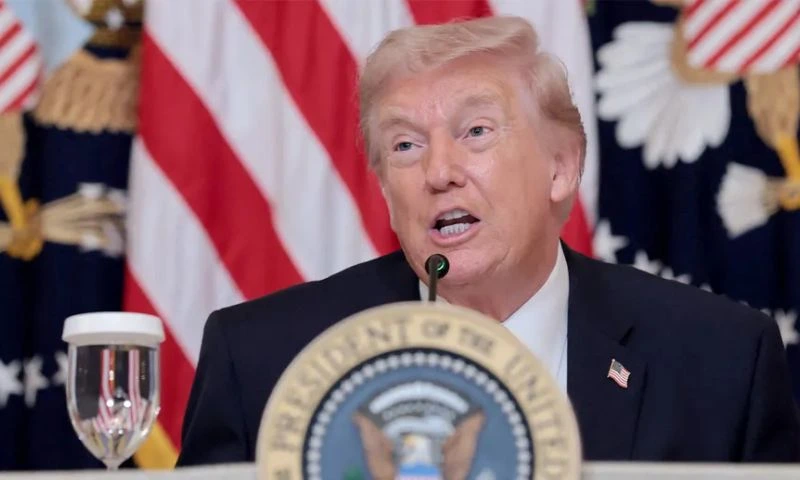
Oil Price Hits $107 as Trump Signals More Strikes on Iran
Global oil markets surged sharply after US President Donald Trump warned of intensified military action against Iran, raising fears of prolonged conflict and further disruption to global energy supplies. Brent crude jumped to $107.60 per barrel, while West Texas Intermediate rose about 6.4% to around $106.50, as traders reacted immediately to the remarks. The spike reversed earlier optimism that prices might stabilise. Trump’s Threat Triggers Market Shock In a televised address from the White House, Trump signalled that the United States would escalate its offensive in Iran over the coming weeks. He said the US would complete its strategic objectives “very shortly” and warned that American forces could spend the next “two to three weeks bombing Iran back to the Stone Ages.” The remarks rattled markets that had been hoping for clarity on a possible exit strategy. Instead, the speech reinforced expectations of a prolonged conflict. Oil prices, which had briefly dipped below $100 earlier in the day on hopes of de-escalation, surged within minutes of the address. Strait of Hormuz Disruption Fuels Crisis The ongoing Iran conflict has severely disrupted global oil and gas flows, particularly through the Strait of Hormuz, one of the world’s most critical energy chokepoints. Shipments through the strait have largely stalled after Iran threatened to target tankers attempting to pass, in response to US and Israeli strikes that began on 28 February. Analysts note that nearly one fifth of the world’s oil supply typically passes through this narrow waterway, making any disruption highly sensitive for global markets. In his speech, Trump said the US no longer depends on Middle Eastern energy and called on other nations to intervene and restore shipping routes. “To those countries that can’t get fuel, many of which refuse to get involved in the decapitation of Iran… build up some delayed courage, go to the Strait and just take it,” he said. Markets React as War Outlook Darkens Energy analysts said the price surge reflects a shift in market expectations. Alberto Bellorin of InterCapital Energy described the rise as a “clear market reality check following the earlier optimism for an imminent ceasefire.” He added that Trump’s speech lacked a “concrete timeline” for reopening the Strait of Hormuz and warned that normal supply conditions could take months rather than weeks to return. Experts say the absence of a clear de-escalation plan has removed hopes of a quick resolution, prompting investors to price in prolonged supply shortages. Tina Soliman-Hunter from Macquarie University said Trump’s comments signal that the war is likely to continue, reinforcing expectations that oil markets will remain tight. Asian Markets Slide Amid Energy Fears The impact was not limited to oil. Stock markets across Asia fell sharply following the speech, reflecting concerns over rising energy costs and economic instability. Japan’s Nikkei 225 dropped 2.4%, South Korea’s KOSPI fell 4.5%, and Hong Kong’s Hang Seng Index declined 1.3%. The region remains particularly vulnerable because many Asian economies rely heavily on Middle Eastern oil imports. Global Energy Risks Intensify The Iran war has already strained global supply chains, with energy markets experiencing sustained volatility since late February. Industry observers warn that continued disruption in the Gulf could push oil prices even higher, increasing inflationary pressures worldwide and affecting fuel costs, transportation, and manufacturing. With no clear timeline for resolution and escalating rhetoric from Washington, markets are bracing for further instability in the weeks ahead.
Mixed Signals: Trump Talks Peace as War Escalates
US President Donald Trump has indicated that Washington is considering scaling back its military campaign against Iran, even as tensions continue to escalate following reported strikes on key nuclear infrastructure. Speaking amid ongoing conflict in the region, Trump said the United States is “considering winding down” the war, suggesting a potential shift in strategy after weeks of intense military operations. Natanz Nuclear Facility Targeted The development comes as Iranian media reported that US and Israeli forces had attacked the Shahid Ahmadi-Roshan enrichment complex in Natanz, one of Iran’s most critical nuclear facilities. According to reports, “technical experts found that no radioactive leaks had occurred and nearby residents were not at risk.” The International Atomic Energy Agency confirmed it is investigating the incident, while Russia condemned the attack, calling it “a blatant violation of international law.” Israel, however, said it was unaware of any such strike, adding further uncertainty around the incident. War Continues Despite De-Escalation Signals Despite Trump’s remarks about potentially winding down the conflict, military activity in the region has not slowed. The United States has continued deploying additional troops and naval assets to the Middle East, highlighting the contradiction between diplomatic messaging and operational reality. The ongoing conflict, which began with coordinated US-Israeli strikes on Iranian targets earlier this year, has expanded into a broader regional confrontation involving multiple actors. Iran has responded with missile and drone attacks targeting US and allied positions, as well as energy infrastructure across the Gulf, intensifying fears of a wider regional war. Strategic Importance of Natanz The Natanz facility holds significant importance in Iran’s nuclear program, serving as a major uranium enrichment site. It has been targeted multiple times in past conflicts due to its role in advancing Iran’s nuclear capabilities. Experts warn that any attack on such facilities carries serious risks, including potential environmental hazards and escalation of geopolitical tensions. Global Reactions and Concerns The reported strike has drawn strong international reactions. Russia has criticized the move, while global powers have called for restraint and de-escalation. The International Atomic Energy Agency’s involvement underscores the seriousness of the situation, particularly given concerns about nuclear safety and regional stability. Uncertain Path Ahead Trump’s suggestion of winding down the war introduces uncertainty into an already volatile situation. Analysts believe that while the statement may signal an attempt to reduce tensions, the continued military buildup suggests that the conflict remains far from resolved. For global markets, especially energy and shipping, the situation remains critical. Any disruption in the region, particularly near key oil routes, could have widespread economic consequences. The coming days are expected to be crucial in determining whether diplomatic efforts can reduce tensions or if the conflict will continue to escalate further.
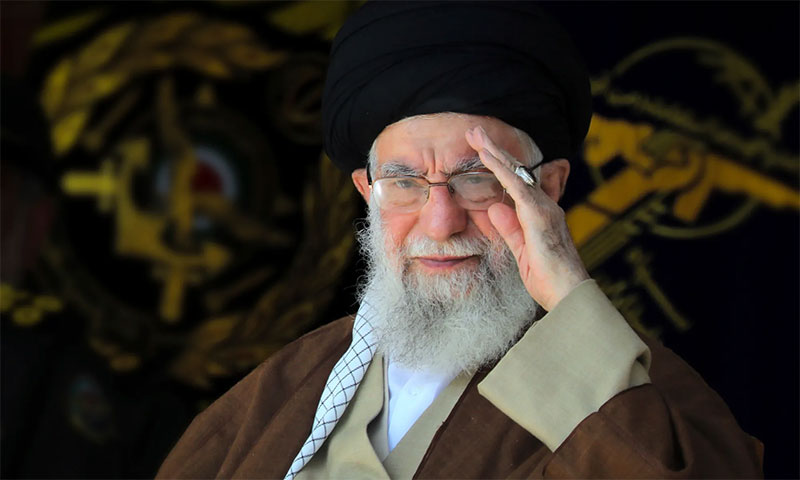
Iran’s Supreme Leader Khamenei Killed in US-Israeli Strikes, 40 days of mourning announced in Iran
Iran’s Supreme Leader Ayatollah Ali Khamenei has been killed in joint military strikes by the United States and Israel, Iranian state media confirmed early Sunday, marking one of the most significant escalations in Middle East tensions in decades. The attacks targeted his compound in Tehran as part of a broader offensive launched late Saturday under what U.S. officials have described as a pre-emptive military campaign. Khamenei, 86, had led the Islamic Republic since 1989, holding ultimate authority over political, military and religious affairs in Iran. His death was confirmed shortly after U.S. President Donald Trump publicly announced the strike, calling it a decisive action against what he described as a persistent threat to U.S. and regional security. 📹 اعلام خبر شهادت رهبر معظم انقلاب اسلامی ایران pic.twitter.com/5k68tVkbHN— خبرگزاری تسنیم (@Tasnimnews_Fa) March 1, 2026 Government Declares Mourning and Public Holidays Following the confirmation, the Iranian government declared 40 days of official mourning nationwide and announced seven days of public holidays as a mark of respect for the late leader. State media also reported that several of Khamenei’s family members, including his daughter, son-in-law and granddaughter, were killed in the attack, with additional reports indicating that another relative was also among the casualties. US and Israeli Military Operation The strike forms part of a major joint operation by the United States and Israel, known in military circles as Operation Epic Fury and Operation Roaring Lion, targeting Iran’s leadership, nuclear infrastructure and strategic military sites. U.S. officials said the attack was timed to coincide with a high-level meeting of Khamenei and senior aides, based on intelligence that ensured the operation’s maximum impact. President Trump described the strikes as a necessary step to protect American forces and allies, asserting that advanced intelligence systems enabled precise targeting. He wrote that Khamenei was unable to evade capture or destruction, even with sophisticated tracking and surveillance efforts. Immediate Retaliation from Iran Hours after the strikes, Iran launched missile and drone attacks against U.S. bases in the Gulf and Israeli territory, escalating the conflict into a broader regional confrontation. Reports have emerged of civilian and military casualties on both sides, as well as damage to infrastructure across the region. The Islamic Revolutionary Guard Corps has pledged continued retaliation, portraying Khamenei’s death as martyrdom at the hands of “vicious terrorists” and vowing that the “hand of revenge” will not let the attackers go unpunished. Global Reactions and Consequences World leaders have reacted with alarm to the rapid escalation. The United Nations and major powers called for restraint and urgent diplomacy to prevent further spillover into neighboring countries. Oil markets also reacted sharply, with global crude prices rising due to fears of disrupted supplies through the Strait of Hormuz. Analysts say Khamenei’s death creates a significant power vacuum in Tehran. His successor has not yet been named, and Iran’s Assembly of Experts, a clerical body responsible for selecting the next supreme leader, is expected to convene soon. Some experts believe hardliners within the Islamic Revolutionary Guard Corps could assert greater influence during the transition. The conflict, which erupted amid months of failed nuclear negotiations, regional proxy tensions and internal Iranian protests driven in part by economic hardship, now stands on the brink of broader war with global implications.
