
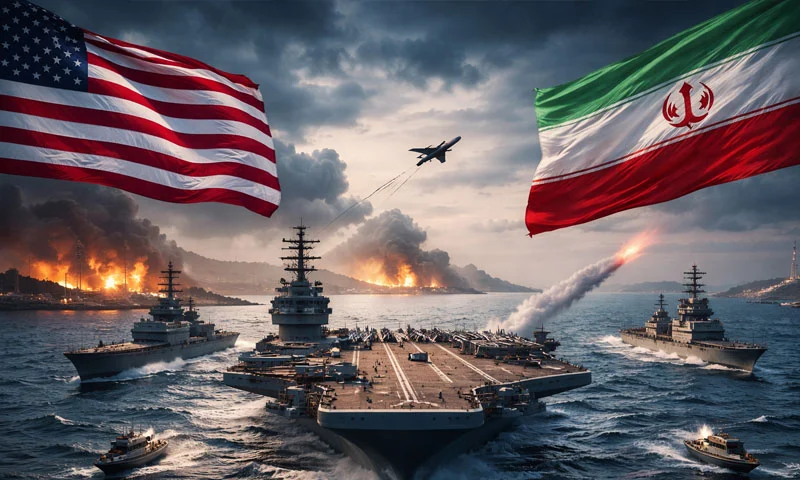
Tensions between the United States and the Islamic Republic of Iran have sharply increased in late January 2026, driven by renewed disputes over Iran’s nuclear program, continued internal unrest within Iran, and growing U.S. military pressure aimed at forcing Tehran back to negotiations. The escalation has raised serious concerns across the Middle East and beyond, with global powers closely watching developments due to their political, economic, and security stakes in the region. The Core Issue: Nuclear Program and Strategic Confrontation At the heart of the current standoff lies Iran’s nuclear program and Washington’s long-standing demand that Tehran permanently abandon any pathway toward nuclear weapons. The United States has reiterated that Iran must return to binding negotiations that impose strict and verifiable limits on its nuclear activities. President Donald Trump has publicly called on Iran to accept a new agreement focused on what he describes as a “no nuclear weapons” outcome, warning that failure to comply could result in military action. This nuclear dispute is not isolated. It is part of a broader strategic conflict that includes regional influence, sanctions enforcement, and long-running mistrust between the two countries following years of collapsed agreements and diplomatic disengagement. Human Rights Concerns and Domestic Unrest in Iran Alongside the nuclear issue, U.S. officials have cited Iran’s internal situation as a key concern. Washington has accused Iranian authorities of using excessive force against nationwide protests, with reports indicating large-scale civilian casualties. American leaders have linked these human rights concerns to their broader pressure strategy, arguing that Iran’s domestic conduct reflects its broader regional and international behavior. Tehran, however, rejects these accusations and views them as interference in its internal affairs. Military Build-Up and Pressure Tactics The escalation has been underscored by a visible U.S. military buildup in the Middle East. The United States has deployed a major naval carrier strike group, centered on the USS Abraham Lincoln, along with additional air and naval assets. Washington describes these deployments as defensive and deterrent in nature, intended to prevent regional instability. However, U.S. officials have also acknowledged that the military presence serves as leverage to push Iran toward negotiations. Iran has interpreted these moves as direct threats. In response, Tehran has conducted military exercises near the Strait of Hormuz and warned that any violation of its territorial waters would be met with force. Trump’s Position and Iran’s Rejection of Talks Under Threat President Trump has repeatedly stated that “time is running out” for diplomacy and that Iran must choose between negotiations and the risk of military confrontation. His administration has also expanded economic pressure, including new sanctions targeting Iranian oil shipments and related entities. Iran’s leadership has firmly rejected the idea of negotiating under coercion. Iranian officials have stated that no meaningful talks can occur in an environment dominated by military threats and economic punishment. Iran’s mission to the United Nations has warned that any U.S. attack would trigger a strong and unprecedented response. Potential Regional Consequences of a Military Conflict Analysts and regional officials warn that a U.S. attack on Iran could have far-reaching consequences. Iran maintains influence through allied groups and armed networks across Iraq, Syria, Lebanon, and Yemen. Any direct confrontation could therefore expand beyond Iran’s borders, increasing instability across the Middle East. The mere prospect of conflict has already heightened anxiety among regional governments, many of which fear being drawn into a wider confrontation. Global Oil Markets at Risk Iran remains a significant oil producer, with output estimated at over three million barrels per day. Rising tensions have already affected global energy markets, as traders factor in the risk of supply disruptions. A major concern is the Strait of Hormuz, a critical chokepoint through which a substantial portion of the world’s oil shipments pass. Any disruption to traffic through the strait could have immediate and severe consequences for global energy prices and economic stability. Reactions of Key Global Stakeholders China and Russia, both of which maintain strategic ties with Iran, have historically opposed unilateral military action by the United States. While neither has indicated support for a U.S. strike, both are expected to resist such action diplomatically and call for de-escalation. Pakistan, which seeks balanced relations with both Washington and Tehran, is unlikely to participate in any military action. However, a regional conflict could still affect Pakistan through economic pressures, energy price shocks, and potential refugee movements. Across the broader international community, calls for restraint and renewed diplomacy have grown louder. Several Gulf states have expressed concern that a full-scale conflict would destabilize the region and undermine economic and security interests. Outlook and Risks Ahead With diplomatic channels strained and military posturing intensifying, the current U.S.–Iran standoff represents one of the most serious escalations in recent years. The situation carries significant risks not only for the Middle East but also for global markets and international security. Whether the crisis moves toward renewed negotiations or further confrontation will likely depend on whether both sides find a way to reduce tensions without appearing to concede under pressure—a challenge that has repeatedly undermined past diplomatic efforts.
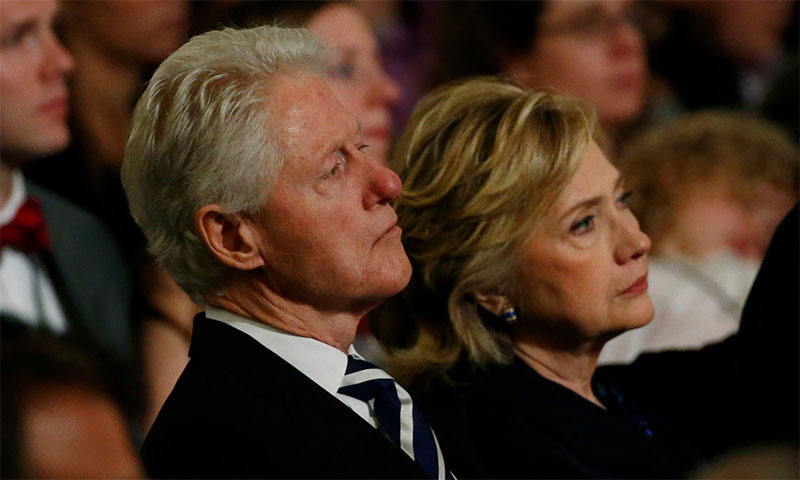
Clintons Face Possible Contempt Charges as Republicans Escalate Epstein Investigation
A key US congressional committee is preparing to vote on whether to move toward contempt of Congress proceedings against Bill Clinton and Hillary Clinton, escalating a highly partisan clash tied to the long-running investigation into disgraced financier Jeffrey Epstein. The Republican-controlled House Oversight Committee is set to consider two resolutions accusing the former president and former secretary of state of defying subpoenas by refusing to appear in person before lawmakers. The panel is probing how US authorities handled earlier investigations into Epstein before his arrest and death in federal custody in 2019. If the resolutions pass, the matter will be sent to the full US House of Representatives, where Republicans also hold a majority. The House would then decide whether to formally cite the Clintons for contempt and refer the case to the Justice Department for possible criminal action. The move highlights how the Epstein scandal continues to reverberate through Washington, ensnaring powerful political figures and fueling bitter partisan confrontations. Lawmakers say they are seeking accountability over the handling of Epstein’s past cases, while Democrats argue the inquiry has been turned into a political weapon. Epstein died in jail while awaiting trial on federal sex-trafficking charges, a death that authorities later ruled a suicide. He had spent years moving among elite social and political circles, forging relationships with influential business leaders, academics, and politicians. The Clintons have pushed back forcefully, arguing the investigation is designed to damage political rivals of President Donald Trump, rather than to pursue legitimate oversight. They note that Trump — who had a long-documented social association with Epstein — has not been summoned to testify. Democrats have also accused the Trump administration of dragging its feet on releasing Epstein-related records, alleging that only a limited portion of legally required files has been made public. Neither the Clintons nor Trump has been charged with any crime related to Epstein. Republicans, however, say the Clintons’ past interactions with Epstein warrant direct questioning under oath. They point in particular to Bill Clinton’s use of Epstein’s private jet during international travel in the early 2000s. The contempt effort gained momentum after Oversight Committee Chairman James Comer rejected a late proposal from Bill Clinton’s legal team to provide testimony under more limited conditions in New York. Comer said the offer would have restricted questioning to a single lawmaker, excluded other committee members, and produced no official transcript — conditions he said violated long-standing congressional procedures. “I have rejected the Clintons’ ridiculous offer,” Comer said, accusing the former first couple of seeking special treatment. Representatives for the Clintons dispute that account, saying they never objected to testifying under oath or on the record. In letters declining to comply with the subpoenas, they argue the requests are invalid because they fail to demonstrate a clear legislative purpose, as required under congressional rules.
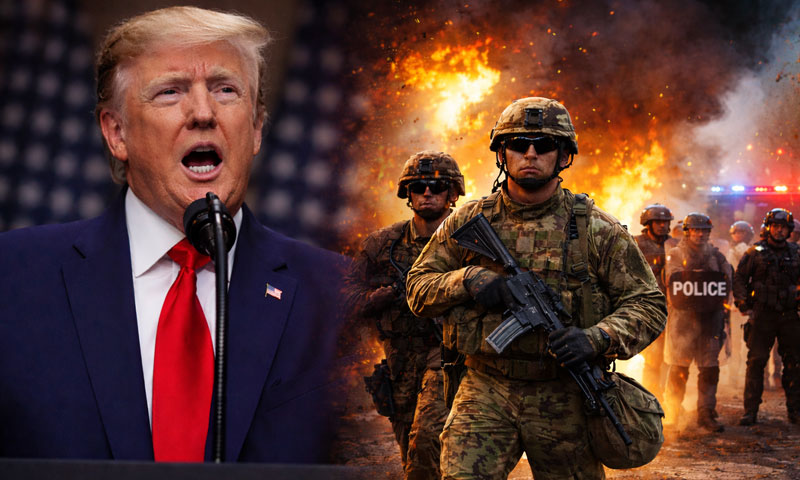
Trump Warns Protesters With the Military — How Often Has a US President Done This Before?
President Donald Trump has again ignited controversy after warning that he could deploy the US military to deal with protests in Minnesota targeting Immigration and Customs Enforcement (ICE). The remarks, made amid escalating demonstrations, revive a question that has followed Trump throughout his political career: how often has he threatened to use force against Americans—and how unusual is this in US history? Trump’s latest warning centres on the Insurrection Act, a centuries-old statute that allows a sitting president to deploy federal troops inside the United States to suppress rebellion or enforce federal law when state authorities are deemed unable or unwilling to act. Trump’s Record: Repeated Threats, Rare Use During his first term, Trump repeatedly raised the prospect of military intervention against domestic unrest. In 2020, amid nationwide protests following the killing of George Floyd, Trump publicly urged governors to “dominate the streets” and said he was prepared to invoke the Insurrection Act if states failed to restore order. Although active-duty troops were placed on standby near Washington, the Act was never formally invoked. Since returning to office, Trump has again turned to similar rhetoric. Protests linked to immigration enforcement, federal policing, and internal security have prompted warnings that federal troops could be deployed if local authorities resist or fail to act. The Minnesota protests represent the latest instance where Trump has threatened military involvement without yet taking the formal legal step required to do so. Legal scholars note that while Trump has frequently discussed the Insurrection Act, no US president has invoked it primarily to suppress political protest without state consent in modern times. When Other Presidents Actually Used Force Historically, US presidents have used military force domestically—but usually under narrow circumstances. George H. W. Bush invoked the Insurrection Act in 1992 at the request of California’s governor during the Los Angeles riots following the Rodney King verdict. Federal troops were deployed after local authorities were overwhelmed. During the civil rights era, Dwight D. Eisenhower, John F. Kennedy, and Lyndon B. Johnson used federal troops or nationalised the National Guard to enforce court-ordered desegregation and protect Black Americans from violent resistance. These actions were framed as enforcement of constitutional rights rather than suppression of dissent. Earlier presidents, including Abraham Lincoln, also used military power internally during periods of rebellion or civil war, but those cases predate modern democratic norms and legal safeguards. What Makes Trump Different What distinguishes Trump from many of his predecessors is not actual deployment, but the frequency and public nature of his threats. Experts argue that repeatedly raising the prospect of military force against civilians—even without invoking it—can have a chilling effect on democratic protest and civil liberties. Unlike past presidents who acted after state requests or court orders, Trump’s warnings have often come in direct response to political demonstrations against federal policy. This has prompted concerns from constitutional scholars and civil rights groups about the normalisation of military rhetoric in domestic governance. A Pattern, Not an Isolated Moment Trump’s Minnesota remarks do not stand alone. They reflect a broader pattern in which military force is positioned as a solution to internal political dissent. While the Insurrection Act remains unused—for now—the repeated threats themselves mark a significant shift in how presidential power is discussed in public life. As protests continue, the central question remains whether such warnings will remain rhetorical—or whether the United States could once again see troops deployed on its own streets.

Meta Appoints Former Trump Adviser Dina Powell McCormick as President and Vice Chairman
US technology giant Meta has announced a major leadership appointment, naming Dina Powell McCormick as its new President and Vice Chairman, marking a significant expansion of her role within the company. In an official statement released on Monday, Meta said Powell McCormick will join its senior management team after previously serving on the company’s board of directors. The move comes as Meta intensifies its long-term focus on advanced artificial intelligence, large-scale computing infrastructure, and what it describes as the pursuit of “personal superintelligence.” Meta founder and CEO Mark Zuckerberg said Powell McCormick’s global experience and policy background make her a strong fit for the company’s next phase. “Dina’s leadership experience, combined with her deep relationships across governments, finance, and international institutions, positions her uniquely to help guide Meta’s strategy as we scale our most ambitious technologies,” Zuckerberg said. In her new role, Powell McCormick will help shape Meta’s overall strategic direction and oversee execution at the highest level. She will also work closely with teams responsible for compute capacity and infrastructure — areas that have become central to Meta’s AI ambitions. The company added that she will lead efforts to secure new strategic capital partnerships and explore innovative funding models aimed at expanding Meta’s long-term investment capabilities. The appointment drew a public reaction from US President Donald Trump, who congratulated Powell McCormick in a post on his social media platform Truth Social. Calling the decision “a great choice,” Trump praised her past service, saying she had represented his administration “with strength and distinction.” Powell McCormick previously served as deputy national security adviser during Trump’s first term. Earlier in her career, she held senior roles in the George W. Bush administration, including assistant secretary of state and senior White House adviser, building a long résumé spanning diplomacy, national security, and global finance. She stepped down from Meta’s board in December 2025, a move that fueled speculation about a broader operational role — speculation now confirmed with her elevation to one of the company’s top leadership positions. Her appointment underscores Meta’s growing emphasis on blending political, financial, and technological expertise as it positions itself at the forefront of the next wave of artificial intelligence development.
