


The United States will make its visa bond programme permanent from August 3, allowing consular officers to demand up to $20,000 from certain business and tourist visa applicants. The State Department rule covers nationals of 50 countries, including Bangladesh, Nepal and Bhutan. Thirty listed countries are in Africa. It applies only to B-1 and B-2 visas for temporary business or tourism travel. Read More: Saudi Arabia Introduces One-Stop Tourist Visa for Seven Countries “Consular officers may require covered nonimmigrant visa applicants to post a bond of up to $20,000 as a condition of visa issuance, as determined by the consular officers,” the Federal Register notice said. New Rule Raises Maximum Bond The programme began as a 12-month pilot in August 2025. Officers could set bonds at $5,000, $10,000 or $15,000. The permanent rule removes the $5,000 option. Officers may now require $10,000, $15,000 or $20,000 after considering each applicant’s circumstances. “The 2025 visa bond pilot, which provided a framework for the Department of State, the Department of Homeland Security, and the Department of the Treasury to assess the feasibility of administering a visa bond program, has provided sufficient data to suggest that a visa bond program is an effective tool for enforcing compliance among bonded visa holders.” Applicants must pay electronically through the US Treasury’s authorised platform after a consular officer gives instructions. A third party may provide the money, but payment does not guarantee approval. Read More: Immigrant Visas on Hold: What the US Visa Pause Means for Pakistan and Other Countries The government will return the bond when a holder leaves on time, does not travel before the visa expires, or is denied entry. Authorities may forfeit it after a serious breach. Some reports suggested broader effects on students and workers. However, the regulation covers only B-1/B-2 applicants and does not directly apply to F student or H employment visas. US Cites Sharp Fall in Overstays US officials say the programme aims to reduce overstays and improve cooperation on identity checks, information sharing and travel-document security. The 50 countries recorded 45,488 overstays in fiscal year 2024, according to the notice. During the pilot’s first 10 months, covered travellers recorded fewer than 50. About 20,000 applications required a bond, far above the government’s initial estimate of 2,000. Close to half paid, temporarily placing about $115 million with the government. Visa issuance from listed countries fell 83% compared with the same 10-month period a year earlier. Nearly half of affected applicants chose not to pay. Read More: US Judge Blocks Trump’s $100,000 H-1B Visa Fee in Major Legal Defeat Immigration advocates argue that high bonds could discourage legitimate travel and place an unequal burden on applicants from poorer countries. The State Department describes the programme as an effective compliance and diplomatic tool. The country list may change. Washington must generally announce additions at least 15 days before implementation, while removals can take effect immediately.
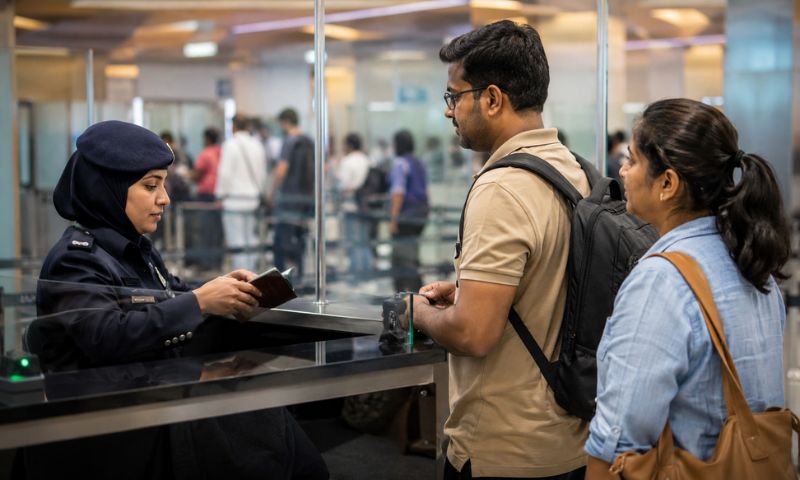
Qatar Cuts Residency Grace Period to 14 Days, Expats Face Daily Fines
Qatar has reduced the grace period for expatriates whose residence permits are cancelled. Affected residents now have only 14 days to leave the country before penalties begin to apply. The announcement came from Captain Ali Ahmed Ali Al Kuwari of the Airport Passports Department during a webinar on safe travel procedures. The Ministry of Interior’s Public Relations Department organised the event. Al Kuwari confirmed that authorities have shortened the post-cancellation grace period. “Earlier it was 30 days, but currently it is two weeks,” Al Kuwari said. The change affects thousands of expatriates who may need time to settle personal matters, complete employment transitions or arrange departure plans after their residence permits are cancelled. Officials warned that anyone who remains in Qatar after the 14-day deadline will face financial penalties. “He added that individuals who remain in the country beyond the 14-day period would be subject to a fine of QR10 per day.” The move comes as Qatar continues to modernise immigration services and tighten compliance with residency regulations. Authorities have increasingly shifted visa and residency procedures to digital platforms in recent years. Visitors Face Much Higher Overstay Penalties Al Kuwari also reminded visitors to check the duration of stay shown on their visa stamps before travelling. He stressed that visit visa holders face much heavier penalties if they overstay. “He noted that overstaying a visit visa carries a penalty of QR200 per day.” The official urged residents and visitors to review their status through the Metrash mobile application before travelling. Users can check visa validity, traffic fines, overstay penalties and other outstanding dues through the platform. Metrash has become one of Qatar’s most important digital government services. The application allows residents to access immigration, residency and passport-related services without visiting government offices. Al Kuwari also encouraged travellers to use electronic gates at Hamad International Airport to speed up immigration procedures. The Airport Passports Department operates 76 e-gates across arrival and departure terminals. The system helps reduce waiting times and improve passenger flow at one of the region’s busiest airports. Newborn Residency Requirements Highlighted During the webinar, Al Kuwari also outlined residency procedures for newborn children. He said residents must report births through passport authorities and obtain the necessary documentation for residency processing. The official said a child born in Qatar must obtain a residence permit under the father’s sponsorship. Parents must first secure the required documents from the relevant embassy. “Without a residence permit, a newborn would not be able to re-enter Qatar after leaving the country,” he said. The latest guidance highlights the importance of complying with immigration deadlines and residency requirements. Authorities continue to encourage residents to use digital platforms to manage travel and residency matters efficiently.
