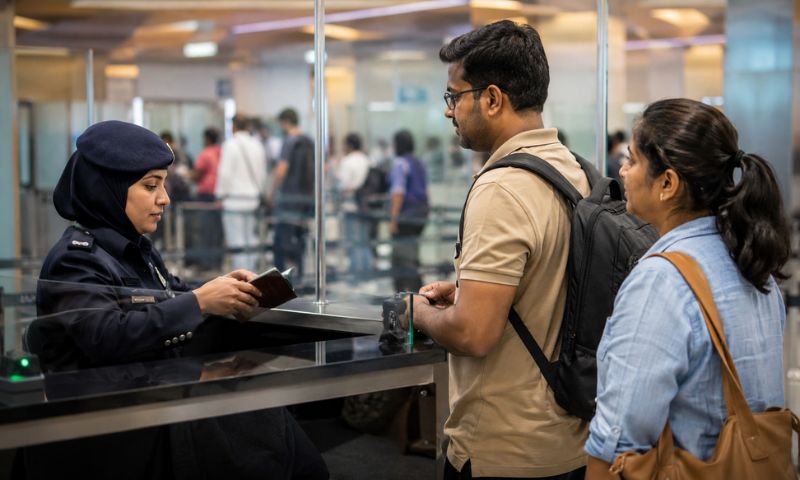
Qatar has reduced the grace period for expatriates whose residence permits are cancelled. Affected residents now have only 14 days to leave the country before penalties begin to apply.
The announcement came from Captain Ali Ahmed Ali Al Kuwari of the Airport Passports Department during a webinar on safe travel procedures. The Ministry of Interior’s Public Relations Department organised the event.
Al Kuwari confirmed that authorities have shortened the post-cancellation grace period.
“Earlier it was 30 days, but currently it is two weeks,” Al Kuwari said.
The change affects thousands of expatriates who may need time to settle personal matters, complete employment transitions or arrange departure plans after their residence permits are cancelled.
Officials warned that anyone who remains in Qatar after the 14-day deadline will face financial penalties.
“He added that individuals who remain in the country beyond the 14-day period would be subject to a fine of QR10 per day.”
The move comes as Qatar continues to modernise immigration services and tighten compliance with residency regulations. Authorities have increasingly shifted visa and residency procedures to digital platforms in recent years.
Visitors Face Much Higher Overstay Penalties
Al Kuwari also reminded visitors to check the duration of stay shown on their visa stamps before travelling.
He stressed that visit visa holders face much heavier penalties if they overstay.
“He noted that overstaying a visit visa carries a penalty of QR200 per day.”
The official urged residents and visitors to review their status through the Metrash mobile application before travelling. Users can check visa validity, traffic fines, overstay penalties and other outstanding dues through the platform.
Metrash has become one of Qatar’s most important digital government services. The application allows residents to access immigration, residency and passport-related services without visiting government offices.
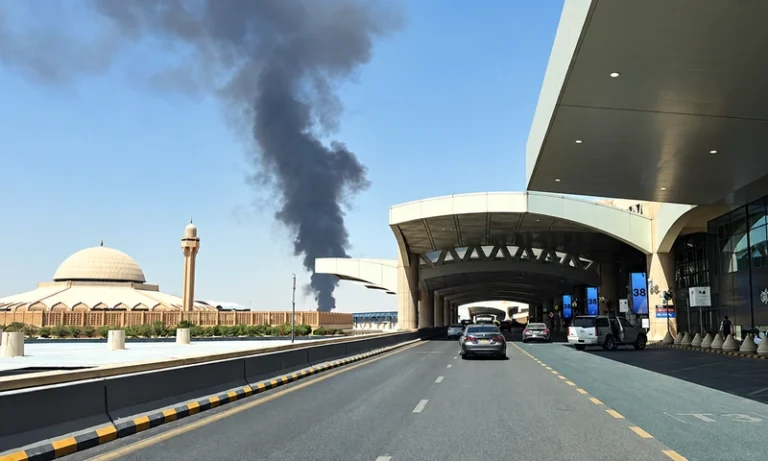
Al Kuwari also encouraged travellers to use electronic gates at Hamad International Airport to speed up immigration procedures.
The Airport Passports Department operates 76 e-gates across arrival and departure terminals. The system helps reduce waiting times and improve passenger flow at one of the region’s busiest airports.
Newborn Residency Requirements Highlighted
During the webinar, Al Kuwari also outlined residency procedures for newborn children.
He said residents must report births through passport authorities and obtain the necessary documentation for residency processing.
The official said a child born in Qatar must obtain a residence permit under the father’s sponsorship. Parents must first secure the required documents from the relevant embassy.
“Without a residence permit, a newborn would not be able to re-enter Qatar after leaving the country,” he said.
The latest guidance highlights the importance of complying with immigration deadlines and residency requirements. Authorities continue to encourage residents to use digital platforms to manage travel and residency matters efficiently.