

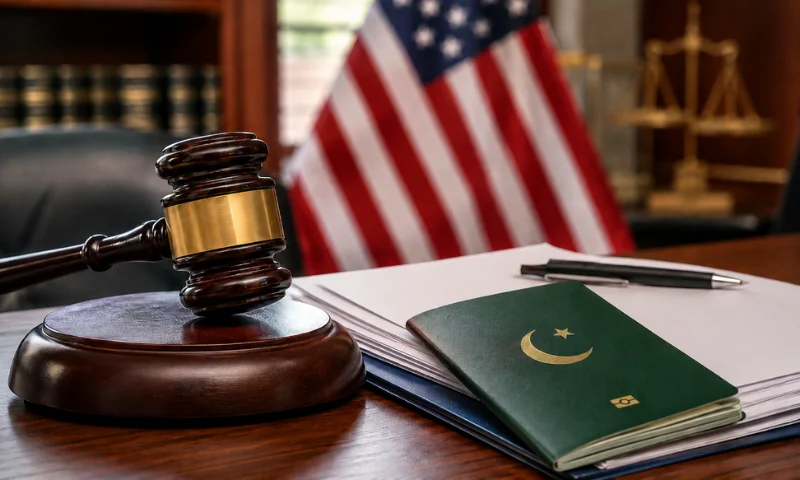
A US federal judge has struck down a Trump administration policy that suspended immigrant visa issuance for nationals of 75 countries, including Pakistan. US District Judge Jeannette Vargas in Manhattan ruled on Friday that the State Department policy exceeded Secretary of State Marco Rubio’s legal authority. She called the policy “patently unlawful” and said it violated federal immigration law. The decision targets a State Department suspension that took effect on January 21, 2026. The measure had blocked immigrant visa issuance for Pakistanis and nationals of 74 other countries. Importantly, the policy concerned immigrant visas. It was separate from restrictions covering some non-immigrant visa categories. Judge Rejects Nationality-Based Visa Freeze Vargas said federal law limits the secretary of state’s authority over how consular officers process individual immigrant visa applications. “The Policy, which categorically prohibits the issuance of immigrant visas based upon the nationality of the applicant, represents a direct abrogation of this statutory scheme,” she wrote. The court also set aside visa denials based solely on the 75-country policy. This clears the way for affected applications to return to individual assessment under existing immigration law. Read More: Visa and Mastercard May Face New Challenge From PayPak The State Department introduced the suspension as part of a review of screening and vetting policies. It said nationals of the selected countries were “at a high risk for becoming a public charge and recourse to local, state and federal government resources in the United States.” The department had not immediately commented on Friday’s ruling. Pakistan Among 75 Countries Affected Pakistan appeared on the State Department’s official list alongside Bangladesh and several other Asian countries. The suspension also covered Brazil, Colombia and Uruguay in Latin America. Albania and Bosnia and Herzegovina were among the affected Balkan states. Many countries across Africa, the Middle East and the Caribbean also appeared on the list. Read More: New US Visa Bond Targets 50 Countries: Is Pakistan on the List? The policy created uncertainty for people seeking permanent residence through family and employment-based immigration routes. Vargas, who former President Joe Biden appointed to the federal bench, issued the decision in a lawsuit challenging the suspension. Catholic Legal Immigration Network and African Communities Together brought the case with affected applicants. US citizens sponsoring relatives from designated countries also joined the legal challenge. Ruling Comes Amid Wider Immigration Crackdown The visa suspension formed part of President Donald Trump’s wider immigration crackdown. Trump has defended tougher immigration controls as necessary to improve domestic security and protect US resources. Read More: Italian Embassy Shares Key Update for Pakistan Visa Applicants Immigrant rights organisations have challenged several administration measures in court. They argue that parts of the crackdown violate free speech and due process protections. Rights groups have also raised concerns about racial profiling and the impact of tougher enforcement on ethnic minority communities. For Pakistani applicants, the ruling removes the blanket nationality-based suspension at issue in this case. Applicants will still need to meet normal US immigration requirements and any other applicable restrictions before receiving an immigrant visa.
New US Visa Bond Targets 50 Countries: Is Pakistan on the List?
The United States will make its visa bond programme permanent from August 3, allowing consular officers to demand up to $20,000 from certain business and tourist visa applicants. The State Department rule covers nationals of 50 countries, including Bangladesh, Nepal and Bhutan. Thirty listed countries are in Africa. It applies only to B-1 and B-2 visas for temporary business or tourism travel. Read More: Saudi Arabia Introduces One-Stop Tourist Visa for Seven Countries “Consular officers may require covered nonimmigrant visa applicants to post a bond of up to $20,000 as a condition of visa issuance, as determined by the consular officers,” the Federal Register notice said. New Rule Raises Maximum Bond The programme began as a 12-month pilot in August 2025. Officers could set bonds at $5,000, $10,000 or $15,000. The permanent rule removes the $5,000 option. Officers may now require $10,000, $15,000 or $20,000 after considering each applicant’s circumstances. “The 2025 visa bond pilot, which provided a framework for the Department of State, the Department of Homeland Security, and the Department of the Treasury to assess the feasibility of administering a visa bond program, has provided sufficient data to suggest that a visa bond program is an effective tool for enforcing compliance among bonded visa holders.” Applicants must pay electronically through the US Treasury’s authorised platform after a consular officer gives instructions. A third party may provide the money, but payment does not guarantee approval. Read More: Immigrant Visas on Hold: What the US Visa Pause Means for Pakistan and Other Countries The government will return the bond when a holder leaves on time, does not travel before the visa expires, or is denied entry. Authorities may forfeit it after a serious breach. Some reports suggested broader effects on students and workers. However, the regulation covers only B-1/B-2 applicants and does not directly apply to F student or H employment visas. US Cites Sharp Fall in Overstays US officials say the programme aims to reduce overstays and improve cooperation on identity checks, information sharing and travel-document security. The 50 countries recorded 45,488 overstays in fiscal year 2024, according to the notice. During the pilot’s first 10 months, covered travellers recorded fewer than 50. About 20,000 applications required a bond, far above the government’s initial estimate of 2,000. Close to half paid, temporarily placing about $115 million with the government. Visa issuance from listed countries fell 83% compared with the same 10-month period a year earlier. Nearly half of affected applicants chose not to pay. Read More: US Judge Blocks Trump’s $100,000 H-1B Visa Fee in Major Legal Defeat Immigration advocates argue that high bonds could discourage legitimate travel and place an unequal burden on applicants from poorer countries. The State Department describes the programme as an effective compliance and diplomatic tool. The country list may change. Washington must generally announce additions at least 15 days before implementation, while removals can take effect immediately.
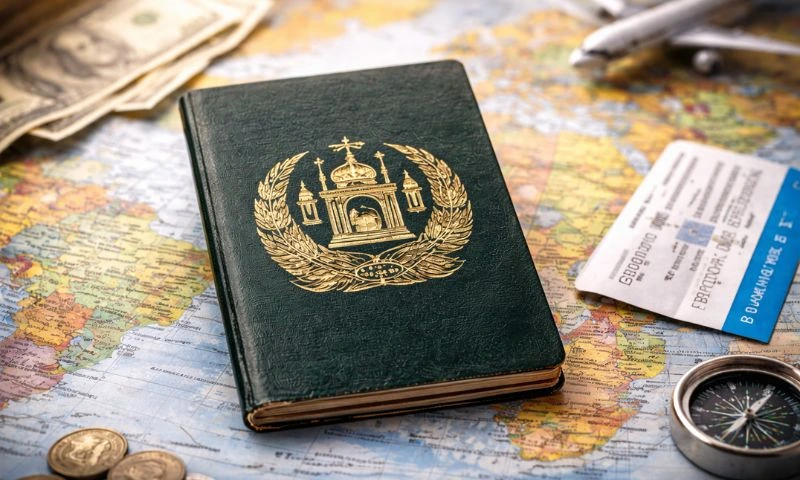
How Diplomatic Isolation Keeps Afghanistan’s Passport Weak
Afghanistan continues to hold the title of the world’s weakest passport in the February 2026 Henley Passport Index, underscoring the severe travel limitations its citizens face. The latest report reveals Afghan passport holders can enter only 24 destinations without securing a visa before their trip. The Henley Passport Index ranks passports based on the number of destinations holders can visit without a pre-arranged visa, using exclusive travel data from the International Air Transport Association (IATA). The index covers passports from around 199 countries and territories. Afghan nationals sit at 101st place, behind all other countries in the index. This ranking is the lowest in the world for 2026, leaving Afghan travellers with severely restricted mobility compared with citizens of other nations. Despite this limited access, Afghan passport holders are still able to travel without a prior visa to a few destinations. The list includes small island countries and select nations in Africa and Asia. Visa-free access is available to the Cook Islands, Dominica, Haiti, and Micronesia. Countries offering visa on arrival or simplified electronic travel authorisation include Bangladesh, Cambodia, Maldives, Rwanda, Kenya, Sri Lanka, and Seychelles. Travel freedom varies greatly around the globe. In stark contrast to Afghanistan, countries such as Singapore, Japan, and South Korea top the 2026 rankings with access to nearly 190 or more destinations without a prior visa. Singapore remains the most powerful passport, granting its holders entry to over 190 countries. Regional neighbours also illustrate the gap in mobility. Pakistan manages to rank slightly higher with access to around 31 countries, while Bangladesh improved slightly to offer visa-free or visa-on-arrival access to 37 destinations. India, meanwhile, advanced in some reports to reach the 75th position, granting access to about 55 destinations. Experts say weak passport rankings often reflect diplomatic isolation, internal conflict, economic instability, and limited bilateral agreements. Countries facing prolonged unrest struggle to secure reciprocal travel arrangements and suffer restricted international engagement. For Afghan citizens, the consequences are real. Limited visa-free access affects millions seeking opportunities for education, work, family visits, or urgent travel abroad. With only 24 destinations accessible without pre-travel visa procedures, Afghanistan’s low ranking on the Henley Passport Index highlights a stark inequality in global movement rights.
