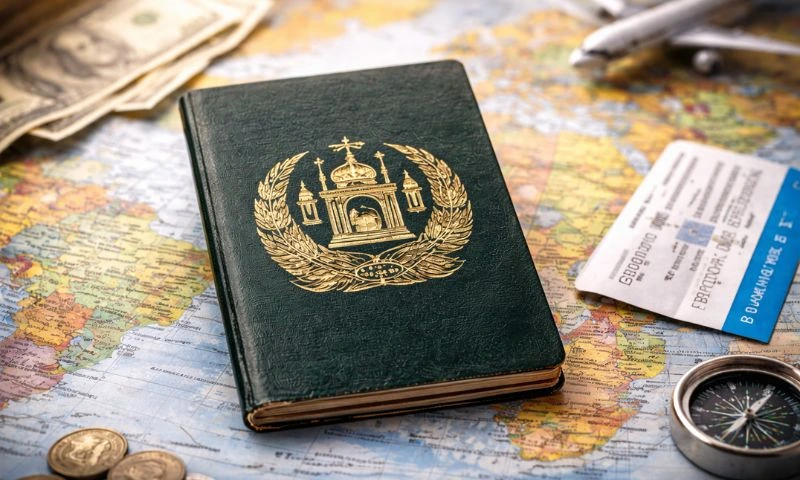
Afghanistan continues to hold the title of the world’s weakest passport in the February 2026 Henley Passport Index, underscoring the severe travel limitations its citizens face. The latest report reveals Afghan passport holders can enter only 24 destinations without securing a visa before their trip.
The Henley Passport Index ranks passports based on the number of destinations holders can visit without a pre-arranged visa, using exclusive travel data from the International Air Transport Association (IATA). The index covers passports from around 199 countries and territories.
Afghan nationals sit at 101st place, behind all other countries in the index. This ranking is the lowest in the world for 2026, leaving Afghan travellers with severely restricted mobility compared with citizens of other nations.
Despite this limited access, Afghan passport holders are still able to travel without a prior visa to a few destinations. The list includes small island countries and select nations in Africa and Asia. Visa-free access is available to the Cook Islands, Dominica, Haiti, and Micronesia. Countries offering visa on arrival or simplified electronic travel authorisation include Bangladesh, Cambodia, Maldives, Rwanda, Kenya, Sri Lanka, and Seychelles.
Travel freedom varies greatly around the globe. In stark contrast to Afghanistan, countries such as Singapore, Japan, and South Korea top the 2026 rankings with access to nearly 190 or more destinations without a prior visa. Singapore remains the most powerful passport, granting its holders entry to over 190 countries.
Regional neighbours also illustrate the gap in mobility. Pakistan manages to rank slightly higher with access to around 31 countries, while Bangladesh improved slightly to offer visa-free or visa-on-arrival access to 37 destinations. India, meanwhile, advanced in some reports to reach the 75th position, granting access to about 55 destinations.
Experts say weak passport rankings often reflect diplomatic isolation, internal conflict, economic instability, and limited bilateral agreements. Countries facing prolonged unrest struggle to secure reciprocal travel arrangements and suffer restricted international engagement.
For Afghan citizens, the consequences are real. Limited visa-free access affects millions seeking opportunities for education, work, family visits, or urgent travel abroad. With only 24 destinations accessible without pre-travel visa procedures, Afghanistan’s low ranking on the Henley Passport Index highlights a stark inequality in global movement rights.