

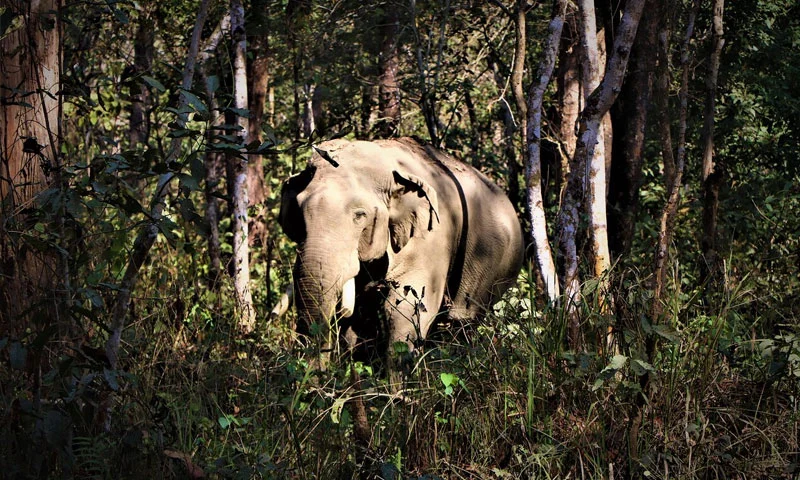
A Nepalese family that moved to escape a notorious wild elephant has suffered another devastating tragedy. Authorities say the same animal found them more than a decade later and killed two more relatives. The latest attack took place in Jagatpur, near Chitwan National Park. A wild elephant entered a home late Saturday night and killed 25-year-old Ashika Bote and her four-year-old son, Bharat Bote. The elephant, known as Dhurbe, has allegedly killed at least 25 people over the past two decades. The tragedy marks the second time the same family has lost loved ones to Dhurbe. In 2012, Shanichara Bote’s parents, Budhiram and Jharali, died after the elephant attacked them near Baruwa Bazaar in Madi. Fearing more attacks, Shanichara sold his property. He crossed the Rapti River and moved his family to Jagatpur, hoping the distance would protect them. Speaking to the Kathmandu Post, Shanichara described the family’s heartbreak. “We originally lived at Dropatinagar in the Madi area, but the constant terror of wild elephants forced us to sell what we had and migrate to Jagatpur,” he said. “We believed that moving across the major rivers would keep us safe. But after all these years, the exact same elephant found us again, raided our home, and took my daughter-in-law and my little grandson. There is nowhere left for us to run.” Dhurbe linked to at least 25 deaths Wildlife officials describe Dhurbe as one of Nepal’s most dangerous elephants. The aggressive male has wandered around Chitwan National Park for years. It frequently enters nearby villages in search of food. Authorities fitted the elephant with a satellite tracking collar to monitor its movements and reduce future attacks. A conservation official at Chitwan National Park said, “We have been utilising a satellite tracking collar to monitor the movements of this highly aggressive male elephant.” “Prior to this tragic incident, Dhurbe had officially claimed 23 human lives. With these two latest casualties in Jagatpur, the confirmed number of fatalities attributed to this single elephant has now risen to 25.” The elephant has become so notorious that it even has its own Wikipedia page documenting years of attacks. Human wildlife conflict remains a growing challenge Experts say Dhurbe’s behaviour reflects the growing conflict between people and wildlife across Nepal. Male elephants often leave or are driven away from their maternal herds as they mature. Many begin living alone. They frequently enter farmland and villages as shrinking forests overlap with expanding human settlements. Wild elephant attacks occur regularly in Nepal and India. However, conservationists say Shanichara Bote’s case is exceptionally rare. The same elephant allegedly killed four members of one family despite their relocation 14 years earlier. The latest tragedy has renewed calls for stronger safety measures around Chitwan National Park. Experts want better tracking systems, improved early warning networks and stronger protection for nearby communities. They also say balancing wildlife conservation with public safety remains one of Nepal’s biggest environmental challenges.
Why Conservationists Are Alarmed After Flamingos Reappeared at Rawal Lake
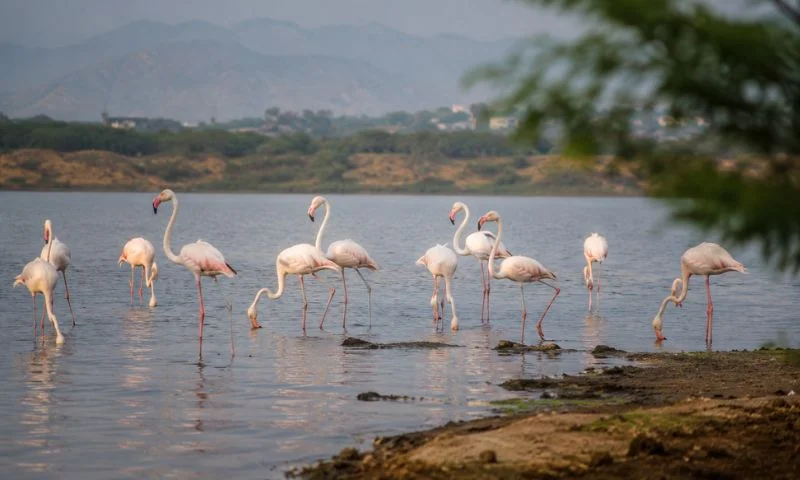
The return of flamingos to Rawal Lake after a prolonged absence has excited birdwatchers and conservationists, but reports of suspected poaching have quickly overshadowed what many considered a positive sign for the region’s fragile ecosystem. According to initial reports, a small flock of around 12 to 13 flamingos recently appeared at Rawal Lake, one of Islamabad’s most important freshwater reservoirs and a seasonal refuge for migratory birds. Wildlife experts viewed the sighting as encouraging because flamingo visits to the lake have become increasingly rare in recent years. Their return had raised hopes that environmental conditions around the water body remained suitable for migratory species travelling through South Asia’s major flyways. However, those hopes suffered a setback after reports emerged that suspected poachers may have targeted the birds shortly after their arrival. Authorities believe several flamingos may have been killed, although officials have not yet confirmed the exact number. Investigators are also examining allegations that local individuals could have participated in the hunting activity. The incident has drawn widespread concern among environmental groups and wildlife enthusiasts, who have repeatedly called for stronger protection of migratory birds across Pakistan. Wildlife Authorities Launch Investigation The Islamabad Wildlife Management Board has taken immediate notice of the reports and launched a formal inquiry into the incident. Officials are collecting evidence from Rawal Lake and nearby areas. They are also coordinating with local police to identify suspects and support any legal proceedings that may follow. Authorities have not released details about possible arrests. However, officials say they will pursue strict legal action if investigators confirm the allegations. Wildlife officials described the incident as highly concerning because flamingo populations depend on safe stopover sites during migration. Rawal Lake and surrounding wetlands provide important habitats for dozens of migratory bird species that travel thousands of kilometres between breeding and wintering grounds. Pakistan sits along the Central Asian Flyway, one of the world’s major migratory bird routes. Every year, millions of birds pass through the country on their seasonal journeys between Central Asia, Siberia and warmer regions further south. Environmental experts say illegal hunting, habitat degradation and pollution continue to threaten many migratory species across the region. Conservation Concerns Grow Conservationists argue that even the loss of a small group of flamingos could affect efforts to encourage the return of sensitive bird populations to urban wetlands. The Islamabad Wildlife Management Board has not yet issued final findings. Investigators continue to examine the circumstances surrounding the reported killings. Wildlife officials stressed that the presence of flamingos at Rawal Lake remains ecologically significant. Their return often indicates the availability of food sources and suitable wetland conditions. Environmental groups have urged authorities to strengthen monitoring around protected habitats and increase public awareness about wildlife protection laws. The investigation remains ongoing, and officials say they will hold any violators accountable under existing wildlife regulations. For conservationists, the incident serves as a reminder that protecting migratory birds requires constant vigilance. The return of flamingos offered a rare moment of optimism, but the suspected poaching case now threatens to turn that success into another setback for Pakistan’s wildlife conservation efforts.
