A Nepalese family that moved to escape a notorious wild elephant has suffered another devastating tragedy. Authorities say the same animal found them more than a decade later and killed two more relatives.
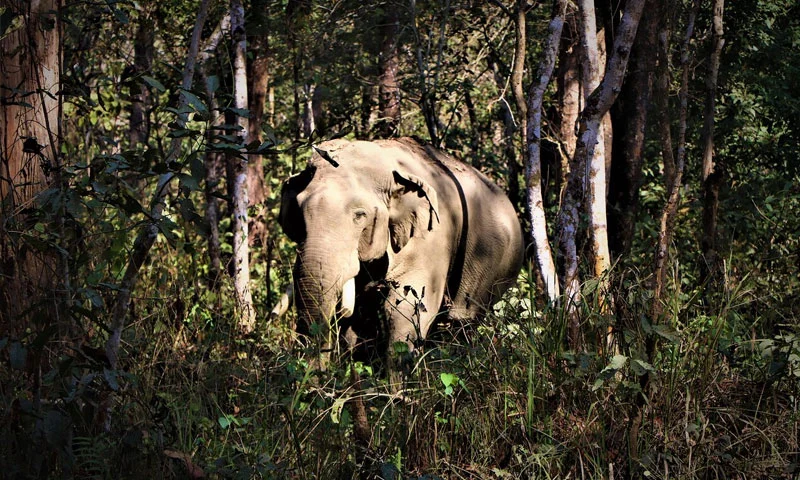
The latest attack took place in Jagatpur, near Chitwan National Park. A wild elephant entered a home late Saturday night and killed 25-year-old Ashika Bote and her four-year-old son, Bharat Bote. The elephant, known as Dhurbe, has allegedly killed at least 25 people over the past two decades.
The tragedy marks the second time the same family has lost loved ones to Dhurbe.
In 2012, Shanichara Bote’s parents, Budhiram and Jharali, died after the elephant attacked them near Baruwa Bazaar in Madi. Fearing more attacks, Shanichara sold his property. He crossed the Rapti River and moved his family to Jagatpur, hoping the distance would protect them.
Speaking to the Kathmandu Post, Shanichara described the family’s heartbreak.
“We originally lived at Dropatinagar in the Madi area, but the constant terror of wild elephants forced us to sell what we had and migrate to Jagatpur,” he said.
“We believed that moving across the major rivers would keep us safe. But after all these years, the exact same elephant found us again, raided our home, and took my daughter-in-law and my little grandson. There is nowhere left for us to run.”
Dhurbe linked to at least 25 deaths
Wildlife officials describe Dhurbe as one of Nepal’s most dangerous elephants.
The aggressive male has wandered around Chitwan National Park for years. It frequently enters nearby villages in search of food. Authorities fitted the elephant with a satellite tracking collar to monitor its movements and reduce future attacks.
A conservation official at Chitwan National Park said, “We have been utilising a satellite tracking collar to monitor the movements of this highly aggressive male elephant.”
“Prior to this tragic incident, Dhurbe had officially claimed 23 human lives. With these two latest casualties in Jagatpur, the confirmed number of fatalities attributed to this single elephant has now risen to 25.”
The elephant has become so notorious that it even has its own Wikipedia page documenting years of attacks.
Human wildlife conflict remains a growing challenge
Experts say Dhurbe’s behaviour reflects the growing conflict between people and wildlife across Nepal.
Male elephants often leave or are driven away from their maternal herds as they mature. Many begin living alone. They frequently enter farmland and villages as shrinking forests overlap with expanding human settlements.
Wild elephant attacks occur regularly in Nepal and India. However, conservationists say Shanichara Bote’s case is exceptionally rare. The same elephant allegedly killed four members of one family despite their relocation 14 years earlier.
The latest tragedy has renewed calls for stronger safety measures around Chitwan National Park. Experts want better tracking systems, improved early warning networks and stronger protection for nearby communities.
They also say balancing wildlife conservation with public safety remains one of Nepal’s biggest environmental challenges.