

The World Bank has approved $375.9 million for Pakistan’s Grid Stability Enhancement Project. The funding launches the first phase of the Boosting Energy Security through Transmission in Pakistan (BEST-PAK) programme. The initiative will run for 10 years. It aims to modernise Pakistan’s electricity transmission system, cut power outages and improve energy security. The World Bank says Pakistan’s ageing transmission network struggles with grid instability and congestion. These problems disrupt electricity supplies, increase costs and prevent the country from using available renewable energy. “Pakistan’s energy challenges are deeply interconnected with its broader economic stability,” World Bank Country Director for Pakistan Bolormaa Amgaabazar said. “By investing in advanced technologies for more resilient transmission infrastructure, this project will contribute to reducing electricity costs, bringing more renewable energy onto the grid, and laying the groundwork for a power sector that works better for households, businesses and industries, as well as overall Pakistan’s economy,” she added. Project will unlock more renewable energy The project will strengthen electricity flow across the national grid. It will install Static Synchronous Compensators (STATCOMs) at three major 500 kV substations. Engineers will also add fixed reactors and capacitor banks at 26 grid substations. These upgrades will allow Pakistan to connect 640 megawatts of wind energy that currently cannot reach the national grid. The project will also enable full use of 1,840 MW of wind generation capacity in southern Pakistan. In addition, the improved network will support nearly 491 MW of private sector renewable energy projects. The World Bank said these investments will help Pakistan move closer to its target of generating 60 percent of electricity from renewable sources by 2030. The organisation estimates the project will prevent about 832,500 tonnes of carbon dioxide emissions each year. Over 25 years, avoided emissions could exceed 20.8 million tonnes. Grid reforms and climate resilience The programme also supports the government’s reform of the National Transmission and Dispatch Company (NTDC). Officials plan to split the utility into specialised successor companies to improve governance, efficiency and accountability. World Bank Lead Energy Specialist Waleed Saleh Alsuraih said reliable transmission remains critical for Pakistan’s energy future. “A reliable and modern transmission grid was essential for Pakistan’s energy future,” he said. “As the first phase of the BEST-PAK programme, it unlocks a pathway to large-scale clean energy deployment, stronger energy security, and a modern, commercially oriented transmission sector through targeted infrastructure investments and institutional reforms, creating the conditions for future private capital participation.” The project also prepares Pakistan’s power system for climate change. Engineers will place new installations on elevated platforms to reduce flood risks. They will also install equipment that can operate in temperatures as high as 55°C. The World Bank believes these improvements will strengthen Pakistan’s electricity network, improve service reliability and support long-term economic growth while expanding the country’s clean energy capacity.
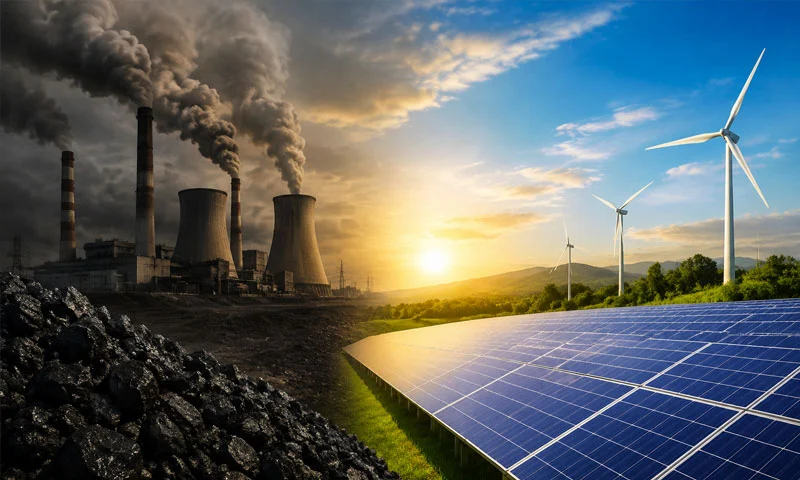
The World Has Finally Chosen Solar Over Coal. Is Pakistan Next?
As the world reaches a historic clean energy milestone, Pakistan finds itself at a critical turning point where solar power could reshape its energy future, reduce dependence on expensive fossil fuels, and cut harmful emissions. For more than a century, coal has been the backbone of the world’s electricity system, powering industries, cities and economies while simultaneously becoming one of the largest contributors to global greenhouse gas emissions. That era is now beginning to change. For the first time in more than 100 years, renewable energy has overtaken coal as the world’s largest source of electricity generation. According to Ember’s Global Electricity Review 2026, renewable sources produced 33.8% of global electricity in 2025, narrowly surpassing coal’s 33.0% share. The milestone marks what energy experts describe as a structural shift in the global power sector rather than a temporary fluctuation. Behind this transformation is the unprecedented growth of solar and wind energy. Solar alone recorded the largest annual increase ever achieved by any electricity source, while wind power continued expanding rapidly across both developed and emerging economies. Together, the two technologies supplied almost all of the growth in global electricity demand during 2025, allowing fossil fuel generation to decline despite rising consumption. The transition has not happened uniformly. Coal continues to dominate electricity generation across much of Asia, particularly in China, India, Indonesia and Malaysia, largely because of abundant domestic reserves and decades of investment in coal-fired infrastructure. Europe, meanwhile, presents a very different picture, with countries such as Spain and Germany generating more electricity from wind and solar than from fossil fuels, while France and Finland continue to rely heavily on nuclear energy. One country attracting increasing international attention, however, is Pakistan. Pakistan’s unexpected solar surge Long viewed as a country struggling with expensive electricity, chronic power shortages and dependence on imported fuels, Pakistan has quietly become one of the world’s fastest-growing solar markets. According to Reuters, solar power supplied approximately 25.3% of Pakistan’s utility-supplied electricity during the first months of 2025, making it the country’s single largest source of electricity generation during that period. The rapid expansion has been driven by falling global solar panel prices, rising electricity tariffs and record imports of inexpensive Chinese photovoltaic panels. Pakistan’s solar expansion has surprised many international energy analysts. Unlike many countries where renewable growth has been led primarily by government-funded utility projects, much of Pakistan’s growth has come from households, commercial buildings and industries installing rooftop solar systems to escape soaring electricity bills. The trend has accelerated dramatically over the past two years as consumers increasingly sought alternatives to conventional grid electricity. Industry observers say the falling cost of solar technology has fundamentally changed the economics of electricity generation in Pakistan, allowing businesses and homeowners to generate their own power at costs significantly below conventional tariffs. Coal still remains a major part of Pakistan’s electricity mix Despite the rapid rise of solar, Pakistan has not yet moved away from fossil fuels. According to the Pakistan Electricity Review 2025, published by Renewables First using data from the National Electric Power Regulatory Authority (NEPRA), Pakistan generated around 137 terawatt-hours (TWh) of electricity during fiscal year 2024. Thermal power remained the dominant source of generation, while coal continued to play a significant role in the country’s electricity system. The report estimates that coal-fired power plants generated roughly 16 TWh of electricity during the year, accounting for approximately 12% of total electricity generation. Hydropower remained Pakistan’s largest electricity source during FY2024, while wind, solar and bagasse together contributed only about 5% of grid electricity. The report notes, however, that distributed solar installations have been growing much faster than utility-scale renewable projects and therefore are not fully reflected in traditional grid generation statistics. Net-metering capacity almost doubled during FY2024 and continued expanding into 2025. The environmental cost of coal Although coal has helped countries meet growing electricity demand for decades, it remains the most carbon-intensive major fuel used for power generation. The International Energy Agency and climate researchers consistently identify coal-fired electricity as one of the largest sources of global carbon dioxide emissions, contributing significantly to climate change, rising temperatures and worsening air pollution. Coal combustion also releases particulate matter, sulphur dioxide, nitrogen oxides and other pollutants associated with respiratory illnesses, cardiovascular diseases and environmental degradation. Globally, reducing coal dependence has become one of the central objectives of climate policies because replacing coal with renewable electricity delivers immediate reductions in carbon emissions while improving air quality.
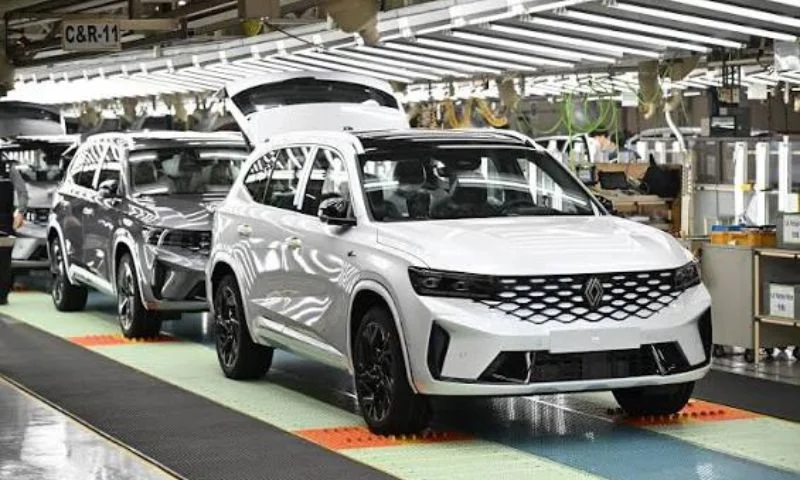
The Secret Behind Morocco’s Rise as Renault’s Global Manufacturing Giant
Morocco has strengthened its position as one of the world’s leading automotive manufacturing centers after producing 394,000 vehicles for Renault Group in 2025, making the North African country the French automaker’s second largest production hub worldwide after France. According to a Renault Group report released on Monday, Morocco now manufactures nearly one in every six vehicles sold globally by Renault. The milestone highlights the country’s growing importance in the company’s international production network and reflects years of investment in manufacturing, logistics and supplier development. Renault operates two production facilities in Morocco, one in Tangier and the other at Somaca in Casablanca. Together, the plants exported 82 percent of their total production to 63 international markets during 2025, including France, Spain, Italy, Germany and Türkiye. Nearly 10,000 employees work across Renault’s Moroccan operations, while the Tangier factory alone employs 6,000 people, making it the largest automobile manufacturing plant in Africa. Tanger Med drives global exports A major factor behind Morocco’s success is the close integration between Renault’s factories and the Tanger Med Port, located only a few kilometres from the Tangier plant. The port handled 161 million tonnes of cargo and more than 11.1 million containers in 2025, making it Africa’s largest port, the biggest in the Mediterranean and the 17th largest port globally. Its vehicle terminal covers 20 hectares and can process up to one million vehicles each year. Renault ships around 8,000 finished vehicles every week through its dedicated quay at Tanger Med. The logistics network also includes 26,400 outbound trucks, 1,440 trains carrying 240 vehicles each, and 290 ships annually. Two railway lines connect directly to the Tangier factory, allowing vehicles to move straight from the assembly line to the port. Rail transport also helps Renault reduce carbon emissions by approximately 90 percent compared with road transport. Thomas Denis, Renault Group’s Supply Chain Director, said, “In a radius of a few kilometres, Morocco concentrates the Tangier plant, the supplier free trade zone and the Tanger Med port, creating a model of efficiency unique in the automotive industry.” He added, “This exceptional proximity between production, suppliers, and logistics makes northern Morocco one of the most integrated automotive ecosystems in the world.” AI, green energy and skilled workforce fuel expansion Renault has also invested heavily in technology and sustainability. Three artificial intelligence powered control towers monitor inbound parts, outbound vehicle shipments and global risks such as strikes, extreme weather and geopolitical disruptions in real time. The Tangier factory sources around 90 percent of its energy from biomass heating and wind power while using a closed loop water recycling system to reduce environmental impact. Read More: Five New Chinese EVs in The Price of One Car in US: The Price Gap Shaking the Auto Industry Renault has managed Morocco’s Institute for Training in Automotive Industry Professions (IFMIA) since 2011. The institute has delivered 3.2 million hours of training in robotics, automation and vehicle electrification while supporting suppliers and youth employment. Morocco’s domestic vehicle market also continues to grow. Renault and Dacia together hold 38 percent of the country’s car market, making the company Morocco’s leading automaker. The country’s overall vehicle sales increased by 33 percent in 2025, driven by stronger consumer demand, wider financing options and new product launches. Mohamed Bachiri, Director General of Renault Group Morocco, said, “Over the years, Morocco has become a key pillar of Renault Group’s global industrial footprint, built on industrial excellence, world class logistics, qualified talent, and a strong public private partnership.” He added, “This long term collective commitment has enabled the emergence of a competitive automotive ecosystem with growing international reach, while supporting the kingdom’s industrial ambitions.”
