

The World Bank has approved $375.9 million for Pakistan’s Grid Stability Enhancement Project. The funding launches the first phase of the Boosting Energy Security through Transmission in Pakistan (BEST-PAK) programme. The initiative will run for 10 years. It aims to modernise Pakistan’s electricity transmission system, cut power outages and improve energy security. The World Bank says Pakistan’s ageing transmission network struggles with grid instability and congestion. These problems disrupt electricity supplies, increase costs and prevent the country from using available renewable energy. “Pakistan’s energy challenges are deeply interconnected with its broader economic stability,” World Bank Country Director for Pakistan Bolormaa Amgaabazar said. “By investing in advanced technologies for more resilient transmission infrastructure, this project will contribute to reducing electricity costs, bringing more renewable energy onto the grid, and laying the groundwork for a power sector that works better for households, businesses and industries, as well as overall Pakistan’s economy,” she added. Project will unlock more renewable energy The project will strengthen electricity flow across the national grid. It will install Static Synchronous Compensators (STATCOMs) at three major 500 kV substations. Engineers will also add fixed reactors and capacitor banks at 26 grid substations. These upgrades will allow Pakistan to connect 640 megawatts of wind energy that currently cannot reach the national grid. The project will also enable full use of 1,840 MW of wind generation capacity in southern Pakistan. In addition, the improved network will support nearly 491 MW of private sector renewable energy projects. The World Bank said these investments will help Pakistan move closer to its target of generating 60 percent of electricity from renewable sources by 2030. The organisation estimates the project will prevent about 832,500 tonnes of carbon dioxide emissions each year. Over 25 years, avoided emissions could exceed 20.8 million tonnes. Grid reforms and climate resilience The programme also supports the government’s reform of the National Transmission and Dispatch Company (NTDC). Officials plan to split the utility into specialised successor companies to improve governance, efficiency and accountability. World Bank Lead Energy Specialist Waleed Saleh Alsuraih said reliable transmission remains critical for Pakistan’s energy future. “A reliable and modern transmission grid was essential for Pakistan’s energy future,” he said. “As the first phase of the BEST-PAK programme, it unlocks a pathway to large-scale clean energy deployment, stronger energy security, and a modern, commercially oriented transmission sector through targeted infrastructure investments and institutional reforms, creating the conditions for future private capital participation.” The project also prepares Pakistan’s power system for climate change. Engineers will place new installations on elevated platforms to reduce flood risks. They will also install equipment that can operate in temperatures as high as 55°C. The World Bank believes these improvements will strengthen Pakistan’s electricity network, improve service reliability and support long-term economic growth while expanding the country’s clean energy capacity.
Pakistan Needs $331 Billion to Fight Climate Change by 2030: SBP
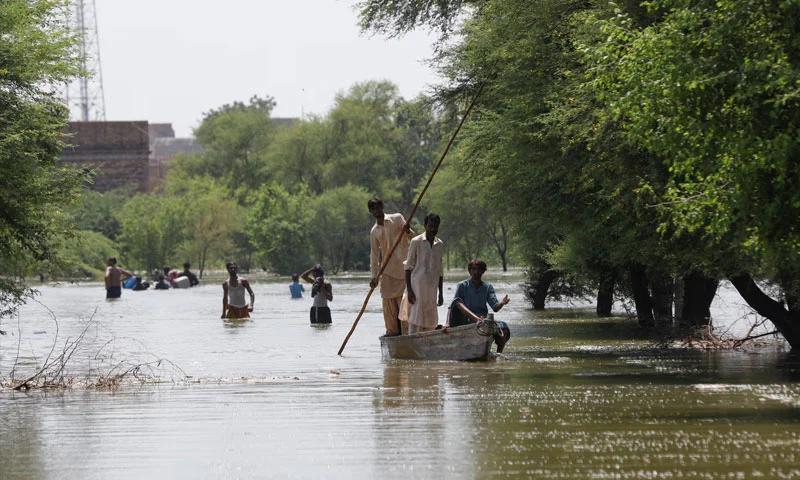
Pakistan will require an estimated $331 billion in climate financing between 2024 and 2030 to strengthen climate resilience and avoid severe economic losses from increasingly frequent climate disasters, according to the State Bank of Pakistan (SBP). The estimate, based on data from the Climate Policy Initiative (CPI), equals nearly 10 percent of Pakistan’s cumulative GDP, or about $47 billion annually during the seven-year period. The findings appear in the SBP’s latest report on climate finance, which highlights the urgent need for greater investment in climate adaptation, mitigation and resilient infrastructure. CPI, an internationally recognized climate finance research and advisory organization, estimates that the world requires $8.6 trillion in climate finance every year to keep global warming within the 1.5°C target set under the Paris Agreement. The report also notes that Pakistan ranked as the 15th most climate-affected country worldwide between 1995 and 2024, despite contributing only about 1 percent of global greenhouse gas emissions. Economic losses continue to mount The SBP said the Government of Pakistan estimates climate financing needs between $200 billion and $348 billion by 2030 to support climate-resilient development and implement its Nationally Determined Contributions (NDCs). Meanwhile, the government’s Pakistan Climate Prosperity Plan estimates that the country will require $1.6 trillion by 2050 for phased investments, technology access and sustainable development. Climate-related disasters have already inflicted enormous damage on Pakistan’s economy. According to the report, climate events caused economic losses of $58.8 billion by 2025. Of this amount, $29.3 billion occurred between 1992 and 2021. The catastrophic 2022 floods alone caused nearly $28 billion in damage, while floods in 2025 added another $1.5 billion in losses. SBP analysis shows floods have directly reduced economic growth by damaging infrastructure, agriculture and businesses. Rising input costs also created indirect pressure on GDP, although post-flood agricultural recovery and reconstruction partly offset the overall impact. The report also cites World Bank projections showing Pakistan’s GDP could decline by 4.5 to 6.5 percent by 2050 under an optimistic climate scenario. Under a pessimistic scenario, losses could reach 7 to 9 percent, with agriculture and industry facing the greatest risks. Funding remains far below requirements Despite its growing vulnerability, Pakistan receives only a fraction of the climate finance it needs. The SBP said the country attracted only $1.4 billion to $2 billion annually in climate finance over the past decade. Funding peaked at around $4 billion in 2021, but remains well below national requirements. The report says Pakistan also receives significantly less climate finance per person than comparable countries, including Bangladesh, India, Kenya and the Philippines. SBP identified several reasons for the financing gap. Globally, investors prefer mitigation projects because they generate stronger financial returns than adaptation projects. Pakistan, however, requires greater investment in adaptation due to its high exposure to floods, droughts and extreme weather. The report also points to recurring macroeconomic instability, exchange rate volatility, political uncertainty, sovereign risk and weak financial markets as factors reducing investor confidence. Another major challenge is the country’s limited ability to develop bankable climate projects. The report notes that stronger project pipelines help attract financing from Multilateral Development Banks and private investors. However, bureaucratic delays and institutional weaknesses continue to slow implementation. It cited the World Bank’s Pakistan Hydromet and Climate Services Project, which concluded in 2025 after key components, including weather radars and automatic weather stations, were dropped because of procurement delays and institutional frictions. The SBP stressed that improving project preparation, strengthening monitoring systems and accelerating reforms will be essential if Pakistan is to secure the climate finance needed to protect its economy from future climate shocks.
Pakistan to End 200-Unit Power Subsidy Under IMF Deal
Pakistan has given written assurances to the International Monetary Fund (IMF) that it will replace the existing electricity subsidy system for low-consumption users with a targeted mechanism linked to the Benazir Income Support Programme (BISP) from January 2027, officials familiar with the discussions said. The move forms part of broader reform commitments under the IMF’s Resilience and Sustainability Facility programme aimed at reducing power sector distortions, improving subsidy targeting and strengthening climate-related financial reforms. Read More: IMF Imposes New Conditions on Pakistan for $1.2bn Loan Currently, households consuming up to 200 electricity units receive subsidised tariffs. However, officials said the existing system has led to misuse, with some consumers reportedly installing multiple electricity meters to keep individual consumption below the subsidy threshold. “The targeted subsidy will help curb the misuse of this subsidy,” a senior official told local media. Under the new framework, the government plans to replace the existing tariff differential subsidy and cross-subsidy structure with a targeted support system for low-income consumers through BISP data and the National Socio-Economic Registry database. “This will replace the budgeted tariff differential subsidy and cross-subsidy system with a targeted budgeted subsidy framework for low-income consumers via BISP,” the official said. IMF board to review Pakistan tranche Officials said Pakistan is expected to secure the second tranche of $200 million under the IMF’s Resilience and Sustainability Facility after the IMF Executive Board meeting scheduled for May 8 in Washington. The government is working with the World Bank to connect electricity consumers with the National Socio-Economic Registry system. Authorities will conduct validity checks before implementing the subsidy model in January 2027. Read More: IMF Sets Tough Budget Priorities for Pakistan Ahead of FY26 Plan Officials also said the government plans to hire an external firm by the end of the current month to develop a payment mechanism for the targeted subsidy programme. Pakistan’s power sector has long faced criticism for high transmission losses, circular debt and untargeted subsidies that place heavy pressure on public finances. The IMF has repeatedly urged Islamabad to improve energy pricing reforms and narrow fiscal leakages. Analysts say the proposed subsidy overhaul could become politically sensitive because millions of households currently benefit from subsidised electricity rates under the 200-unit slab system. Water charges and climate reforms also expanded The government has also committed to expanding the digital e-Abiana irrigation service charge system to Sindh, Khyber Pakhtunkhwa and Balochistan after introducing it in Punjab. Authorities plan to roll out the system by August 2027. Officials are also working with the World Bank on irrigation water tariff adjustment mechanisms linked to operations and maintenance cost recovery in Punjab and Sindh by February 2027. Pakistan further informed the IMF that it had implemented several agreed reform measures under the first review of the Resilience and Sustainability Facility programme. Read More: IMF Demands Fuel Reforms: What It Means for Millions of Pakistanis According to officials, the State Bank of Pakistan issued climate-related financial risk management guidelines in December 2025. The Securities and Exchange Commission of Pakistan also introduced disclosure guidelines for listed companies regarding climate-related risks and opportunities. Officials added that the government is developing a framework to coordinate federal and provincial disaster risk financing needs under the National Disaster Risk Financing Strategy by August 2026 with IMF support.
