

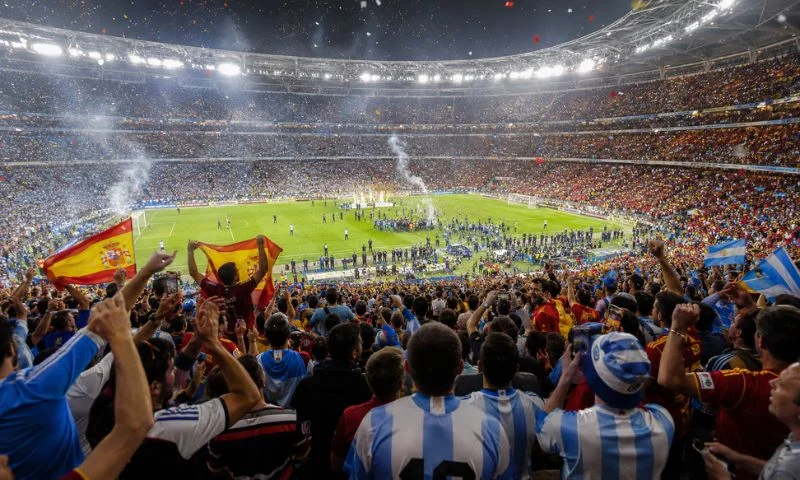
The 2026 FIFA World Cup rewrote football history after setting new records for attendance, television audiences and digital engagement. The first 48 team tournament attracted millions of fans across the United States, Canada and Mexico and surpassed FIFA’s own expectations. FIFA President Gianni Infantino praised the success of the expanded tournament. He acknowledged that the larger format helped produce the record numbers. Speaking before the final weekend, Infantino said, “this is the largest World Cup in history by far, by many times, actually, welcoming 16 additional teams.” “But,” he added, “it has exceeded all expectations.” The tournament featured 104 matches, compared with 64 in Qatar in 2022. Before the final weekend, FIFA confirmed that more than 6.6 million fans had entered stadiums. After Spain beat Argentina 1 to 0 in extra time to win the title, media estimates placed total attendance at about 6.81 million. FIFA has not yet released the official final figure. The tournament also broke the previous attendance record of 3,587,538 spectators, set during the 1994 World Cup in the United States. Fans almost filled every seat throughout the competition. FIFA said stadiums operated at a record 99.7 percent capacity despite criticism over expensive ticket prices. Average attendance reached 65,351 spectators per match. The tournament crossed the five million spectator mark during the Round of 32 match between France and Sweden. TV Viewership and Online Engagement Hit New Highs FIFA also celebrated record television audiences around the world. “TV viewership records were shattered, both in the host countries and across the globe,” the governing body said. FIFA has not released detailed audience figures. However, US President Donald Trump claimed the tournament attracted “nearly six billion viewers.” Read More: Spain Rewrites Football History by Winning Both Men and Women FIFA Titles The previous record belonged to the 2022 World Cup final between Argentina and France. That match drew about 1.5 billion viewers worldwide. FIFA expects the 2026 final to surpass that figure once the official numbers become available. The tournament also dominated digital platforms. FIFA estimated that 5.2 billion people had engaged with the competition by the end of the Round of 16. That figure represents nearly two thirds of the world’s population. Fans interacted through television, websites, apps and social media. Record Revenue Strengthens Expansion Plans The tournament generated record commercial returns alongside its huge audiences. Before the event, FIFA projected revenue of more than €7 billion, or about $8 billion, for 2026. That represents a 56 percent increase compared with the 2022 World Cup. FIFA also expected television rights revenue to climb 34 percent to nearly $4 billion. Sponsorship income was forecast to rise by 21 percent. FIFA planned to spend $3.7 billion on the tournament. It allocated one quarter of that amount to participating national teams and clubs that released players. The governing body increased the total prize fund by 15 percent to $871 million in April. Spain collected $50 million after winning the title, while every participating nation received at least $12.5 million. Read More: Messi Effect? FIFA World Cup Final Tickets Break US Record The expanded tournament also revived discussion about another increase in participating teams. Earlier this summer, Infantino said, “we have had discussions about expanding to 64 teams” for the 2030 World Cup. The centenary tournament will take place in Spain, Portugal and Morocco, with opening matches in Paraguay, Uruguay and Argentina. He added, “this matter has been submitted to the FIFA Council.”
Messi Effect? FIFA World Cup Final Tickets Break US Record
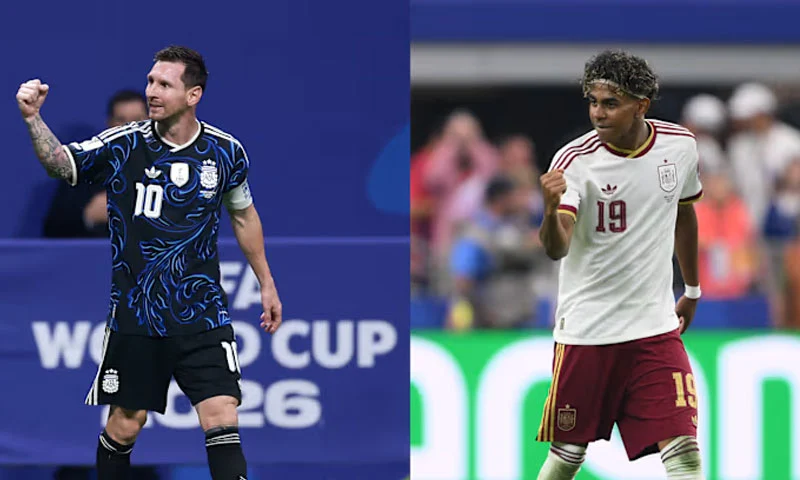
Fans hoping to watch Argentina take on Spain in the 2026 FIFA World Cup final are facing record-breaking ticket prices, with resale values reaching levels never seen before for a sporting event in the United States. The championship match will take place on Sunday at MetLife Stadium in East Rutherford, New Jersey. Defending champions Argentina, led by Lionel Messi, will face Spain after a month-long tournament across the United States, Canada and Mexico. Demand for the final has pushed ticket prices to historic highs across the resale market. Read More: Messi’s Magic Sends Argentina Past England Into World Cup Final According to ticket marketplace TickPick, the average resale price for a World Cup final ticket stands at $11,327. That figure surpasses the previous US record of $9,411, set during the 2024 Super Bowl, making this the most expensive sporting event in American history based on average resale prices. Cheapest Ticket Starts Above $7,400 Even the lowest-priced seats remain out of reach for many football fans. TickPick reported that the cheapest available ticket for the final is listed at $7,451. The platform also revealed that one buyer paid $56,958 for two premium seats, with each ticket costing $28,479. The highest-priced ticket listed for the Argentina versus Spain final reached an astonishing $116,462, highlighting the extraordinary demand surrounding the tournament’s biggest match. Read More: Why a 64 Team World Cup Could Become Reality in 2030 Industry analysts say several factors have driven prices higher. Lionel Messi’s appearance in what could be his final World Cup match has significantly increased global demand. Spain’s return to the final has also attracted supporters from across Europe. Combined with limited ticket availability and strong international interest, resale prices have continued climbing in the days before kickoff. Most official tickets were sold during FIFA’s earlier sales phases. As a result, many supporters now rely on resale platforms, where prices fluctuate according to demand. FIFA continues to advise fans to purchase tickets only through official channels or authorised resale platforms to avoid fraud. Ticket Sales Under Investigation The record-breaking prices have also drawn the attention of regulators. Earlier, Qazinform News Agency reported that authorities in New York and New Jersey launched an investigation into FIFA’s ticket sales practices following complaints over soaring prices and controversial sales methods. The inquiry aims to examine concerns surrounding pricing policies and ticket distribution during the expanded 2026 FIFA World Cup. Read More: FIFA’s Ultimate Prize Gets a Luxury Louis Vuitton Journey The final is expected to attract one of the largest global television audiences of the year. Inside the stadium, however, attendance has become an increasingly expensive experience. Many fans have expressed frustration that the cost of securing a seat now exceeds the price of luxury holidays or premium sporting events. Despite the criticism, demand remains exceptionally strong. With Argentina and Spain set to battle for football’s biggest prize, resale prices continue to climb as kickoff approaches, reinforcing the final’s status as one of the most sought-after sporting events ever staged in the United States.
Shakira Steals the Show as Mexico Kicks Off World Cup With Victory
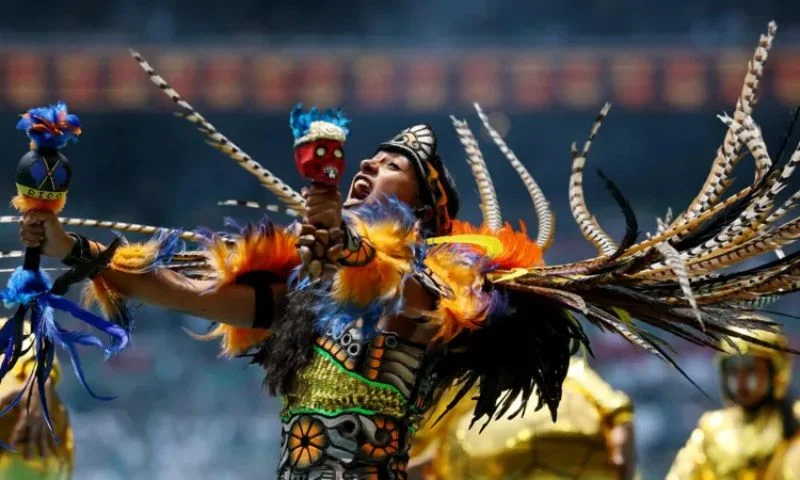
The FIFA World Cup 2026 officially began on Thursday in Mexico City with a colourful opening ceremony featuring global music stars, traditional cultural performances and a packed Azteca Stadium witnessing Mexico’s opening victory over South Africa. More than 80,000 fans filled the iconic stadium, which hosted World Cup matches in 1970 and 1986. The tournament marks the first time Mexico has hosted football’s biggest event in 40 years and makes history as the first nation to stage matches at three separate men’s World Cups. The ceremony blended music, football and Mexican culture before the opening match. “Bienvenida a México. Welcome to Mexico,” a performer announced. “We are a nation of diversity, heritage and pride. Football carries the same heartbeat, uniting generations.” Global superstar Shakira headlined the event alongside J Balvin, Burna Boy and Danny Ocean. Mexican singer Fher Olvera performed the classic “Oye Mi Amor”, while renowned tenor Andrea Bocelli and K-pop artist EJAE sang the tournament’s official anthem, DNA. Grammy-winning South African star Tyla performed South Africa’s national anthem before kickoff. Performers dressed in indigenous-inspired clothing and traditional Mexican attire filled the pitch, while fireworks illuminated the stadium in the colours of the Mexican flag. Mexico Starts With Victory Amid Tight Security The celebrations continued when Mexico defeated South Africa 2-0 to launch its campaign on a winning note. Fans arrived hours before kickoff, creating a festive atmosphere around the stadium. Javier Pérez, who attended the match with his family, described the experience as unforgettable. “We were lucky to get hospitality tickets and it’s a unique experience. I have never been to a World Cup before so to bring my family is wonderful,” he told the BBC. “I just want Mexico to get off on the right foot, win today and score a load of goals! And then we’ll see how far we can go!” Authorities deployed a heavy security presence around the 82,000-capacity venue. Mexican officials said nearly 200 hooded protesters broke away from two larger groups of around 800 demonstrators and clashed with police near the stadium. The unrest temporarily disrupted nearby metro services before security forces restored order. Protests Cast Shadow Over Global Celebration While football dominated headlines, activists used the global spotlight to highlight domestic issues. Teachers’ unions and families of people missing during Mexico’s long-running drug war staged demonstrations across the capital. The protests coincided with the opening of a tournament expected to attract billions of viewers worldwide. Mexico is co-hosting the World Cup alongside the United States and Canada. The two countries are scheduled to stage separate opening celebrations on Friday. FIFA has assembled a diverse lineup of artists for the tournament. Several performers also feature on the 18-track Official FIFA World Cup 2026 Album. Despite isolated unrest outside the stadium, the focus inside remained firmly on football, music and celebration as the world’s biggest sporting event officially got underway.
FIFA Makes Surprise U-Turn on Water Bottles Ahead of World Cup
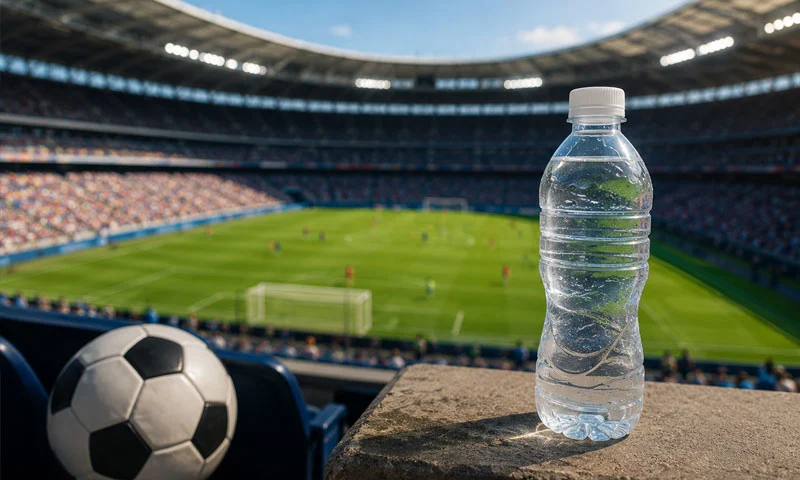
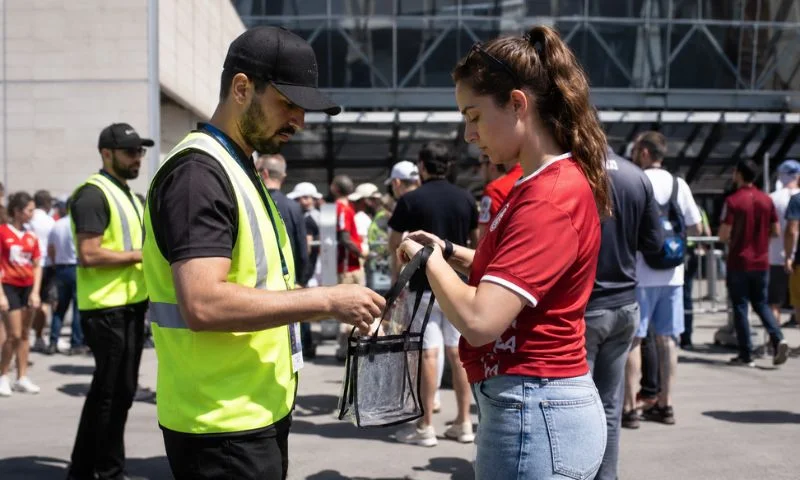
FIFA has relaxed its controversial World Cup water bottle policy. Fans can now bring one factory-sealed disposable plastic water bottle into stadiums during the 2026 FIFA World Cup. The decision came days after criticism of FIFA’s ban on reusable water bottles. Many supporters and health experts raised concerns about hydration during a summer tournament expected to feature extreme temperatures. In a video posted on FIFA’s official X account, World Cup chief operating officer Heimo Schirgi explained the updated rule. “All fans will be permitted to bring in one, soft, plastic 20 ounces (590ml), factory sealed disposable water bottle into any FIFA World Cup 2026 match in the USA and Canada,” Schirgi said. FIFA described the announcement as a clarification. However, the move eases restrictions announced earlier this week. Safety Concerns Drive Policy Earlier this week, FIFA updated its stadium code of conduct and banned reusable water bottles. The organisation defended the move on security grounds. “Fifa made the decision to prohibit bottles to prevent risk and injury to players and attendees,” FIFA said. The governing body noted that many World Cup venues already enforce similar restrictions. All fans will be permitted to bring in one, soft, plastic, 20 ounces (590ml), factory sealed disposable water bottle into any FIFA World Cup 2026 match in the USA and Canada. ✅As FIFA World Cup 2026 Chief Operating Officer, Heimo Schirgi, explains, fans will not be permitted… pic.twitter.com/ePEHq9oalJ— FIFA (@FIFAcom) June 5, 2026 “Outside bottles are already prohibited at several of these venues for safety considerations, and Fifa is applying this consideration across its tournament stadiums,” the statement added. Despite Friday’s change, FIFA continues to prohibit reusable containers. Schirgi said, “fans will not be permitted to bring in hard sided, reusable water bottles due to safety and security reasons.” He also displayed examples of permitted and prohibited bottles. Under the revised rules, fans may carry only one soft plastic disposable bottle that remains factory sealed upon entry. Heat Risks Remain in Focus The debate has intensified because experts continue to warn about extreme temperatures during the tournament. The United States, Canada and Mexico will host the 2026 World Cup. The competition will feature a record 48 teams and 104 matches. Last month, the World Weather Attribution research group released a report on tournament conditions. Researchers estimated that 26 matches could take place in conditions where the Wet Bulb Globe Temperature exceeds 26 degrees Celsius. The Wet Bulb Globe Temperature, or WBGT, measures heat stress on the human body. It combines temperature, humidity, sunlight and wind into a single reading. Fans raised similar concerns during last year’s FIFA Club World Cup in the United States. Many complained about intense heat inside stadiums. Organisers also prohibited outside water bottles during that tournament. FIFA says it will provide hydration stations, cooling tents, misting stations and fans throughout venue areas. The organisation also says bottled water inside stadiums will remain priced similarly to other events held at each venue. As preparations continue for the largest World Cup in history, FIFA faces growing pressure to balance security requirements with fan comfort and safety.
FIFA Bans Water Bottles at World Cup 2026 Amid Heat Concerns
FIFA has introduced a controversial policy ahead of the 2026 World Cup. The governing body will not allow fans to bring refillable water bottles into stadiums across the United States, Canada and Mexico. The decision has triggered debate among supporters and health experts. Many have raised concerns about spectator welfare during the summer tournament. The Athletic first reported the policy change. FIFA later confirmed it in a statement. Just weeks ago, FIFA allowed fans to carry empty transparent reusable plastic bottles with a capacity of up to one litre into stadiums. The earlier code of conduct stated: “For the avoidance of doubt, empty, transparent, reusable plastic bottles, up to (1 litre in) capacity, may be brought into the Stadium.” FIFA has now changed that rule. The updated code states: “For the avoidance of doubt, reusable water bottles may not be brought into the stadium.” FIFA Defends the Decision FIFA says safety concerns drove the policy shift. “Fifa is committed to protecting the health and safety of all players, referees, fans, volunteers, and staff,” a FIFA spokesperson told AFP. “Fifa made the decision to prohibit bottles to prevent risk and injury to players and attendees. “Outside bottles are already prohibited at several of these venues for safety considerations, and Fifa is applying this consideration across its tournament stadiums.” Several host venues already ban outside bottles during sporting events. FIFA decided to apply the same rule across all World Cup stadiums. The organisation says fans will still have access to hydration facilities. These include misting stations, cooling tents, fans and dedicated hydration points. FIFA also said spectators can buy bottled water inside stadiums. According to the governing body, prices will remain similar to those charged during other events. Heat Concerns Continue to Grow The announcement comes as climate experts warn about the risk of extreme heat during the tournament. Last month, the World Weather Attribution research group released a report on World Cup conditions. Researchers estimated that 26 of the tournament’s 104 matches could take place in conditions where the Wet Bulb Globe Temperature exceeds 26 degrees Celsius. The Wet Bulb Globe Temperature, or WBGT, measures heat stress on the human body. It combines temperature, humidity, sunlight and wind into a single index. Scientists and sports organisations use WBGT to assess heat-related risks. Several host cities could experience high temperatures during the competition. Concerns about fan safety have therefore intensified in recent months. Similar issues emerged during last year’s FIFA Club World Cup in the United States. Many supporters complained about intense heat inside venues. Tournament organisers also banned outside water bottles during that competition. The 2026 World Cup will feature 48 teams and 104 matches. It will be the largest tournament in FIFA history. Organisers expect record crowds across North America. As kickoff approaches, the debate over fan comfort, hydration and safety is likely to continue. For now, supporters attending matches must leave reusable water bottles at home. They will need to rely on hydration stations or purchase water inside the stadiums.
