

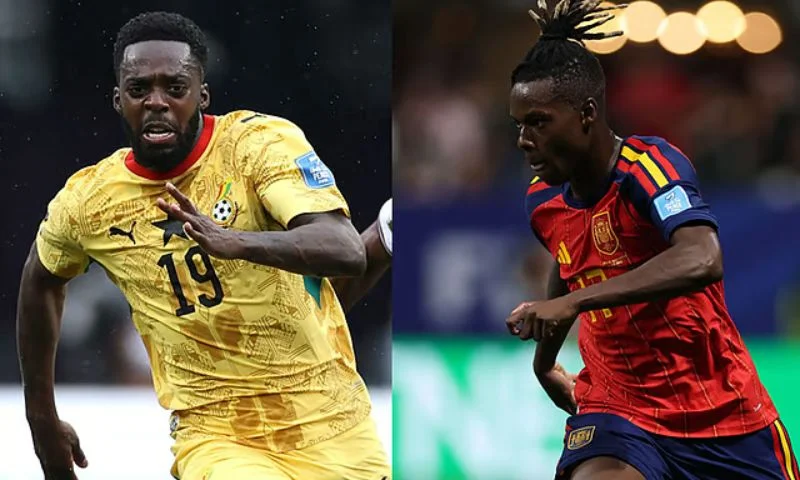
The FIFA World Cup has long produced stories that extend beyond football. At the 2026 tournament, one of the most fascinating narratives involves four families whose sons are representing different countries on the sport’s biggest stage. For parents and relatives, national allegiances have become secondary to family pride. Yet the possibility remains that brothers could face each other in matches that carry the highest stakes in international football. “The ultimate test for any parent: two sons lining up on opposite sides of the pitch. Who do you cheer for?” The unusual scenario is not entirely new. Football fans still remember the famous rivalry between half-brothers Jérôme Boateng and Kevin-Prince Boateng, who represented Germany and Ghana respectively. The pair first faced each other at the 2010 FIFA World Cup in South Africa when Germany defeated Ghana in the group stage. Four years later, they met again at the 2014 World Cup in Brazil, creating one of football’s most memorable family stories. Sixteen years later, the possibility of similar encounters remains alive at the 2026 tournament. Williams and Doué Brothers Follow Different Paths The highest-profile sibling story at this year’s World Cup belongs to Iñaki and Nico Williams. Born in Bilbao to Ghanaian parents who migrated to Spain, both brothers developed through the youth ranks of Athletic Club and became stars in European football. However, their international journeys took different directions. Iñaki Williams, 32, chose to represent Ghana and switched allegiance from Spain in 2022. Since then, he has become one of the Black Stars’ most experienced players and a key figure in their attack. His younger brother Nico Williams, 23, opted to remain with Spain. The winger emerged as one of Europe’s most exciting talents and played a crucial role in Spain’s UEFA Euro 2024 triumph. Another family divided by international football is the Doué family. Désiré Doué has rapidly established himself as one of France’s brightest young stars following his breakthrough performances for club and country. His older brother, Guéla Doué, represents Ivory Coast. Although both were born in France, family heritage and personal choices led them down different international paths. The possibility of France and Ivory Coast meeting later in the tournament has added another layer of intrigue. Ghana Features in Two Sibling Stories Ghana appears in two separate sibling rivalries at World Cup 2026. Netherlands striker Brian Brobbey progressed through the Dutch football system and earned his place in the Oranje squad. His older brother Derrick Luckassen chose to represent Ghana, strengthening the African nation’s connection to this unique World Cup subplot. The fourth family involves Harry and John Souttar. Harry Souttar represents Australia through his mother’s Australian heritage and has become one of the Socceroos’ most influential defenders. His brother John Souttar plays for Scotland and remains a key figure in the Scottish national team setup. Football’s increasingly global nature has made such stories more common. FIFA eligibility rules allow players with multiple national connections to represent countries linked through birth, ancestry or residency. As migration and multicultural identities continue shaping modern football, sibling rivalries across national teams may become less unusual. For now, however, the Williams, Doué, Brobbey-Luckassen and Souttar families remain among the most compelling human stories of World Cup 2026. Should the tournament draw align, football fans could witness another unforgettable chapter in the history of brothers divided by flags but united by family.
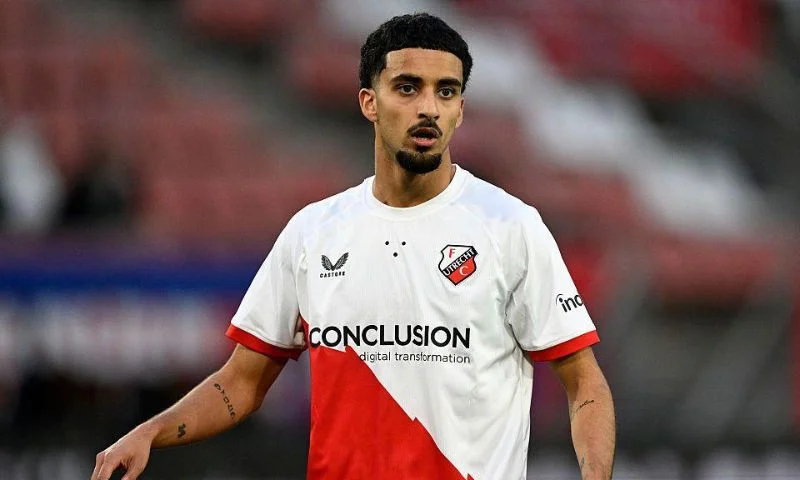
Zidane Iqbal Makes History as First Player of Pakistani Heritage at FIFA World Cup
Midfielder Zidane Iqbal has etched his name into football history after becoming the first player of Pakistani heritage to appear in a men’s FIFA World Cup match. The 23-year-old Iraq international reached the milestone when he came off the bench during Iraq’s opening match against Norway at the 2026 FIFA World Cup in the United States. Iqbal entered the game in the 59th minute at Boston Stadium in Foxborough, Massachusetts, as Iraq suffered a 4-1 defeat to Norway. The match also marked a memorable World Cup debut for Norwegian striker Erling Haaland, who scored twice to help secure victory for his side. While the result disappointed Iraq, the occasion carried historic significance for Iqbal and millions of football fans with Pakistani roots around the world. Born in Manchester, England, Iqbal represents Iraq through his mother’s side of the family. His father is Pakistani, giving him a unique connection to two nations with deep personal significance. A Historic Moment for Pakistani Heritage in Football Speaking to BBC Sport, Iqbal admitted he did not initially realise the significance of his achievement. “To be honest, I didn’t even know it myself,” Zidane Iqbal told BBC Sport. “I followed the account that posted it [that he was the first player of Pakistani heritage to play at a men’s World Cup] and sent it to my dad straight away. I think we were both surprised. When I tried to qualify for the World Cup with Iraq, I didn’t think of anything like this.” The midfielder paid tribute to his father, whom he credits as one of the most influential figures in his football journey. “My dad is Pakistani. He’s my father, the man I respect the most in my life, who helped me so much in my career.” “I play for Iraq, grew up in England, but my dad was born in Pakistan. My grandad was a first-generation there, so I have a lot of respect for that side of my family.” Iqbal’s achievement comes at a time when football continues to grow in popularity among Pakistanis both at home and abroad. Pakistan has yet to qualify for a FIFA World Cup, making his appearance even more symbolic for many supporters. Carrying Two Flags With Pride Iqbal has often spoken about embracing both sides of his heritage. He revealed that he honours his family background by wearing the Iraqi and Pakistani flags on his boots. “I wear the Iraqi flag on my left side and the Pakistani flag on my right side,” he said. “I think that’s because I respect both sides.” “When people ask me what I feel more connected to, I can’t answer. For me, they’re both equal. It’s about respect and something I carry with a lot of pride.” Iqbal began his professional career at Manchester United, where he progressed through the club’s academy system before making his senior debut. He later moved to Dutch football and has continued his development at club level while becoming an important figure for Iraq’s national team. Although Iraq’s World Cup campaign started with defeat, Iqbal’s appearance ensured the match will be remembered for more than the scoreline. For many football fans of Pakistani heritage, it represented a groundbreaking moment on the sport’s biggest stage.
