


Many big employers have tried to pull people back to the office. Some have gone all-in. Amazon told staff it would require five days a week in the office starting in 2025, tightening rules that already demanded in-person time. JPMorgan also moved toward five days a week for many roles, part of a wider return-to-office push across corporate America. Yet remote work keeps expanding in daily life, even when policies get stricter. The reason is simple: the remote-capable workforce has changed its expectations. Gallup’s tracking shows remote-capable workers make up about half of the U.S. workforce, and hybrid remains the dominant setup for most of them. In Gallup’s latest reporting, hybrid work “barely” retreated, and in tech, 47% of remote-capable employees are fully remote while 45% are hybrid. Preferences also stay strong. A Pew Research Center survey found many remote workers would rethink their job if they lost the option to work from home, highlighting how flexibility has become a retention issue, not a perk. Globally, researchers see the same pattern. A 2025 paper using the Global Survey of Working Arrangements across dozens of countries found work-from-home rates fell after the pandemic peak, then stabilized after 2022 among college-educated employees. In other words, the world did not “snap back” to 2019. So why does remote work keep growing even under pressure? One driver is distributed teams. Once companies hired across cities, it became harder to justify a full-time return for everyone. Another driver is competition for talent. Even when executives prefer offices, many still offer hybrid options to avoid losing skilled staff to more flexible rivals. That tension shows up in company messaging. In its return-to-office memo, JPMorgan said, “What is not changing is our support for flexibility in the workplace.” There is also a lifestyle pull. Remote and hybrid work reduce commute time, make family logistics easier, and let workers live farther from expensive office hubs. That mix explains why remote work can spread even when some headline companies tighten rules. The result is a new compromise: more badge scans in big cities, but more remote days everywhere else. Office comeback pushes are real. But so is the market reality that flexibility now shapes where people work—and which employers win.

From Pakistan to Disney: Asad Ayaz to Unite Disney’s Marketing Worldwide
The Walt Disney Company has taken a major strategic step by creating a new enterprise-wide Chief Marketing and Brand Officer role and appointing Asad Ayaz to lead it. This marks the first time Disney has established a centralized marketing and brand leadership position, underscoring the company’s focus on aligning its global brand strategy. Ayaz, who has spent more than two decades at Disney, will oversee marketing and brand strategy across all major segments including film and television studios, theme parks, streaming platforms like Disney+, sports, and consumer products. “Over more than two decades at the company — and as Disney’s first-ever Chief Brand Officer — Asad has helped bring the magic of Disney to life for millions through his exceptional leadership,” said Disney CEO Bob Iger, explaining why the new role was necessary. “As our businesses have evolved, it’s clear that we need a company-wide role that ensures brand consistency and allows consumers to seamlessly interact with our products and experiences.” Born in Pakistan in 1978, Ayaz is the son of a senior Pakistan Air Force officer. He spent part of his childhood in the Middle East before moving with his family to the United States as a teenager, where he later pursued higher education. Ayaz’s rise through Disney’s ranks has been marked by a series of high-impact leadership roles. He served as President of Marketing for Walt Disney Studios for eight years, leading campaigns for major films and franchises. He also played a central role in shaping Disney+ marketing, helping promote globally popular series such as The Mandalorian and Andor, and the blockbuster release Taylor Swift | The Eras Tour (Taylor’s Version) on the streaming platform. In 2023, Ayaz became Disney’s first Chief Brand Officer, taking on responsibility for global brand campaigns, strategic alliances, and high-profile events across Disney’s many businesses. The new expanded role now places him among the company’s top senior executives, reporting directly to Iger and collaborating with leaders across all major divisions. Industry experts say the move reflects broader trends in how global brands connect with audiences in a media landscape increasingly driven by digital engagement and integrated marketing campaigns. Disney’s decision to unite its marketing efforts under one leader aims to ensure a consistent brand promise while adapting to changing consumer behavior worldwide. Asad Ayaz’s appointment is also significant for representation. His leadership role at one of the world’s most influential entertainment companies adds to the growing list of executives of South Asian origin shaping global corporations.
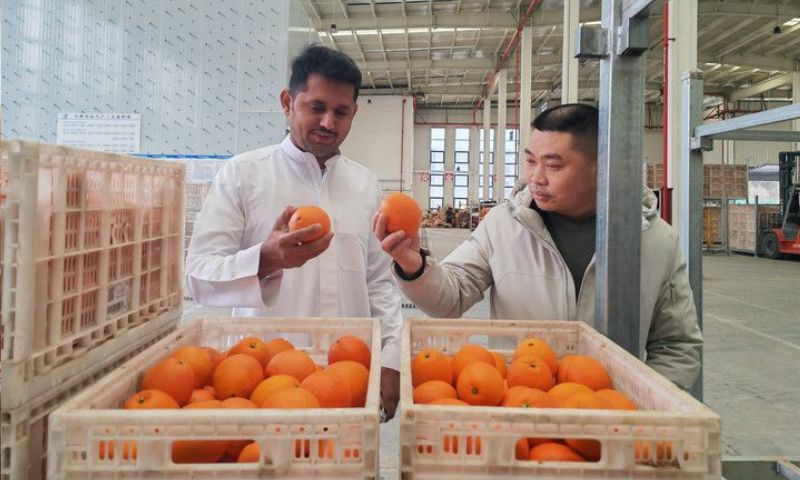
Fresh From China: Pakistani Importer Taps Guizhou for Middle East Markets
Pakistani trader Muhammad Waqar is emerging as a key link between China’s southwest and the Middle East, as he expands imports of fresh and processed agricultural products from Guizhou province to Dubai and beyond. In late December 2025, Waqar made his third visit in a single year to Guizhou, this time to add dried ginger and navel oranges to his growing import portfolio. He has worked in Dubai’s fruit and vegetable trade for over five years and now sees Guizhou as a direct sourcing hub rather than an intermediary market. Inside the production facility of Guizhou Wanhui International Trade Co., Ltd., located in the Guiyang Comprehensive Bonded Zone, cartons of ginger and garlic were being loaded for shipment. Waqar personally inspected the goods, which will reach Dubai in about 20 days via a combined land-sea transport route. Waqar first visited Guizhou in February 2025 at the invitation of the company. After spending more than a month surveying farms, factories, and logistics, he decided to collaborate. “Guizhou’s agricultural products are highly suitable for the Middle Eastern market. They remain in good condition during storage and transport, and the logistics system is efficient,” Waqar said. He now treats Guizhou as a core import base for his regional supply chain. Improved infrastructure has played a decisive role. In November 2025, Guizhou became the first provincial-level region in southwest China to achieve full high-speed rail connectivity to all provincial capitals. The province’s railway network now spans 4,354 kilometers, including 1,906 kilometers of high-speed rail, linking it to 17 major rail corridors nationwide. Previously, Waqar sourced goods mainly from Chinese companies already operating in Dubai. Better transport links and trade facilitation in western China encouraged him to move closer to the source. During each visit, Waqar stays in Guizhou for nearly two months, overseeing quality checks, finalizing packaging, and sharing real-time videos with Middle Eastern clients. From Dubai, he distributes Guizhou produce to Saudi Arabia, Qatar, and Oman. Language barriers proved manageable. Waqar and his partners rely on electronic translation tools, while Guizhou’s mild climate and smooth coordination further eased cooperation. Wu Longhua, business director at Guizhou Wanhui International Trade, said the bonded zone provides integrated services for processing and exports. “We can complete all customs declaration procedures in one step using mobile devices,” Wu said. “Once goods enter the bonded zone, they can be shipped directly to Shenzhen Port without additional inspections, significantly reducing loss and waste.” Since 2025, the company has exported over 10 types of agricultural products to the Middle East, valued at more than 20 million yuan (about $2.86 million). Workshops now operate 24 hours a day, with daily shipments. In Dubai, Waqar’s warehouse receives over 320 tonnes of garlic and ginger weekly, often selling out within a week. Last year, Waqar also visited Guizhou’s kiwi orchards and plans to introduce the fruit to Middle Eastern markets this harvest season. “Guizhou’s kiwis are rich in vitamins and excellent in taste,” he said. “I believe they have the potential to become a new favorite in the Middle East.”

Unbelievable Demand: Over 500 Million People Tried to Buy World Cup 2026 Tickets
The excitement for the FIFA World Cup 2026 has hit a level never seen before in sporting history. FIFA has reported that during the Random Selection Draw ticket sales phase, it received more than 500 million ticket requests from fans worldwide. This figure smashed previous records and highlighted football’s unmatched global appeal. Between December 11, 2025 and January 13, 2026, fans applied in huge numbers averaging roughly 15 million requests per day. Requests came from all 211 FIFA Member Associations, a testament to football’s universal passion and the unique lure of this edition of the World Cup. The upcoming tournament will be co-hosted by the United States, Mexico, and Canada. It’s the first time three nations have shared hosting duties and the first to feature an expanded field of 48 teams. Matches will take place from June 11 to July 19, 2026 across 16 cities, with stadiums in Miami, Mexico City, Toronto and more ready for action. While demand was strong everywhere, the Colombia vs. Portugal match in Miami on June 27 became the most requested fixture. Other high-interest games included Mexico vs. South Korea in Guadalajara, the opening match Mexico vs. South Africa in Mexico City, and the Final on July 19 in New Jersey. Despite the overwhelming interest, not every fan will secure a ticket. Because demand far exceeds available seats, FIFA will verify applications and allocate tickets via a random draw. Fans should receive notification of the outcome starting February 5. Ticket pricing has also stirred global conversation. Some premium seats have been listed at as much as $8,680, a figure that drew criticism among supporters. In response, FIFA has confirmed that $60 entry-level tickets will be available for every match and distributed through national federations to loyal fans. For many supporters the ticket frenzy is more than numbers — it’s proof that world football remains the sport with the greatest ability to unite. FIFA President Gianni Infantino said, “Half a billion ticket requests in just over a month is more than demand — it’s a global statement.” Fans who miss out in the random allocation will still have options. A Last-Minute Sales phase will open closer to the tournament on a first-come, first-served basis. FIFA also provides an official resale and exchange platform to keep tickets safe and legitimate. With such historic demand, the FIFA World Cup 2026 promises not only epic football but records that could stand for generations.

Pakistan’s Energy Boom: How Investors Are Flocking to Solar, Hydro, and Renewables
Pakistan’s energy sector is entering a new era of expansion, with investment opportunities rising sharply and public and private actors eager to participate. According to a recent government announcement, Pakistan has seen a notable rise in renewable energy capacity. Off-grid solar installations now total 12 gigawatts, and net-metered solar capacity has grown by more than 6 gigawatts, indicating strong momentum in clean energy development. Officials say this growth reflects a strategic shift toward sustainability and energy security. Last fiscal year, 53 % of electricity generation came from renewable sources, a historic milestone for the country’s energy mix. This shift places Pakistan among the faster-growing renewable energy markets globally. But the story goes beyond solar power. Pakistan’s energy landscape is diversifying with hydropower projects, foreign partnerships and private investments gaining steam. For example, the Azad Pattan Hydropower Project, a $1.5 billion initiative on the Jhelum River, is due for completion this year. It will add 700 MW of clean hydropower to the grid. Similarly, the Balakot Hydropower Project (300 MW) and the Lower Spat Gah project (496 MW) are poised to attract investor interest as Pakistan seeks to reach reliable, affordable electricity. Foreign engagement has also accelerated. A United States energy company, GE Vernova, has expressed interest in expanding hydropower investments in Pakistan — a sign that global firms see strong potential here. Local financial markets are responding too. Lucky Investments Limited recently launched a Shariah-compliant energy fund to give investors ethical exposure to the energy sector’s growth. Mohammad Shoaib, CEO, remarked, “The energy sector remains central to Pakistan’s economic revival and long-term sustainability.” Private investment is not just about projects; it’s about reshaping markets. Data show that energy investment with private participation in Pakistan was already significant in recent years, demonstrating commitment from outside players. Experts caution that attracting more foreign capital will require policy stability, streamlined regulations, and infrastructure upgrades. They argue that the energy sector’s growth could boost economic recovery far beyond power generation from jobs to technology transfer. As Pakistan advances its renewable targets and broadens its energy portfolio, investors are watching closely. The country’s strategic location, untapped resources, and renewed policy focus make now a pivotal moment for the energy sector’s future and for investors ready to power progress.

Folk Remedy Turns Dangerous: Raw Fish Gallbladder Poisoning Sends Woman to ICU
A middle-aged woman in eastern China landed in the intensive care unit (ICU) after swallowing a raw fish gallbladder in hopes of curing a headache – a decision that quickly turned dangerous and life-threatening. The case highlights the serious health risks tied to traditional folk remedies that lack scientific support. The 50-year-old woman, known only by her surname Liu, lived in Jiangsu province. On the morning of December 14, 2025, she bought a 2.5 kg grass carp at a local market. Believing the fish’s gallbladder would clear internal “heat,” detoxify the body and relieve her persistent headache, she extracted it at home and swallowed it raw. Just two hours later, Liu began suffering from severe vomiting, diarrhoea and sharp stomach pain, alarming her family. Her relatives rushed her to the Affiliated Hospital of Jiangsu University, where doctors diagnosed her with fish gallbladder poisoning and acute hepatic failure. These are serious conditions caused by toxic bile components in the gallbladder. Emergency treatment included plasma exchange therapy and continuous renal replacement therapy (CRRT), a form of slow blood purification used in critical cases. After five days in intensive care, Liu’s condition improved and she was discharged. Medical experts say the toxins in fish gallbladders especially in species like grass carp and other common carp can be more toxic than arsenic, even in small amounts. Tests have shown that bile contains harmful compounds such as cyprinol sulfate, which can damage the liver, kidneys, heart and digestive system when ingested. Symptoms typically include vomiting, stomach cramps, diarrhoea, reduced urine output and in severe situations acute organ failure. Cases of poisoning have been documented in hospitals across China, India and Vietnam. Doctors warn that fish gallbladders remain toxic whether eaten raw, cooked or soaked in alcohol, disproving common claims that preparation methods neutralise their harmful effects. One treating physician, Dr Hu Zhenkui, said gallbladder toxins can severely damage vital organs and noted that even small amounts might poison a person quickly. In larger quantities, the toxins can be fatal if medical care is not sought promptly. The incident is not an isolated one. Similar poisonings have been reported in rural areas where folk remedies remain popular and medical guidance is limited. Traditional beliefs about ingesting animal organs for health benefits persist, despite a lack of evidence and strong medical warnings against such practices. Experts emphasise proper medical consultation for persistent symptoms rather than resorting to unproven and risky treatments. Liu’s ordeal serves as a stark reminder that natural or traditional remedies are not always safe and that toxic substances can lurk in unexpected places. Awareness and public education remain key to preventing similar emergencies in the future.

Manual Cars vs AI Driving: Are We Losing Skill or Gaining Safety?
In the 2000s, a manual car made you feel like part of the machine. Your left foot and right hand did real work. You listened to the engine, timed the clutch bite, and judged gaps with your gut. Driving wasn’t just transport. It was a small daily skill test. Fast-forward to today, and the “skill” is getting outsourced. AI-assisted driving (really, driver-assistance) now handles chunks of the job: it warns you, brakes for you, and sometimes nudges the steering wheel back into lane. Automakers sell it as confidence. Many drivers buy it as relief. The market shift is huge. Data widely cited in industry coverage shows manual transmissions dominated Europe around 2000, but by 2022 they had fallen to roughly a third of new-car sales, and they keep dropping. Manuals didn’t lose because they stopped working. They lost because convenience, emissions targets, and traffic made automatics—and now electrification—an easier default. Safety is where AI assistance has a real argument. The Insurance Institute for Highway Safety reports that forward collision warning plus automatic emergency braking can cut rear-end crashes by about 50%. That’s not a “nice to have.” That’s thousands of avoided bumps, injuries, and insurance claims. But here’s the catch: today’s systems still have moods. IIHS testing has found that adaptive cruise control and lane-keeping can perform inconsistently in everyday situations like curves, hills, and approaching stopped vehicles. And regulators keep repeating the same message: these features help, but you remain responsible. NHTSA’s driver-assistance guidance stresses that some systems only warn, while others act, and drivers must understand limits through the owner’s manual. There’s also the “annoyance factor.” J.D. Power says a top consumer complaint about ADAS is that the alerts feel bothersome. When the car beeps too much, people disable the tech—and lose the safety benefit. So who wins: manuals of the 2000s or AI-assisted driving today? Manuals win on connection and control. AI assistance wins on crash prevention when drivers treat it like a smart co-pilot, not a chauffeur. The future is likely neither pure nostalgia nor full automation. It’s a blend: human judgment, plus machines that step in when humans slip.

Spotify Price Hike: Monthly Plans Get More Expensive Starting February
Spotify, the world’s largest music streaming platform, has announced a new monthly subscription pricing plan for 2026, confirming that its Premium subscription costs will rise in several markets beginning next month. The update marks another step in Spotify’s ongoing strategy to align pricing with the value it delivers while expanding features and support for creators and artists. On January 15, 2026, Spotify said it will increase the price of its monthly Premium plan from $11.99 to $12.99 in the United States, as well as in Estonia and Latvia. This increase takes effect on each user’s billing date starting in February 2026, and subscribers will receive email notifications detailing how the changes apply to their accounts. The price hike follows a broader trend in Spotify’s pricing adjustments over the past few years. The company raised its U.S. subscription price for the first time in over a decade in mid-2023, then again in 2024, and now for a third time in around three years. Market analysts say these periodic adjustments help Spotify sustain investment in platform improvements and broaden its content offerings. Premium subscription plans typically include ad-free music streaming, offline downloads, higher audio quality, and full control over playback. Subscribers also gain access to Spotify’s expanding library of podcasts, music videos, and original content, which the platform has been promoting to stay competitive with rivals like Apple Music and YouTube Music. Beyond the individual plan, Duo, Family and Student Premium plans will also see price adjustments. In the U.S., the Duo plan rises to about $18.99 per month, the Family plan climbs to $21.99, and the Student plan will increase to $6.99 per month. These changes reflect a broader shift in streaming economics as companies balance subscriber growth with revenue generation. Spotify officials said the updated pricing “reflects the value that Spotify delivers, enabling us to continue offering the best possible experience and benefit artists,” underscoring the company’s emphasis on investing in long-term product quality and creator support. Despite potential concerns about higher subscription costs, Spotify has continued to grow its paid user base, reporting 281 million Premium subscribers and more than 713 million monthly active users as of late 2025. This suggests that demand remains strong even with rising prices. While the price increase currently applies to select countries, users in many other regions continue to subscribe at local rates. For example, in Pakistan, Premium plans start at around Rs 349 per month for Individual users and include additional options like Duo and Family plans at varying prices, offering flexibility for different listener needs. As streaming platforms evolve, subscription pricing has become a key part of the business model. Higher fees may help Spotify invest in new technologies, such as lossless audio and AI-powered recommendations, while maintaining its broad catalogue of music and podcasts that users enjoy worldwide.

YouTube Lets Parents Limit Teens’ Shorts Time; Here’s How It Works
YouTube is rolling out major new parental controls to help families better manage how teenagers use its platform especially when it comes to short-form video scrolling. The changes come amid growing concern around excessive screen time and the addictive nature of YouTube Shorts, the platform’s vertical, fast-scroll video feed that has become hugely popular with young users. Under the updated supervision tools, parents with supervised teen accounts can now set daily time limits for Shorts viewing. These limits range from 15 minutes to two hours, and YouTube says it will soon introduce a zero-minute option, effectively turning off the Shorts feed entirely when needed. Importantly, teens cannot change or disable these limits themselves once set. YouTube also added other wellbeing features, such as custom “Bedtime” and “Take a Break” reminders. These alerts encourage teens to pause their video sessions at pre-set times, helping families build healthier digital routines. The platform says these tools build on its existing default protections designed to promote mindful viewing. In addition to time limits, YouTube is launching guidance on age-appropriate content. The company developed new principles — in collaboration with its Youth Advisory Committee and global experts from the American Psychological Association and Boston Children’s Hospital — to help creators and the recommendation system spotlight high-quality, educational and developmentally suitable videos for teens. Channels like Khan Academy, CrashCourse and TED-Ed are expected to appear more often in teen feeds as a result. YouTube is also simplifying the way family and supervised accounts are managed. Soon, parents will be able to create child and teen accounts more easily within the mobile app and switch between family profiles with a few taps, a design similar to profile switching on streaming platforms. This will help ensure that each user sees content appropriate to their age. The new controls reflect broader industry efforts to enhance digital wellbeing for young users. Other platforms such as TikTok and Instagram already offer time limits or content filters for under-18 users, and YouTube’s move aligns with this trend as regulators and child safety groups call for stronger protections online. Despite these protections, experts say parents should still stay engaged with their teens’ online habits rather than rely solely on automated controls. Using tools like content limits alongside open communication can help children develop balanced media habits in a world where digital screens are a constant presence. Overall, YouTube’s latest updates put more power in the hands of parents and caregivers, giving them flexible tools to tailor the platform experience for teens while encouraging responsible and age-appropriate viewing.

T20 World Cup in Trouble? ICC Rushes to Bangladesh Over India Venue Standoff
Tension has risen in the world of cricket as the International Cricket Council (ICC) prepares to send a high-level delegation to Bangladesh to resolve a growing dispute over the national team’s participation in the ICC Men’s T20 World Cup 2026. The tournament, co-hosted by India and Sri Lanka from February 7 to March 8, 2026, is now clouded by uncertainty as the Bangladesh Cricket Board (BCB) refuses to send its squad to play matches scheduled in India. Bangladesh is scheduled to play four group matches in India — including three in Kolkata and one in Mumbai — as per the official World Cup schedule. However, the BCB has firmly rejected calls to travel to India, citing security and safety concerns for players and officials. In a recent video meeting with the ICC, the board “reaffirmed its position regarding the decision not to travel to India,” and reiterated a request that their matches be moved to neutral venues or Sri Lanka instead. The decision to refuse travel to India stems, in part, from political tensions that have affected cricketing relations between the two nations. The row escalated after Bangladesh fast bowler Mustafizur Rahman was released from his Indian Premier League (IPL) team, a move linked to diplomatic pressure following unrest in Bangladesh. This development led the BCB to formally request the ICC to shift its World Cup fixtures out of India. The ICC has so far maintained the existing tournament itinerary, telling the BCB that the schedule has already been announced and urging the board to reconsider its stance to ensure Bangladesh’s involvement. Without a compromise, Bangladesh risks forfeiting points or standing aside from matches they are scheduled to play. Now, an ICC delegation is likely to meet both BCB leadership and officials from the Bangladesh Sports Ministry in Dhaka to explore a resolution that would allow the Bangladesh team to participate without jeopardising their concerns. This face-to-face dialogue shows how seriously the global cricket body is taking the situation, attempting to balance safety worries with tournament continuity. The dispute highlights how sport and politics can intersect. Fans and analysts worry that if a solution isn’t found before the World Cup begins, it could lead to a major diplomatic and sporting standoff within the cricketing world. Cricket nations generally view the World Cup as a celebration of the sport, but this crisis underlines the complexities of hosting major events in politically sensitive settings. As talks continue, cricket lovers worldwide will watch closely. Whether a compromise can be reached before Bangladesh’s first scheduled match remains unclear. But the ICC’s upcoming visit signals that efforts are underway to find common ground so that the T20 World Cup can proceed with all qualified teams on the field.
