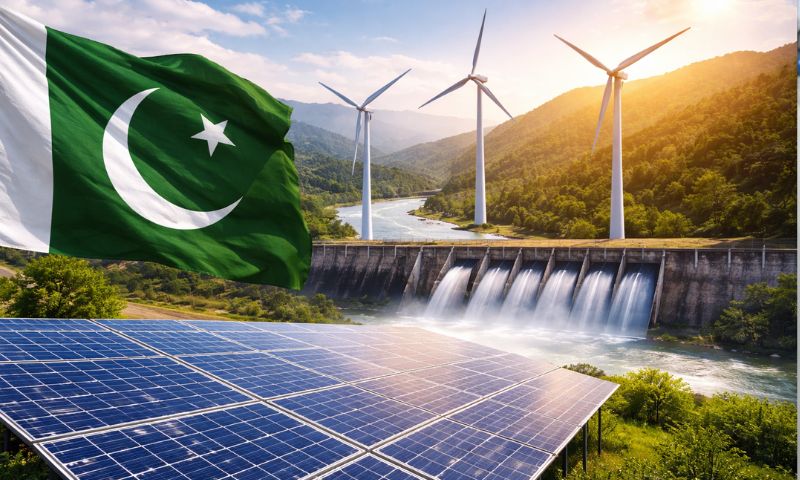
Pakistan’s energy sector is entering a new era of expansion, with investment opportunities rising sharply and public and private actors eager to participate. According to a recent government announcement, Pakistan has seen a notable rise in renewable energy capacity. Off-grid solar installations now total 12 gigawatts, and net-metered solar capacity has grown by more than 6 gigawatts, indicating strong momentum in clean energy development.
Officials say this growth reflects a strategic shift toward sustainability and energy security. Last fiscal year, 53 % of electricity generation came from renewable sources, a historic milestone for the country’s energy mix. This shift places Pakistan among the faster-growing renewable energy markets globally.
But the story goes beyond solar power. Pakistan’s energy landscape is diversifying with hydropower projects, foreign partnerships and private investments gaining steam. For example, the Azad Pattan Hydropower Project, a $1.5 billion initiative on the Jhelum River, is due for completion this year. It will add 700 MW of clean hydropower to the grid.
Similarly, the Balakot Hydropower Project (300 MW) and the Lower Spat Gah project (496 MW) are poised to attract investor interest as Pakistan seeks to reach reliable, affordable electricity.
Foreign engagement has also accelerated. A United States energy company, GE Vernova, has expressed interest in expanding hydropower investments in Pakistan — a sign that global firms see strong potential here.
Local financial markets are responding too. Lucky Investments Limited recently launched a Shariah-compliant energy fund to give investors ethical exposure to the energy sector’s growth. Mohammad Shoaib, CEO, remarked, “The energy sector remains central to Pakistan’s economic revival and long-term sustainability.”
Private investment is not just about projects; it’s about reshaping markets. Data show that energy investment with private participation in Pakistan was already significant in recent years, demonstrating commitment from outside players.
Experts caution that attracting more foreign capital will require policy stability, streamlined regulations, and infrastructure upgrades. They argue that the energy sector’s growth could boost economic recovery far beyond power generation from jobs to technology transfer.
As Pakistan advances its renewable targets and broadens its energy portfolio, investors are watching closely. The country’s strategic location, untapped resources, and renewed policy focus make now a pivotal moment for the energy sector’s future and for investors ready to power progress.