


Global stock markets experienced renewed volatility in early 2026, as heavy losses in major technology stocks wiped out billions in market value and shifted investor sentiment toward more traditional sectors and diverse equity markets. Tech Selloff Hits Big Market Caps Hard Concerns about the profitability of continued AI spending triggered a broad selloff among the world’s largest technology companies. Microsoft’s shares dropped about 17%, costing roughly $613 billion in valuation. Amazon lost nearly 14% of its market worth, shaving off around $343 billion, despite its plan to invest over $200 billion in AI, chips and robotics this year. Apple, Nvidia and Alphabet also saw significant declines. Investors growing wary of speculative AI valuations have been rotating away from big tech toward sectors viewed as more stable. This trend echoes broader market moves where defensive industries like utilities and semiconductors held up better amid the turbulence. Shift to Traditional and Overseas Markets Data from global markets shows that funds are increasingly flowing out of high-valued U.S. tech stocks into other regions. Global ex-U.S. equity funds drew their biggest inflows in over four years in January 2026, as investors sought value in markets in Europe, China, and Japan. Emerging markets also started the year strong, supported by a weaker U.S. dollar. Nations such as Turkey, Brazil, South Africa and South Korea saw some stock indexes rise more than 20% recently, boosting global market capitalization outside the U.S. tech sphere. Mixed Global Market Indicators Market action remained unsettled in other regions. European stocks edged higher as financial shares rallied, while Asian markets were subdued in holiday-light trading. Investors are watching upcoming corporate earnings as well as key economic signals like U.S. consumer price data for further cues. Meanwhile, broader global stock indexes have hit mixed results. Some world indexes touched record highs recently, only to retreat as fears about tech valuations and slowing growth cropped up. Why This Matters The selloff and market rotation underline a broader shift in investor priorities. Concerns about AI-related costs and inflated returns are forcing re-evaluations of sector valuations and risk. At the same time, overseas markets and traditional sectors are attracting capital, indicating that global market cap growth is becoming more balanced and diversified in 2026. As analysts observe, these trends may temper expected gains from mega-cap tech stocks and encourage broader participation across international equities and cyclical industries.
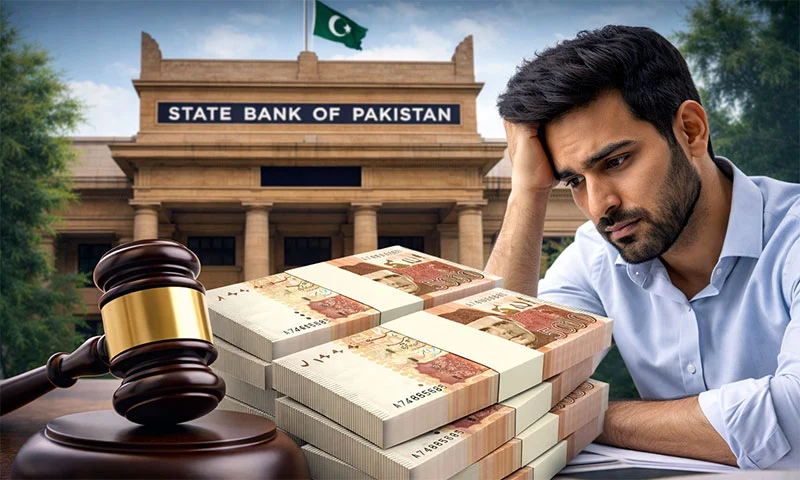
State Bank Loses Big: Court Orders PKR 500,000 Fine for Rejecting Father’s Paternity Leave
The State Bank of Pakistan (SBP) has been fined PKR 500,000 by the Federal Ombudsman for Protection Against Harassment (FOSPAH) after it refused a male employee’s request for paternity leave—triggering a landmark ruling on parental rights and workplace equality in the country. What Happened? In April 2025, Syed Basit Ali, an officer at the State Bank of Pakistan Banking Services Corporation (SBP BSC), applied for 30 days of paternity leave following the birth of his son on April 4. The bank rejected his application on the grounds that its internal leave policy did not include paternity leave—despite the fact that the Maternity and Paternity Leave Act, 2023 was already in force. Under this law, fathers are entitled to paternity leave after the birth of a child. The Ombudsman’s Ruling After reviewing the case, Federal Ombudsperson Fouzia Waqar ruled that the SBP’s refusal was illegal and discriminatory. She stated that “denying paternity leave to the complainant, to which he is legally entitled as a father, while allowing maternity leave to female employees, constitutes clear gender-based discrimination.” The ruling stressed that childcare is a shared responsibility and that denying fathers leave undercuts both parental roles and the best interests of the child. Penalty and Directive SBP was fined PKR 500,000 in total. PKR 400,000 of that amount must be paid directly to Basit Ali as compensation. The remaining PKR 100,000 will be deposited into the national treasury. The bank must immediately grant Ali 30 days of fully paid paternity leave. SBP is also ordered to update its internal policies to fully align with the Maternity and Paternity Leave Act, 2023. Why This Matters Legal experts and rights advocates are calling the decision a significant step toward workplace equality in Pakistan, where gender roles have traditionally been rigid. The ruling sets a precedent that even autonomous federal institutions are bound by federal welfare laws and cannot use internal policy loopholes to deny statutory rights. This case also highlights growing public and institutional recognition that parental responsibilities should be shared, and that both parents deserve legal support in caring for newborns—a shift from conventional norms.

Gold Bullion Surge Boosts Pakistan’s Wealth to Over $10 Billion
Pakistan has seen the value of its gold reserves climb sharply, with the latest figures from the State Bank of Pakistan (SBP) showing that the country’s gold holdings are now valued at $10.374 billion as of January 2026. This marks a significant increase from just a few months ago and reflects broader trends in global bullion markets. According to the central bank, Pakistan currently holds 64.76 tonnes of gold in reserve. That equates to roughly 20.82 million ounces or about 5.5 million tolas, a traditional South Asian measure of weight. The value of these holdings jumped by $1.279 billion in January alone. Over the first seven months of the current fiscal year, the gold reserve value has increased by about $3.5 billion. To put this surge in perspective, the value of Pakistan’s gold was previously recorded at $6.84 billion in June 2025. The recent rise underscores how changes in global gold prices can rapidly influence the worth of stored bullion. Gold functions as a key component of a country’s financial reserves, especially during periods of economic uncertainty. Central banks around the world often hold gold to diversify risk and strengthen the backing of their currencies. Recent trends show many nations increasing gold holdings as a hedge against volatile financial markets and geopolitical tensions. While Pakistan’s gold holdings in physical terms have remained relatively stable for some time, their dollar valuation moves with global spot prices. For instance, recent fluctuations saw global gold prices dip and drop to around $4,010 per ounce in mid-February 2026, mirroring movements in domestic gold markets. That volatility also affects domestic jewelry and bullion trading. Local gold prices per tola have seen declines, influenced by the international trend. Still, analysts argue that higher reserve values overall reflect solid central bank positioning against longer-term risks. Globally, gold remains a cornerstone of reserve strategy. Countries like the United States, Germany, and Italy command the largest sovereign gold stocks, often measured in thousands of tonnes. While Pakistan’s 64.76 tonnes is modest compared to these giants, a valuation above $10 billion is a noteworthy milestone for its balance sheet. Going forward, the value of Pakistan’s gold reserves will continue to be closely watched by economists and policymakers. With global markets responding to central bank demand and economic uncertainty, gold is likely to remain a vital part of Pakistan’s reserve structure.
How Diplomatic Isolation Keeps Afghanistan’s Passport Weak
Afghanistan continues to hold the title of the world’s weakest passport in the February 2026 Henley Passport Index, underscoring the severe travel limitations its citizens face. The latest report reveals Afghan passport holders can enter only 24 destinations without securing a visa before their trip. The Henley Passport Index ranks passports based on the number of destinations holders can visit without a pre-arranged visa, using exclusive travel data from the International Air Transport Association (IATA). The index covers passports from around 199 countries and territories. Afghan nationals sit at 101st place, behind all other countries in the index. This ranking is the lowest in the world for 2026, leaving Afghan travellers with severely restricted mobility compared with citizens of other nations. Despite this limited access, Afghan passport holders are still able to travel without a prior visa to a few destinations. The list includes small island countries and select nations in Africa and Asia. Visa-free access is available to the Cook Islands, Dominica, Haiti, and Micronesia. Countries offering visa on arrival or simplified electronic travel authorisation include Bangladesh, Cambodia, Maldives, Rwanda, Kenya, Sri Lanka, and Seychelles. Travel freedom varies greatly around the globe. In stark contrast to Afghanistan, countries such as Singapore, Japan, and South Korea top the 2026 rankings with access to nearly 190 or more destinations without a prior visa. Singapore remains the most powerful passport, granting its holders entry to over 190 countries. Regional neighbours also illustrate the gap in mobility. Pakistan manages to rank slightly higher with access to around 31 countries, while Bangladesh improved slightly to offer visa-free or visa-on-arrival access to 37 destinations. India, meanwhile, advanced in some reports to reach the 75th position, granting access to about 55 destinations. Experts say weak passport rankings often reflect diplomatic isolation, internal conflict, economic instability, and limited bilateral agreements. Countries facing prolonged unrest struggle to secure reciprocal travel arrangements and suffer restricted international engagement. For Afghan citizens, the consequences are real. Limited visa-free access affects millions seeking opportunities for education, work, family visits, or urgent travel abroad. With only 24 destinations accessible without pre-travel visa procedures, Afghanistan’s low ranking on the Henley Passport Index highlights a stark inequality in global movement rights.
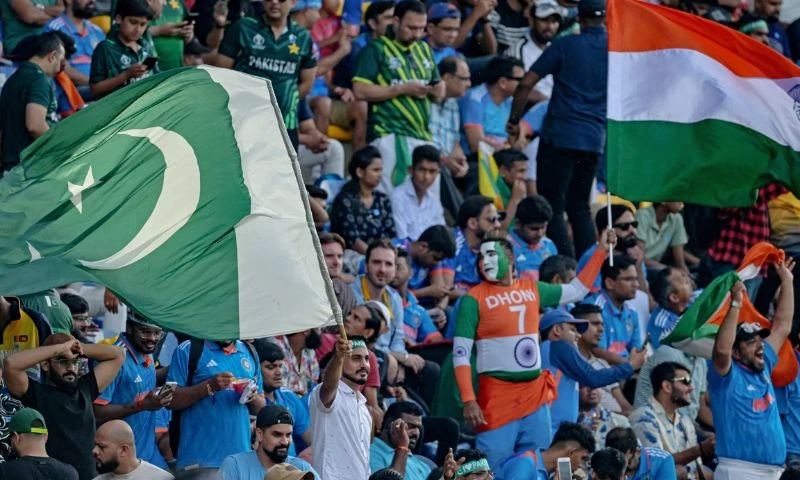
T20 World Cup Permutations: When and How India and Pakistan Can Cross Paths Again
The cricket world watched with bated breath on February 15 in Colombo when India and Pakistan clashed in the ICC Men’s T20 World Cup 2026. India thrashed Pakistan by 61 runs, but that result does not end hopes of another blockbuster meeting later in the tournament. Experts and fans alike are now closely watching the group and Super Eight scenarios to see if the arch-rivals could meet again. India’s win in Colombo secured their place in the Super Eight stage with a perfect record and superior net run rate. The result left Pakistan’s campaign in danger as they slipped to third in Group A, trailing behind the United States. Group A standings now place India first, the USA second, and Pakistan third, creating a tense qualification race for the final Super Eight spot. So how can the two rivals meet again? The key lies in Super Eight qualification and draw positions. Pakistan still has one group match remaining against Namibia on February 18. A win would likely lift them into the Super Eights, since they would go beyond four points — the maximum points any non-India team in Group A can achieve. A washout also benefits Pakistan under the points rules. A loss, however, could see them exit the tournament at the group stage yet again. If Pakistan does qualify, they would be placed into Super Eight Group 2 alongside teams such as England, New Zealand, and co-hosts Sri Lanka. India, meanwhile, will be in a different Super Eight group. For a rematch to occur, both teams would need to finish high enough in their respective Super Eight groups to reach the semi-finals. A semi-final showdown or even a final meeting could then take place if both sides advance. Fans are also watching the USA and Netherlands in Group A. The USA currently sit second but must hope for Pakistan to slip to keep their own Super Eight hopes alive. The Netherlands still has a mathematical chance but would also need results to go their way in net run rate comparisons. For Pakistan’s supporters, the crunch match against Namibia is now do-or-die. Win it and the door remains open for a potential rematch with India on the grandest World Cup stage. Lose it, and the rivalry’s official chapter in this tournament could end. Either way, the drama around potential clashes makes the T20 World Cup one of the most compelling events on the cricket calendar.

British Museum Sparks Global Outcry After Removing Word “Palestine”
The world’s most-visited cultural institution, the British Museum in London, is facing sharp criticism after removing the word “Palestine” from some of its ancient Middle East displays. The museum quietly revised several maps, labels, and information panels in its Levant and Egypt galleries, replacing the term with historically specific names such as “Canaan” and “Canaanite”. Critics say the changes distort history and erase Palestinian presence. Officials said the updates were prompted by concerns that the word “Palestine” was being applied retroactively to cultures and civilizations that existed long before the term was coined in later historical eras. They noted that the name “Palestine” first became established in Western and Middle Eastern scholarship in the late 19th century and may no longer be neutral when used to describe ancient periods. The museum also noted that in modern contexts, it still uses United Nations terminology on maps showing current political boundaries, such as Gaza, West Bank, Israel, and Jordan, and refers to “Palestinian” when appropriate as a cultural or ethnographic identifier. However, the decision triggered immediate backlash from historians, activists, and the wider public. Times columnist and historian William Dalrymple called the move “ridiculous,” pointing out that the earliest recorded use of the word “Palestine” dates back to at least 1186 BCE, predating even the first known mention of “Britain”. On social media, he wrote: “To reassure you we are not removing mention of Palestine from our labels. Indeed, we have a display on at the moment about Palestine and Gaza.” A petition opposing the change quickly gained traction online, amassing over 5,000 signatures within days. Opponents argue that removing the term contributes to erasing Palestinian presence from public memory and blurs the historical record. Activists have charged that the move reflects political pressure, particularly after a campaign by the pro-Israel legal group UK Lawyers for Israel (UKLFI) urged the museum to revise its terminology. The Palestinian ambassador to the United Kingdom, Husam Zomlot, condemned the decision, stressing that “Cultural institutions must not become arenas for political campaigns. Palestine exists. It has always existed and it always will.” The British Museum has said further updates will take place over time as part of ongoing gallery redevelopment. But critics warn that losing established terms risks rewriting history rather than clarifying it.

SBP Launches Cyber Shield to Protect Pakistan’s Financial Sector
The State Bank of Pakistan (SBP) has launched a new ‘Cyber Shield’ strategy to fortify the nation’s financial system against growing cyber threats. Announced on February 17, 2026, the initiative is a key part of the central bank’s Vision 2028 agenda, which aims to strengthen digital resilience and protect the banking ecosystem from rising online risks. The plan comes amid rapid growth in online payments and digital financial services, which have increased exposure to cybercrime both domestically and internationally. The SBP’s Cyber Shield strategy sets out a clear roadmap for banks and other financial institutions to prevent, respond to, and recover from cyber incidents. It also emphasises collaboration and information sharing across the sector, the adoption of international best practices, and continuous improvement of cyber defences to match evolving cyber risks. According to the central bank, these measures will help safeguard customers, maintain trust in digital finance systems, and support the ongoing adoption of innovative financial technologies. In a statement, SBP officials highlighted that cybersecurity threats are becoming more sophisticated as digital financial services expand. The central bank said it expects all regulated entities to align their internal cybersecurity programmes with the Cyber Shield strategy. The phased implementation will continue through 2030, giving financial institutions time to enhance systems and controls, strengthen governance and accountability around cyber risk, and ensure compliance with the new framework. SBP’s focus on cybersecurity comes at a time when the adoption of digital payments and internet banking is surging. According to industry data, the number of online transactions and fintech platforms in Pakistan has increased sharply over the past few years, driven by broader financial inclusion efforts and the convenience of mobile and internet banking. Cyber experts say this growth has expanded the surface area for potential cyberattacks, making resilience a top priority for regulators and banks alike. The Cyber Shield strategy identifies five key priorities for the financial sector. These include strengthening the ability of institutions to withstand cyber incidents, improving governance frameworks related to cyber risk, fostering cooperation and information sharing, building skilled cyber talent, and regularly updating security practices to stay ahead of emerging threats. The SBP said it will monitor global developments closely and update the strategy as needed to address new risks. Industry stakeholders have welcomed the initiative, saying the framework will help unify efforts across banks, fintech firms, and other financial service providers. Many also noted the importance of developing local cybersecurity expertise, as Pakistan currently faces a shortage of skilled professionals able to manage complex cyber challenges. Attracting and retaining talent is seen as crucial to implementing the new strategy effectively. As digital finance continues to grow in Pakistan, the launch of the Cyber Shield marks a significant milestone in the country’s efforts to ensure the safety and stability of its financial ecosystem. By reinforcing defences and improving readiness, the strategy aims to protect both consumers and businesses in an increasingly interconnected digital world.
