

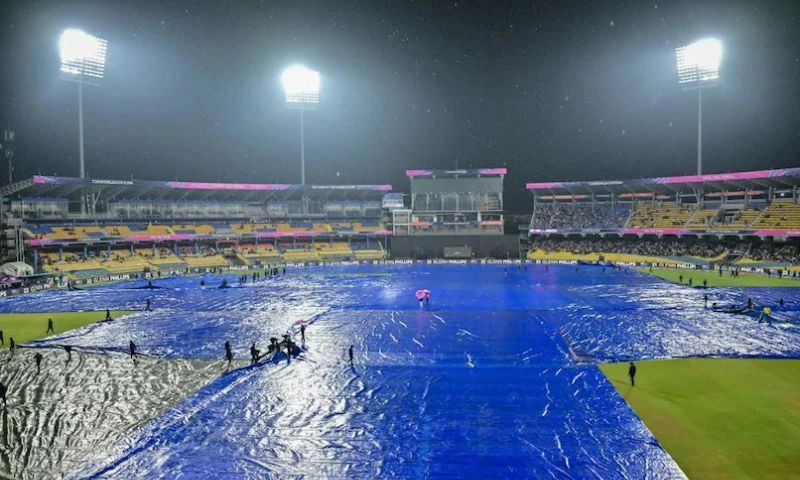
The high stakes Super 8 encounter between Pakistan and New Zealand in the ICC Men’s T20 World Cup 2026 ended in frustration as persistent rain forced a washout. Not a single ball could be bowled, leaving both teams to share one point each in Group 2. The abandoned match has significant implications for the semi final race, especially with the Super 8 stage entering its decisive phase. Points Table Impact After Washout Under ICC tournament rules, a washout results in one point per team. With this outcome, both Pakistan and New Zealand move ahead slightly in the standings but miss the opportunity to claim two crucial points. New Zealand had entered the contest in a stronger position, having secured earlier wins in the Super 8 stage. The additional point keeps them in contention and maintains their edge in net run rate, which often plays a decisive role in tight groups. Pakistan, however, needed a victory to boost their semi final hopes. The shared points scenario means they now rely heavily on winning their remaining match and monitoring other results. If New Zealand win their final Super 8 fixture, they are likely to secure a semi final berth regardless of Pakistan’s outcome. Pakistan’s qualification path becomes narrower, as they must win big in their next game and hope for a favorable net run rate swing if teams end level on points. Read More: High Stakes Clash as Pakistan Face New Zealand in T20 World Cup Impact on the Semi Final Equation From a strategic standpoint, New Zealand appear less affected by the washout. The extra point strengthens their buffer in the standings and reduces pressure ahead of their final group match. Pakistan face the greater disadvantage. A win against New Zealand would have put them in a stronger position and possibly ahead in the table. Instead, they now depend on other results. Net run rate calculations could become critical. In previous ICC tournaments, teams have qualified or been eliminated by marginal differences in run rate. Pakistan must aim for a convincing victory in their remaining fixture to improve their standing. Read More: T20 World Cup: What Happens If Pakistan vs New Zealand T20 World Cup Match Is Washed Out Tournament Context and Rivalry Pakistan and New Zealand share a history of closely fought ICC matches. Pakistan famously defeated New Zealand in the semi final of the 2022 T20 World Cup, while New Zealand have often dominated bilateral T20 series. The Super 8 stage in the 2026 edition has already produced tight finishes and rain interruptions. Weather has played a role in several games, adding unpredictability to the qualification race. The venue conditions for this match had initially promised an even contest between Pakistan’s pace attack and New Zealand’s disciplined batting lineup. Unfortunately, rain denied fans a potential thriller. What Lies Ahead For Pakistan, the equation is clear. Win the final Super 8 match convincingly and hope that net run rate and other outcomes fall in their favor. Any slip could end their campaign. New Zealand remain in a stronger position. A win in their final outing likely secures a semi final spot, while even a narrow loss might keep them in contention depending on net run rate. The washout has intensified the drama in Group 2. With semi final berths on the line, every remaining over in the Super 8 stage now carries immense weight.
Pakistan Pushes for Expanded US Investment Ahead of March Trade Forum
Pakistan’s Finance Minister Senator Muhammad Aurangzeb led a high-level delegation to Washington, DC, for intensive discussions with US Commerce Secretary Howard A. Lutnick aimed at enhancing bilateral trade and investment ties between the two countries. The meetings reflected both sides’ desire to expand economic cooperation beyond traditional areas and to explore new opportunities for mutual growth. The talks, held at the US Department of Commerce, brought together senior officials from Pakistan’s commerce and finance ministries, the Pakistani Ambassador to the United States, and key American counterparts. Both delegations discussed ways to strengthen trade linkages, address market access issues, and attract greater US investment into the Pakistani economy. A Focus on Investment and Emerging Sectors During the meeting, Aurangzeb and Lutnick highlighted promising sectors for collaboration, including information and communications technology (ICT), mining, minerals and energy, where both nations see significant growth potential. Aurangzeb expressed Pakistan’s interest in drawing US firms into these areas, saying the partnership could benefit from the US’s technological expertise and capital resources. Aurangzeb also appreciated the role of the US Chamber of Commerce in organising the upcoming US-Pakistan Trade and Investment Forum scheduled for March 31, 2026. He expressed hope that the office of the US Commerce Secretary would participate in the event, which is expected to attract leading companies and investors from both countries. The discussions build on months of ongoing negotiations and high-level engagements. Last year, Pakistan and the United States concluded a landmark trade deal aimed at reducing reciprocal tariffs, particularly on Pakistani exports, and broadening access to US markets. Officials described the agreement as a major step forward in economic cooperation, with potential to spur investment in energy, mining, IT and digital sectors. Economists say enhancing Pakistan-US trade ties could help reduce trade imbalances, create jobs, and boost exports of value-added products. The US remains one of Pakistan’s largest trading partners, with thousands of US companies already doing business in Pakistan or looking for opportunities in its large consumer market. Reform Agenda and Economic Stability Aurangzeb has repeatedly emphasised that continued economic reforms in taxation, energy and trade policy are central to making Pakistan a more attractive destination for foreign investment. Previously, he noted that both sides agreed to expand engagement beyond immediate trade issues and focus on longer-term investment opportunities that could be “a real game changer” for Pakistan’s economy. The Pakistani delegation’s visit coincides with broader efforts to strengthen strategic ties with the United States as part of a reset in diplomatic and economic relations. Recent visits by senior Pakistani officials have addressed issues ranging from joint investment projects to regional stability and security cooperation. The high-profile meetings in Washington signal both countries’ commitment to deepening economic partnership. Observers expect that the momentum generated by these talks will carry through to the upcoming trade forum at the end of March, potentially laying the groundwork for expanded bilateral investment and enhanced market access.
The Science of Ramadan Fasting: What 30 Days Does to Your Body
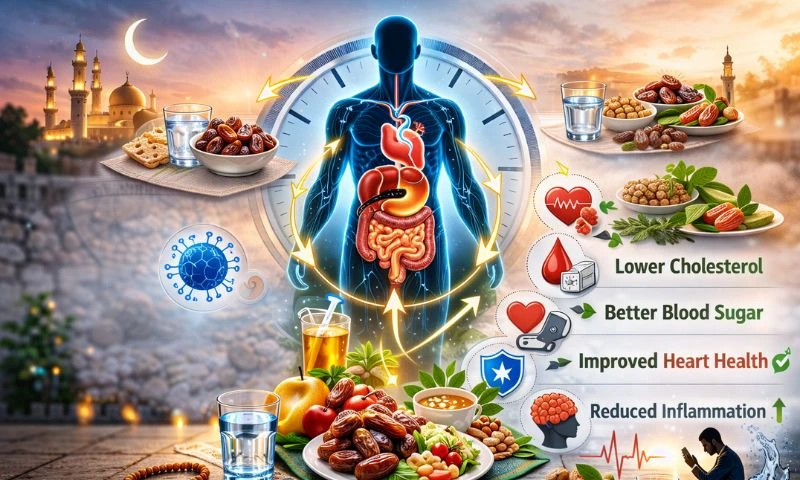
Ramadan fasting differs from popular diet trends because it involves abstaining from food and drink from dawn to sunset for 29 to 30 consecutive days. Unlike continuous calorie restriction, Ramadan fasting follows a daily cycle of fasting and refeeding. Scientists classify it as a form of intermittent fasting with time-restricted eating. So what does a full month of Ramadan fasting actually do to the body? Metabolic Reset and Fat Utilization During the fasting hours, the body first uses stored glucose. After several hours, it begins shifting toward burning fat for energy. Researchers describe this as “metabolic switching.” A review published in the New England Journal of Medicine explains: “Periods of dietary energy restriction sufficient to cause depletion of liver glycogen stores trigger a metabolic switch.” This shift increases fat oxidation and ketone production. Studies specifically on Ramadan fasting show measurable metabolic improvements. A 2019 systematic review in Nutrients found that Ramadan fasting is associated with modest weight loss, reduced body fat percentage, and improvements in lipid profiles, especially in healthy adults. Most participants lose between 1 to 3 kilograms during Ramadan, according to pooled analyses. Some weight may return after the month, but improvements in cholesterol markers often persist for weeks. Cholesterol, Blood Pressure, and Heart Health Cardiovascular health markers frequently improve during Ramadan. A review published in the Journal of the American Heart Association found that Ramadan fasting was linked to reductions in LDL cholesterol and triglycerides, particularly when diets were balanced. Blood pressure often declines as well. Research published in Frontiers in Nutrition showed that both systolic and diastolic blood pressure decreased modestly during Ramadan in many participants. These changes are linked to improved insulin sensitivity, better fat metabolism, and structured meal timing. Blood Sugar and Insulin Sensitivity Ramadan fasting can improve insulin sensitivity in healthy individuals. A study in Diabetes Research and Clinical Practice reported improved glycemic control in many fasting participants, particularly those who maintained balanced iftar meals. Lower insulin levels during fasting hours allow the body to access stored fat more efficiently. However, people with diabetes must fast under medical supervision, as blood sugar fluctuations can pose risks. Inflammation and Cellular Repair Emerging evidence suggests Ramadan fasting may reduce inflammation. A study published in Annals of Nutrition and Metabolism found decreases in inflammatory markers such as CRP after Ramadan. There is also growing interest in autophagy, the body’s cellular repair process. While human evidence is still developing, fasting periods are associated with biological pathways that support cellular clean-up and renewal. Mental and Hormonal Effects Beyond metabolism, Ramadan fasting influences hormones such as cortisol and growth hormone. Many participants report improved focus and mood stability after the first adjustment phase. Sleep changes can occur, especially due to late-night prayers and early suhoor meals. Studies note that sleep quality plays a key role in determining overall benefits. The Bottom Line A month of Ramadan fasting can lead to modest weight loss, improved cholesterol levels, better blood sugar control, reduced blood pressure, and lower inflammatory markers in healthy adults. The benefits depend heavily on food quality, hydration after sunset, and sleep patterns. Ramadan fasting works best when iftar meals avoid excessive sugar and fried foods. Science shows that when practiced safely, Ramadan fasting can offer measurable metabolic and cardiovascular benefits. It is not just spiritual discipline. It is also a structured metabolic reset.
Fasting and Fearless: How Muslim Athletes Compete in Ramadan
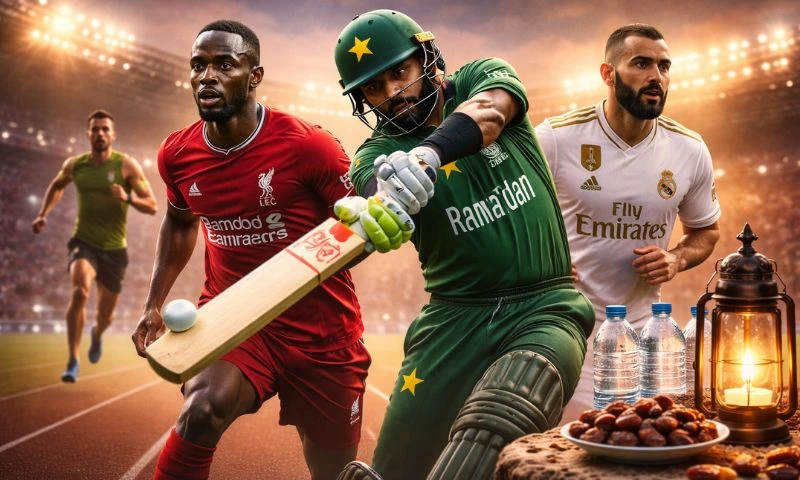
Every year, Ramadan overlaps with major global sporting events, including football leagues, international cricket tours, the IPL, and even ICC tournaments. For Muslim athletes, this means competing without food or water from dawn to sunset while maintaining elite performance standards. Ramadan shifts around 10 to 11 days earlier each year, meaning it frequently falls during peak cricket and football seasons. In 2019, Ramadan ran from May 6 to June 4 and overlapped with the ICC Cricket World Cup in England. Several Muslim players competed during that period, including Pakistan’s squad members and Afghanistan players. What Sports Science Says Research on fasting and performance has grown in recent years. A consensus statement published by the International Olympic Committee found that intermittent fasting, including Ramadan fasting, does not automatically impair performance in well-trained athletes, provided hydration and recovery are managed carefully. A 2020 review published in Sports Medicine concluded that aerobic performance, strength, and jump performance often remain stable during Ramadan. However, sprint performance and high-intensity repeated efforts can be affected, especially when dehydration combines with reduced sleep. Aspetar, the Qatar-based sports medicine hospital, advises adjusting training times, reducing load where needed, and maximizing nutrition during non-fasting hours. Their clinical guidance highlights that hydration status is the most critical variable affecting performance. Read More: The Resilience of Ramadan: How Faith Survives Conflict and Loss Cricket During Ramadan Cricket presents unique challenges. Matches can last up to eight hours in ODIs or multiple days in Test cricket. Fasting players must manage long fielding spells under the sun, high-intensity bowling bursts, and concentration-heavy batting sessions. During the 2019 Cricket World Cup, Pakistan defeated England at Trent Bridge on June 3, 2019, while Ramadan was ongoing. Several Muslim players competed in that match. Earlier that month, Afghanistan faced Australia during Ramadan as well. In domestic leagues, Ramadan frequently overlaps with the Indian Premier League. Night matches help fasting players because they can break their fast shortly before or during the game. Some players take fluids immediately after sunset when permitted under match conditions. Former Pakistan captain Misbah-ul-Haq has spoken in interviews about balancing faith and professional cricket, emphasizing discipline and mental strength as key factors. Read More: Ramadan 2026: Which Countries Will Have Longest and Shortest Fasting Hours Football and Global Examples Football has produced some of the most visible Ramadan athletes. Karim Benzema once said, “Ramadan is part of my life and my religion makes Ramadan an obligation. For me, it’s very important and I feel good when I’m fasting.” Liverpool forward Sadio Mane admitted the difficulty, saying, “It’s not easy because playing and training and doing Ramadan isn’t easy at all.” Coaches increasingly adapt. Training sessions may shift to mornings, recovery protocols intensify, and nutrition plans become highly personalized. Read More: London Marks Ramadan with 30,000 LED Lights and a Message of Peace Performance Is Planning Data and athlete testimony show that fasting does not automatically reduce elite output. The key lies in sleep management, smart nutrition at suhoor and iftar, and structured recovery. In cricket, football, athletics, and combat sports, Ramadan has become another variable to manage rather than an obstacle to avoid. For many athletes, faith and performance move forward together.
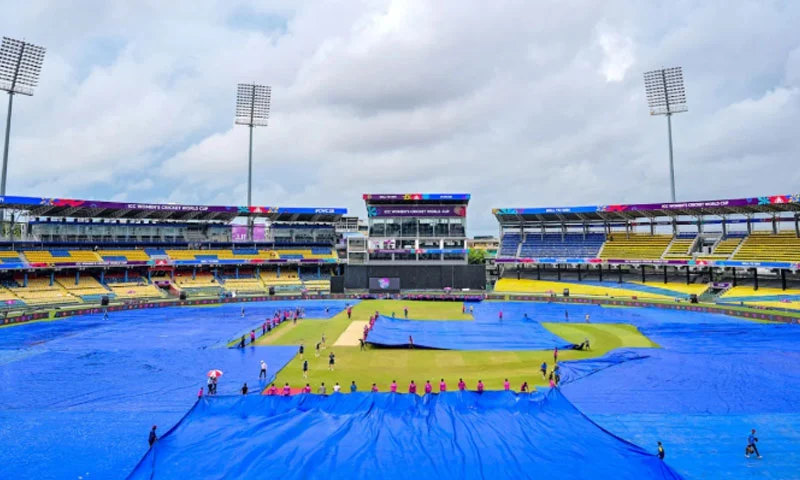
T20 World Cup: What Happens If Pakistan vs New Zealand T20 World Cup Match Is Washed Out
As the ICC Men’s T20 World Cup 2026 Super Eight stage gets underway, heavy rain clouds are threatening the crucial match between Pakistan and New Zealand at the R. Premadasa Stadium in Colombo. Weather forecasts predict widespread showers and thunderstorms throughout Saturday, raising concerns that rain may disrupt or even wash out the high-stakes encounter. According to meteorological reports, Colombo’s skies will remain overcast with high probabilities of precipitation before and during the match. Forecasts indicated a 75 to 80 percent chance of rain in the afternoon and into the evening, with maximum rain expected between midday and early afternoon. While the chance of rain drops slightly later in the evening, showers may still interfere with play shortly before the scheduled 7 p.m. start. Officials and teams are keenly watching weather developments, as the match holds significant implications for both sides. Pakistan and New Zealand finished second in their respective groups to reach the Super Eight round of the tournament, co-hosted by India and Sri Lanka from February 7 to March 8. The opening Super 8 match is expected to set the tone for both teams’ chances of reaching the semifinals. What Happens If Rain Washes Out the Match? Under current ICC rules for rain-affected matches in the Super Eight stage, there is no reserve day for group matches. Reserve days are reserved only for the semifinals and final due to tight scheduling and logistic challenges across multiple venues. This means any washed-out match will be decided based on the standard competition points system rather than being replayed on another day. If rain prevents the match from beginning or if it cannot reach the minimum play criteria needed for a result under the Duckworth-Lewis-Stern (DLS) method, both Pakistan and New Zealand will be awarded one point each. In ICC events, each side normally earns two points for a win and one point apiece for a no-result. The DLS method applies only if a minimum number of overs are bowled in the match before rain intervenes and a revised target can be calculated. Awarding one point each would have immediate strategic impacts. Points earned from this match could play a decisive role in determining which teams progress to the semifinals from the Super 8 group. With limited fixtures remaining and tight competition, even minor weather disruptions can shift momentum and rankings. In some recent World Cup matches, rain has affected decisive contests, and the teams must prepare for all possibilities. Conditions and Predictions Ahead of Play Beyond rain chances, Colombo’s conditions are expected to be hot and humid, with high humidity and significant cloud cover making the day uncomfortable for both players and fans. Winds will vary throughout the afternoon, but they are unlikely to disperse clouds or prevent rainfall entirely. Some localized thunderstorms remain possible before and during play. As both teams prepare, Pakistan’s captain Salman Ali Agha and New Zealand’s leadership will monitor weather updates closely. The teams may adjust strategies if rain looks likely, particularly in their approach to batting orders and bowling changes. Fans around the world are urged to stay updated on live weather feeds as they follow the match online or on television.

Former England Captain Warns ECB Over Pakistani Players’ Fate in The Hundred
Former England captain Michael Vaughan has issued a strong appeal to the England and Wales Cricket Board (ECB) to intervene after reports suggested that Pakistani players may face exclusion or indirect snubbing in this year’s The Hundred player draft. Vaughan voiced his concerns on social media platform X, urging the ICC-aligned board to uphold fairness and inclusivity as franchises prepare for the March 11-12 player auction. He said the board must act swiftly if the reported avoidance of Pakistani talent is true. In a post that resonated widely within the cricket community, Vaughan wrote, “The ECB need to act fast on this… they own the league and this should not be allowed to happen.” He added that cricket should be one of the most inclusive sports in England, reflecting the country’s multicultural and diverse sporting culture. The ECB need to act fast on this .. they own the league and this should not be allowed to happen .. the most inclusive sport in the country is not one that allows this to happen .. https://t.co/IYysTSIYHt— Michael Vaughan (@MichaelVaughan) February 20, 2026 What Triggered Vaughan’s Statement Recent reports by BBC Sport and other media outlets suggested that several franchises linked to Indian Premier League (IPL) owners may be hesitant to sign Pakistani players. Teams such as Manchester Super Giants, MI London, Southern Brave and Sunrisers Leeds have connections to IPL ownership, and insiders hinted that unofficial preference patterns could influence squad composition. Such trends would mirror the reality of the IPL itself, where Pakistani players have been absent since 2008 due to broader geopolitical tensions. Although this absence predates The Hundred, the possibility of a similar pattern within England’s franchise competition alarmed Vaughan and other cricket observers. ECB Responds and Stresses Inclusivity The ECB responded to the controversy by stating that it had not verified the specific claims related to nationality bias. A spokesperson said The Hundred “welcomes men’s and women’s players from all over the world” and emphasised that overseas recruitment should reflect merit. Franchise officials have also downplayed the snub narrative. One team representative described squad building as a “complex process balancing international talent, team strategy and player availability”, not factors tied to a player’s national origin. Pakistani Players in The Hundred So Far In past editions, The Hundred has featured Pakistani stars including Mohammad Amir, Shaheen Shah Afridi, Shadab Khan, Haris Rauf and Imad Wasim. Their participation added variety and competitive strength to the tournament, making the current reports of potential exclusion even more contentious. Critics argue that a pattern of avoidance based on nationality undermines the ethos of franchise cricket, which thrives on diversity and global talent exchange. As the auction approaches, observers will be watching closely to see if any actions are taken in response to Vaughan’s plea and whether Pakistani players receive fair opportunities in The Hundred.

0.8 Million Hours Saved: Yango Highlights AI Impact on Traffic
Ride hailing and mobility platform Yango has said that its AI powered routing system helped commuters in Pakistan save more than 0.8 million hours in 2025, highlighting the growing role of artificial intelligence in tackling urban congestion. According to a report published by Dawn, Yango shared data indicating that its advanced routing algorithms reduced travel time for riders across major cities by suggesting faster and more efficient routes. The company said the savings were achieved through real time traffic analysis and predictive modeling that adjusts routes dynamically based on road conditions. AI at the Core of Urban Mobility Yango explained that its routing system uses artificial intelligence to process traffic data, road closures, weather patterns and historical ride information. The platform’s technology evaluates thousands of route combinations within seconds and guides drivers through the most time efficient paths. The company said that in Pakistan’s densely populated cities, where traffic congestion remains a daily challenge, even small route optimizations can lead to substantial cumulative time savings over the course of a year. Urban transport experts have long argued that smart mobility solutions can help reduce delays in megacities. According to global mobility studies by institutions such as the International Transport Forum, AI driven traffic systems can improve travel time reliability and lower congestion costs when implemented at scale. Read More: Electric Rides & Hybrid Power: Pakistan’s 2026 Car Lineup Preview Benefits for Riders and Drivers Yango noted that reduced travel time benefits both passengers and drivers. Riders reach their destinations faster, while drivers can complete more trips in a day, potentially increasing earnings. The company stated that its AI model also enhances safety by avoiding accident prone routes and high risk traffic zones where possible. By continuously learning from traffic trends, the system adapts to evolving patterns in each city. Yango operates in multiple Pakistani cities and competes in a market that includes other ride hailing platforms. The integration of AI in routing reflects a broader trend in the global mobility sector, where companies increasingly rely on data driven optimization. Pakistan’s Digital Transformation Pakistan’s digital ecosystem has expanded rapidly in recent years. Smartphone penetration and mobile broadband usage have increased, enabling technology platforms to reach a wider user base. The Pakistan Telecommunication Authority has reported steady growth in mobile internet subscribers, which supports app based services such as ride hailing. Experts say AI adoption in transport is part of a larger digital transformation. Intelligent transport systems can reduce fuel consumption and emissions by minimizing idle time in traffic, which also supports environmental goals. Read More: Motorways Crackdown Begins: Unsafe Cars Denied Entry Nationwide Looking Ahead Yango said it will continue investing in AI research and local adaptation of its routing systems. The company aims to further enhance trip efficiency and user experience in Pakistan. As urban centers grow and congestion intensifies, technology driven solutions may play a critical role in shaping the future of mobility. With claimed savings of 0.8 million hours in 2025 alone, AI powered routing is emerging as a significant tool in improving commuter experience in Pakistan.

Trump Vows 10% Global Tariff After US Supreme Court Rejects his Global Tariffs
In a major legal and economic setback, the United States Supreme Court on Friday ruled that President Donald Trump’s sweeping global tariffs were illegal, curbing one of the most controversial aspects of his second term’s trade policy. The decision came in a 6-3 ruling that upheld lower court judgments and rejected Trump’s use of an emergency powers law to impose tariffs on almost all US trading partners. However, Trump reacted defiantly after the ruling and pledged to introduce a new 10 per cent tariff on imported goods from around the world, signalling that trade tensions and economic friction are far from over. Supreme Court’s Ruling on Tariffs The case centred on Trump’s invocation of the International Emergency Economic Powers Act (IEEPA), a law crafted for use in genuine national emergencies but not traditionally used to impose tariffs. In its decision, the Supreme Court held that IEEPA does not authorise tariffs or duties without explicit congressional approval. Chief Justice John Roberts wrote that “IEEPA contains no reference to tariffs or duties,” highlighting the constitutional requirement that Congress, not the President, has authority to levy taxes and tariffs under the US Constitution. The ruling upheld decisions from lower courts brought by businesses and a coalition of 12 states that had challenged the legality of Trump’s tariff actions. These tariffs had affected a wide range of imports and were originally justified by Trump as necessary to protect US industries and address trade imbalances. Economists from the Penn-Wharton Budget Model estimated that tariffs imposed under IEEPA had already generated more than $175 billion in revenue, with projections of up to $300 billion annually if all tariffs remained in place over the next decade. Many of these funds would now likely need to be refunded following the court’s ruling. Read More: 25% Tariff Shock: Trump Moves to Punish Nations Doing Business With Iran Trump’s Reaction and New Tariff Plan After the decision, Trump spoke to reporters at the White House and lambasted the court’s majority. He said he was “ashamed of certain members of the court… for not having the courage to do what’s right for our country.” Yet he insisted the ruling left him “more powerful” and vowed to pursue tariffs under alternative legal authorities. Trump announced plans to institute a 10 per cent tariff on global imports, hinting at a new trade strategy that could reshape US economic policy and strain relations with key partners. Trump said that to protect America, the presidency would now expand tariff powers beyond previous levels, including maintaining tariffs on goods from China, Europe and other major partners. Global Response and Economic Impact The court’s decision drew immediate global attention. The European Union said it was analysing the implications of the ruling on transatlantic trade relations and expected ongoing dialogue with Washington. A British government spokesperson stated London would work with the US to understand how the ruling could affect existing trade arrangements. Canada’s trade minister called the Supreme Court decision an affirmation that Trump’s tariffs were unjustified, though he noted that some sector-specific levies affecting steel and aluminum remained in effect. Financial markets reacted positively following the ruling, with US and European stocks rising as investors gained clarity on future trade policy. Read More: Big Spending, Bigger Warnings: US President Donald Trump Proposes Record $1.5 Trillion US Defence Budget Historical and Political Context Trump’s tariff strategy marked one of the most aggressive uses of trade tools by any US president. He initially imposed wide duties under IEEPA in 2025 and later under other statutes, including tariffs aimed at China, Mexico and Canada. These tariffs were intended to extract concessions, protect domestic industries and deter unfair trade practices, but they also raised costs for importers and stirred diplomatic tension. The Supreme Court’s landmark decision now limits unilateral presidential authority on trade, reaffirming the constitutional role of Congress in tax and tariff legislation.
