In a major legal and economic setback, the United States Supreme Court on Friday ruled that President Donald Trump’s sweeping global tariffs were illegal, curbing one of the most controversial aspects of his second term’s trade policy. The decision came in a 6-3 ruling that upheld lower court judgments and rejected Trump’s use of an emergency powers law to impose tariffs on almost all US trading partners.
However, Trump reacted defiantly after the ruling and pledged to introduce a new 10 per cent tariff on imported goods from around the world, signalling that trade tensions and economic friction are far from over.
Supreme Court’s Ruling on Tariffs
The case centred on Trump’s invocation of the International Emergency Economic Powers Act (IEEPA), a law crafted for use in genuine national emergencies but not traditionally used to impose tariffs. In its decision, the Supreme Court held that IEEPA does not authorise tariffs or duties without explicit congressional approval. Chief Justice John Roberts wrote that “IEEPA contains no reference to tariffs or duties,” highlighting the constitutional requirement that Congress, not the President, has authority to levy taxes and tariffs under the US Constitution.
The ruling upheld decisions from lower courts brought by businesses and a coalition of 12 states that had challenged the legality of Trump’s tariff actions. These tariffs had affected a wide range of imports and were originally justified by Trump as necessary to protect US industries and address trade imbalances.
Economists from the Penn-Wharton Budget Model estimated that tariffs imposed under IEEPA had already generated more than $175 billion in revenue, with projections of up to $300 billion annually if all tariffs remained in place over the next decade. Many of these funds would now likely need to be refunded following the court’s ruling.
Read More: 25% Tariff Shock: Trump Moves to Punish Nations Doing Business With Iran
Trump’s Reaction and New Tariff Plan
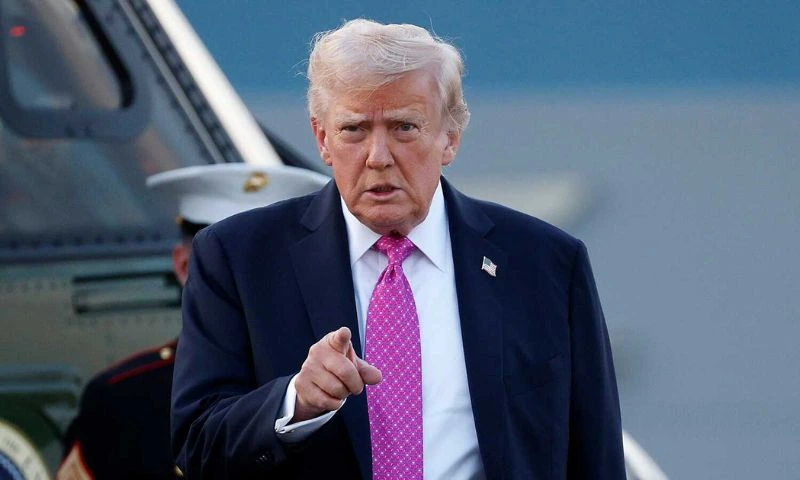
After the decision, Trump spoke to reporters at the White House and lambasted the court’s majority. He said he was “ashamed of certain members of the court… for not having the courage to do what’s right for our country.” Yet he insisted the ruling left him “more powerful” and vowed to pursue tariffs under alternative legal authorities. Trump announced plans to institute a 10 per cent tariff on global imports, hinting at a new trade strategy that could reshape US economic policy and strain relations with key partners.
Trump said that to protect America, the presidency would now expand tariff powers beyond previous levels, including maintaining tariffs on goods from China, Europe and other major partners.
Global Response and Economic Impact
The court’s decision drew immediate global attention. The European Union said it was analysing the implications of the ruling on transatlantic trade relations and expected ongoing dialogue with Washington. A British government spokesperson stated London would work with the US to understand how the ruling could affect existing trade arrangements.
Canada’s trade minister called the Supreme Court decision an affirmation that Trump’s tariffs were unjustified, though he noted that some sector-specific levies affecting steel and aluminum remained in effect.
Financial markets reacted positively following the ruling, with US and European stocks rising as investors gained clarity on future trade policy.
Historical and Political Context
Trump’s tariff strategy marked one of the most aggressive uses of trade tools by any US president. He initially imposed wide duties under IEEPA in 2025 and later under other statutes, including tariffs aimed at China, Mexico and Canada. These tariffs were intended to extract concessions, protect domestic industries and deter unfair trade practices, but they also raised costs for importers and stirred diplomatic tension.
The Supreme Court’s landmark decision now limits unilateral presidential authority on trade, reaffirming the constitutional role of Congress in tax and tariff legislation.