

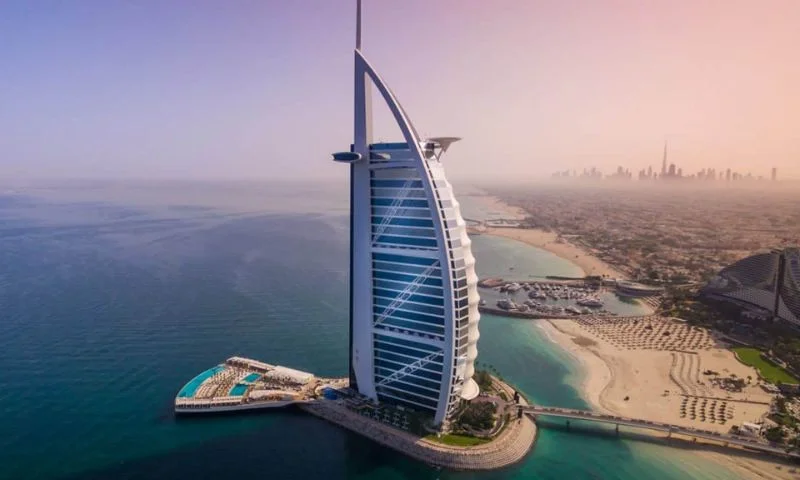
Dubai’s iconic luxury hotel, the Burj Al Arab, is set to undergo a comprehensive 18-month restoration project, marking one of the most significant upgrades since the property first opened in 1999. The announcement was confirmed by operator Jumeirah Group, which said the hotel will temporarily close to guests while extensive refurbishment works are carried out across its interiors. Focus on preserving identity while modernising interiors According to the operator, the restoration will focus primarily on upgrading the hotel’s interiors while ensuring that its distinctive design and architectural identity are preserved. The project has been described as a carefully planned effort to maintain the property’s globally recognised aesthetic while modernising facilities to meet evolving luxury standards. Officials said the restoration will be led by an international design expert, highlighting the scale and precision of the upgrade. The Burj Al Arab, often described as one of the world’s most recognisable hotels, has been a defining symbol of Dubai’s luxury tourism industry for more than two decades. Landmark status and global appeal Built on an artificial island approximately 280 metres off Jumeirah Beach, the sail-shaped hotel has become synonymous with Dubai’s rise as a global tourism hub. Since its opening in 1999, the property has attracted high-profile guests and global attention, frequently marketed as one of the most luxurious hotels in the world. Its interiors are known for their opulence, featuring extensive use of gold leaf, rare marble and elaborate design elements that have defined its “seven-star” reputation. The restoration comes as the hotel approaches more than 25 years of operation, with analysts noting that high-end hospitality assets often require major upgrades to remain competitive in the luxury segment. Timing and strategic positioning The closure is expected to take effect in 2026, with the hotel remaining unavailable to guests throughout the 18-month restoration period. Industry experts say the timing reflects a broader strategy within Dubai’s tourism sector to refresh flagship properties while maintaining the city’s reputation for premium hospitality. The move also coincides with increased competition in the luxury hotel market, both within the UAE and globally, as new high-end developments continue to emerge. Broader implications for Dubai tourism The temporary closure of such a high-profile landmark is likely to have short-term implications for the city’s luxury tourism offerings, though officials say the long-term benefits will outweigh the disruption. Analysts note that Dubai has a diverse hospitality portfolio, allowing it to absorb the temporary loss of one of its flagship properties. The restoration is expected to reinforce the Burj Al Arab’s position as a leading luxury destination once it reopens, with upgraded interiors and enhanced guest experiences. Outlook The planned restoration underscores Dubai’s continued investment in maintaining its status as a global luxury tourism hub. By modernising one of its most iconic properties while preserving its architectural identity, the city is aiming to balance heritage with innovation in a competitive global market.

France Unveils $10.7 Billion Plan to Ditch Fossil Fuels
France is moving away from short-term fuel subsidies and toward a large-scale electrification strategy worth approximately $10.7 billion annually, as it seeks to reduce reliance on imported oil and gas amid global energy shocks. The plan, announced by Prime Minister Sébastien Lecornu, marks a shift in policy from shielding consumers through fuel relief to accelerating long-term energy independence through electrification. From fuel relief to electrification The government will increase annual support for electrification to around €10 billion per year through 2030, nearly doubling previous funding levels. Officials say the move is designed to reduce exposure to volatile global energy markets, particularly following disruptions linked to the Middle East crisis and the closure of key oil supply routes. “Today 60% of our energy consumption comes from imported fossil fuels,” Lecornu said, warning that reliance on oil and gas leaves France vulnerable to external shocks. He added that dependence on fossil fuels means countries will continue to “pay the price of other people’s wars,” underscoring the urgency of the transition. Heat pumps at the center of transition A key pillar of the strategy is the rapid rollout of heat pumps, with the government targeting the installation of one million units annually by 2030. Authorities also plan to ban the installation of gas boilers in new buildings from 2027, signalling a decisive shift in how homes are heated. The government aims to phase out gas heating in two million social housing units by 2050, while offering subsidies and financing schemes to encourage households to switch to electric heating systems. Officials say these measures could replace 85 terawatt-hours of gas consumption, equivalent to around 20 percent of France’s import bill. Electrification extends to transport The plan also targets the transport sector, with a goal that two out of three new vehicles sold in France will be electric by 2030. To support adoption, the government will expand its social leasing programme for electric vehicles and provide subsidies of up to €100,000 per electric truck or commercial vehicle. Analysts say this approach focuses on high-impact users such as delivery operators and long-distance drivers, where fuel displacement is greatest. Energy security and economic implications The electrification drive is framed not only as a climate policy but also as a national security strategy. “The issue is no longer only about climate, it now concerns national interest,” Lecornu said, linking the transition directly to geopolitical risks and energy sovereignty. France benefits from a strong domestic electricity base, largely powered by nuclear energy, which officials say is significantly cheaper than imported fossil fuels. However, experts warn that scaling electrification will require significant upgrades to infrastructure and careful management of electricity demand. Outlook France’s shift toward electrification reflects a broader European trend of reducing dependence on fossil fuels and accelerating the adoption of cleaner energy technologies. By prioritising heat pumps, electric vehicles and domestic power generation, the government aims to build a more resilient energy system. While the transition will take years to fully implement, the scale of investment signals a decisive policy shift that could reshape how France powers its economy and homes.

Tired of Repeating Prompts? Google Just Made AI Way Easier to Use in Chrome
Google has rolled out a new feature in its Chrome browser that allows users to save and reuse artificial intelligence prompts, addressing a common frustration among users who repeatedly enter the same commands when interacting with AI tools. The feature, known as “Skills,” is integrated into Google’s Gemini AI system within Chrome and enables users to store frequently used prompts and execute them across different webpages with minimal effort. How the feature works The system allows users to turn prompts into reusable workflows that can be triggered instantly. Once a prompt is saved, it can be accessed via the Gemini interface by typing a forward slash or selecting from a menu of stored “Skills.” Users can create custom prompts or choose from a growing library of pre-built options designed for common tasks such as summarising content, comparing products or modifying recipes. “To make this easier, we’re launching Skills in Chrome, which lets you save and reuse your most helpful AI prompts and run them with a single click,” a Chrome product manager said. The saved prompts are synced across devices linked to the same Google account, allowing users to access them on any desktop running Chrome. Addressing repetitive AI usage The update aims to solve a persistent usability issue in generative AI tools, where users often need to retype or copy prompts repeatedly when working across multiple tabs or websites. Previously, tasks such as analysing articles, extracting data or rewriting text required manual input each time. The new feature enables users to automate these repetitive workflows, improving efficiency. Early examples shared by Google include prompts that calculate nutritional values in recipes or generate side-by-side comparisons while shopping online. Part of broader AI integration The launch of “Skills” is part of Google’s broader push to embed AI deeper into everyday tools, transforming Chrome from a traditional browser into a productivity platform powered by artificial intelligence. Gemini in Chrome already allows users to summarise content, analyse multiple tabs and assist with tasks such as planning or research directly within the browser environment. Analysts say the ability to reuse prompts could mark a shift toward more personalised and automated browsing experiences, where users build libraries of AI-driven workflows tailored to their needs. Availability and rollout The feature is currently being rolled out to Chrome desktop users with their language set to US English, with broader availability expected in future updates. Google has also introduced a set of ready-made Skills that users can customise, offering a starting point for those unfamiliar with prompt engineering. Outlook The introduction of reusable AI prompts reflects a growing trend among technology companies to simplify interactions with generative AI tools. By reducing friction and enabling automation, features like “Skills” could encourage wider adoption of AI in everyday digital tasks. However, experts note that long-term success will depend on how intuitive the feature proves to be and whether users integrate it into their daily workflows.

$100 Train Ride? US Lawmaker Demands FIFA Pay World Cup Costs
A senior US lawmaker has called on football’s governing body FIFA to cover public transportation costs for the 2026 World Cup, as concerns grow over rising expenses for fans attending matches across the United States. The demand comes after reports that transport fares for fans traveling to matches could surge dramatically, adding to mounting criticism over already high ticket prices for the tournament. Transport costs spark political pushback US Senate Minority Leader Chuck Schumer said FIFA, which is expected to generate billions in revenue from the tournament, should step in to ease the burden on local residents and visitors. “FIFA is set to reap nearly $11 billion from this summer’s World Cup, yet New York area commuters and residents are being handed the bill,” Schumer said. He added, “The least FIFA can do is ensure New York residents can go to the stadium without being gouged at the turnstile.” The remarks followed reports that New Jersey Transit could charge more than $100 for a single journey from Manhattan’s Penn Station to MetLife Stadium, compared to a regular fare of about $12.90. Mounting concerns over affordability The 2026 FIFA World Cup, scheduled from June 11 to July 19 and hosted across the United States, Canada and Mexico, is already facing criticism over ticket pricing. Lawmakers and fans have raised concerns about FIFA’s use of dynamic pricing, which allows ticket costs to fluctuate based on demand, pushing prices significantly higher for high-profile matches. Critics say the combination of expensive tickets and rising transport costs risks making the tournament inaccessible to ordinary fans. New York Governor Kathy Hochul also criticised the reported fare hikes, saying, “Charging over $100 for a short train ride sounds awfully high to me.” Financial burden on host cities According to reports, the cost of providing transport services for matches at MetLife Stadium alone could reach $48 million, raising questions over who should bear the financial burden. New Jersey Governor Mikie Sherrill has said the state will not pass these costs on to taxpayers, stating, “We are not going to be paying for moving the people who are viewing the World Cup on the back of New Jersey taxpayers and New Jersey commuters.” Similar concerns have emerged in other host cities. In Boston, for example, return train tickets to Gillette Stadium could rise to around $80, up from about $20. Broader debate over World Cup costs The controversy highlights wider tensions surrounding the financial impact of hosting major global sporting events. The 2026 World Cup will be the largest in history, featuring 48 teams across 16 cities, and is expected to draw millions of fans. However, the decentralised structure of the US hosting model means local authorities are often responsible for infrastructure, security and transport arrangements, placing pressure on city budgets. Analysts say this has led to growing calls for FIFA to contribute more directly to operational costs, particularly as the organisation stands to generate record revenues. Outlook With ticket prices already under scrutiny and transport costs becoming a new flashpoint, pressure is mounting on FIFA to address affordability concerns ahead of the tournament. While no final decisions have been made on transport pricing, the issue is likely to remain a key point of debate as preparations for the World Cup intensify.

Game-Changer: This New Oppo Phone Works Even in Heavy Rain
Chinese smartphone maker Oppo has introduced a new device featuring what it claims is the first touchscreen capable of functioning reliably in heavy rainfall, addressing a long-standing limitation of modern smartphones. The technology, branded “Super Rain Touch,” will debut in the company’s upcoming midrange device, the Oppo A6s Pro, which is scheduled for launch on April 14. ‘Super Rain Touch’ aims to solve everyday problem According to the company, the new feature allows the touchscreen to accurately register user inputs even when water is actively falling on the display, a scenario where most smartphones struggle due to interference with capacitive touch sensors. The system is designed to function under China’s “30x Red Rain” standard, which represents the highest category of rainfall intensity, meaning the device can reportedly be used even in extreme downpour conditions. Oppo said the technology goes beyond existing “rain touch” or “aqua touch” solutions found in some smartphones and rugged devices, which typically only work with light moisture or droplets. The company claims users will be able to type messages even during monsoon-level rain, potentially offering practical benefits in emergency or outdoor situations. Built for water and impact resistance The Oppo A6s Pro also carries an IP69K rating, the highest level of ingress protection for consumer smartphones, which Oppo says provides resistance against “38 types of water exposure,” including high-pressure and high-temperature conditions. The device features what the company calls a “Diamond Architecture” chassis, designed to improve drop resistance and durability, allowing it to withstand both water exposure and accidental falls. Midrange specs with standout battery Despite its advanced durability features, the smartphone is positioned in the midrange segment. It comes with a 6.57-inch full HD display, powered by a MediaTek Dimensity 6300 chipset. The device also includes a 7,000mAh battery, significantly larger than most smartphones in its category, while maintaining a relatively slim profile at 8.32mm thickness and a weight of 193 grams. The camera setup includes a 50-megapixel main sensor paired with a 2-megapixel secondary lens, along with a 16-megapixel front-facing camera. Storage configurations range from 8GB RAM with 128GB storage up to 12GB RAM and 512GB storage. Industry context and challenges Touchscreen performance in wet conditions has been a persistent challenge for smartphone manufacturers because water interferes with the electrical signals used in capacitive displays. While companies such as OnePlus have previously introduced limited rain-touch capabilities, Oppo’s claim of full usability in heavy rainfall represents a significant step forward, though independent testing will determine its real-world effectiveness. Outlook The Oppo A6s Pro highlights a growing focus on practical durability features in smartphones, as manufacturers seek to differentiate devices beyond cameras and processing power. If the “Super Rain Touch” technology performs as advertised, it could set a new benchmark for outdoor usability, particularly in regions with heavy rainfall. However, analysts note that real-world testing following the device’s launch will be critical in validating Oppo’s claims.

Dog Chews Battery, Nearly Burns Down Family Home
Fire authorities in the United Kingdom have issued a safety warning after a household dog nearly caused a lithium battery fire inside a family home in Devon, highlighting growing concerns over everyday items turning into fire hazards. The incident occurred in Willingcott Valley, Woolacombe, where firefighters from Braunton Fire Station responded on Friday after residents reported a strong burning smell inside their property. Cause discovered after initial confusion According to officials, firefighters initially struggled to identify the source of the smell, as there was no visible fire or smoke upon arrival. After conducting a detailed search of the property, crews discovered that the family’s dog had picked up a lithium battery from a child’s toy and taken it to its bed, where it chewed the device. The damaged battery triggered a small fire, burning part of the dog’s bedding. Authorities confirmed that the situation was brought under control before it could escalate into a larger blaze. “Thankfully the cause was discovered early and didn’t develop further, but it could very easily have been a different outcome,” the fire service said. Rising risk linked to lithium batteries Firefighters warned that incidents involving lithium-ion batteries are becoming more common, reflecting the widespread use of the technology in everyday devices. These batteries are commonly found in toys, vapes, remote controls and car key fobs, and can ignite if damaged, overheated or punctured. “At Devon and Somerset Fire and Rescue Service, we’re seeing more incidents involving lithium batteries and this is a great example of how everyday situations can escalate quickly,” the service said. Experts say lithium-ion batteries pose a unique risk because they can enter a state known as thermal runaway, where internal chemical reactions generate intense heat and lead to fire or explosion. Safety warning for households Following the incident, fire authorities urged households to take extra precautions, particularly those with pets and young children. Loose batteries should be stored securely and kept out of reach, while damaged or unused batteries should be disposed of safely. Fire officials also stressed the importance of early detection, noting that unusual smells or heat can be warning signs of battery failure. “A really positive outcome, but one that serves as a reminder to stay aware,” the fire service added. Broader implications The near-miss incident underscores a growing challenge for fire services as modern homes increasingly rely on battery-powered devices. With lithium batteries embedded in a wide range of consumer products, authorities say public awareness remains critical in preventing accidents. While the Devon case ended without serious damage or injury, officials warn that similar situations could have far more severe consequences if not identified quickly.

Disney Cuts 1,000 Jobs and the Reason Could Surprise You
The The Walt Disney Company has begun a new round of layoffs expected to eliminate around 1,000 jobs across multiple divisions, marking the first major restructuring under its new chief executive Josh D’Amaro. The layoffs started this week and will impact employees across the company’s traditional television businesses, including ESPN, as well as its film studio, product and technology teams, and certain corporate functions. Restructuring under new leadership D’Amaro, who took over as CEO in early 2026 following Bob Iger, said the move is part of a broader effort to streamline operations and adapt to a rapidly evolving media landscape. “Over the past several months, we have looked at ways… to ensure we deliver the world-class creativity and innovation our fans value and expect,” he said in a memo to employees. He added that the “fast-moving pace of our industries” requires Disney to build a more agile and technologically enabled workforce. The layoffs follow a January decision to consolidate the company’s marketing division, which resulted in overlapping roles across departments. Scope and departments affected The job cuts are expected to span several core areas of the business, including: Traditional television operations such as ESPN Film and studio divisions Product and technology units Corporate and administrative functions Employees began receiving notifications this week as the company implements the restructuring plan. Disney employed roughly 230,000 people globally as of late 2025, meaning the layoffs represent a relatively small portion of its workforce but carry broader implications for its operational strategy. Part of a broader industry slowdown The move comes amid wider contraction across the entertainment industry, where companies are grappling with declining traditional television audiences, fluctuating box office revenues and intensifying competition from streaming platforms. Other major players have also announced job cuts. Paramount Skydance has shed around 2,000 jobs, while Sony Pictures recently said it would eliminate hundreds of positions. Analysts say the layoffs reflect a structural shift in the media industry, as companies transition toward digital platforms while trying to manage costs and improve efficiency. Previous layoffs and cost pressures This is not Disney’s first round of job cuts in recent years. Shortly after Iger returned as CEO in 2022, the company eliminated around 8,000 roles as part of a cost-cutting drive. That restructuring was aimed at saving billions of dollars and addressing losses in the company’s streaming business, which has faced growing competition from rivals. Outlook The latest layoffs highlight the challenges facing Disney as it navigates a changing entertainment landscape under new leadership. While the company continues to invest in its core creative and technological capabilities, the restructuring signals a shift toward leaner operations and a renewed focus on efficiency. Industry observers say further adjustments may follow as media companies continue to realign their business models with evolving consumer habits.

Bezos’ Ex-Wife Gives Away Another $70 Million and the Impact Is Huge
Philanthropist MacKenzie Scott has donated $70 million to Meals on Wheels America, continuing her pattern of large-scale, no-strings-attached giving aimed at supporting vulnerable communities across the United States. The donation will support programs focused on delivering meals and essential services to seniors, particularly those facing food insecurity, isolation and health challenges. The nonprofit said the funding will be distributed across its nationwide network of local providers. According to the organisation, the contribution represents one of the largest single donations it has received and is expected to significantly expand its reach at a time when demand for services is rising. Funding to support vulnerable seniors Meals on Wheels America said the funds will help deliver millions of additional meals, strengthen local infrastructure and expand services to underserved communities. “This transformative gift from MacKenzie Scott will help ensure we can meet the growing need among seniors who rely on our services,” the organisation said in a statement, highlighting the urgency of addressing food insecurity among older Americans. The group operates through a network of more than 5,000 community-based programs, providing not only meals but also wellness checks and social interaction for elderly individuals living alone. Experts say such services have become increasingly critical in the post-pandemic period, as economic pressures and rising living costs continue to affect vulnerable populations. Scott’s continued philanthropic strategy Scott, who received a significant share of Amazon stock following her divorce from Jeff Bezos, has become one of the world’s most influential philanthropists. Since 2019, she has donated more than $16 billion to hundreds of organisations globally, focusing on causes such as education, racial equity, public health and poverty alleviation. Her approach is notable for its speed and lack of restrictions, often providing unrestricted grants that allow organisations to decide how best to use the funds. Analysts say this model contrasts with traditional philanthropy, where donations are often tied to specific conditions or long-term reporting requirements. Rising demand for support services The donation comes as Meals on Wheels America reports increasing demand for its services, driven by an ageing population and economic pressures. Millions of seniors in the United States face food insecurity, with many relying on community programs for daily meals and social support. The organisation has warned that funding gaps could limit its ability to meet demand, making large donations such as Scott’s critical for sustaining operations. Broader impact Scott’s latest donation underscores a broader shift in philanthropy toward direct, large-scale funding of grassroots organisations. Experts say such contributions can have immediate impact, particularly in sectors where demand is urgent and resources are limited. At the same time, the scale of Scott’s giving continues to draw attention to wealth distribution and the role of private philanthropy in addressing public challenges. Outlook With this latest $70 million contribution, Scott has reinforced her position as a leading force in modern philanthropy, directing resources toward organisations working on the front lines of social support. As demand for services like Meals on Wheels continues to grow, such funding is expected to play a crucial role in ensuring vulnerable communities receive essential care.

BMW iX5 Hydrogen Set to Deliver 500km Range on a Single Tank
BMW is pushing forward with hydrogen-powered mobility as it prepares its iX5 Hydrogen SUV, a model expected to deliver one of the longest driving ranges on a single tank while maintaining ultra-fast refuelling times. The development highlights the German automaker’s broader strategy to position hydrogen as a complementary solution to battery electric vehicles in the transition to zero-emission transport. According to details shared about the model, the BMW iX5 Hydrogen is capable of travelling over 500 kilometres on a single tank, placing it among the longest-range hydrogen-powered passenger vehicles currently under development. Performance and fuel system details The SUV is powered by a hydrogen fuel cell system combined with BMW’s fifth-generation electric drive technology, delivering 295 kW or around 401 horsepower. Hydrogen is stored in two high-pressure tanks with a combined capacity of approximately 6 kilograms, allowing the vehicle to maintain consistent range even in varying weather conditions. One of the key advantages highlighted by BMW is the refuelling time. Unlike battery electric vehicles that may require extended charging, the iX5 Hydrogen can be refilled in just three to four minutes, offering a refuelling experience similar to conventional petrol vehicles. The vehicle can accelerate from 0 to 100 km/h in under six seconds, with a top speed exceeding 180 km/h, aligning its performance with traditional premium SUVs. Why hydrogen matters in BMW’s strategy BMW executives have emphasised that hydrogen is not meant to replace battery electric vehicles but to complement them. “Hydrogen is the missing piece in the jigsaw when it comes to emission-free mobility,” BMW Group Chairman Oliver Zipse said, underlining the company’s multi-technology approach to decarbonisation. The company argues that hydrogen offers advantages in long-distance travel, heavy vehicles and markets where charging infrastructure remains limited. Unlike battery EVs, hydrogen vehicles generate electricity onboard through a fuel cell, emitting only water vapour as a by-product. Global rollout and future production The iX5 Hydrogen is currently part of a limited pilot fleet being tested in multiple markets worldwide, with fewer than 100 units produced for evaluation purposes. BMW has indicated that it is preparing for series production of hydrogen vehicles around 2028, depending on market readiness and infrastructure development. The fuel cell technology used in the vehicle has been developed in collaboration with Toyota, reflecting growing industry partnerships in hydrogen mobility. Challenges and outlook Despite its advantages, hydrogen technology faces significant hurdles, particularly the lack of refuelling infrastructure and high production costs. Experts note that while hydrogen vehicles can match or exceed the range of battery EVs, their widespread adoption will depend on investment in refuelling networks and cost reductions in fuel cell systems. Still, BMW’s continued investment signals confidence in hydrogen as a long-term solution, especially for segments where battery technology may fall short. Conclusion The BMW iX5 Hydrogen represents a key step in the evolution of zero-emission vehicles, combining long range, fast refuelling and strong performance. As the global auto industry explores multiple pathways to decarbonisation, hydrogen-powered vehicles like the iX5 could play a critical role in shaping the future of mobility.

$3bn deposit, $5bn extension: Saudi Arabia boosts Pakistan economy
Saudi Arabia has pledged an additional $3 billion in financial support for Pakistan and extended an existing $5 billion deposit facility through 2028, providing a significant boost to the country’s external financing position at a critical time. Finance Minister Muhammad Aurangzeb announced the development during a media briefing in Washington on the sidelines of the World Bank and IMF Spring Meetings, highlighting the importance of continued support from Riyadh in stabilising Pakistan’s economy. The fresh commitment comes as Pakistan faces mounting pressure on its foreign exchange reserves, including the need to repay a $3.5 billion loan to the United Arab Emirates this month, raising concerns over reserve adequacy and compliance with International Monetary Fund targets. Boost to reserves amid financing pressures Aurangzeb said the Saudi support would come at a “critical time” for Pakistan’s external financing needs and would help “reinforce foreign exchange reserves and strengthen the country’s external account.” He added that the previously existing $5 billion Saudi deposit would now be extended beyond the earlier annual rollover arrangement, offering longer-term stability to Pakistan’s financial position. Saudi Arabia Announces USD 3 Billion Additional Support, Extends USD 5 Billion Deposit: Finance MinisterFederal Minister for Finance and Revenue, Senator Muhammad Aurangzeb, has informed that the Kingdom of Saudi Arabia has committed USD 3 billion in additional deposits, with… pic.twitter.com/E8dXPg6g9Y— Ministry of Finance, Government of Pakistan (@Financegovpk) April 15, 2026 Analysts say such deposits, typically placed with the State Bank of Pakistan, play a key role in supporting the country’s balance of payments and maintaining confidence in the currency. The additional $3 billion commitment further underscores Saudi Arabia’s continued financial backing, which has historically included deposits, oil facilities and direct investments aimed at supporting Pakistan’s economy. IMF targets and economic outlook Pakistan is currently working under an IMF-supported programme that requires maintaining adequate foreign exchange reserves and implementing fiscal reforms. The government has set a target of building reserves to around $18 billion by the end of the fiscal year, equivalent to roughly 3.3 months of import cover. Officials say the Saudi financial package will help Islamabad meet its external financing requirements and avoid disruptions in its reform programme. The move also comes as global economic uncertainty and regional tensions continue to impact energy prices and capital flows, increasing the need for stable financial inflows. In recent years, Saudi Arabia has repeatedly extended deposits and financial facilities for Pakistan, reflecting close economic ties between the two countries. These arrangements have often been crucial in helping Pakistan manage short-term liquidity challenges and maintain macroeconomic stability. While the latest commitment provides immediate relief, economists caution that structural reforms, export growth and fiscal discipline remain essential for long-term economic sustainability. The extension of the $5 billion facility through 2028 signals a longer-term commitment from Riyadh, offering Pakistan a degree of financial certainty as it navigates ongoing economic challenges.
